What if going to the dentist could be quicker, quieter, and a lot less stressful? That’s exactly what laser dentistry promises. Instead of drills and sharp tools, dentists use focused light to treat certain dental issues.
Sounds like a big upgrade, right? But before you assume it’s the better choice, it’s worth looking at both sides. Traditional dental procedures are still widely used and highly effective through general dentistry and other proven treatment options.
The real question is whether laser dentistry actually improves comfort, results, and recovery time.
If you’ve ever felt nervous about dental work or just want a smoother experience, understanding the differences can help you make a more confident decision.
Is Laser Dentistry Less Painful Than Traditional Dental Procedures?
For many patients, laser dentistry does feel less painful than traditional dental procedures. One of the biggest reasons is that lasers can work with extreme precision while reducing the need for cutting, scraping, or drilling in some situations. That often means less irritation to the surrounding tissue.
Why lasers may feel more comfortable
Traditional dental tools can cause vibrations, pressure, and heat that some patients find unpleasant. In contrast, dental lasers are often quieter and gentler during treatment. This can make a big difference for people who experience dental anxiety or sensitivity.
Laser technology may also reduce the need for local anesthesia in certain soft tissue procedures. While not every treatment can be done completely without numbing, some patients report a much easier experience compared to conventional methods.
Pain depends on the procedure
It is important to keep expectations realistic. Laser dentistry is not automatically pain-free. The level of comfort depends on the type of treatment being performed, the area being treated, and the patient’s personal sensitivity. A laser used for gum reshaping or treating periodontal issues may feel much easier than traditional tools, but more complex dental work may still require anesthesia or a combination of techniques.
Less stress during treatment
Pain is not the only factor people think about. Many patients also dislike the sound and feel of dental instruments. Since lasers often create a calmer treatment experience, they can make appointments feel less intimidating overall. That psychological comfort matters just as much for many people.
What are The Main Advantages of Laser Dentistry Over Traditional Methods?
Laser dentistry offers several advantages that make it an appealing option for both dentists and patients. While traditional methods remain effective, laser technology can bring added comfort, precision, and efficiency in the right cases.
Greater precision
One of the biggest benefits of laser dentistry is precision. Lasers can target specific areas while leaving more of the healthy surrounding tissue untouched. This is especially useful in procedures involving gums or early cavity treatment.
That precision may help preserve more of your natural tooth or gum tissue, which is always a goal in modern dentistry.
Less bleeding and swelling
For soft tissue procedures, lasers can seal blood vessels as they work. This often means less bleeding during treatment and reduced swelling afterward. Patients who need gum contouring or periodontal care may notice that the procedure feels cleaner and recovery feels easier.
Reduced need for sutures
Because lasers can cut and seal tissue at the same time, stitches may not be necessary for some treatments. That can make healing more convenient and reduce post-procedure discomfort.
Lower risk of bacterial spread
Lasers can help disinfect the treatment area while the procedure is being performed. This can be particularly helpful in gum treatments or cavity-related care where controlling bacteria is important, especially for patients dealing with dental infection.
Better patient experience
For many people, the biggest advantage is simply how the appointment feels. Laser dentistry can make dental care feel more modern, less invasive, and more manageable. Patients who have avoided the dentist because of fear may be more willing to move forward when they know a laser option is available.
Are Laser Dental Treatments Safer Than Conventional Procedures?
Laser dental treatments are generally considered safe when performed by a trained and experienced dentist. In fact, in some cases, they can offer safety benefits because of their accuracy and reduced tissue trauma.
Safety comes down to proper use
Like any dental tool, a laser is only as safe as the professional using it. Dentists who offer laser treatment need the right training to choose the correct laser type, settings, and technique for each procedure. When used properly, dental lasers are designed to treat targeted areas without unnecessary damage.
Benefits that support safety
Laser dentistry may improve safety in a few important ways:
Controlled treatment area
Because lasers can be very precise, they can reduce accidental impact on nearby tissue.
Sterilizing effect
Lasers may reduce bacteria in the treatment area, which can support a cleaner procedure.
Less bleeding
For soft tissue work, the laser can help control bleeding, which makes the area easier to manage during treatment.
Reduced trauma
Less cutting and less pressure can mean less trauma to the mouth overall.
Protective measures still matter
During laser procedures, both the patient and the dental team typically wear protective eyewear. This is a standard safety precaution. Dentists also evaluate whether laser treatment is appropriate based on the patient’s condition, medical history, and the specific dental concern being addressed.
So, are laser treatments safer? In many cases, they can be very safe and may offer extra benefits, but safety always depends on the provider’s experience and choosing the right treatment method for the job.
Does Laser Dentistry Heal Faster Than Traditional Dental Work?
In many situations, laser dentistry can lead to faster healing than traditional dental work, especially when soft tissues are involved. That is one of the main reasons patients are drawn to this type of treatment.
Why healing may be quicker
Laser treatments often cause less trauma to the tissue than scalpels or other conventional tools. Because the laser can cut with precision and may also reduce bleeding and bacteria at the site, the body may have less work to do during recovery.
Patients often experience:
- Less swelling
- Less bleeding
- Less discomfort after treatment
- A smoother recovery period
Soft tissue procedures often show the biggest difference
Healing improvements are most noticeable in gum-related treatments such as reshaping gum tissue, treating periodontal pockets, or exposing a tooth for orthodontic purposes. Since the tissue is handled more gently, recovery can feel more manageable.
Healing time still varies
Not every procedure heals at the same speed. Your overall health, oral hygiene habits, the complexity of the treatment, and whether the procedure involves hard tissue or soft tissue all affect recovery. Laser dentistry may support faster healing, but proper aftercare still matters. Following the right post-op instructions can make a meaningful difference.
Faster healing can improve confidence
One overlooked benefit is how faster healing can help patients return to normal routines with less disruption. When your mouth feels better sooner, it becomes easier to eat, speak, and go about your day comfortably.
What Dental Procedures Can Be Done With Laser Technology?
Laser technology can be used in a wide range of dental procedures, especially those involving soft tissue, gum treatment, and selected hard tissue applications.
Common soft tissue laser procedures
Soft tissue lasers are often used for procedures involving the gums and other delicate tissue in the mouth. These may include:
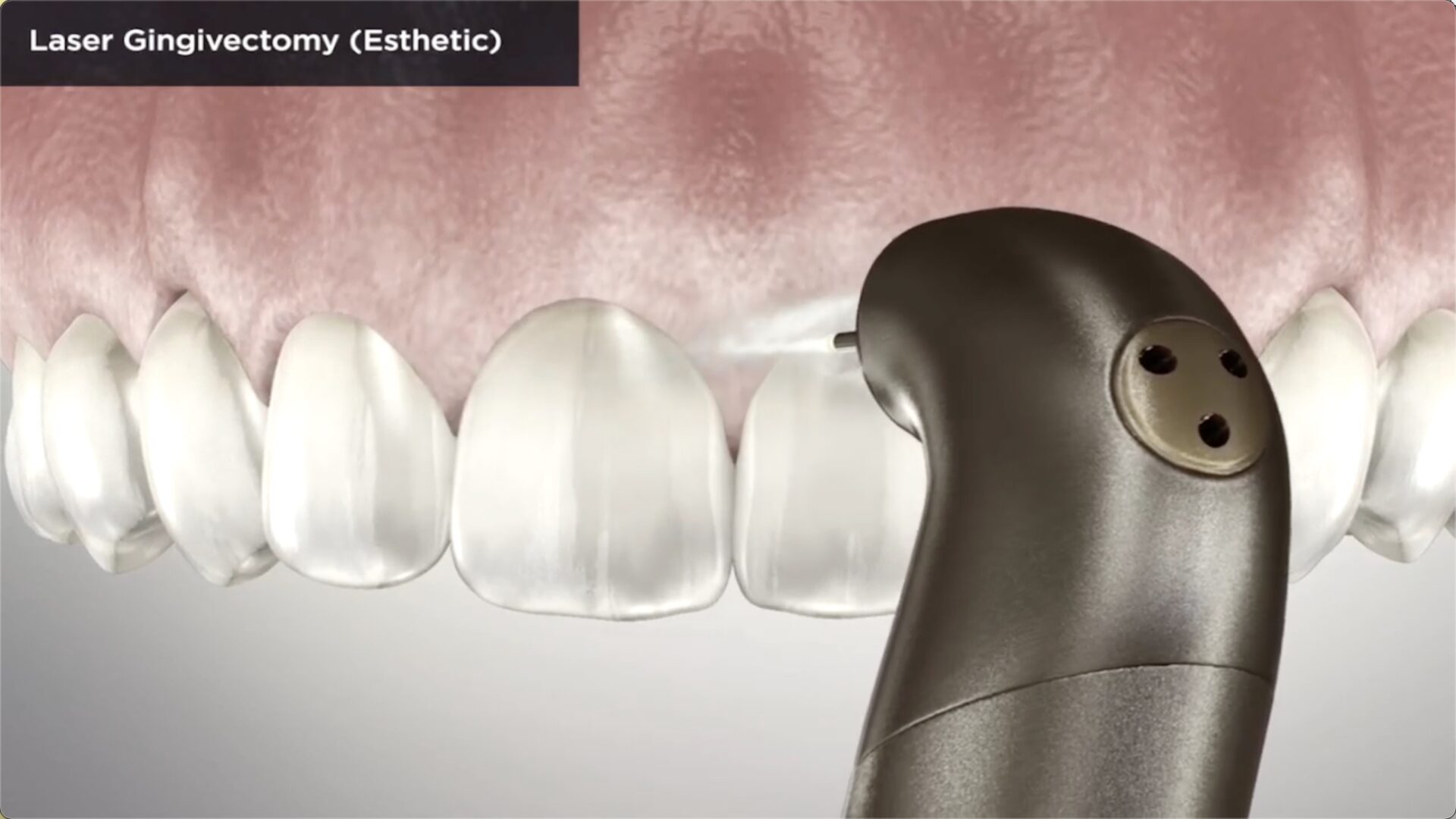
Gum reshaping
Lasers can contour uneven gum lines and improve the appearance of a “gummy smile.”
Periodontal treatment
Lasers may be used to remove infected gum tissue and reduce bacteria in periodontal pockets.
Frenectomy
A laser can release a tight tongue-tie or lip-tie with precision.
Crown lengthening
This procedure exposes more of the tooth structure when needed for restorative treatment.
Treatment of mouth sores
Certain lasers may help reduce discomfort from canker sores or similar lesions.
Hard tissue laser procedures
Some lasers can also be used on teeth and bone-related areas for certain applications, such as:
Early cavity treatment
Lasers may help remove decay and prepare a tooth for a filling in selected cases.
Tooth sensitivity treatment
Laser technology may help seal tubules in the tooth that contribute to sensitivity.
Cosmetic and restorative support
Lasers are sometimes used to support cosmetic dentistry by refining gum lines or improving the appearance of the smile before veneers or other treatment. They may also assist in procedures where a more conservative approach is preferred.
Not every procedure can be done with a laser alone
It is important to know that laser dentistry does not replace every traditional dental tool. Some treatments still require conventional instruments, and some procedures are best done with a combination of laser and traditional methods. The best approach depends on your specific diagnosis and treatment plan.
Is Laser Dentistry More Expensive Than Traditional Treatments?
Laser dentistry can sometimes cost more than traditional treatment, but the answer is not always straightforward. Pricing depends on the type of procedure, the technology being used, and the complexity of your case.
Why laser procedures may cost more
Dental lasers are advanced pieces of equipment, and they require specialized training. That investment can influence the cost of treatment. Some laser procedures may be priced slightly higher because of the technology involved and the skill needed to perform them properly.
Value goes beyond the fee
A higher upfront cost does not always mean poorer value. Many patients feel that the benefits of laser dentistry make it worthwhile. If treatment involves less bleeding, less discomfort, fewer follow-up concerns, and a smoother recovery, that added comfort may be worth the difference.
Insurance coverage can vary
Insurance does not always separate laser dentistry from traditional procedures in a way that affects coverage. In some cases, the insurance plan may cover the procedure itself regardless of the tools used. In other cases, there may be limitations. It is always smart to ask your dental office for a clear explanation of costs before treatment begins and review available payment options.
The right choice is not only about price
The least expensive option is not always the best one, and the newest technology is not always necessary either. The real question is which treatment method offers the most effective, comfortable, and appropriate care for your needs.
Are There Any Disadvantages To Laser Dentistry?
Yes, laser dentistry does have some disadvantages, even though it offers many benefits. It is a helpful tool, but it is not perfect for every patient or every procedure.
Not all procedures are suitable
One of the biggest limitations is that lasers cannot be used for every type of dental work. Some restorative procedures, complex fillings, or treatments involving certain materials may still require traditional tools.
Equipment and availability
Not every dental office offers laser dentistry. Practices need to invest in equipment and training, so access can vary depending on location and provider.
Cost may be higher
As mentioned earlier, laser treatment can sometimes come with a higher fee. For patients focused strictly on cost, that may be a drawback.
Skill and experience matter
Laser dentistry should be performed by a dentist who is properly trained in the technology. If a provider lacks experience, the benefits of the laser may not be fully realized. Choosing a dental team that understands when and how to use the technology is essential. Learning more about the team can help patients feel more confident in their choice of provider.
Traditional dentistry is still highly effective
It is also worth saying that traditional dental procedures are still safe, reliable, and effective. Just because laser dentistry is modern does not mean conventional treatment is outdated. In many cases, traditional methods remain the best option.
So, is laser dentistry better than traditional dental procedures? In many cases, it can be.
Laser dentistry often offers a more comfortable experience, greater precision, less bleeding, and faster healing for certain treatments. It can be an excellent option for gum procedures, selected cavity care, and patients looking for a less invasive approach. At the same time, traditional dentistry still plays a critical role and may be the better choice depending on the procedure.
Final Thoughts
The best treatment is the one that fits your needs, your comfort level, and your oral health goals. At Cascade Dental, we believe patients deserve clear answers and personalized care, not one-size-fits-all treatment.
If you are curious about whether laser dentistry is right for you, our team is here to help you explore your options and feel confident about your next step. You can contact us to schedule a visit or learn more about the services available to support your smile.