If you have been told that you have a cavity, it may be tempting to postpone treatment, especially if the tooth is not causing pain. However, cavities generally do not stop progressing once permanent tooth damage has occurred.
Over time, untreated decay can spread deeper into the tooth, increasing the risk of sensitivity, structural damage, infection, and more extensive treatment. Understanding how cavities progress can help you make informed decisions about your oral health.
Many people assume that if a cavity is not painful, it is not serious. In reality, tooth decay often develops gradually and may continue spreading long before symptoms become noticeable.
Understanding what happens when you wait to fill a cavity can help you make informed decisions about your oral health and potentially avoid more extensive treatment in the future.
Fast Answer: What Happens If You Wait to Fill a Cavity?
In most cases, cavities do not go away on their own once a portion of the tooth has been permanently damaged by decay.
When a cavity is left untreated, bacteria can continue breaking down tooth structure and gradually spread deeper into the tooth. Over time, this may increase the risk of pain, infection, structural damage, and more complex treatment needs.
It is important to understand that cavity progression varies from person to person. Factors such as oral hygiene habits, diet, saliva production, overall health, and the size of the cavity can all influence how quickly decay advances.
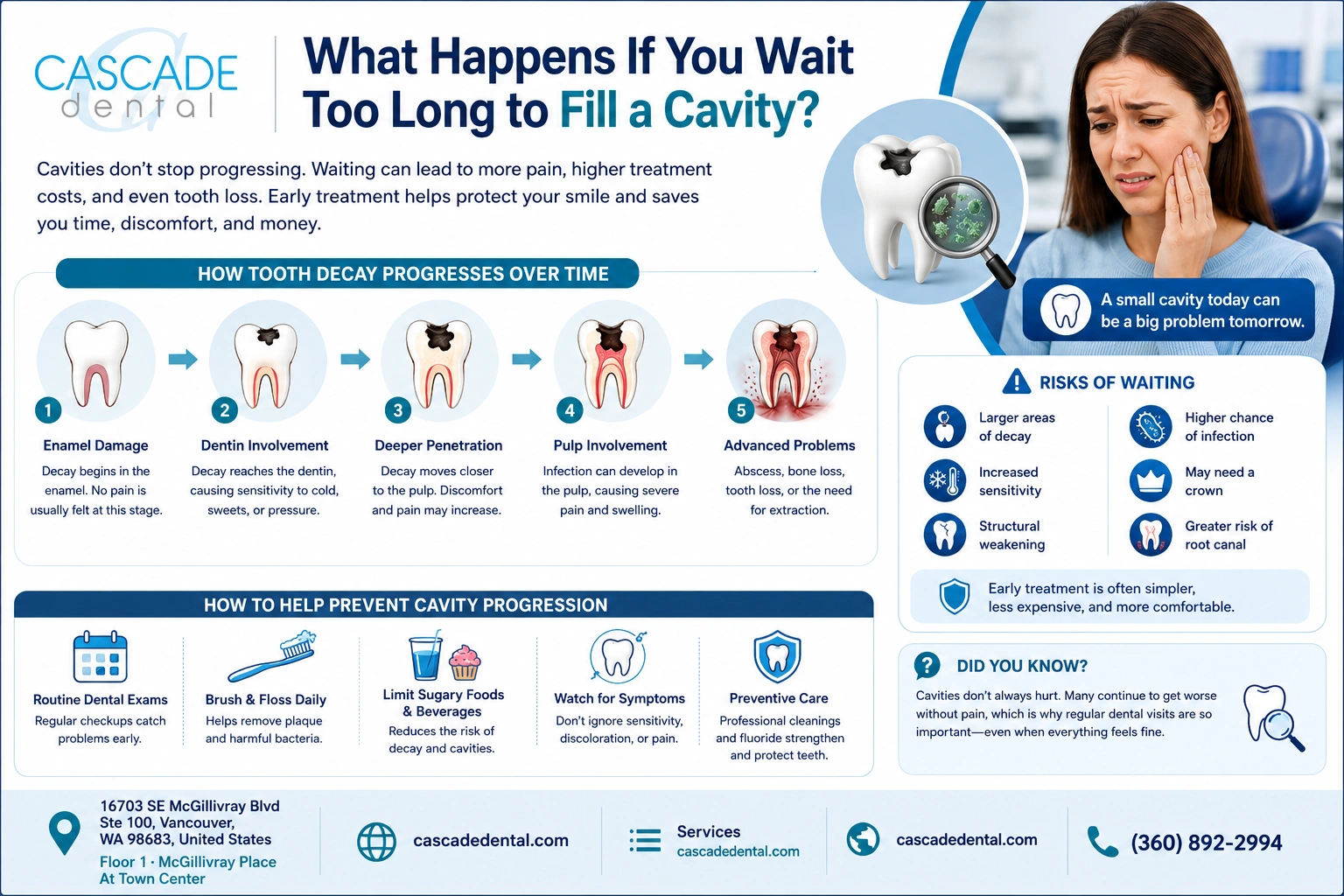
Potential consequences of delaying treatment may include:
- Larger areas of decay
- Increased tooth sensitivity
- Structural weakening of the tooth
- Greater likelihood of needing a dental crown
- Infection involving the inner portion of the tooth
- Increased risk of root canal treatment
In some situations, very early enamel changes may be managed through preventive care and remineralization efforts. However, once a cavity has caused permanent structural damage to the tooth, professional treatment is generally needed.
The sections below explain how cavities typically progress and why early intervention often helps preserve more of the natural tooth.
How Tooth Decay Spreads Over Time
To understand the risks of waiting to fill a cavity, it helps to know how tooth decay typically develops.
Enamel Damage
Cavities usually begin in the enamel, which is the hard outer layer of the tooth.
Bacteria in the mouth feed on sugars and starches from food and beverages. As they break down these substances, acids are produced that gradually weaken and damage the enamel.
During this stage, symptoms may be minimal or completely absent.
Progression Into Dentin
If decay continues, it may eventually move through the enamel and reach the dentin.
Dentin is softer than enamel and contains microscopic pathways that connect to the inner structures of the tooth. Once decay reaches this layer, sensitivity often becomes more noticeable.
Patients may begin experiencing:
- Sensitivity to cold foods and drinks
- Sensitivity to sweets
- Occasional discomfort when chewing
Deeper Penetration Toward the Pulp
As decay advances further, it can approach the pulp, which contains the tooth’s nerves and blood vessels.
At this stage, symptoms often become more pronounced and may include persistent discomfort or pain.
Why Decay Continues
Without treatment, the bacteria responsible for tooth decay generally continue affecting the tooth structure. The cavity does not simply stop progressing because symptoms are absent.
One of the most important things for patients to understand is that a lack of pain does not necessarily mean the cavity has stopped growing.
Many cavities continue to worsen long before noticeable symptoms develop.
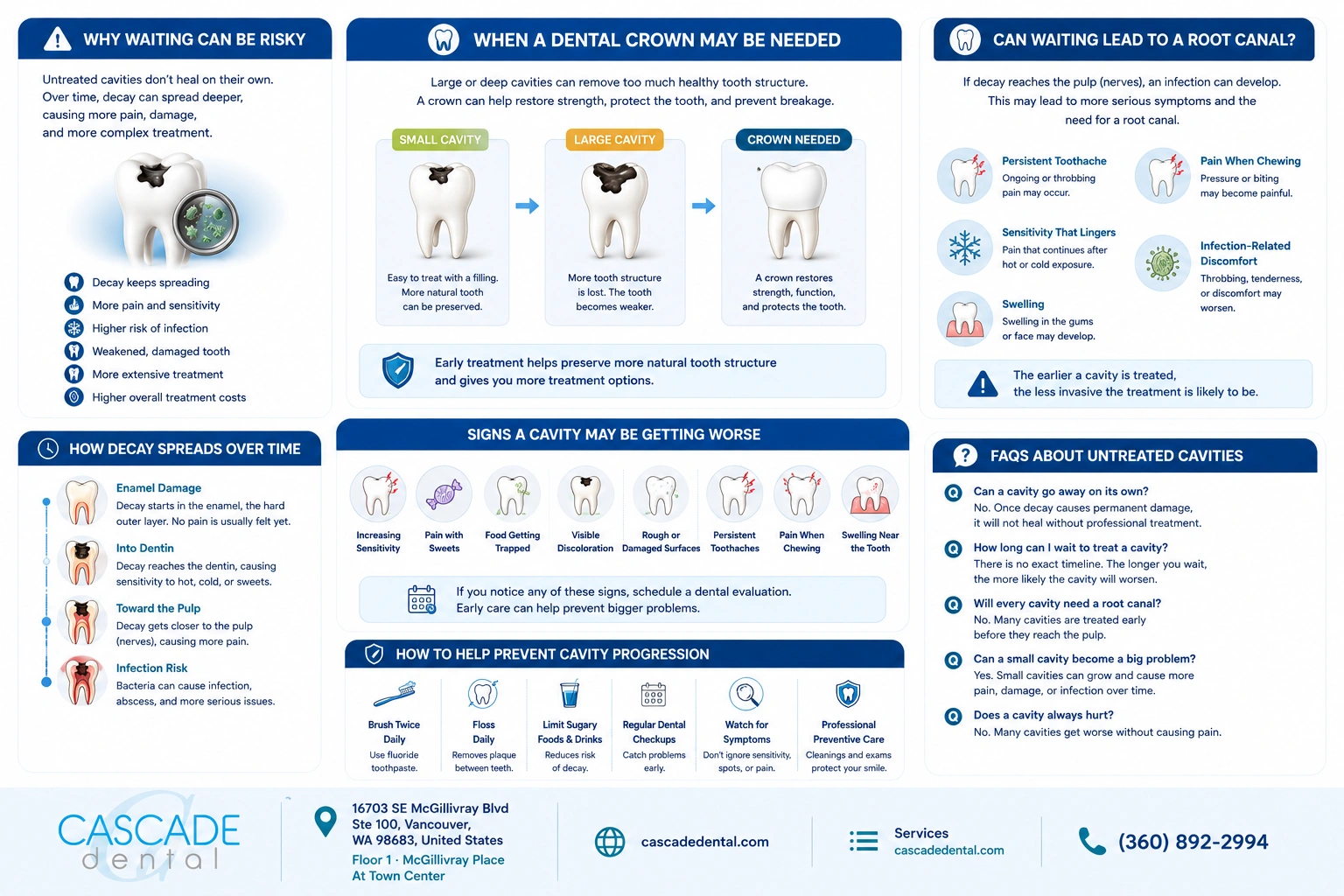
When a Dental Crown May Be Needed
As cavities become larger, they can remove more healthy tooth structure and weaken the overall strength of the tooth.
Small Cavities vs. Large Cavities
Smaller cavities are often easier to treat because less tooth structure has been affected.
However, when decay becomes extensive, a simple filling may no longer provide sufficient support for the remaining tooth.
Structural Weakness
Large areas of decay can make a tooth more vulnerable to:
- Cracks
- Fractures
- Breakage during normal chewing
In these situations, additional protection may be necessary to help restore strength and function.
Preserving Natural Tooth Structure Matters
One reason dentists encourage early treatment is that preserving healthy tooth structure is often easier when cavities are addressed sooner.
The more tooth structure that remains intact, the greater the number of conservative treatment options that may be available.
This is one reason why regular evaluations and early intervention can play an important role in long-term oral health.
Can Waiting Lead to a Root Canal?
One of the more significant risks associated with waiting to fill a cavity is the possibility that decay may eventually reach the pulp of the tooth.
The pulp contains nerves, blood vessels, and connective tissue that help keep the tooth alive and healthy.
What Happens When Decay Reaches the Pulp?
As bacteria penetrate deeper into the tooth, inflammation and infection may develop within the pulp.
This can lead to symptoms such as:
Persistent Toothache
A continuous ache or recurring pain may indicate deeper involvement of the tooth.
Sensitivity That Lingers
Sensitivity that continues long after exposure to hot or cold temperatures may signal advanced decay.
Swelling
Swelling around the gums or nearby tissues may occur when infection develops.
Pain When Chewing
Pressure applied during eating may become increasingly uncomfortable.
Infection-Related Discomfort
Some patients experience throbbing pain, tenderness, or other symptoms associated with infection.
When deeper infection occurs, treatment needs may become more complex.
The goal of discussing these risks is not to create fear but to help patients understand how untreated decay can progress over time.
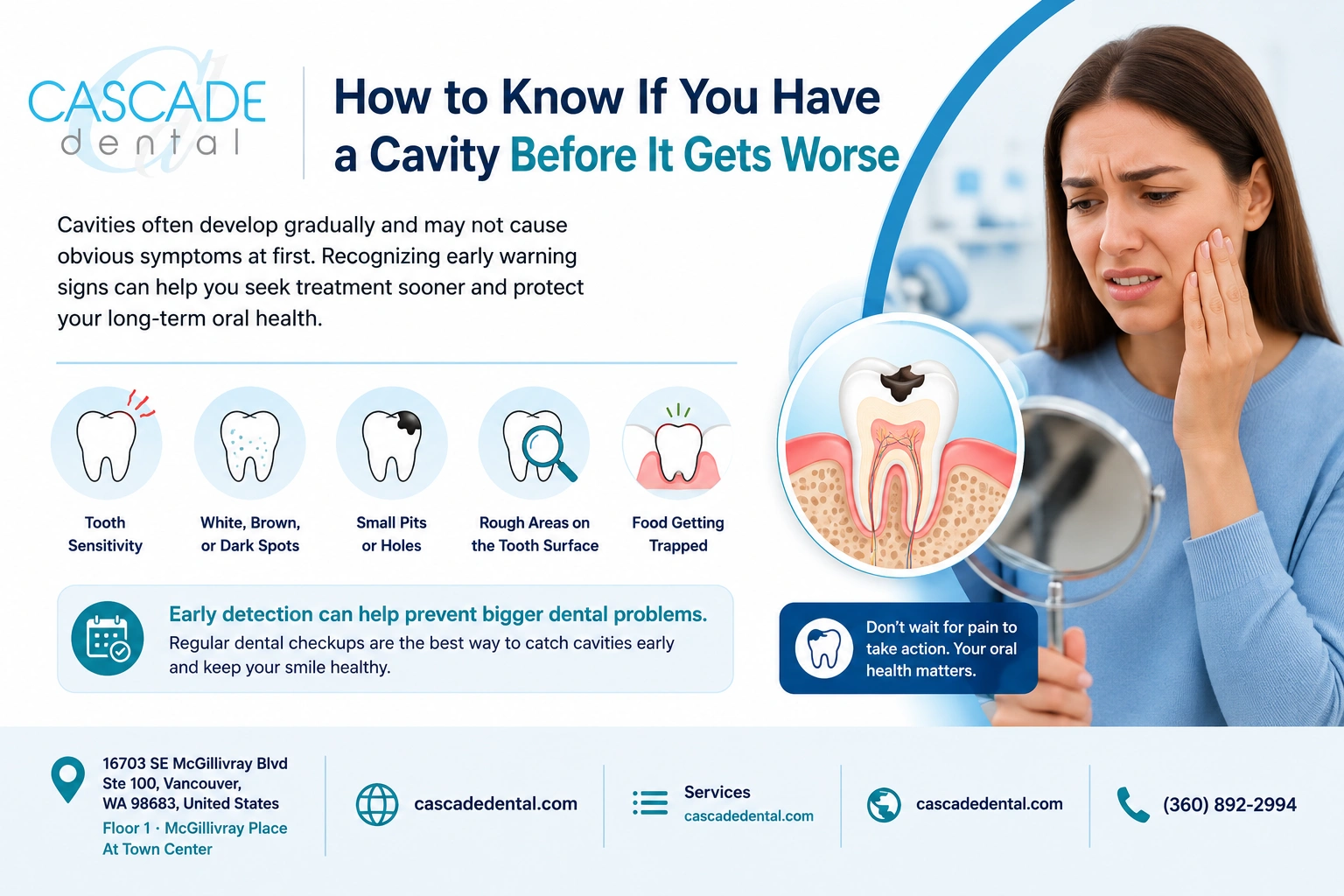
Signs a Cavity May Be Getting Worse
While cavities do not always cause symptoms right away, certain changes may indicate that decay is progressing.
Warning signs can include:
- Increasing tooth sensitivity
- Pain when eating sweets
- Food becoming trapped in the same area
- Visible darkening or discoloration
- Rough or damaged tooth surfaces
- Persistent toothaches
- Pain when chewing
- Swelling near the affected tooth
If symptoms begin appearing or becoming more frequent, a professional dental evaluation is recommended.
How to Help Prevent Cavity Progression
The good news is that there are several effective ways to reduce the risk of cavity progression and protect your oral health.
Routine Dental Exams
Regular dental visits allow potential concerns to be identified before symptoms become severe.
Daily Brushing and Flossing
Consistent oral hygiene helps remove plaque and bacteria that contribute to tooth decay.
Limiting Sugary Foods and Beverages
Reducing exposure to sugary snacks and drinks may help lower the risk of cavity formation and progression.
Early Evaluation of Symptoms
Sensitivity, discoloration, rough tooth surfaces, and food trapping should not be ignored if they persist.
Professional Preventive Care
Routine cleanings, examinations, and preventive recommendations can support long-term oral health and help identify concerns early.
When cavities are detected in their earlier stages, treatment is often simpler and more conservative.
FAQs About Untreated Cavities
Can a cavity go away without a filling?
Once a cavity has caused permanent loss of tooth structure, it generally does not heal on its own. A professional evaluation can determine whether treatment is necessary.
How long can I wait before treating a cavity?
There is no universal timeline because cavities progress at different rates. However, delaying treatment may increase the likelihood of larger cavities and more extensive treatment needs.
Will every cavity eventually need a root canal?
No. Many cavities are treated long before they reach the inner portion of the tooth. Early detection and treatment often help reduce the risk of deeper infection.
How do I know if a cavity is getting worse?
Possible signs include increasing sensitivity, pain, visible discoloration, food trapping, rough tooth surfaces, or symptoms that gradually worsen over time.
Can a small cavity become a major problem?
Yes. A small cavity can continue growing if left untreated and may eventually affect deeper portions of the tooth.
Does a cavity always hurt when it gets worse?
Not necessarily. Some cavities continue progressing with little or no pain. This is one reason regular dental examinations are important, even when symptoms seem minor or absent.
When should I schedule a dental appointment for a cavity?
You should consider scheduling an appointment if you notice symptoms of decay, visible changes in your teeth, or if it has been a long time since your last dental examination.
Early Action Can Help Protect Your Smile
When it comes to waiting to fill a cavity, the most important thing to remember is that tooth decay rarely stops progressing on its own. While symptoms may be minimal at first, untreated cavities can gradually affect deeper layers of the tooth and increase the likelihood of more extensive treatment.
Early evaluation and timely care often help preserve more natural tooth structure, support long-term oral health, and reduce the risk of complications. Routine dental visits and attention to early warning signs remain some of the most effective ways to keep small problems from becoming larger ones.