Tooth Fillings in Vancouver, WA | Cavity Repair
Fillings That Disappear Into Your Smile - Designed to Repair Cavities and Protect Your Teeth
Modern tooth-colored fillings blend seamlessly with your natural enamel — stopping decay in its tracks and restoring your tooth without leaving a trace behind. Most completed in a single visit.
⭐Completed in one visit
⭐Tooth-colored composite resin
⭐Most insurance accepted
⭐Gentle care, comfortable experience
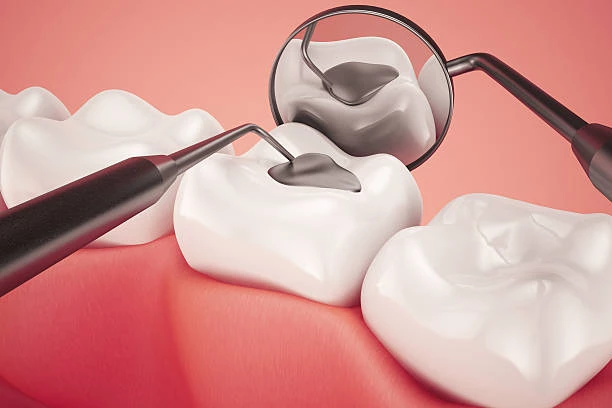
What is a Tooth Filling — and Why Does It Matter?
A tooth filling repairs damage caused by decay, minor fractures, or wear by removing the affected area, cleaning the tooth, and restoring it with durable material. Treating cavities early helps prevent decay from reaching the tooth’s inner pulp, where more complex care like a root canal or extraction may be needed.
At Cascade Dental, we use tooth-colored composite resin that bonds directly to the enamel and blends naturally with your smile. Most fillings are completed in one visit, making them a simple, effective way to protect your tooth and restore normal function.
Signs You May Need A Filling
- Tooth sensitivity to hot, cold, or sweet foods or drinks
- A visible dark spot, hole, or pit on a tooth surface
- Toothache or dull ache that comes and goes
- Pain when biting down on a specific tooth
- A rough or sharp edge you can feel with your tongue
- Food consistently getting stuck in the same spot
Do You Need a Filling?
What a Dental Bridge Restores
Tooth sensitivity to temperatures or sugar
Often the first sign that enamel has been compromised
Pain when biting or chewing on one side
Structural compromise or a crack alongside decay
Pain when biting or chewing on one side
Structural compromise or a crack alongside decay
Food always trapping in the same spot
Cavity creating a gap that traps food and bacteria
Cavity found on X-ray with no pain yet
Early-stage decay — the ideal time to fill
Old filling that feels rough, high, or loose
Worn filling that may need replacement
Chipped or fractured tooth edge
Minor fractures can be restored with composite bonding
Good news: cavities found and treated early are straightforward. The same cavity left for another year may require a crown — and the one after that, a root canal. The sooner a filling is placed, the simpler and less expensive the solution.
Why early treatment protects more than just the tooth
Stops decay from reaching the nerve
Once bacteria work through enamel and dentin, they can infect the pulp — requiring root canal therapy or extraction rather than a simple filling.
Preserves more of your natural tooth
A small cavity needs a small filling. A larger cavity needs a larger filling — or may not leave enough tooth structure to support one at all.
Prevents infection from spreading
Untreated decay can develop into a dental abscess — a painful infection that can affect the surrounding bone and neighboring teeth.
Keeps costs manageable
A composite filling is a fraction of the cost of a crown or root canal. Treating decay early is the single best value in dentistry.
The Types of Tooth Fillings — and Which We Use
Not all filling materials are equal in aesthetics, durability, or how they interact with your tooth structure. Here’s a clear breakdown.
Composite Resin (Tooth-Colored) – Our primary material for most fillings
Our standard filling material. Composite is a durable plastic resin tinted to match your natural tooth color exactly. It bonds chemically to the tooth surface, which means less healthy enamel needs to be removed during preparation. The finished filling is indistinguishable from surrounding enamel — no silver, no metal, no “tells.”
Amalgam (Silver) – Rarely used (aesthetic concerns)
A traditional alloy of metals that has been used in dentistry for over 150 years. Amalgam is durable and less expensive, but its silver-gray appearance is visible in the mouth. It also requires more removal of healthy tooth structure for placement. We rarely recommend amalgam today, though we can discuss it for specific clinical situations.
Ceramic / Porcelain – For larger restorations
Ceramic fillings (sometimes called inlays or onlays) offer excellent aesthetics and biocompatibility. They’re typically fabricated in a lab and require two visits, but offer exceptional durability and a close match to natural tooth appearance. A good option when a larger area needs restoration and composite alone may not be sufficient.
Glass Ionomer – Specialty use (fluoride-releasing)
A tooth-colored material that releases fluoride over time — helpful for patients with a high cavity risk. Less durable than composite, so it’s primarily used for non-biting surfaces, baby teeth, or areas below the gumline where fluoride release is particularly beneficial.
Why Tooth-Colored Fillings
The Case for Composite Resin Over Silver Amalgam
The filling you can’t see is the one that works best
Composite resin is bonded directly into the cavity after etching the tooth surface — creating a mechanical and chemical bond that actually strengthens the remaining tooth structure. Amalgam, by contrast, doesn’t bond to the tooth. It relies on mechanical retention, which is why more healthy enamel has to be removed to make room for it.
The result with composite: a smaller, stronger, invisible restoration that lets your natural tooth do most of the work.
“The best restoration is the smallest one — and modern composite makes that possible.” — Cascade Dental
- Bonds to the tooth
Chemical bonding means less healthy enamel removal during prep — and a tighter seal that resists bacteria re-entering the cavity.
- Temperature stable
Metal fillings expand with heat and contract with cold over time — creating micro-cracks in surrounding enamel. Composite doesn’t.
- Invisible result
Matched to your exact tooth color. No dark spots when you laugh, no metal visible in dental X-rays — just a natural-looking tooth.
- Same-day placement
Composite fillings are applied, shaped, and cured with a special light in one visit — no lab work, no temporary restoration needed.
What to Expect
The Filling Process, Step by Step
From the moment you sit down to the moment you leave, most fillings are done comfortably in under an hour. Here’s exactly what happens.
- Exam & X-Ray (Before you start)
We confirm the extent of decay and check for anything a visual exam might miss
- Numbing (5 Minutes)
Local anesthetic is applied — the area is fully numb before we begin any preparation
- Remove Decay (10 to 15 Minutes)
The decayed portion is carefully removed; only what needs to go comes out
- Place & Cure (15 to 20 Minutes)
Composite is applied in layers, shaped precisely, and hardened with a curing light
- Polish & Adjust (5 Minutes)
We check your bite, make any refinements, and polish the filling to a smooth finish
Understanding Your Options
Fillings vs. Crowns, Root Canals & Leaving It Alone
The treatment you need depends entirely on how far the decay or damage has progressed. Here’s how a filling compares to the alternatives — and why acting early keeps options simpler.
Tooth Filling (Simplest option — when caught early)
Decay has affected the enamel and dentin but hasn’t reached the inner pulp. The compromised material is removed and replaced with composite. Tooth structure is preserved, the nerve is untouched, and the tooth continues functioning normally.
Dental Crown (Needed when decay is extensive)
Decay is extensive, the tooth is fractured, or so much structure has been removed that a filling alone can’t provide adequate support. A crown caps the entire tooth to protect what remains. More involved than a filling, but still preserves the natural root.
Root Canal (Needed when infection reaches the nerve)
Decay has reached the inner pulp of the tooth, causing infection or significant pain. The infected pulp is removed, the canal is cleaned and sealed, and a crown is typically placed on top. More complex — and avoidable if decay is addressed before it progresses this far.
No Treatment (always worsens over time)
Decay doesn’t stop growing on its own. Without treatment, a small cavity will eventually reach the pulp, cause infection, and may result in tooth loss. Delaying also increases the cost and complexity of whatever treatment eventually becomes necessary.
After Your Filling
Caring for Your Filling — and Making It Last
Composite fillings are durable and low-maintenance. A few consistent habits keep them and the teeth around them healthy for years.
- Brush twice daily with fluoride toothpaste: Fluoride helps strengthen enamel around the filling and reduce the risk of new decay.
- Floss daily around filled teeth: Flossing removes plaque where recurrent decay often starts.
- Avoid chewing ice or hard objects: Hard items can create small cracks or damage the filling over time.
- Limit sugary and acidic foods: Sugar and acid can weaken enamel and increase the risk of decay around the filling.
Keep regular checkups: Routine visits help catch filling wear or new decay early.

What To Expect Right After Your Appointment
Local anesthetic wears off within 1–3 hours. Until then, be careful eating — you won’t feel biting pressure accurately while numb. After that, most patients return to normal immediately.
Mild sensitivity to hot, cold, or pressure is normal for a few days and typically fades on its own
If your bite feels high or uneven once the numbness wears off, call us — this is a simple adjustment
Avoid very hard or sticky foods on the day of the procedure
Composite fillings are fully set before you leave — no waiting period for the material to harden
If sensitivity persists beyond 2 weeks, contact us so we can evaluate the tooth
Why Cascade Dental
Trusted, Award-Winning Care for Vancouver Families
A restorative team that’s been voted Best Dentist in Clark County six times — because getting a filling here feels genuinely different from what most patients have experienced elsewhere.
🏆 Best Dentist Clark County · 2014
🏆 Best Dentist Clark County · 2016
🏆 Best Dentist Clark County · 2017
🏆 Best Dentist Clark County · 2018
🏆 Best Dentist Clark County · 2019
🏆 Best Dentist Clark County · 2021
Only tooth-colored fillings
We focus on composite resin — better for your tooth, better for your appearance, and better for long-term structural integrity than amalgam.
Digital X-rays for better diagnosis
Digital imaging detects early-stage decay between teeth that a visual exam alone would miss — so we catch problems when they’re easiest to treat.
Genuinely comfortable experience
We don’t start until you’re fully numb. Our team works unhurriedly and explains what they’re doing — no sudden surprises mid-procedure.
Family-friendly care
We see patients of all ages and take time with those who are anxious about dental treatment — especially first-timers and younger patients.
You understand what's happening
We explain what we found, why a filling is (or isn’t) recommended, and what the procedure involves — before anything is scheduled.
7 AM appointments available
Open early Monday through Friday so you can come in before work — not lose half a day to a single dental appointment.
What Patients Say
Trusted by Families Across Vancouver and Clark County
Great service as usual.
Ovetall and Dr. Andy H. in particular.
Had routine tooth filling.
★★★★★ Melior O
My experience with Cascade Dental is consistently positive. Everyone I have had contact with is thorough, gentle and pleasant. I always feel cared for and more educated with each visit.
★★★★★ Meg Woodard
This place was great! Very relational and professional. We are moving and now have high standards for our next dentist.
Thank you Dr. Reller and team! You guys are great!
★★★★★ Alla Zalyashko
Frequently Asked Questions
Tooth Filling FAQs
Does getting a filling hurt?
No. The tooth is numbed first, so you may feel pressure or vibration, but not pain.
How long does a filling take?
Most single-tooth fillings take about 30 to 60 minutes and are completed in one visit.
Can I eat after a filling?
Yes, but wait until the numbness wears off to avoid biting your cheek or tongue.
How long do composite fillings last?
Composite fillings usually last 7 to 12 years with good oral hygiene and regular checkups.
Does insurance cover fillings?
Most dental plans cover fillings as a basic restorative service, but coverage depends on your plan.
My tooth does not hurt. Do I still need a filling?
Yes, cavities often do not hurt early on, and treating them early prevents bigger problems.
Can old silver fillings be replaced with tooth-colored ones?
Yes, especially if the old filling is worn, cracked, leaking, or causing sensitivity.
What happens if I do not get a filling?
The cavity can grow, leading to a root canal, crown, or possible tooth extraction.
Questions About Fillings?
These are the most common things patients ask before and after their appointment. If yours isn’t here, call us directly.
We’re open Mon–Fri from 7 AM
Ready to Get It Done?
A Cavity Gets Easier to Treat Today Than It Will Be Tomorrow
If you’ve been putting off a filling — or if you’re due for an exam and aren’t sure what’s going on with a tooth — Cascade Dental in Vancouver, WA is here to help. One appointment, one visit, and most fillings are done.
our service areas
washington
- Tooth Fillings in Fisher’s Landing East, WA
- Tooth Fillings in Cascade Park West, WA
- Tooth Fillings in Burnt Bridge Creek, WA
- Tooth Fillings in North Image, WA
- Tooth Fillings in Walnut Grove, WA
- Tooth Fillings in Washougal, WA
- Tooth Fillings in Vancouver, WA
- Tooth Fillings in Orchards, WA
- Tooth Fillings in Minnehaha, WA
- Tooth Fillings in Mill Plain, WA
- Tooth Fillings in Hazel Dell, WA
- Tooth Fillings in Fisher’s Landing, WA
- Tooth Fillings in Felida, WA
- Tooth Fillings in Camas WA