Many people associate dental problems with tooth pain. If a tooth hurts, they know it is time to call the dentist. But what happens when your gums feel swollen, tender, or irritated while your teeth feel completely normal?
Gum symptoms can happen without significant tooth pain. In fact, some of the earliest stages of gum disease and other oral health concerns may develop with little or no discomfort.
Because these symptoms can seem minor, many people wait to schedule a dental visit and assume the problem will go away on its own.
At Cascade Dental, we encourage patients to pay attention to changes in their gums just as they would changes in their teeth. Swelling, redness, bleeding, and irritation can be important warning signs that deserve professional evaluation.
Gums Feel Swollen but No Tooth Pain?
Get gentle dental care before it turns into a bigger issue. Call now to schedule your gum evaluation.
Fast Answer: Swollen Gums Without Tooth Pain
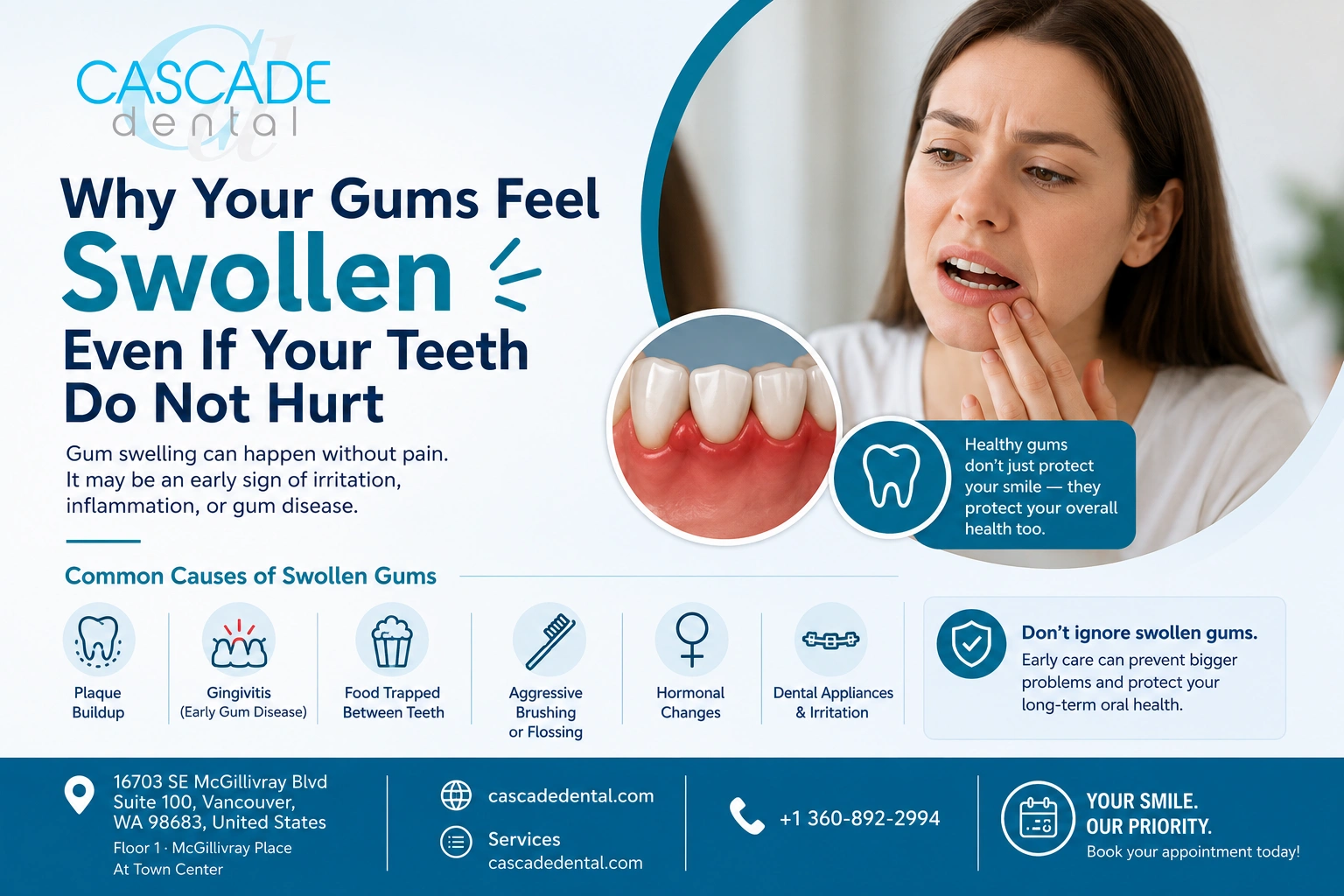
Gums can feel swollen even when teeth do not hurt because many gum-related conditions develop before significant pain occurs. Common causes include plaque buildup, gingivitis, food particles trapped between teeth, aggressive brushing, hormonal changes, irritation from dental appliances, and early stages of gum disease.
Mild gum irritation may sometimes improve with better oral hygiene. However, persistent swelling, redness, tenderness, or bleeding is a good reason to schedule a dental evaluation.
Gum symptoms often appear before serious pain develops, which makes early evaluation important for protecting long-term oral health.
Why Gums Can Swell Without Tooth Pain
Swollen gums can occur for several reasons. Some causes are temporary and relatively minor, while others may point to an oral health condition that needs professional attention.
Gums are soft tissues, and they can react quickly to bacteria, irritation, hormones, or inflammation. Teeth may still feel normal even when the gum tissue around them is irritated.
That is why swollen gums without tooth pain should still be taken seriously, especially if the swelling lasts, returns, or appears with bleeding.
Common Causes of Swollen Gums
Plaque Buildup Along the Gumline
One of the most common causes of swollen gums is plaque accumulation.
Plaque is a sticky film of bacteria that naturally forms on teeth throughout the day. When plaque is not removed effectively through brushing and flossing, it can collect along the gumline and trigger inflammation.
As the body responds to bacterial buildup, gums may become:
- Red
- Puffy
- Tender
- More likely to bleed
This early inflammatory response often develops before significant pain occurs.
Gingivitis
Gingivitis is the earliest stage of gum disease and one of the most common reasons patients experience swollen gums without tooth pain.
Because gingivitis affects the gums rather than the teeth themselves, many patients may not notice obvious discomfort.
Common signs of gingivitis include:
- Swollen gums
- Redness
- Bleeding when brushing or flossing
- Mild tenderness
- Persistent bad breath
The encouraging news is that gingivitis is often reversible when identified and addressed early. If bleeding is one of your main symptoms, understanding why gums are bleeding can also help you recognize common causes, warning signs, and available treatment options.
Food Trapped Between Teeth
Sometimes swollen gums result from something as simple as food becoming lodged between teeth.
Popcorn hulls, seeds, meat fibers, and other small food particles can irritate gum tissue and create localized swelling.
In these situations, patients may notice irritation around one specific area instead of widespread gum inflammation.
Aggressive Brushing or Flossing
Good oral hygiene is important, but too much force can irritate gum tissue.
Using a hard-bristled toothbrush or brushing aggressively may contribute to:
- Gum irritation
- Minor swelling
- Tenderness
- Small areas of inflammation
Flossing too aggressively can also cause temporary gum discomfort.
A gentle but thorough oral hygiene routine is usually the most effective approach.
Hormonal Changes
Hormonal fluctuations can make gums more sensitive and reactive.
This is especially common during:
- Pregnancy
- Puberty
- Menstrual cycles
- Menopause
Changes in hormone levels may increase blood flow to gum tissues and make them more susceptible to inflammation from plaque and bacteria.
Dental Appliances and Irritation
Orthodontic appliances, retainers, dentures, and other oral devices can sometimes irritate gum tissue.
When appliances rub against soft tissues or create areas that are difficult to clean, localized swelling may occur.
A dental evaluation can help determine whether an appliance is contributing to gum irritation.
Early Signs of Gum Disease
One of the most important things patients should understand is that gum disease often develops quietly.
Unlike a cavity that may eventually cause tooth pain, gum disease can progress for months or even years before more obvious symptoms appear.
Redness Along the Gumline
Healthy gums are typically firm and pink.
When inflammation begins, gums may appear:
- Bright red
- Dark red
- Slightly swollen
- Shiny
- Irritated
Color changes are often among the earliest visible signs of gum disease.
Bleeding During Brushing or Flossing
Many people assume occasional bleeding is normal, but healthy gums generally do not bleed during routine brushing or flossing.
Bleeding may indicate that inflammation is already present.
Patients often notice blood:
- While brushing
- During flossing
- When rinsing after oral hygiene
Even small amounts of recurring bleeding are a good reason to schedule an evaluation.
Persistent Swelling
Gum swelling that remains for several days or longer should be checked by a dentist.
Persistent inflammation may suggest bacterial buildup, gingivitis, or another underlying concern that needs professional evaluation.
Gum Tenderness
Significant pain may be absent, but mild tenderness can develop as inflammation progresses.
Patients may notice discomfort when:
- Brushing
- Flossing
- Eating certain foods
- Touching the affected area
Tenderness often appears along with other signs of gum irritation.

What to Do If Your Child Says Their Tooth Hurts
If your child says their tooth hurts, start by gently checking the area for trapped food, swelling, a loose tooth,…

Bad Breath That Does Not Improve
Chronic bad breath may sometimes be linked to bacteria accumulating beneath the gumline.
When gum disease begins developing, bacterial activity can contribute to persistent odors that do not improve with brushing alone.
Gum Recession
In some cases, patients notice that their teeth appear longer than before.
This may happen when gum tissue begins to recede, exposing more of the tooth surface. Gum recession can develop gradually and may not cause pain at first.
What Dentists Check During an Exam
Because swollen gums can have multiple causes, a professional examination helps determine what is happening and whether treatment or monitoring is needed.
Reviewing Symptoms and Health History
Your dentist may ask questions about:
- How long the swelling has been present
- Whether bleeding occurs
- Oral hygiene habits
- Medical conditions
- Medications
- Changes in symptoms
This information helps provide context for the examination.
Visual Examination of the Gums
The dentist carefully evaluates the appearance of the gum tissue.
They may assess:
- Color
- Texture
- Swelling
- Gum recession
- Areas of irritation
- Plaque accumulation
Visual findings often provide important clues about gum health.
Measuring Gum Pockets
Healthy gums fit snugly around teeth.
Dentists may measure the spaces between teeth and gums, often called periodontal pockets.
Deeper pockets can indicate progression beyond early gingivitis and may suggest more advanced gum disease.
Evaluating Plaque and Tartar Buildup
Even patients who brush regularly can develop plaque and tartar in difficult-to-reach areas.
Dentists look for bacterial buildup that may be contributing to inflammation and gum irritation.
Examining Teeth and Supporting Structures
Tooth and gum health are closely connected, so the examination may also include evaluating:
- Tooth stability
- Bite alignment
- Existing restorations
- Signs of decay
- Bone support
This comprehensive approach helps ensure no contributing factors are missed.
Dental X-Rays When Needed
X-rays may be recommended to evaluate areas beneath the gumline that cannot be seen during a visual exam.
They can help identify:
- Bone loss
- Hidden infections
- Structural concerns
- Changes associated with periodontal disease
Not every patient needs X-rays at every visit, but they can provide valuable diagnostic information when indicated.
When Swollen Gums Need a Dentist
Many cases of mild gum irritation improve with better oral hygiene, but certain symptoms are a good reason to schedule a dental evaluation.
You should consider scheduling a dental visit if you experience:
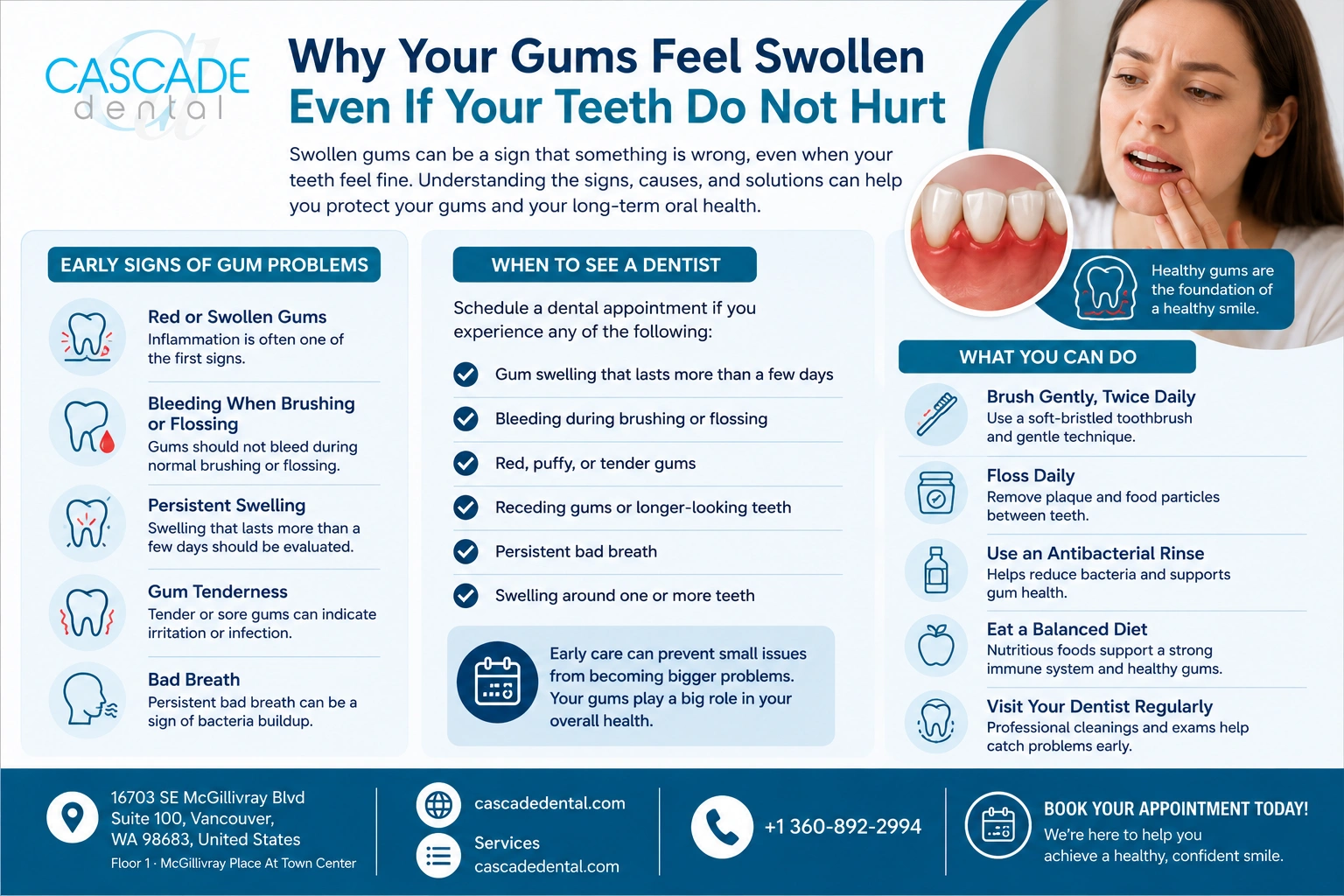
- Gum swelling lasting more than a few days
- Bleeding during brushing or flossing
- Red or tender gums
- Persistent bad breath
- Gum recession
- Swelling that repeatedly returns
- Localized areas of irritation
Early evaluation helps identify potential concerns before they become more difficult to manage.
Even when there is no tooth pain, gum symptoms may signal changes occurring beneath the surface.
Why Early Action Matters
Many oral health problems are easier to address when they are identified early.
When gum inflammation is recognized in its initial stages, patients often have more opportunities to protect their oral health and reduce the risk of complications associated with advanced periodontal disease. Understanding the connection between periodontal disease and overall health can also help patients see why maintaining healthy gums is an important part of preventive care.
Routine dental exams also provide an opportunity to detect concerns that may not yet be causing noticeable symptoms.
FAQs About Swollen Gums Without Tooth Pain
Can gums be swollen without tooth pain?
Yes. Gum inflammation can happen before tooth pain develops, especially with plaque buildup, gingivitis, irritation, or early gum disease. Teeth may feel normal even when the gum tissue around them is inflamed.
Why do my gums bleed when I brush?
Bleeding may be a sign of gum inflammation or plaque buildup along the gumline. If it happens repeatedly, a dental exam can help identify the cause and determine whether treatment is needed.
Can swollen gums go away on their own?
Mild irritation may improve with gentle brushing, flossing, and better oral hygiene. Persistent swelling, bleeding, or tenderness should be evaluated by a dentist.
Are swollen gums always a sign of gum disease?
No. Swollen gums can also be caused by trapped food, aggressive brushing, hormonal changes, or irritation from dental appliances. A dental exam can help determine the cause.
When should I see a dentist for swollen gums?
Schedule an evaluation if swelling lasts more than a few days, keeps returning, bleeds, feels tender, or appears with gum recession or bad breath. These symptoms may suggest an underlying issue that needs attention.
Can stress cause swollen gums?
Stress may contribute to oral health changes by affecting immune response, oral hygiene habits, or teeth grinding. However, swollen gums should still be evaluated if they persist or occur with bleeding, tenderness, or bad breath.
Do Not Ignore What Your Gums Are Telling You
Swollen gums may seem like a minor issue, especially when your teeth feel perfectly fine. However, gum symptoms are often your body’s way of signaling that something deserves attention.
Whether the cause is plaque buildup, gingivitis, irritation, hormonal changes, or early gum disease, persistent swelling should not be dismissed simply because there is no tooth pain.
At Cascade Dental, we help patients throughout Vancouver, WA understand the importance of preventive dental care and early periodontal evaluation. Paying attention to changes in your gums and scheduling routine dental exams can help protect your smile, preserve healthy tissues, and support long-term oral health.
If your gums have been swollen, red, tender, or prone to bleeding, a professional evaluation can provide answers and help you determine the next best steps for maintaining a healthy smile.
Worried About Swollen Gums?
Find out what is causing the swelling and get treatment early. Contact us today to get started.