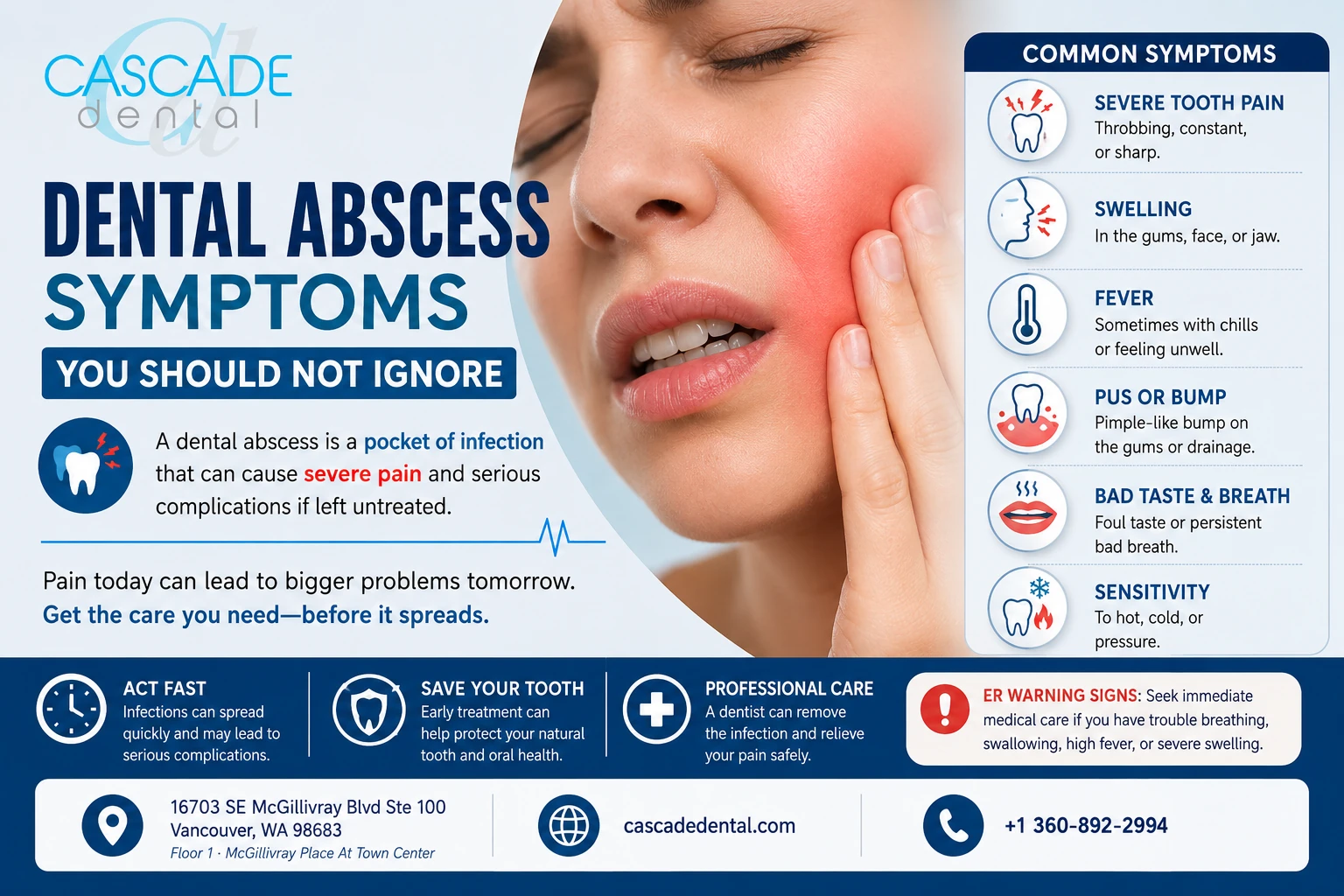
A dental abscess is a pocket of infection that can cause severe tooth pain, swelling, a bad taste in the mouth, and sometimes fever. It should never be ignored because the infection can spread beyond the tooth or gums if it is not treated promptly.
For patients in Vancouver, WA, knowing the symptoms of a dental abscess can help you act quickly instead of waiting for the pain to go away. Severe tooth pain, increasing swelling, or a pimple-like bump on the gums may be signs that you need urgent dental care.
Dental Abscess Pain or Swelling?
Don’t wait for symptoms to worsen. Call today for prompt dental care and get the relief you need.
Fast Answer: What Are the Symptoms of a Dental Abscess?
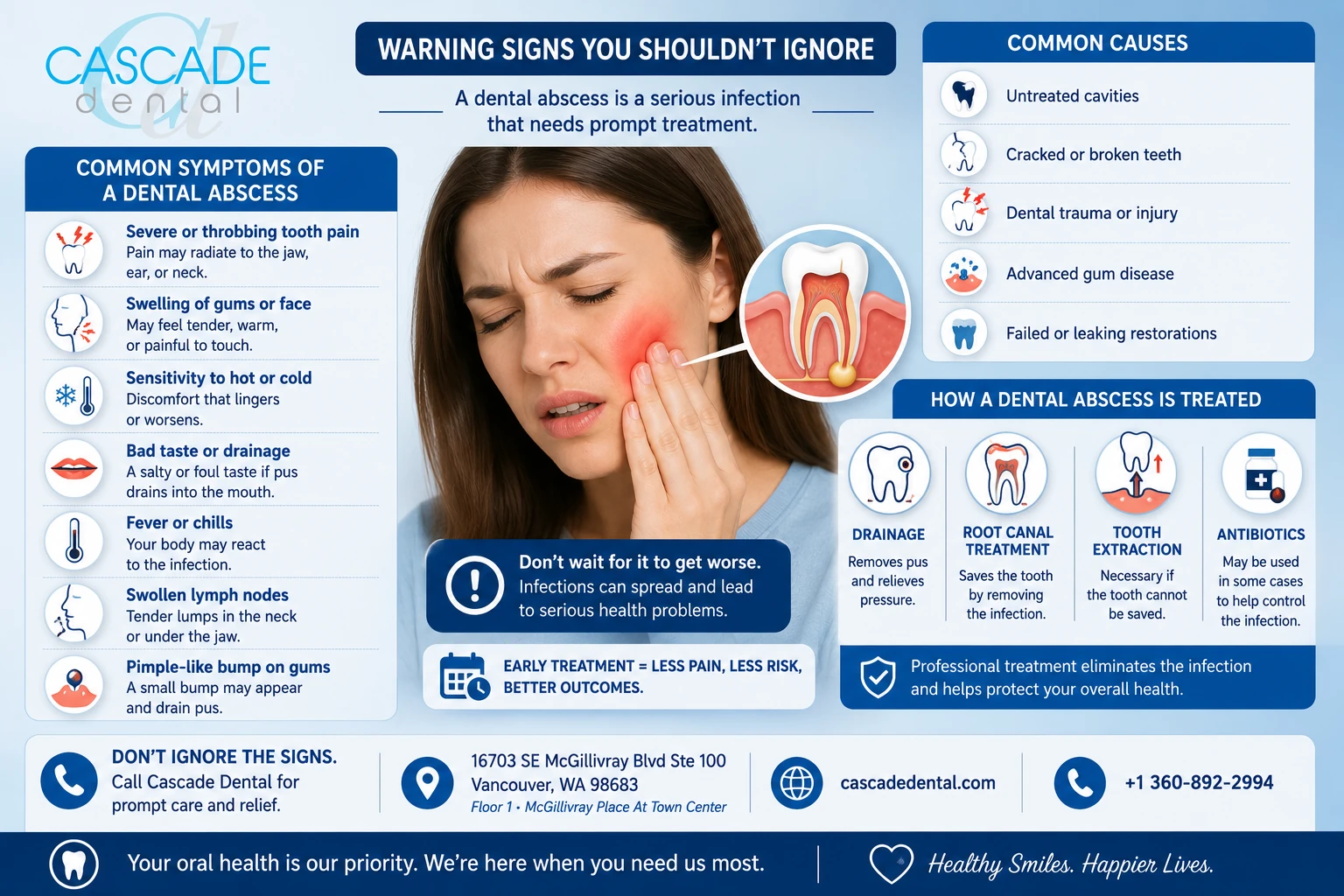
A dental abscess is a pocket of infection caused by bacteria. Common symptoms include severe tooth pain, swelling of the gums or face, sensitivity to hot and cold, a bad taste in the mouth, and sometimes fever. Because the infection can spread if left untreated, a dental abscess requires prompt evaluation by a dentist.
A tooth abscess may form when bacteria enter the inside of the tooth through deep decay, a crack, trauma, or previous dental damage. An abscess can also develop in the gums, especially when gum disease creates spaces where bacteria can collect. Dental sources such as Mayo Clinic and Cleveland Clinic describe an abscess as a bacterial infection that can lead to swelling, pain, pus, and possible spread to nearby tissues if untreated.
Common Signs of a Dental Abscess
Symptoms may develop gradually or appear suddenly. Some people notice mild tooth sensitivity first, while others wake up with intense throbbing pain or visible swelling. Symptoms can vary depending on where the infection is located and how advanced it has become.
Common warning signs include:
- Severe or throbbing tooth pain
- Swollen gums near the affected tooth
- Facial or jaw swelling
- Pain when biting or chewing
- Sensitivity to hot or cold foods and drinks
- Persistent bad breath
- A foul taste or drainage in the mouth
- Swollen or tender lymph nodes in the neck
- A pimple-like bump on the gums
- Tooth discoloration
- Pain that spreads to the ear, jaw, or neck
Pain may come and go, but the infection usually does not resolve without professional treatment. Sometimes an abscess may begin to drain, and the pain may temporarily decrease. This does not mean the infection is gone. It still needs dental care because bacteria may remain inside the tooth, gums, or surrounding bone.
What Does Dental Abscess Pain Feel Like?
Abscess pain is often more intense than ordinary tooth sensitivity. It may feel deep, constant, throbbing, or sharp. Some patients describe it as pressure building inside the tooth or jaw.
You may notice that the pain:
- Gets worse when chewing
- Wakes you up at night
- Spreads to the ear, jaw, neck, or temple
- Feels worse when lying down
- Does not improve for long with pain relievers
- Comes with swelling or a bad taste
Pain from a dental abscess can sometimes feel like it affects several teeth, even when only one tooth is infected. This happens because nerves in the jaw and face can refer pain to nearby areas. A dental exam and X-rays can help locate the source.
Swelling and Pain
One of the most noticeable signs of an abscess is swelling around the affected tooth. Swelling happens because the body is responding to infection and inflammation. The area may feel tender, warm, or painful when touched. Face swelling from a tooth problem can also develop when the infection extends into nearby tissues.
You may notice:
- A pimple-like bump on the gums
- Tenderness when touching the area
- Difficulty opening your mouth comfortably
- Pain that spreads to the ear, jaw, or neck
- A swollen cheek or jaw
- Gum tissue that looks red, shiny, or irritated
Increasing swelling should never be ignored, as it may indicate the infection is spreading. Swelling that affects the face, jaw, neck, swallowing, or breathing needs urgent attention. Mayo Clinic advises emergency care if a tooth abscess is accompanied by fever, facial swelling, or trouble breathing or swallowing.
Fever or a Bad Taste in Your Mouth
A dental abscess can sometimes cause symptoms beyond the mouth. These symptoms may mean your body is reacting to the infection.
These may include:
- Fever or chills
- General feeling of illness
- Difficulty swallowing
- A salty or unpleasant taste if the abscess begins to drain
- Persistent bad breath
- Swollen lymph nodes
- Fatigue
- Nausea in more serious cases
A bad taste often happens when pus drains from the abscess into the mouth. While drainage may reduce pressure and pain for a short time, it does not replace professional treatment. The source of the infection still needs to be removed, drained, cleaned, or otherwise treated by a dentist.
If swelling affects your ability to swallow or breathe, seek emergency medical care immediately.
Why a Dental Abscess Needs Prompt Care
Unlike minor tooth sensitivity, a dental abscess is an active bacterial infection. Waiting to see whether it improves can allow the infection to damage more tissue and become harder to treat.
Without treatment, the infection may:
- Damage the tooth and surrounding bone
- Spread to nearby tissues
- Lead to tooth loss
- Cause more serious health complications
- Create facial or jaw swelling
- Require more complex treatment later
Early treatment helps relieve pain and reduces the risk of the infection spreading. It may also increase the chance of saving the natural tooth.
Antibiotics may sometimes be used, but they are not always enough on their own. The American Dental Association notes that dental infection care depends on the situation, and treatment often focuses on addressing the dental source of infection, not only taking medication.
What Causes a Dental Abscess?
A dental abscess forms when bacteria enter an area where they can multiply and create infection. This can happen inside the tooth, around the tooth root, or in the gums.
Common causes include:
- Untreated cavities
- Cracked or broken teeth
- Dental trauma
- Advanced gum disease
- Deep periodontal pockets
- Failed or leaking dental restorations
- Food or debris trapped under the gums
- Wisdom teeth that are difficult to clean
A periapical abscess often begins inside the tooth when bacteria reach the pulp, which contains nerves and blood vessels. Mayo Clinic explains that this can happen because of untreated decay, injury, or previous dental work.
A periodontal abscess forms in the gums and supporting tissues around the tooth. This is often connected to gum disease, where bacteria collect in deeper spaces between the teeth and gums. Cleveland Clinic notes that periodontal abscesses can spread without treatment.
Can a Dental Abscess Go Away on Its Own?
No, a dental abscess usually does not go away on its own. The pain may decrease if the abscess drains, but the underlying infection often remains. Without dental treatment, bacteria can continue to damage the tooth, gums, and bone.
This is one reason people sometimes delay care. They may feel intense pain, then notice relief after a bad taste or drainage. However, that temporary relief can be misleading.
A dentist needs to determine:
- Where the infection started
- Whether the tooth can be saved
- Whether the abscess needs drainage
- Whether root canal treatment is needed
- Whether the tooth is too damaged to restore
- Whether antibiotics are appropriate
The safest next step is to schedule urgent dental care as soon as abscess symptoms appear.
How Is a Dental Abscess Diagnosed?
A dentist can usually diagnose a dental abscess through an exam, symptom review, and dental imaging. They may ask when the pain started, whether swelling is present, and whether hot, cold, biting, or pressure makes symptoms worse.
Your dentist may:
- Examine the painful tooth and gums
- Check for swelling or drainage
- Tap gently on the tooth to test sensitivity
- Evaluate your bite
- Take dental X-rays
- Check for gum pockets
- Look for cracks, decay, or failed restorations
X-rays can help show whether infection has affected the root area or surrounding bone. In more complex cases, advanced imaging or referral may be needed.

What to Do If Your Child Says Their Tooth Hurts
If your child says their tooth hurts, start by gently checking the area for trapped food, swelling, a loose tooth,…

How Is a Dental Abscess Treated?
Treatment depends on the location and severity of the infection. The main goal is to remove the source of infection, relieve pain, and prevent the infection from spreading.
Your dentist may recommend one or more of the following treatments.
Draining the Abscess
Releasing the trapped infection can reduce pressure and relieve pain. Drainage may be done through the gum tissue or as part of another dental procedure, depending on where the abscess is located.
Drainage helps remove pus, but it may not be the only treatment needed. The tooth or gum problem that caused the abscess must also be addressed.
Root Canal Treatment
If the tooth can be saved, root canal treatment removes the infected pulp, disinfects the inside of the tooth, and seals it to prevent reinfection. After a root canal, the tooth may need a dental crown to restore strength and function.
Root canal treatment is often recommended when the infection started inside the tooth due to decay, a crack, or trauma.
Tooth Extraction
If the tooth cannot be restored, removing it may be the safest way to eliminate the infection. Extraction may be needed when the tooth is severely damaged, fractured below the gumline, or has lost too much supporting structure.
After the infection is treated, your dentist can discuss replacement options, such as a dental implant, bridge, or partial denture, if appropriate.
Antibiotics
Antibiotics may be prescribed in certain situations, such as when the infection has spread, there is significant swelling, or the patient has certain health risks. However, antibiotics alone usually do not eliminate the source of the infection.
That is because bacteria may remain inside the tooth, root canal system, gum pocket, or surrounding tissue. Definitive dental treatment is usually needed to fully address the cause.
What Can You Do at Home While Waiting for Dental Care?
Home care may help reduce discomfort temporarily, but it should not replace dental treatment. A dental abscess needs professional care.
While waiting for your appointment, you may be able to:
- Rinse gently with warm salt water
- Use a cold compress on the outside of the cheek
- Avoid chewing on the painful side
- Eat soft foods
- Drink water
- Keep the area clean with gentle brushing
- Take over-the-counter pain relief only as directed
Avoid placing aspirin directly on the tooth or gums, as this can irritate or burn the tissue. Do not try to pop or drain the abscess yourself. This can worsen the infection or push bacteria deeper into the tissues.
When Should You Contact a Dentist?
Schedule immediate dental care if you experience symptoms that suggest an abscess. Even if the pain is manageable, the infection can still progress. Knowing the signs you need immediate dental care can help you avoid delaying treatment when an infection is becoming more serious.
Contact a dentist right away if you have:
- Severe tooth pain
- Swelling of the gums, face, or jaw
- A bump on the gums that drains pus
- Fever with dental pain
- Difficulty chewing because of pain
- Persistent bad taste or bad breath
- Sensitivity that lingers
- Pain that spreads to the jaw, ear, or neck
- A tooth that feels raised or painful when biting
Prompt evaluation allows your dentist to diagnose the problem and recommend the most appropriate treatment.
When Is a Dental Abscess a Medical Emergency?
Some symptoms require emergency medical care, especially if the infection may be spreading beyond the mouth.
Seek emergency medical care immediately if you experience:
- Difficulty breathing
- Difficulty swallowing
- Rapidly increasing facial or neck swelling
- High fever
- Confusion
- Severe weakness
- Swelling near the eye
- Inability to open your mouth normally
These symptoms can indicate a serious infection that needs urgent medical attention. After you are medically stable, dental treatment may still be needed to address the source of the infection.
How Can You Lower Your Risk of a Dental Abscess?
While not every dental abscess can be prevented, many begin with untreated decay, gum disease, or dental injury. Consistent care can reduce your risk.
To help protect your teeth and gums:
- Brush twice daily with fluoride toothpaste
- Floss once a day
- Schedule regular dental exams and cleanings
- Treat cavities early
- Do not ignore cracked or chipped teeth
- Wear a mouthguard for sports
- Ask about a night guard if you grind your teeth
- Avoid tobacco products
- Replace your toothbrush every three to four months
- Manage dry mouth with help from your dentist
Routine dental visits help catch problems before they become painful infections. A small cavity or cracked filling is usually easier to treat than an abscessed tooth.
Do Not Ignore the Warning Signs
A dental abscess is more than a painful toothache. It is an infection that requires professional care. Early treatment can relieve discomfort, help save your natural tooth, and reduce the risk of serious complications.
If you notice signs of an abscess, seek prompt dental evaluation rather than waiting for the pain to improve. Cascade Dental in Vancouver, WA can examine the area, identify the source of infection, and recommend the right treatment to protect your oral health.
Don’t Ignore a Dental Abscess
Early treatment can help prevent the infection from getting worse. Contact our dental team today.