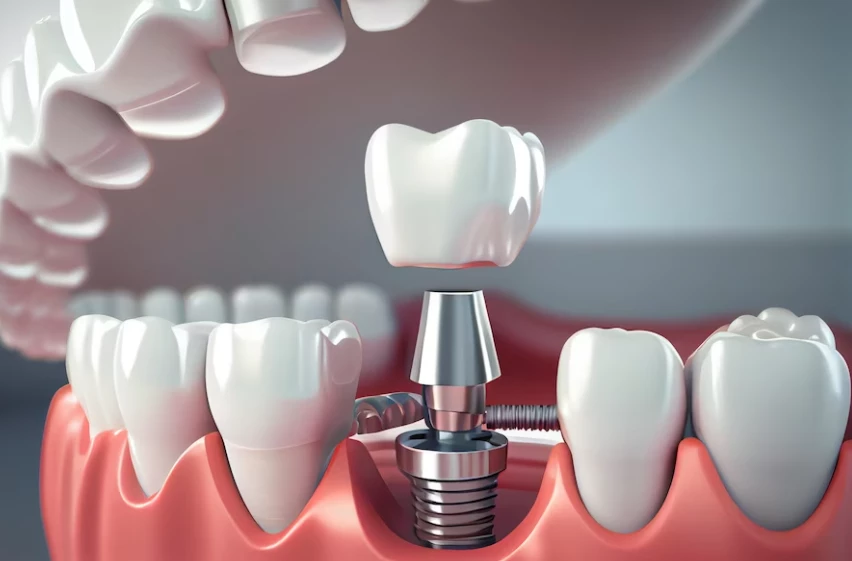
Dental implants are strong and stable, but unlike natural teeth, they don’t have ligaments that absorb pressure. Instead, they are anchored directly into your jawbone.
Here are the most common causes:
Micro-Movements at the Implant Connection
The abutment connects your crown to the implant. Small movements in this connection—especially when chewing—can sometimes create a faint clicking sound.
Slightly Loose Components
In rare cases, a screw or crown may not be fully tightened, causing a subtle shift when pressure is applied.
To better understand how implant components work together, read more abo
ut different types of dental implants.
Bite Alignment Issues
If your bite isn’t perfectly balanced, certain teeth may hit harder than others, which can lead to clicking sounds.
Hard Foods and Rigid Surfaces
Because implants lack cushioning, biting into hard foods like nuts or ice can produce sharper, more noticeable sounds.
Can Dental Implants Change How You Hear Sounds When Chewing?
Yes—and this often surprises patients.
Your mouth acts like a sound chamber. Natural teeth absorb vibrations, but implants transmit them more directly through the bone.
Here’s what happens:
- Increased awareness of chewing sounds
- Bone conduction effect (vibrations travel to your inner ear)
- Different textures produce different sound sensations
In many cases, these sounds are internal—meaning other people don’t hear them.
Is Clicking in Dental Implants Normal?
In many cases, yes—especially during the early stages after placement.
During the dental implant recovery timeline, your mouth and jaw are still adjusting to the implant and the way it interacts with your bite. Treatments within restorative dentistry are designed to integrate naturally with your bite over time.
However, if the clicking becomes persistent or uncomfortable, it’s best to have it evaluated by a dentist in Vancouver WA.
When Should You Be Concerned
You should see a dentist if you notice:
- Clicking that gets worse over time
- Pain or discomfort
- A loose or shifting crown
- Swelling or bleeding around the implant
These could indicate a minor mechanical issue or bite imbalance that needs adjustment. In some cases, a simple evaluation during a routine dental exam can quickly identify the cause.
How to Fix or Reduce Clicking Sounds
In most cases, the solution is simple:
- Tightening loose components
- Adjusting your bite
- Refining the crown fit
These are typically quick and non-invasive fixes when addressed early, especially when handled by experienced providers offering general dentistry services.
What to Expect Over Time
For many patients, the clicking sound:
- Becomes less noticeable
- Fades as you adapt
- Stops completely after adjustments
Your brain and jaw gradually adjust to the implant, making the sound feel like part of your normal chewing experience.
This long-term stability is one reason dental implants are often considered the future of permanent tooth replacement, providing a durable solution that closely resembles the function and feel of natural teeth.
Final Thoughts
Hearing a slight click from your dental implants can feel unusual—but in most cases, it’s nothing to worry about.
It’s simply a result of how implants interact with your jawbone and transmit sound differently than natural teeth.
With proper care and regular checkups, your implants should remain stable, comfortable, and long-lasting. You can also explore more helpful insights on the Cascade Dental blog to stay informed about your oral health.
Concerned About Your Dental Implant? We Can Help.
If your dental implant feels or sounds unusual, don’t wait—get it checked for peace of mind. At Cascade Dental, our experienced team specializes in dental implants and can quickly diagnose and resolve any issues.
Contact Cascade Dental today:
We’re located at 16703 SE McGillivray Blvd, Suite 100, Vancouver, WA 98683.

