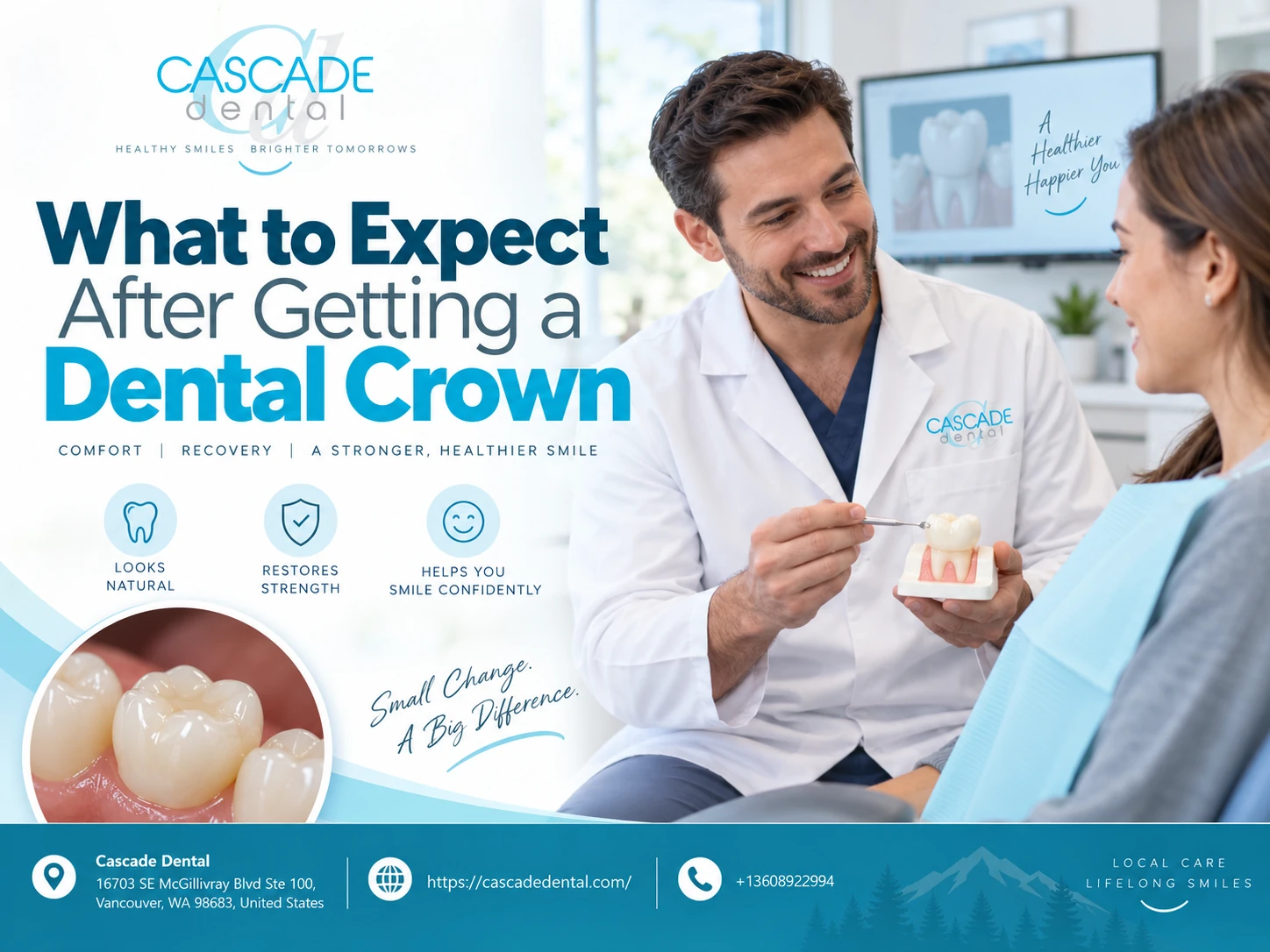
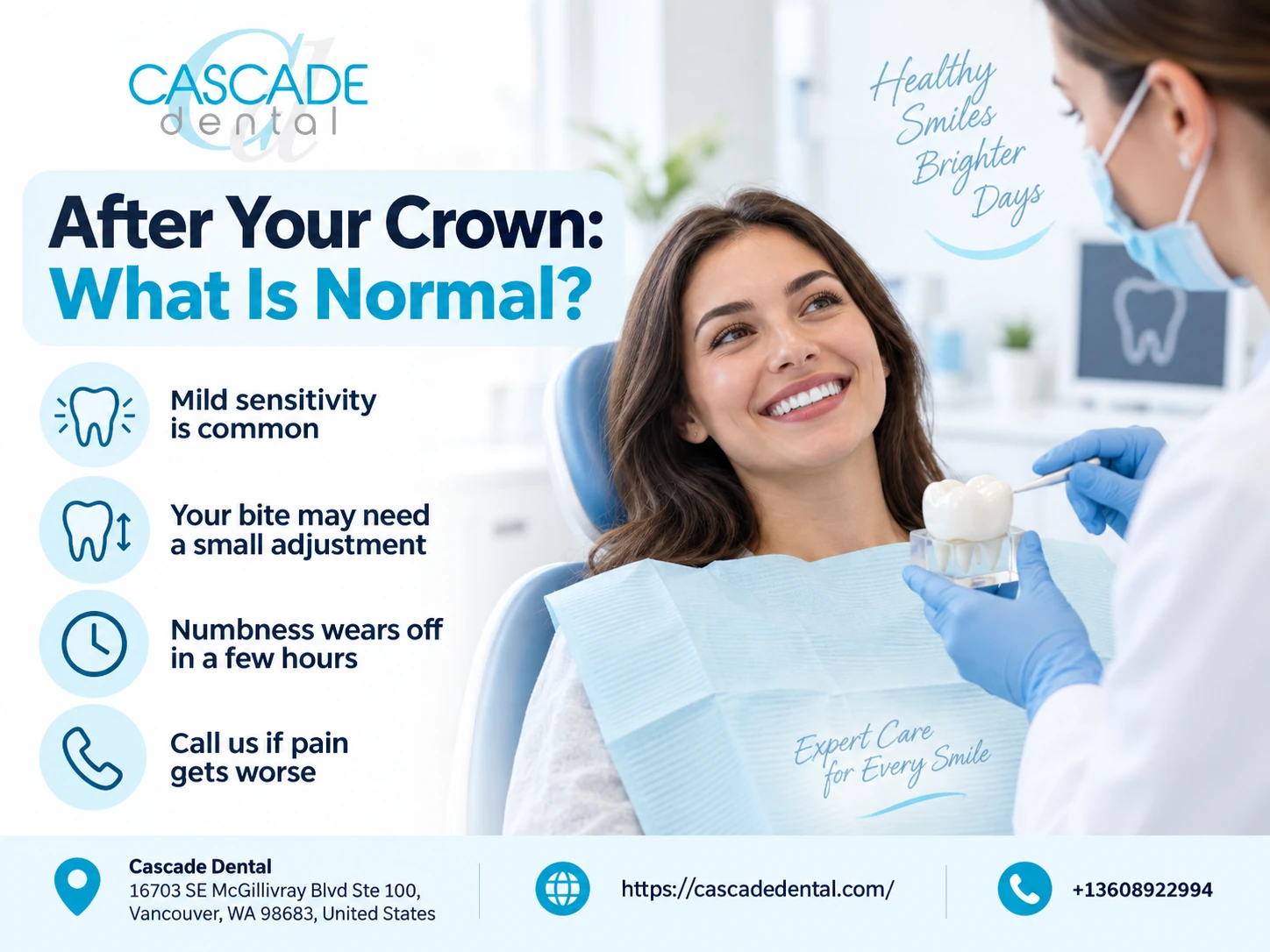
Receiving a dental crown is a common restorative procedure that helps strengthen and protect a damaged tooth. Whether your crown was placed because of a large cavity, a cracked tooth, or after root canal treatment, it’s normal to have questions about what recovery will feel like.
Fortunately, most patients return to their normal routine quickly. Some mild sensitivity or tenderness is common during the first few days, especially after the permanent crown has been cemented into place. These temporary symptoms usually improve as the tooth and surrounding tissues adjust.
Understanding what is considered normal after treatment, how to care for your new crown, and when to contact your dentist can help you recover comfortably while protecting your restoration for years to come.
Crown Just Placed? Know What Comes Next
Learn what to expect after your dental crown and get professional care if something doesn’t feel right.
What Is Normal After Getting a Dental Crown?
Most patients experience only minor discomfort after a dental crown is placed. The exact recovery depends on whether you received a temporary crown, a permanent crown, or additional procedures such as root canal treatment.
During the first few hours after your appointment, the local anesthetic may still be active. Numbness often lasts two to four hours, although the duration varies depending on the type of anesthetic used and the individual patient.
Until the numbness completely wears off, it’s best to avoid chewing. Biting your cheek, tongue, or lip without realizing it is a common complication while the mouth remains numb.
After the permanent crown is cemented, it’s normal to experience:
- Mild soreness around the gums
- Temporary sensitivity to hot or cold foods
- Slight tenderness when biting
- Minor irritation where the dentist worked around the tooth
- A brief adjustment period as the crown begins to feel natural
The American Dental Association notes that some temporary sensitivity after restorative dental procedures is common and generally improves over time as the tooth settles.
Many patients notice that the crown feels slightly different from their natural teeth during the first several days. This sensation usually fades as your tongue and bite become accustomed to the new restoration.
If a temporary crown is placed before your final appointment, it may feel less smooth or less precisely fitted than the permanent restoration. Temporary crowns are intended to protect the tooth while the final crown is being fabricated.
How Long Does Sensitivity Usually Last?
Mild sensitivity is one of the most common questions patients have after crown placement.
Most temporary sensitivity gradually improves within a few days to two weeks. In some cases, mild sensitivity may continue for several weeks before resolving completely, particularly if the tooth had extensive decay or required significant preparation.
You may notice sensitivity when:
- Drinking cold beverages
- Eating hot foods
- Breathing cold air
- Biting firmly
- Chewing on the treated tooth
This occurs because the tooth has undergone preparation, and the nerve inside the tooth may need time to recover from the procedure.
Patients who had deep decay or a very large filling before receiving the crown may experience a longer adjustment period because the pulp was already irritated before treatment.
Sensitivity should gradually improve rather than become more intense.
Some people also notice mild tenderness in the surrounding gums where the dentist placed retraction cord or worked near the gumline to prepare the tooth. This discomfort generally improves within several days as the tissue heals.
If your crown was placed after root canal treatment, temperature sensitivity is usually minimal because the pulp has already been removed. However, the surrounding tissues may still feel tender for a short time while healing.
If sensitivity continues to worsen instead of improving, or if severe pain develops, you should contact your dentist for further evaluation.
What Should You Eat After Getting a Crown?
Eating recommendations depend on whether you received a temporary crown or your permanent restoration.
Immediately After Treatment
Wait until the numbness has completely worn off before chewing.
If a permanent crown was cemented with traditional dental cement, your dentist may recommend waiting until the cement has reached its full strength before eating very hard or sticky foods. Follow the specific instructions provided during your appointment.
During the first day, softer foods are often the most comfortable, including:
- Yogurt
- Soup (not excessively hot)
- Scrambled eggs
- Oatmeal
- Pasta
- Mashed potatoes
- Rice
- Applesauce
- Smoothies
- Soft cooked vegetables
Chewing on the opposite side of the mouth during the first several hours may also improve comfort.
Foods to Avoid Initially
For the first day or two, it is wise to avoid foods that place excessive stress on the new restoration, including:
- Ice
- Hard candy
- Popcorn kernels
- Nuts
- Hard pretzels
- Tough steak
- Sticky caramel
- Taffy
- Chewing gum
Sticky foods are especially important to avoid if you have a temporary crown because they can accidentally pull it off.
The American College of Prosthodontists recommends avoiding sticky and hard foods while wearing a temporary crown.
Returning to Normal Eating
Once the crown feels comfortable and your dentist has confirmed that your bite is properly adjusted, most patients can return to their regular diet.
Even with a permanent crown, however, it is still advisable to avoid chewing ice, opening packages with your teeth, or biting extremely hard objects that could damage either the crown or the natural tooth underneath.
How to Care for Your New Dental Crown
Good oral hygiene is one of the best ways to protect both your crown and the underlying tooth.
Although the crown itself cannot develop a cavity, decay can still occur where the crown meets the natural tooth if plaque accumulates around the margin.
Daily care should include:
Brush Twice Daily
Use a soft-bristled toothbrush and fluoride toothpaste.
Brush carefully around the crown and along the gumline without using excessive force.
Floss Every Day
Flossing helps remove plaque between teeth where brushing cannot reach.
When cleaning around a newly cemented crown, gently guide the floss through the contact area and remove it carefully according to your dentist’s instructions rather than snapping it forcefully against the restoration.
Temporary crowns may require slightly different flossing techniques to reduce the risk of loosening the temporary restoration.
Keep Regular Dental Checkups
Routine examinations allow your dentist to evaluate:
- Crown margins
- Bite alignment
- Gum health
- Early signs of wear
- Any developing decay around the crown
Professional cleanings also help remove hardened plaque that cannot be removed with home brushing alone.
Protect Against Teeth Grinding
If you clench or grind your teeth during sleep, ask your dentist whether a custom nightguard would be appropriate.
Bruxism places repeated pressure on crowns and natural teeth, increasing the risk of wear or fracture over time.
The National Institute of Dental and Craniofacial Research notes that nighttime grinding can place significant stress on teeth and dental restorations.
Avoid Using Your Teeth as Tools
Do not use your teeth to:
- Open bottles
- Tear packaging
- Bite fingernails
- Crack nutshells
- Hold objects
These habits increase the risk of damaging both crowns and natural teeth.
With good oral hygiene and regular dental care, many crowns function successfully for many years.

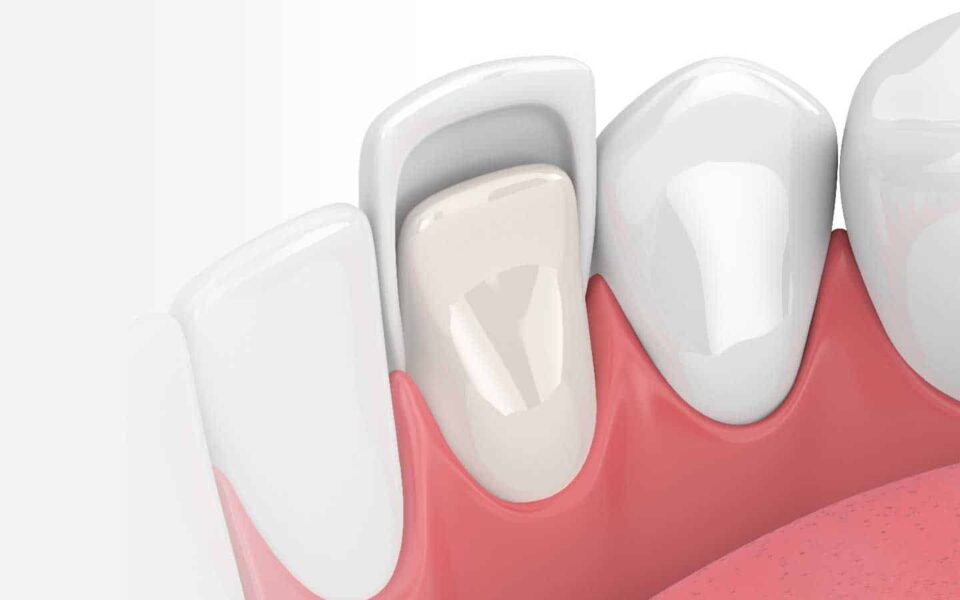
How Long Do Veneers Last and Are They Right for Me?
Thinking About Upgrading Your Smile with Veneers? Thinking about upgrading your smile with veneers? You’re not alone. Veneers are one…
What Warning Signs Should You Watch For?
While most patients recover without complications, certain symptoms should not be ignored.
Contact your dentist if you experience:
Severe or Increasing Pain
Some mild soreness is expected.
However, pain that becomes progressively worse or keeps you awake at night is not considered typical and should be evaluated.
Persistent Bite Problems
Your teeth should come together comfortably after the crown is placed.
If the crown feels too high, causes pain every time you bite, or changes the way your teeth fit together, it may require a minor adjustment.
An uneven bite can place excessive pressure on both the crowned tooth and surrounding teeth.
Swelling
Mild gum tenderness may occur initially.
Noticeable swelling of the gums, face, or jaw may indicate infection or another complication requiring prompt evaluation.
A Loose Crown
A permanent crown should remain securely attached.
If the crown feels loose, shifts while chewing, or repeatedly comes off, contact your dental office rather than attempting to permanently reattach it yourself.
Persistent Temperature Sensitivity
Sensitivity that steadily improves is reassuring.
Sensitivity that continues for several weeks without improvement, or becomes increasingly painful, may require additional examination.
Cracked or Chipped Crown
Although modern crown materials are durable, they are not indestructible.
A chipped or fractured crown should be evaluated before additional damage occurs.
When Should You Schedule a Follow-Up Visit?
Many patients will not need an additional appointment beyond their routine dental examinations unless a concern develops.
However, you should schedule a follow-up visit if:
- Your bite feels uneven
- Chewing remains uncomfortable after several days
- Your crown feels loose
- Your temporary crown comes off
- Sensitivity continues to worsen
- Swelling develops
- Pain interferes with normal eating or sleeping
- The crown chips or fractures
During a follow-up appointment, your dentist may:
- Check the bite
- Examine the crown margins
- Evaluate the surrounding gums
- Assess the health of the underlying tooth
- Take dental X-rays if needed
- Determine whether further adjustment or treatment is necessary
Minor bite adjustments are common and can often be completed quickly if the crown feels slightly high after placement.
Even if everything feels comfortable, regular dental examinations remain important. These visits allow your dentist to monitor the crown, surrounding teeth, and gum health while identifying any problems before they become more significant.
How Cascade Dental Can Help
At Cascade Dental, we want every patient to feel confident about caring for a new dental crown after treatment.
Before you leave your appointment, our team will explain what you can expect during recovery, including normal sensitivity, eating recommendations, and proper home care. We encourage patients to ask questions so they know how to protect their restoration during the adjustment period.
If you experience ongoing discomfort, changes in your bite, or concerns about how your crown feels, we can evaluate the restoration and determine whether an adjustment or additional care is needed.
Routine dental examinations also allow us to monitor the crown over time, assess the surrounding gums, and ensure the restoration continues to function properly.
With good home care, regular preventive visits, and prompt attention to any concerns, most dental crowns provide comfortable function and long-lasting protection for many years.
FAQs
How long does it take to recover after getting a dental crown?
Most patients resume normal daily activities immediately after treatment. Mild sensitivity or tenderness often improves within several days to two weeks, although recovery varies depending on the condition of the tooth and the treatment performed.
Is it normal for my crown to feel strange at first?
Yes. A new crown may initially feel slightly different from your natural teeth. Your tongue and bite typically adjust within several days as the restoration begins to feel more natural.
How long will my mouth stay numb?
Numbness commonly lasts between two and four hours, although this varies depending on the anesthetic used and individual response. Avoid chewing until normal feeling returns.
Can I eat immediately after getting a permanent crown?
It is usually best to wait until the numbness has worn off. Your dentist may also recommend waiting for the cement to fully set before eating hard or sticky foods. Follow the instructions provided at your appointment.
Why is my crowned tooth sensitive to cold?
Temporary sensitivity can occur because the tooth has been prepared and the nerve may need time to settle. Mild cold sensitivity generally improves over the first several days or weeks. Persistent or worsening sensitivity should be evaluated.
Is it normal if my bite feels uneven?
No. Your teeth should come together comfortably. If the crown feels too high or chewing causes pain, contact your dentist. A simple bite adjustment often resolves the problem.
How should I floss around a new crown?
Continue flossing every day. Slide the floss gently between the teeth and remove it according to your dentist’s instructions to avoid placing unnecessary stress on a temporary restoration.
Can a dental crown get a cavity?
The crown itself cannot decay, but the natural tooth underneath can develop decay around the edge of the crown if plaque accumulates. Good oral hygiene and routine dental visits help reduce this risk.
How long do dental crowns usually last?
Many dental crowns last 10 to 15 years or longer with proper care, although longevity depends on the material used, oral hygiene, bite forces, teeth grinding, and regular dental maintenance.
What should I do if my crown falls off?
Keep the crown if possible and contact your dentist promptly. Avoid chewing on the affected tooth until it has been evaluated. Do not attempt to permanently reattach the crown with household adhesives.
Should I wear a nightguard if I grind my teeth?
If you clench or grind your teeth, your dentist may recommend a custom nightguard. It can help reduce excessive pressure on both your crown and your natural teeth while you sleep.
Concerned About Your New Dental Crown?
Pain, sensitivity, or bite problems? Contact our dental team for prompt help and peace of mind.