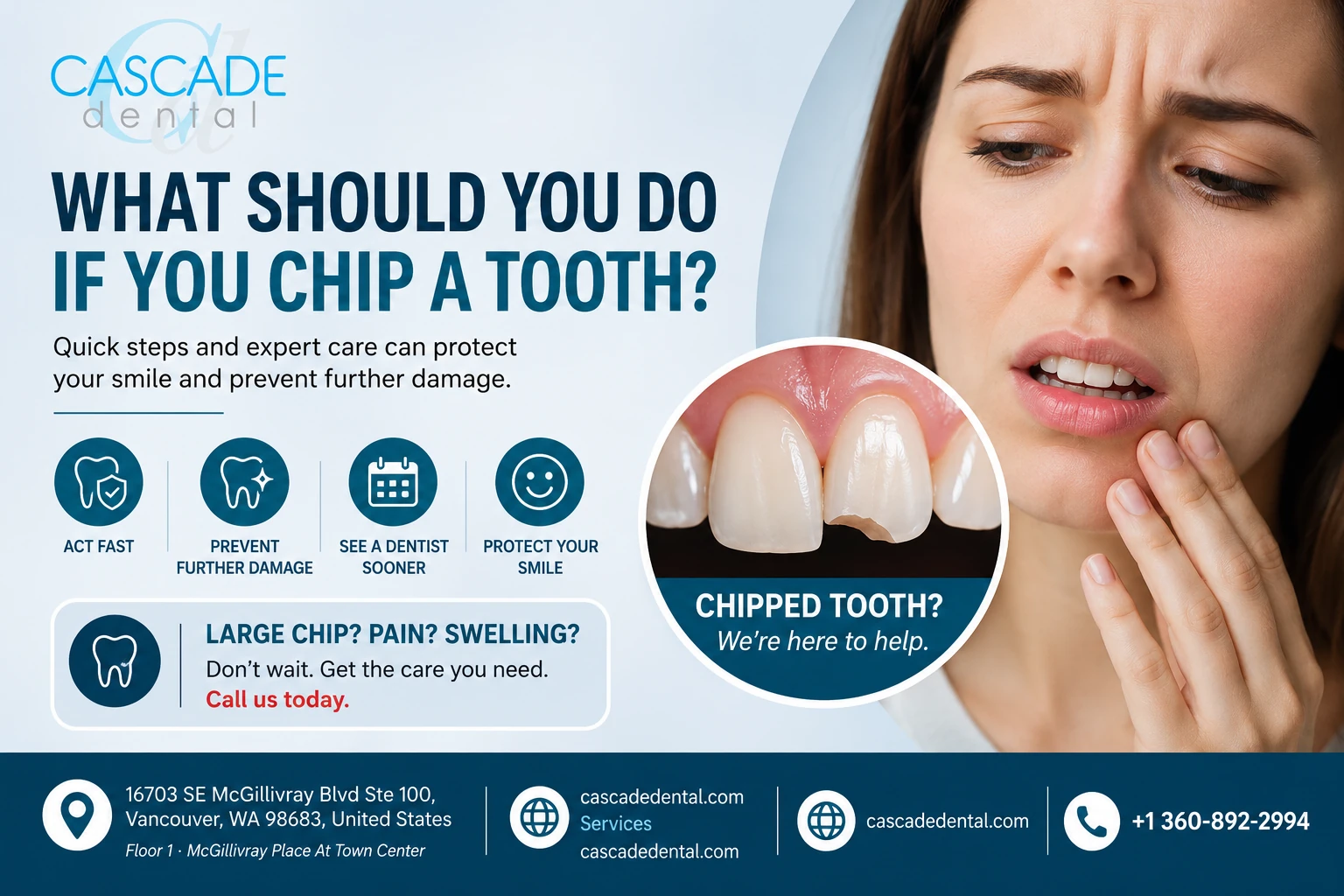
If you chip a tooth, rinse your mouth with warm water, avoid chewing on that side, and contact a dentist for guidance. Some small chips may be simple to repair, but larger fractures, pain, bleeding, or sensitivity can mean the tooth needs prompt professional care.
A chipped tooth can happen from biting something hard, a sports injury, a fall, teeth grinding, or decay that weakens the tooth structure. Even when the chip looks minor, it is important to have it evaluated because cracks can spread, sharp edges can irritate your mouth, and bacteria can enter exposed areas of the tooth.
Fast Answer: What Should You Do If You Chip a Tooth?
If you chip a tooth, rinse your mouth gently with warm water, save any broken pieces if possible, and avoid chewing on the affected side. While small chips may not require immediate emergency care, larger fractures, severe pain, bleeding, swelling, or a loose tooth should be evaluated by a dentist as soon as possible.
If the tooth is painful, sensitive, sharp, cracked, or visibly damaged, do not wait to see if it improves on its own. A dental exam can determine whether the damage is limited to the enamel or whether deeper layers of the tooth are involved.
The sooner the tooth is checked, the better the chance of preventing more serious problems.
What to Do Right Away
Taking the right steps can help protect the tooth and reduce discomfort until you can see a dentist. Try to stay calm and avoid testing the tooth with your tongue, fingers, or by biting down.
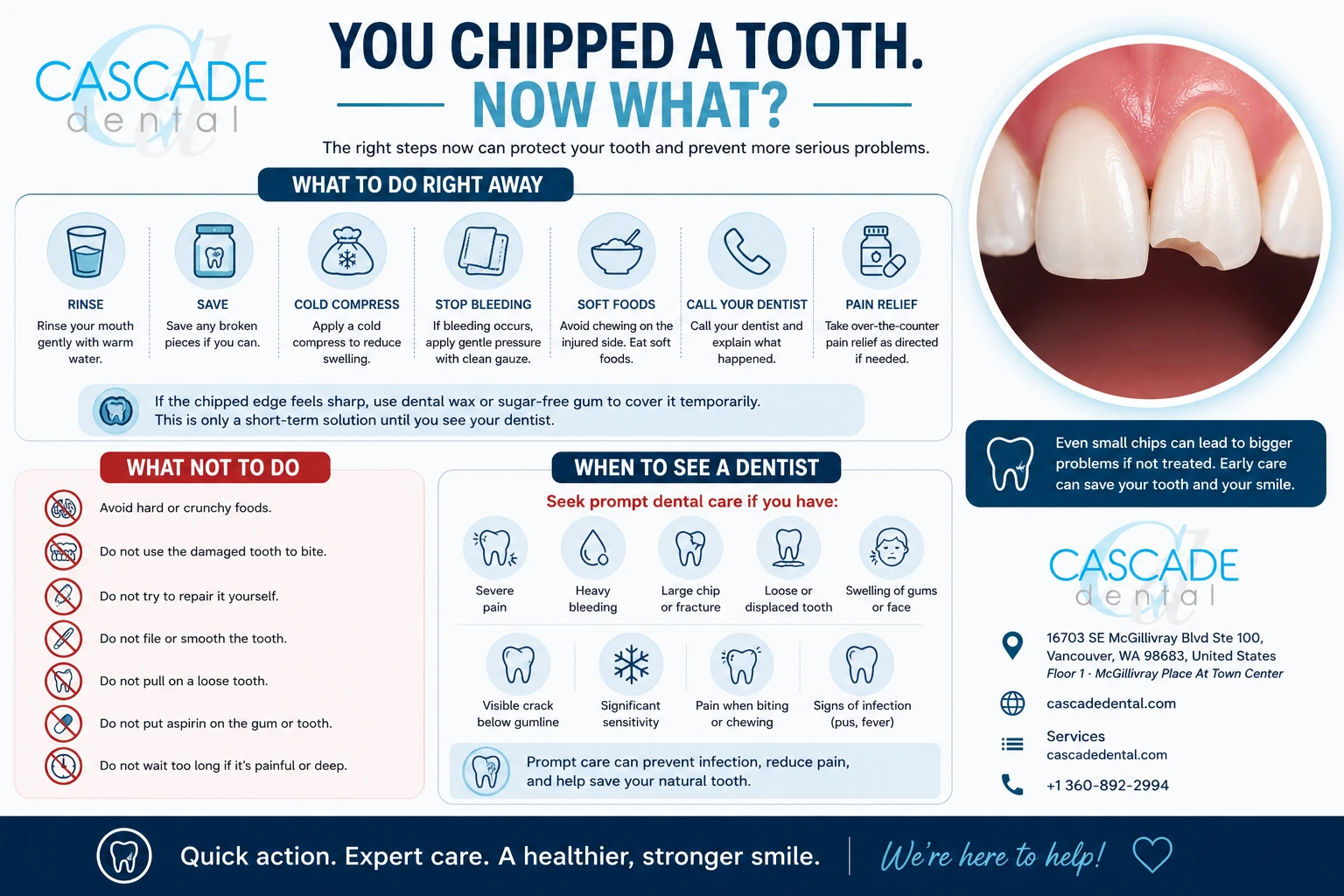
Follow these steps:
- Rinse your mouth gently with warm water
- Save any broken pieces of the tooth if you can
- Apply a cold compress to reduce swelling
- If bleeding occurs, apply gentle pressure with clean gauze
- Avoid chewing on the injured tooth
- Eat soft foods until you receive treatment
- Call your dentist and explain what happened
- Take over-the-counter pain relief only as directed on the label or by your healthcare provider
If the chipped edge feels sharp, dental wax or sugar-free chewing gum may temporarily cover the area to help prevent irritation to your tongue or cheek. This is only a short-term measure. It does not repair the tooth or protect it from deeper damage.
If you saved a broken piece, place it in a clean container and bring it to your appointment. Your dentist may or may not be able to use it, but it can help them understand the extent of the break.
What Not to Do
Certain actions can make the injury worse. A chipped tooth may feel strange, and it can be tempting to keep touching it or trying to smooth it yourself. Avoid doing anything that could damage the tooth further or irritate the surrounding tissue.
Avoid:
- Chewing hard or crunchy foods
- Using the damaged tooth to bite
- Ignoring persistent pain or sensitivity
- Trying to repair the tooth yourself with household glue or other materials
- Filing the tooth with a nail file or tool
- Pulling on a loose tooth
- Using aspirin directly on the gum or tooth
- Waiting too long if the chip is painful or deep
Only a dental professional can determine the extent of the damage and provide appropriate treatment. Household adhesives and do-it-yourself repair kits can harm the tooth, gums, or surrounding tissues. They may also make professional repair more difficult.
When Is a Chipped Tooth an Emergency?
Not every chipped tooth is a dental emergency, but some situations require prompt care. A small chip with no pain may be able to wait for a scheduled dental appointment. A larger chip, severe pain, bleeding, or swelling should be handled more urgently.
Seek prompt dental care if you experience:
- Severe or persistent tooth pain
- Heavy bleeding
- A large portion of the tooth has broken off
- A loose or displaced tooth
- Swelling of the gums or face
- A visible crack extending below the gumline
- Sensitivity that worsens over time
- Pain when biting or releasing pressure
- Signs of infection, such as pus, fever, or facial swelling
These symptoms may indicate damage to the tooth’s inner structures and should be evaluated quickly. When the pulp inside the tooth is exposed or injured, bacteria can enter and cause infection. Early treatment may help save the tooth and reduce the need for more complex care.
If the injury happened from trauma to the face or jaw and you have severe swelling, difficulty breathing, uncontrolled bleeding, or symptoms of a head injury, seek emergency medical care first.
Why Does a Chipped Tooth Hurt?
A chipped tooth may hurt because the damage exposes sensitive inner layers of the tooth. The outer layer, called enamel, protects the tooth. Under the enamel is dentin, which contains tiny tubules that connect to the nerve area. When dentin is exposed, hot, cold, sweet foods, air, or pressure can cause sensitivity.
Pain may also occur if:
- The crack reaches deeper into the tooth
- The nerve is irritated or exposed
- The tooth was weakened by decay
- The bite now places pressure on the damaged area
- The chip caused trauma to the surrounding gum or bone
Pain is a sign that the tooth needs attention. Even if the discomfort comes and goes, it is better to have the tooth checked before the damage worsens.
Can a Small Chip Wait?
A very small chip may not need same-day emergency care, especially if there is no pain, bleeding, swelling, or sensitivity. However, it should still be examined by a dentist. Small chips can create rough edges, affect your bite, or make the tooth more vulnerable to further damage.
You may be able to wait for a regular dental appointment if:
- The chip is small
- There is no pain
- There is no swelling
- The tooth is not loose
- The edge is not cutting your tongue or cheek
- You can avoid chewing on that side
Even then, schedule a visit rather than ignoring it. A small repair may be simpler, faster, and more affordable than waiting until the tooth breaks more.
How Can a Chipped Tooth Be Repaired?
Treatment depends on the size and location of the chip, whether the tooth is painful, and whether deeper tooth structures are involved. Your dentist will examine the tooth and may take X-rays to check for cracks, decay, root damage, or infection.
Common repair options include dental bonding, crowns, veneers, and root canal treatment. In some cases, smoothing a very minor chip may be enough.
Dental Bonding
Small chips can often be repaired with tooth-colored composite resin. Dental bonding is commonly used when the damage is minor and enough healthy tooth structure remains.
During bonding, the dentist applies a tooth-colored resin to the chipped area, shapes it, and hardens it with a special curing light. The material is then polished so it blends with the surrounding tooth.
Bonding can help:
- Restore the tooth’s shape
- Smooth sharp edges
- Improve appearance
- Protect exposed areas
- Restore normal function for minor chips
Bonding is often a conservative option because it usually requires little removal of natural tooth structure.
Dental Crowns
If a significant portion of the tooth has been damaged, a dental crown may be recommended to strengthen and protect it. A crown covers the visible part of the tooth and helps restore its shape, size, and chewing function.
A crown may be needed if:
- The chip is large
- The tooth is weakened
- A filling would not provide enough support
- The tooth has existing cracks
- The tooth has had root canal treatment
- The damage affects chewing strength
Crowns are commonly used on back teeth because molars and premolars handle heavy biting forces. They may also be used on front teeth when the damage is too large for bonding alone.
Dental Veneers
For chips affecting the front teeth, veneers may be an option when cosmetic improvement is the primary goal. A veneer is a thin covering placed over the front surface of the tooth to improve its shape, color, and appearance.
Veneers may be considered when:
- The chip affects a visible front tooth
- The tooth is otherwise healthy
- The patient wants a cosmetic improvement
- There are additional concerns with shape, size, or discoloration
Not every chipped tooth is a good candidate for a veneer. Your dentist will evaluate the amount of remaining tooth structure and your bite before recommending this option.
Root Canal Treatment
If the chip exposes the tooth’s pulp or causes infection, root canal treatment may be necessary before restoring the tooth. The pulp contains nerves and blood vessels inside the tooth. When it becomes exposed or infected, pain and swelling can occur.
A root canal may be recommended if you have:
- Severe tooth pain
- Lingering sensitivity to hot or cold
- Swelling around the tooth
- A deep fracture
- Darkening of the tooth
- Signs of infection on an X-ray
After root canal treatment, the tooth often needs a crown to protect it and restore strength.
What If the Chipped Tooth Is a Front Tooth?
A chipped front tooth can be especially stressful because it affects your smile. The good news is that front teeth can often be repaired with natural-looking materials.
Depending on the size of the chip, treatment may include:
- Smoothing a tiny rough edge
- Tooth-colored bonding
- A veneer
- A crown
- Root canal treatment if the pulp is damaged
If the chip is visible, avoid trying to whiten or reshape the tooth yourself. A dentist can match the repair to your natural tooth color and shape it so it blends with your smile.
What If the Chipped Tooth Is a Back Tooth?
A chipped molar or premolar may not be as visible, but it still needs attention. Back teeth absorb strong chewing forces, so even a small crack or chip can worsen if you keep biting on it.
A chipped back tooth may need:
- A filling
- Bonding
- A crown
- An onlay
- Root canal treatment if the damage is deep
Until your appointment, avoid chewing on that side. Hard foods, sticky foods, and pressure can cause the chip to spread.
Can a Chipped Tooth Get Worse?
Yes, a chipped tooth can get worse without treatment. A small chip can turn into a larger fracture, especially if the tooth is weakened or exposed to repeated chewing pressure.
Possible complications include:
- Increased sensitivity
- Tooth decay
- Cracks spreading deeper
- Pain when biting
- Infection
- Damage to the nerve
- Need for more extensive treatment
- Tooth loss in severe cases
Early treatment helps protect the remaining tooth structure. It can also reduce the risk of needing a root canal, crown, or extraction later.
When Should You Call a Dentist?
Contact a dentist as soon as possible if you are unsure how serious the chip is. Even a small chip can become more serious if bacteria enter the damaged area or if the fracture spreads.
Call a dentist if:
- The tooth is painful or sensitive
- The chip has created a sharp edge
- The tooth is cracked as well as chipped
- The damaged area affects your bite
- You are unsure how severe the injury is
- The tooth looks darker after the injury
- The tooth feels loose
- You notice swelling or bleeding
- The chip happened because of a fall, accident, or sports injury
Your dentist can tell you whether you need urgent care or a regular appointment based on your symptoms.
How Can You Prevent Chipped Teeth?
Not every dental injury can be prevented, but you can lower your risk by protecting your teeth from unnecessary stress.
To help prevent chipped teeth:
- Avoid chewing ice, pens, fingernails, or hard candy
- Wear a mouthguard for sports
- Ask about a night guard if you grind your teeth
- Do not use your teeth to open packages
- Treat cavities before they weaken the tooth
- Replace large failing fillings when recommended
- Keep up with routine dental exams
- Address bite problems if your dentist notices uneven wear
Strong teeth are less likely to chip. Regular dental visits help identify weak spots, cracks, decay, and worn restorations before they lead to injury.
Protect Your Smile After a Dental Injury
A chipped tooth may seem minor, but early evaluation helps prevent additional damage and increases the chances of saving the natural tooth. Prompt treatment can restore both the appearance and strength of your smile, helping you avoid more complex dental procedures in the future.
If you chipped a tooth in Vancouver, Cascade Dental can examine the damage, explain your treatment options, and help restore your comfort and confidence. Whether the chip is small, painful, sharp, or affecting your bite, getting care early is the best way to protect your smile.