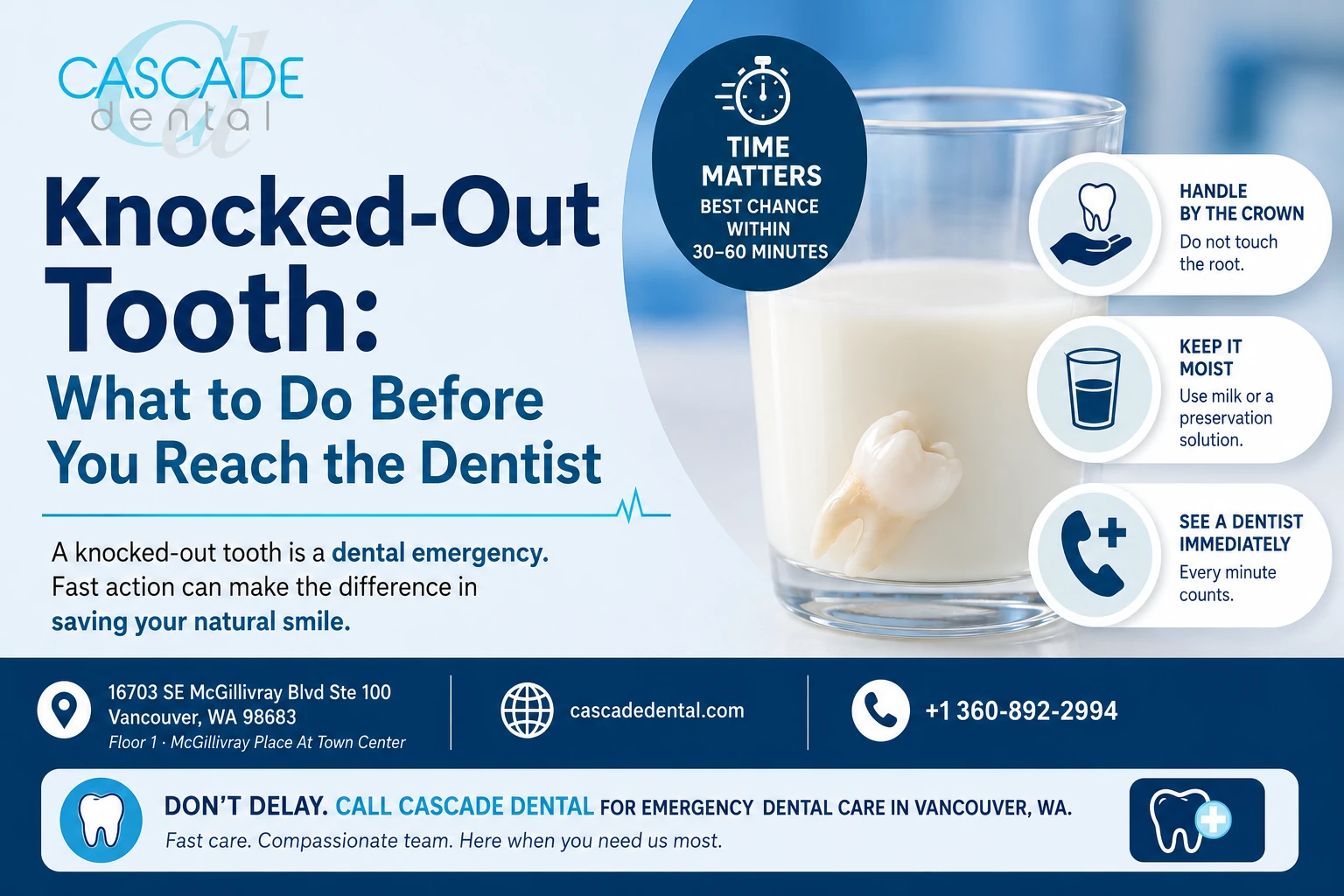
A knocked-out tooth is a dental emergency, and the first few minutes matter. If an adult tooth comes out completely, handling it carefully, keeping it moist, and getting emergency dental care quickly may improve the chance of saving it.
For patients in Vancouver, WA, a knocked-out tooth can happen during a fall, sports injury, accident, or sudden impact to the mouth. The situation can feel overwhelming, but knowing what to do before you reach the dentist can help protect the tooth and reduce the risk of further damage.
Knocked-Out Tooth? Get Help Now.
Fast treatment may improve the chance of saving your tooth. Call for emergency dental care.
Fast Answer: What Should You Do If a Tooth Is Knocked Out?
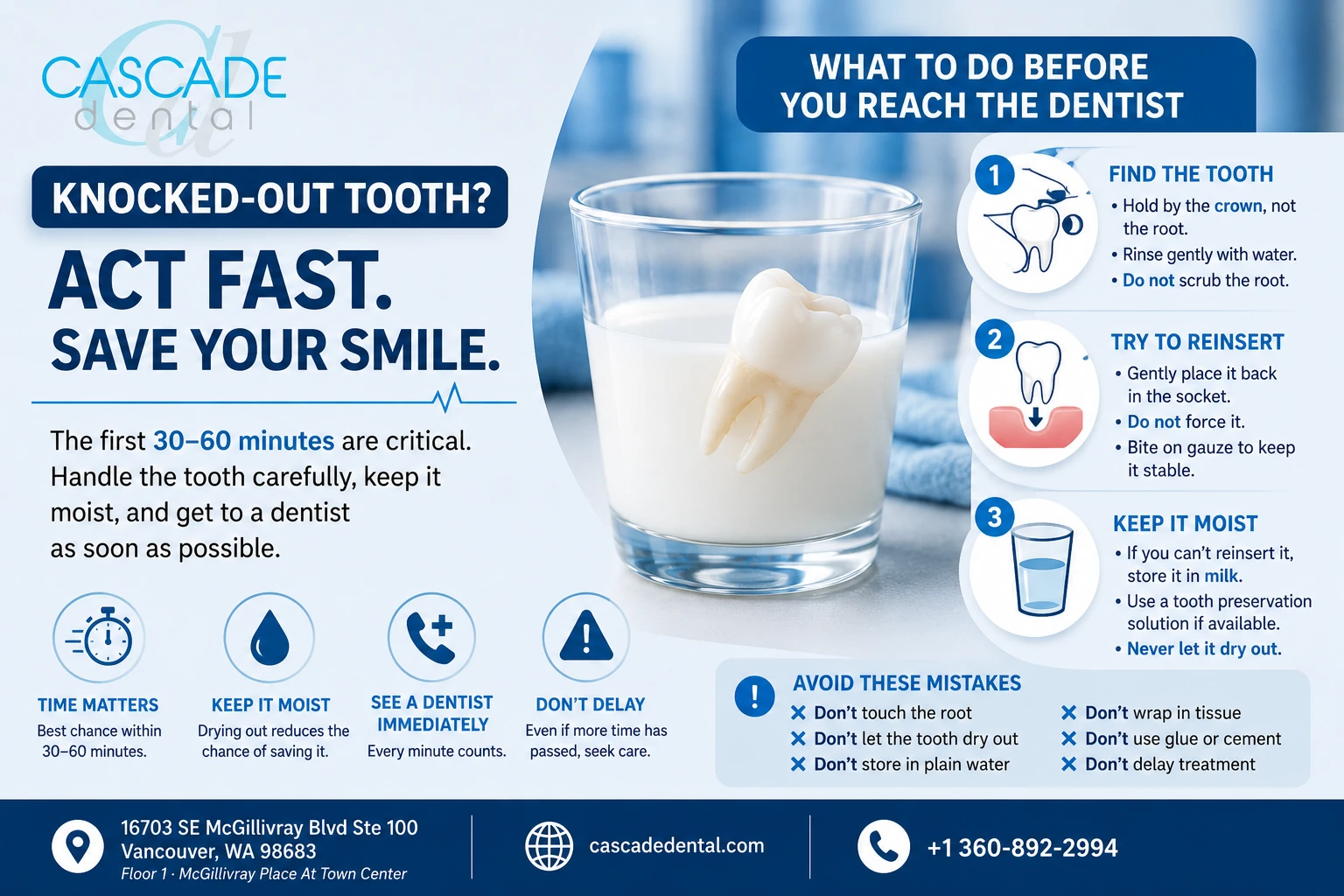
If an adult tooth is knocked out, pick it up by the crown, which is the visible chewing surface, not the root. If it is dirty, gently rinse it with water for a few seconds without scrubbing. If possible, place the tooth back into its socket. If that is not possible, keep it moist in milk or a tooth preservation solution and seek emergency dental care immediately.
The best chance of saving the tooth is usually within 30 to 60 minutes. Even if more time has passed, still call a dentist right away. In some cases, treatment may still be possible, especially if the tooth has been kept moist and handled properly.
Step 1: Find the Tooth
Locate the tooth as quickly as possible. Time is important, but so is careful handling. The root surface contains delicate cells that may help the tooth reattach. Scrubbing, drying, or touching the root can damage those cells and reduce the chance of successful reimplantation.
When handling the tooth:
- Hold the tooth by the crown only
- Avoid touching the root
- Do not scrub or scrape the tooth
- Do not use soap, alcohol, peroxide, or disinfectants
- If needed, rinse gently with clean water for a few seconds
- Do not wrap the tooth in a dry tissue or paper towel
Protecting the root surface helps improve the chances of successful reimplantation. If the tooth fell on the ground, rinse away visible dirt gently, but do not overclean it. The goal is to remove debris without damaging the root.
Step 2: Try to Reinsert the Tooth
If the knocked-out tooth is a permanent adult tooth and you are able to do so safely, try to place it back into the socket. This may sound intimidating, but getting the tooth back into its natural position quickly can help protect the root surface.
To reinsert the tooth:
- Gently place it back into the socket
- Make sure it is facing the correct direction
- Do not force it into place
- Bite gently on clean gauze or a soft cloth to help keep it stable
- Keep pressure light and steady until you reach the dentist
If the tooth does not slide back into place easily, do not force it. If the person is young, upset, at risk of swallowing the tooth, or unable to cooperate safely, it is better to keep the tooth moist and seek emergency dental care right away.
If reinserting the tooth is not possible, move to the next step and focus on keeping it from drying out.
Step 3: Keep the Tooth Moist
Never allow the tooth to dry out. A knocked-out tooth needs moisture to help preserve the living cells on the root surface. Dry storage can lower the chance that the tooth can be successfully replanted.
If you cannot place the tooth back in the socket, store it in:
- Cold milk
- A tooth preservation solution, if available
- Saliva by placing it inside your cheek, only if you can do so safely without swallowing it
For children or anyone who may accidentally swallow the tooth, do not place it inside the cheek. Instead, use milk or a tooth preservation kit if available.
Avoid storing the tooth in plain water for long periods, as this may reduce the chances of successful reattachment. Water is better than letting the tooth dry out completely, but milk or a tooth preservation solution is usually preferred when available.
Why Timing Matters
A knocked-out tooth is a true dental emergency because the tooth and surrounding tissues begin to change quickly once the tooth leaves the socket. The sooner treatment begins, the greater the chance the tooth can be successfully replanted.
Seeking care within the first 30 to 60 minutes generally offers the best opportunity to save the tooth. This does not mean the tooth cannot be treated after that window, but the chances may decrease the longer it remains out of the mouth, especially if it has dried out.
Even if more time has passed, you should still contact a dentist immediately. The dentist may still be able to reimplant the tooth, stabilize the area, treat the injury, or discuss replacement options if saving the tooth is not possible.
What Should You Do About Bleeding?
Bleeding is common after a tooth is knocked out. Try to stay calm and control the bleeding while making arrangements to get to the dentist.
To manage bleeding:
- Rinse gently with warm water if needed
- Place clean gauze over the socket
- Apply gentle pressure by biting down
- Keep the head slightly elevated
- Use a cold compress on the outside of the cheek to reduce swelling
Do not poke the socket with your fingers or a toothpick. Do not rinse forcefully or repeatedly, as this may disturb the area and increase bleeding. If bleeding is heavy, does not slow with pressure, or is related to a larger facial injury, seek emergency medical care.
What Should You Avoid After a Tooth Is Knocked Out?
Certain actions can make the injury worse or reduce the chance of saving the tooth. Until you reach the dentist, focus on protecting the tooth, controlling bleeding, and avoiding unnecessary pressure.
Avoid:
- Touching the root of the tooth
- Scrubbing the tooth clean
- Letting the tooth dry out
- Wrapping the tooth in tissue or a napkin
- Using household glue or dental cement
- Chewing on the injured side
- Drinking very hot beverages
- Delaying care to “see what happens”
- Reimplanting a baby tooth
A knocked-out tooth needs professional care. Even if you manage to place the tooth back into the socket, you still need to see a dentist immediately so the tooth can be evaluated, stabilized, and monitored.
What Will the Dentist Do?
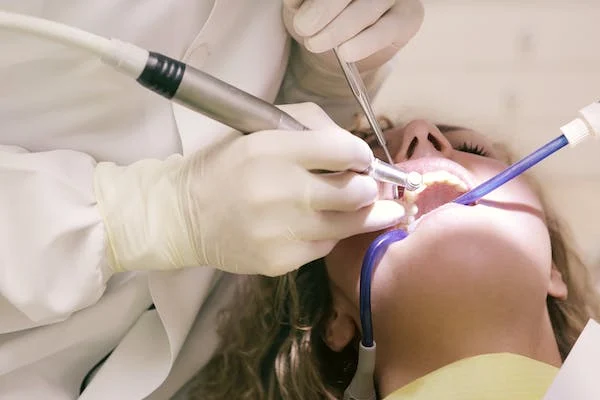
Your dentist will evaluate both the tooth and the surrounding tissues. They will check whether the tooth can be replanted or stabilized, whether other teeth were injured, and whether the jaw, gums, or bone were affected.
Treatment may include:
- Cleaning the tooth and socket
- Repositioning the tooth
- Stabilizing the tooth with a flexible splint
- Taking dental X-rays to check for additional injuries
- Monitoring healing over several follow-up visits
- Recommending additional treatment, such as root canal therapy, if needed
A flexible splint may be used to hold the tooth in place while the surrounding tissues begin to heal. This splint usually attaches the injured tooth to nearby teeth for support. Your dentist will explain how long the splint should remain and what foods or habits to avoid during healing.
The exact treatment depends on the condition of the tooth, how long it was out of the mouth, whether it was kept moist, and the extent of the injury.
Will a Knocked-Out Tooth Need a Root Canal?
Many knocked-out permanent teeth need root canal treatment after reimplantation, especially if the tooth root is fully developed. This is because the tooth’s nerve and blood supply are often damaged when the tooth is completely displaced.
Root canal treatment may help prevent infection and preserve the tooth after it has been stabilized. Your dentist will monitor the tooth carefully and recommend treatment based on the tooth’s development, symptoms, X-rays, and healing response.
Signs that additional treatment may be needed include:
- Tooth darkening
- Pain or swelling
- Sensitivity that worsens
- Infection around the root
- Changes seen on dental X-rays
Follow-up visits are very important after a knocked-out tooth. Even if the tooth feels better, the dentist needs to monitor healing over time. Knowing the signs you need immediate dental care can also help you recognize when symptoms after an injury should not be ignored.

Where Can I Find an Emergency Dentist Near Me Right Now?
A dental emergency never seems to happen at a good time. One minute you are fine, and the next you…
What About Baby Teeth?
If a baby tooth is knocked out, do not try to place it back into the socket. Reimplanting a baby tooth may damage the developing permanent tooth underneath.
Instead:
- Control any bleeding with clean gauze
- Keep your child comfortable
- Apply a cold compress if there is swelling
- Save the tooth if you can, but do not reinsert it
- Contact your dentist promptly for evaluation and guidance
A dentist should still examine your child’s mouth after a baby tooth is knocked out. They can check for injury to the gums, lips, neighboring teeth, and developing adult tooth. They can also explain what to expect as the area heals.
What If the Tooth Is Loose but Not Knocked Out?
A tooth that is loose after an injury also needs prompt dental evaluation. It may have been pushed out of position, partially displaced, or damaged below the gumline.
Call a dentist right away if a tooth is:
- Loose
- Shifted forward, backward, or sideways
- Painful when biting
- Bleeding around the gumline
- Sensitive after trauma
- Cracked or chipped
Do not wiggle the tooth or try to push it back forcefully. Avoid chewing on that side and let the dentist determine the best way to stabilize and treat it.
What If the Tooth Is Broken Instead of Knocked Out?
Sometimes an injury breaks part of the tooth rather than knocking it out completely. A broken or chipped tooth may still be urgent, especially if there is pain, bleeding, exposed inner tooth structure, or a large missing piece. Knowing what to do if you chip a tooth can help you protect the damaged area until a dentist can evaluate it.
If part of the tooth breaks:
- Rinse your mouth gently
- Save any broken pieces
- Avoid chewing on the injured tooth
- Cover sharp edges with dental wax if needed
- Call a dentist for guidance
Treatment may include dental bonding, a filling, a crown, or root canal therapy if the inner pulp is exposed. A dentist can determine how deep the fracture goes and whether the tooth can be restored.
When Should You Call an Emergency Dentist?
Seek immediate dental care if a permanent tooth has been completely knocked out. This is one of the clearest situations where fast dental treatment can make a major difference.
You should also seek urgent care if:
- A tooth is loose after an injury
- You have heavy bleeding
- You experience severe pain or swelling
- Multiple teeth have been injured
- The injury occurred during sports, a fall, or a vehicle accident
- A tooth has been pushed out of position
- The jaw feels painful or misaligned
- There are cuts to the lips, cheeks, or gums
- You are unsure whether the tooth is permanent or baby
Prompt treatment gives your dentist the best chance to save the tooth and prevent additional complications.
If the injury involves loss of consciousness, suspected jaw fracture, uncontrolled bleeding, difficulty breathing, or a serious head or facial injury, seek emergency medical care first.
How Can You Prevent Knocked-Out Teeth?
Dental injuries are not always preventable, but you can lower the risk by protecting your teeth during activities that commonly cause trauma.
To help prevent knocked-out teeth:
- Wear a mouthguard during sports
- Use a custom mouthguard if recommended
- Avoid using teeth to open packages or bottles
- Treat weakened or damaged teeth early
- Wear a seatbelt in vehicles
- Keep walkways clear to reduce fall risks
- Address teeth grinding if it is weakening your teeth
Sports-related dental injuries are common, especially in contact sports. A mouthguard can help absorb impact and protect teeth, lips, cheeks, and jaw joints.
How Should You Care for the Tooth After Reimplantation?
If the dentist is able to replant the tooth, aftercare will be important. The tooth and surrounding tissues need time to heal, and follow-up care helps reduce the risk of complications.
Your dentist may recommend that you:
- Eat soft foods for a period of time
- Avoid biting directly on the injured tooth
- Brush gently around the area
- Use a recommended mouth rinse
- Take medication only as prescribed or directed
- Avoid sports until cleared
- Return for all follow-up visits
- Watch for pain, swelling, or tooth color changes
Do not skip follow-up appointments. A replanted tooth can look stable at first but still need monitoring for root healing, infection, or other changes.
Act Quickly to Protect Your Smile
A knocked-out tooth requires immediate attention, but taking the right steps before you arrive at the dental office can make a significant difference. Handling the tooth carefully, keeping it moist, and seeking emergency dental care as soon as possible can improve the chances of preserving your natural smile.
If you or your child has a knocked-out tooth in Vancouver, WA, contact Cascade Dental right away for guidance. Fast action can help protect the tooth, reduce complications, and give your dentist the best chance to restore your smile.
Dental Emergency? Don’t Wait.
A knocked-out tooth needs prompt attention. Call now and get the care you need.