Many people assume that cavities always cause noticeable pain. In reality, tooth decay often develops gradually and may not produce obvious symptoms during its earliest stages. By the time a cavity becomes painful, the decay may have already progressed deeper into the tooth.
The good news is that there are often early warning signs. Understanding these signs can help you recognize potential concerns sooner and seek professional evaluation before more extensive treatment becomes necessary.
Learning what to watch for is an important part of protecting your long-term oral health.
Think You Have a Cavity? Don't Wait.
Early treatment can stop decay before it becomes painful or costly. Schedule your dental exam today.
What Are the Early Signs of a Cavity?
Cavities typically begin when bacteria in the mouth produce acids that gradually weaken and damage tooth enamel.
One of the most important things to understand about early cavity signs is that tooth decay is not always painful at first. In many cases, cavities develop quietly before noticeable discomfort appears.
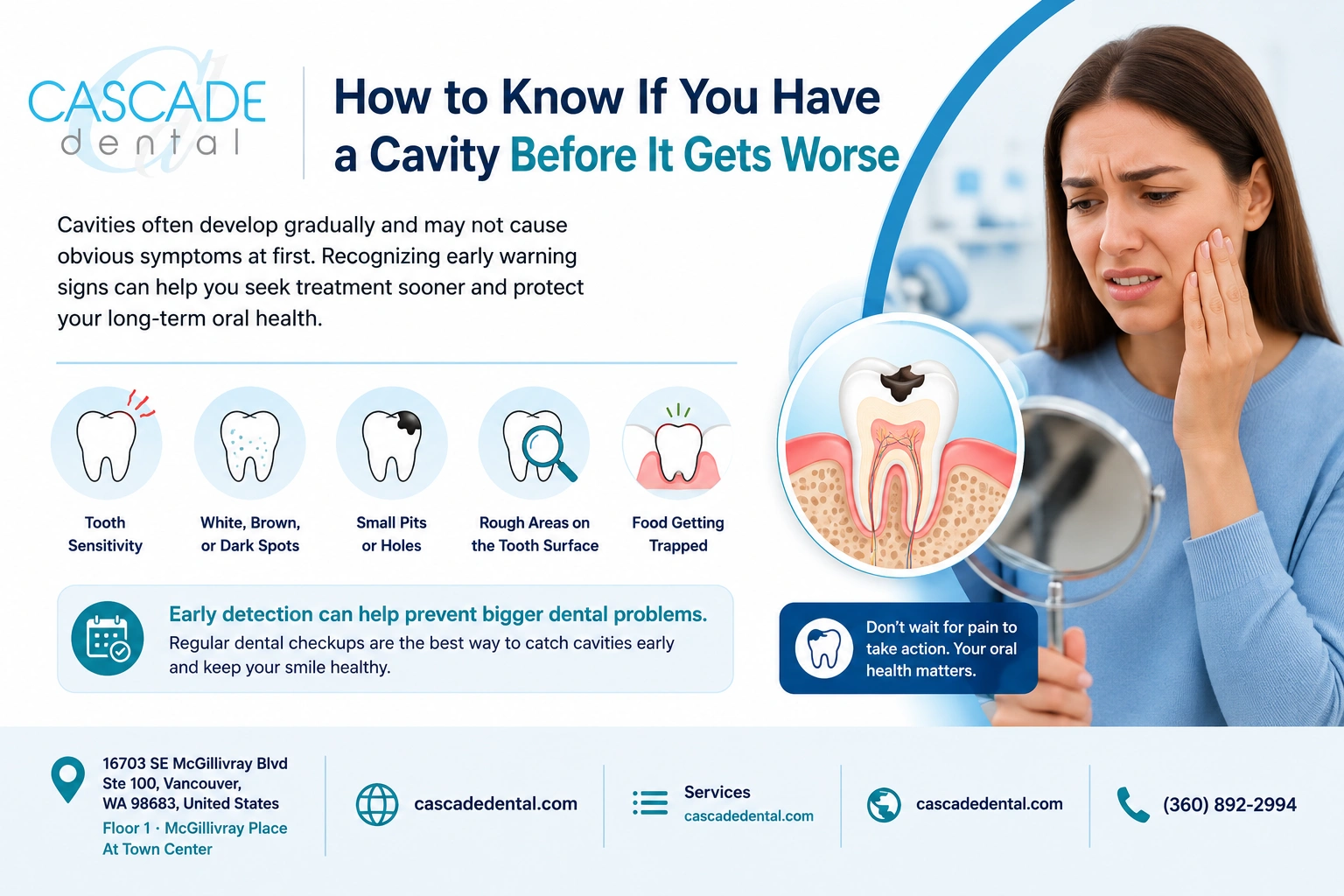
Some common warning signs include:
- Increased tooth sensitivity
- White, brown, or dark spots on teeth
- Small pits or holes in the tooth surface
- Rough areas that feel different from surrounding enamel
- Food becoming trapped in certain areas more frequently
Because early decay can be difficult to detect on your own, professional evaluation often plays an important role in identifying cavities before they become larger problems.
Early detection may also help preserve more of the natural tooth structure and reduce the likelihood of more extensive treatment later.
Tooth Sensitivity Can Be an Early Cavity Sign
One of the most common early cavity signs is increased tooth sensitivity.
As enamel begins to weaken, the tooth may become more reactive to certain foods, beverages, and temperature changes.
Cold Foods and Beverages
Ice water, cold drinks, frozen desserts, and other chilled foods may trigger a brief sharp sensation in affected teeth.
Hot Foods and Drinks
Coffee, tea, soup, and other hot items may occasionally cause discomfort when enamel has been compromised.
Sweet Foods
Sensitivity to candy, desserts, sugary beverages, or other sweet foods can sometimes indicate developing tooth decay.
Temperature Changes
Moving quickly between hot and cold foods may make sensitivity more noticeable.
It is important to remember that sensitivity alone does not automatically mean you have a cavity. Other conditions such as gum recession, enamel wear, or tooth grinding can also contribute to sensitivity.
However, if symptoms persist or gradually worsen over time, a professional evaluation may help determine the underlying cause.
Visible Tooth Changes That May Point to Decay
Changes in the appearance of your teeth may provide clues that decay is developing.
Because cavities often begin gradually, these visual changes can be subtle at first.
White Spots on Teeth
One of the earliest signs of enamel damage may appear as chalky white spots on the tooth surface.
These areas can indicate mineral loss within the enamel before a cavity fully develops.
Brown Spots
As decay progresses, affected areas may begin to take on a brown appearance.
Dark Discoloration
Dark spots or discoloration on the tooth surface can sometimes indicate more advanced decay.
Small Pits or Holes
Tiny openings or depressions in the enamel may develop as the cavity grows.
Rough Areas on the Tooth Surface
If part of a tooth feels rough, uneven, or different than surrounding enamel, it may be worth having it evaluated.
It is important to understand that not all cavities are visible. Some develop between teeth, beneath existing restorations, or in other locations that are difficult to see without professional tools and imaging. Knowing when old dental fillings should be replaced can also help identify worn, cracked, or failing restorations before they contribute to further tooth damage.
Paying attention to noticeable changes can be helpful, but routine dental evaluations remain one of the most reliable ways to detect decay early.
Why Cavities May Not Hurt at First
Many patients are surprised to learn that cavities often develop without causing pain.
The reason lies in how tooth decay progresses.
Early Decay Starts in Enamel
The outer layer of the tooth, known as enamel, does not contain nerves. Because of this, damage occurring in the enamel may not trigger discomfort.
A cavity can grow for some time before it reaches deeper portions of the tooth where nerves become involved.
Pain Often Develops Later
As decay progresses beyond the enamel and moves closer to the inner layers of the tooth, symptoms may become more noticeable.
At that point, patients may experience:
- Increased sensitivity
- Discomfort when eating
- Temperature-related pain
- Persistent toothaches
No Pain Does Not Mean No Problem
One of the biggest misconceptions about tooth decay is that a lack of pain means the tooth is healthy.
Unfortunately, many cavities continue to progress silently. This is one reason routine dental checkups remain an important part of preventive care.
Regular examinations can identify developing issues before symptoms become severe and before larger portions of the tooth are affected.
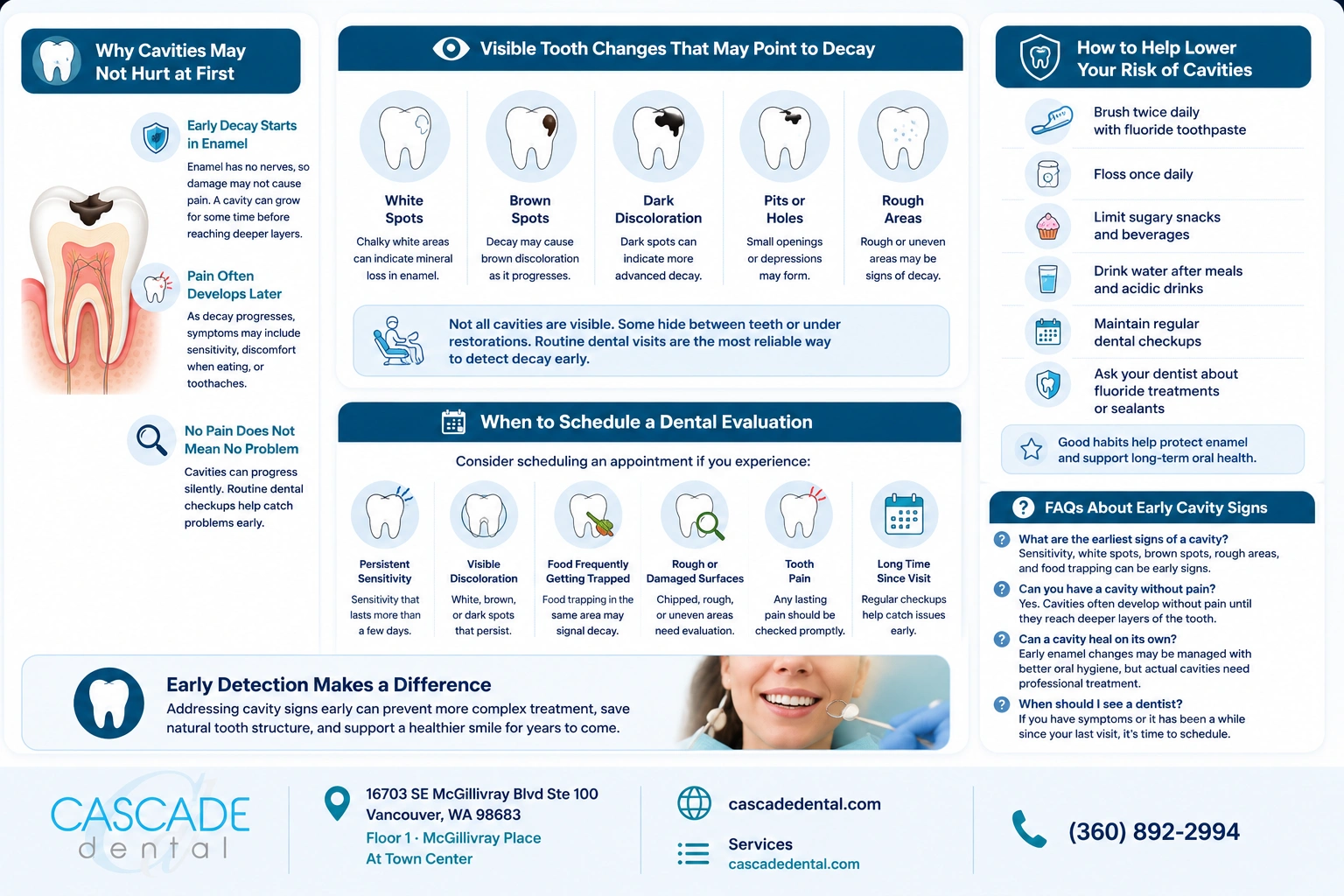
How to Help Lower Your Risk of Cavities
While no prevention method is perfect, healthy habits can help reduce your risk of developing tooth decay.
You can help protect your teeth by:
- Brushing twice daily with fluoride toothpaste
- Flossing once daily
- Limiting frequent sugary snacks and beverages
- Drinking water after meals and acidic drinks
- Maintaining regular dental checkups
- Asking your dentist whether fluoride treatments or sealants may be appropriate
These habits can help protect enamel and support long-term oral health. However, they do not replace professional treatment if a cavity has already formed.
When to Schedule a Dental Evaluation
While not every sensitivity issue or discoloration indicates a cavity, certain situations may warrant professional evaluation.
Consider scheduling an appointment if you experience:
Persistent Sensitivity
Sensitivity that continues for several days or weeks may deserve further investigation.
Visible Discoloration
White, brown, or dark spots on teeth should be evaluated if they persist or appear to be changing.
Food Frequently Getting Trapped
Repeated food trapping in the same location may indicate a cavity, damaged restoration, or another dental concern.
Rough or Damaged Tooth Surfaces
Areas that feel rough, chipped, or uneven may benefit from professional assessment.
Tooth Pain
Any persistent tooth pain should be evaluated promptly.
Long Periods Since Your Last Dental Visit
Even without symptoms, regular dental examinations can help identify problems before they become noticeable.
Professional evaluations allow dental teams to detect issues early and determine whether treatment is needed.
FAQs About Early Cavity Signs
What are the earliest signs of a cavity?
Some of the earliest cavity signs include tooth sensitivity, white spots on enamel, brown discoloration, rough areas on the tooth surface, and food becoming trapped more frequently.
Can you have a cavity without pain?
Yes. Cavities often develop without pain during their early stages because enamel does not contain nerves. Pain may not occur until decay progresses deeper into the tooth.
Why are my teeth sensitive to sweets?
Sensitivity to sugary foods can sometimes occur when enamel becomes weakened or when decay begins affecting deeper portions of the tooth.
What do cavity spots look like?
Cavity-related spots may appear white, brown, or dark depending on the stage of decay. Some may look like small discolorations, while others may appear as pits or holes.
Can a cavity heal on its own?
Early enamel changes may sometimes be managed through preventive measures and improved oral hygiene. However, once a cavity has caused permanent structural damage to the tooth, professional treatment is generally needed.
When should I see a dentist about possible tooth decay?
You should consider scheduling an evaluation if you experience persistent sensitivity, visible tooth changes, discomfort, food trapping, or if it has been a long time since your last dental visit.
Early Detection Makes a Difference
Recognizing early cavity signs can help you address tooth decay before it becomes a larger concern. Symptoms such as sensitivity, discoloration, rough tooth surfaces, and food trapping may indicate that a tooth deserves closer attention.
Because cavities often develop without pain during their early stages, regular dental examinations remain one of the most effective ways to identify issues early. Taking action before symptoms worsen can help preserve more natural tooth structure and support long-term oral health.
Don't Ignore the Early Signs of Tooth Decay.
A quick dental exam today can help prevent fillings, root canals, or tooth loss later.