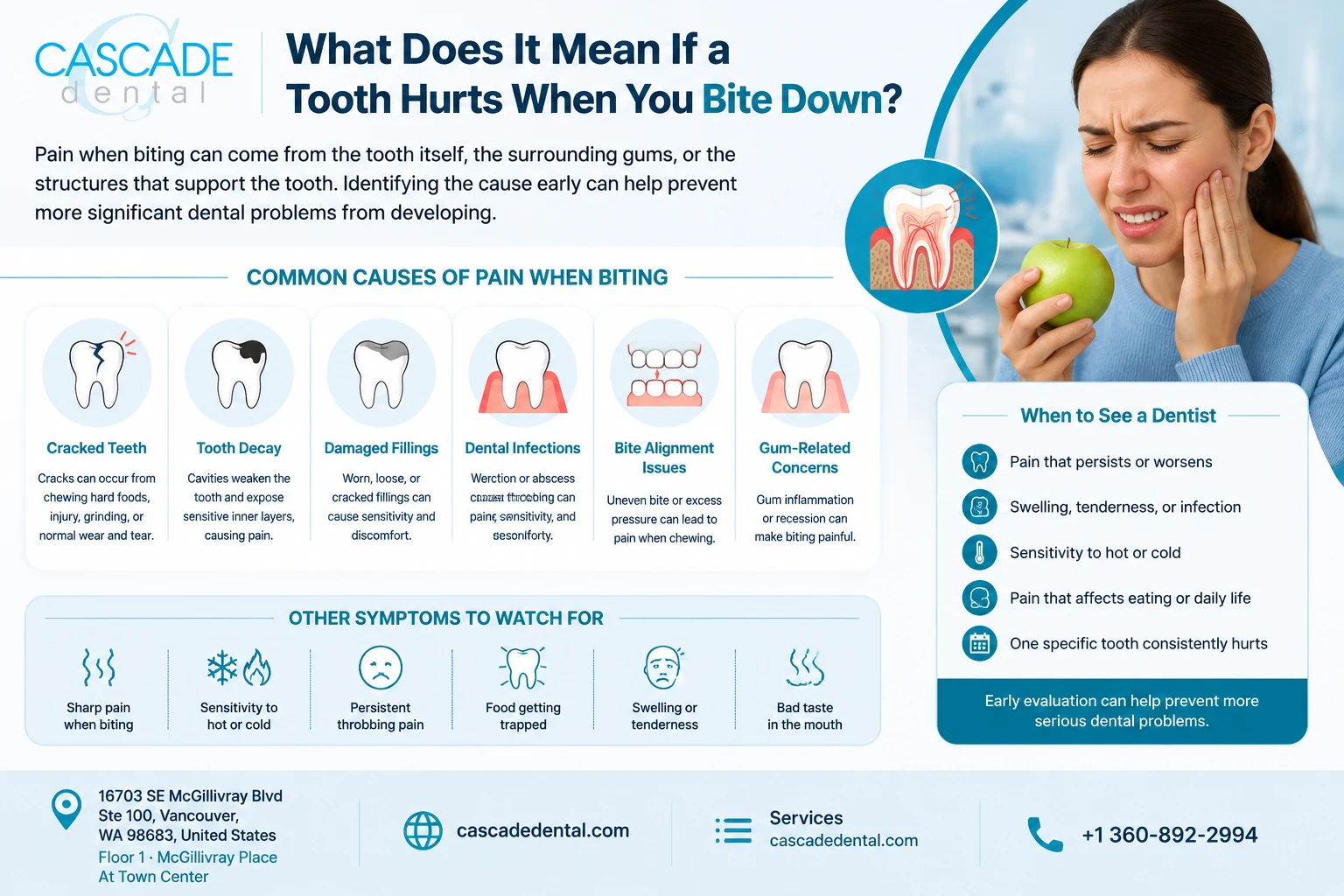
If a tooth hurts when you bite down, the discomfort may be coming from the tooth itself, the surrounding gums, or the structures that support the tooth. Common causes include cracked teeth, cavities, damaged fillings, infections, and bite alignment issues.
While some cases involve temporary irritation, persistent pain when chewing or applying pressure should be evaluated by a dental professional. Identifying the cause early can help prevent more significant dental problems from developing.
Biting into food should not cause pain. If you notice discomfort when chewing, eating, or applying pressure to a tooth, it can be frustrating and concerning. The good news is that pain when biting often has an identifiable cause, and understanding the possible reasons can help you determine when it is time to seek professional care.
Don't ignore tooth pain when biting.
Early treatment can prevent bigger dental problems. Contact our office today and get the care your smile deserves.
Fast Answer: Why Does My Tooth Hurt When I Bite Down?
If a tooth hurts when biting down, it often means that pressure is affecting a sensitive area of the tooth, surrounding gum tissue, or the structures that support the tooth.
Pain during biting can result from several different conditions, including:
- Cracked teeth
- Tooth decay
- Damaged fillings
- Dental infections
- Bite alignment issues
- Gum-related concerns
It is important to understand that occasional mild sensitivity is not always the same as persistent pain. A brief moment of discomfort may be temporary, while ongoing pain, worsening symptoms, or pain that interferes with eating often warrants professional evaluation.
The sections below explore some of the most common reasons a tooth may hurt when pressure is applied.
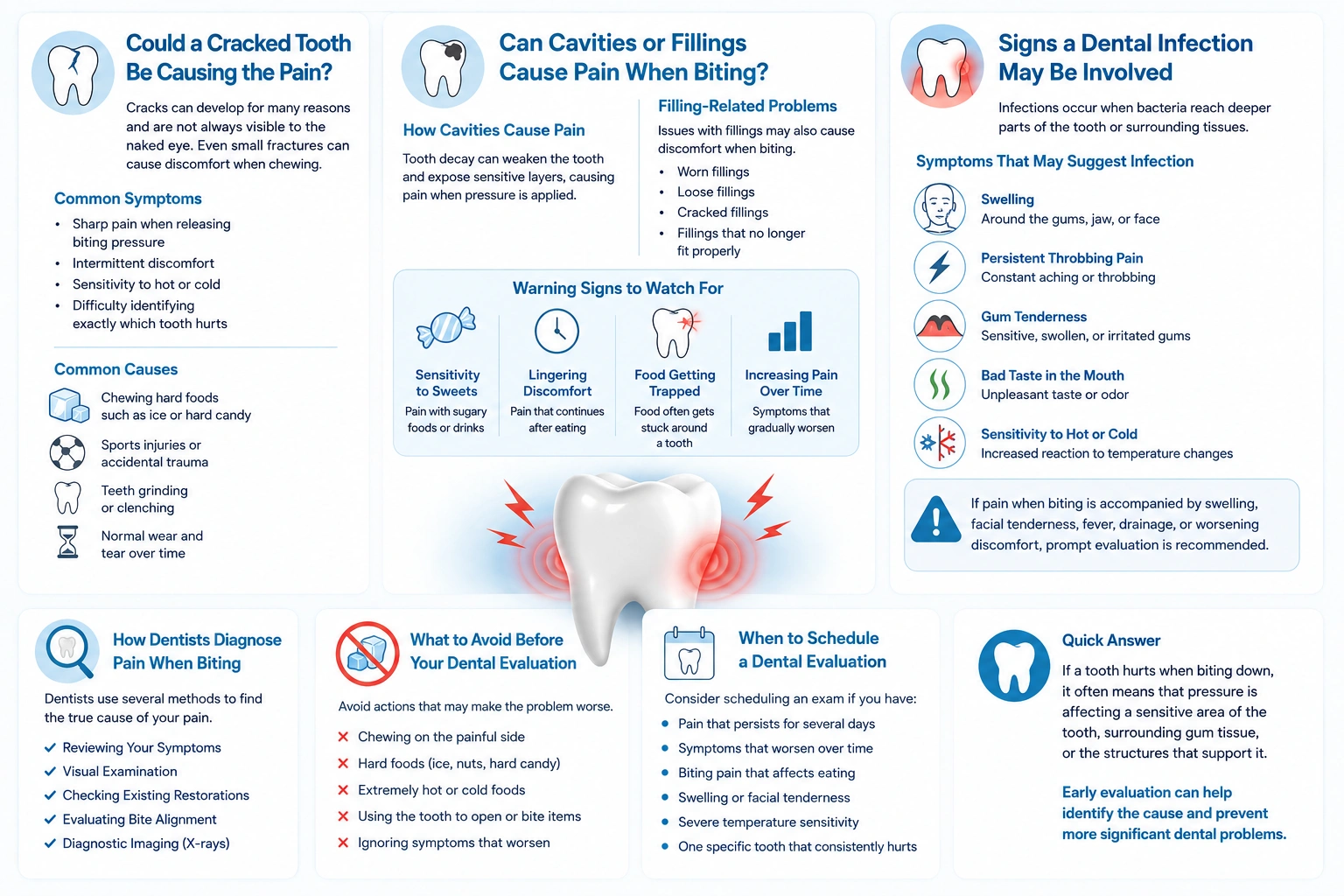
Could a Cracked Tooth Be Causing the Pain?
One possible cause of biting pain is a cracked tooth.
Cracks can develop for many reasons and are not always visible to the naked eye. Even small fractures can allow pressure to affect the inner structures of the tooth, resulting in discomfort when chewing.
Common Symptoms of a Cracked Tooth
A cracked tooth may cause:
- Sharp pain when releasing biting pressure
- Intermittent discomfort that comes and goes
- Sensitivity to hot or cold temperatures
- Difficulty identifying exactly which tooth hurts
Many patients find that the pain is inconsistent. The tooth may feel normal one day and become painful the next, making it difficult to pinpoint the problem.
Common Causes of Tooth Cracks
Several factors may contribute to cracked teeth, including:
- Chewing hard foods such as ice or hard candy
- Sports injuries or accidental trauma
- Teeth grinding or clenching
- Normal wear and tear over time
Because cracks are not always visible, professional evaluation is often necessary to determine whether a fracture is contributing to symptoms.
Can Cavities or Fillings Cause Pain When Biting?
Another common reason a tooth hurts when biting down is tooth decay or problems involving an existing filling.
How Cavities Cause Biting Pain
As a cavity progresses, it can weaken the tooth structure and expose more sensitive layers beneath the enamel. When pressure is applied during chewing, those affected areas may become painful.
Filling-Related Problems
Even if a cavity has already been treated, issues involving a filling may contribute to discomfort.
Examples include:
- Worn fillings
- Loose fillings
- Cracked fillings
- Fillings that no longer fit properly
When a filling becomes damaged or compromised, it may allow bacteria, food particles, or pressure to affect the tooth underneath.
Warning Signs to Watch For
Certain symptoms may suggest decay or filling-related issues.
Sensitivity to Sweets
Discomfort after consuming sugary foods or beverages can sometimes indicate decay.
Lingering Discomfort
Pain that continues after eating or drinking may deserve further evaluation.
Food Getting Trapped
Food frequently becoming lodged around a specific tooth can sometimes signal a damaged restoration or cavity.
Increasing Pain Over Time
Symptoms that gradually worsen often indicate that the underlying problem is progressing rather than resolving.
Early evaluation may help identify these concerns before they become larger dental issues.
Signs a Dental Infection May Be Involved
In some situations, pain when biting may be related to a dental infection.
When bacteria reach deeper portions of a tooth or surrounding tissues, inflammation and infection can develop. This often increases sensitivity when pressure is applied.

Why Your Family Dentist is a Long-Term Partner
Stability matters when teeth, schedules, and budgets all share the same calendar. That’s why the family dentist you choose should…

Symptoms That May Suggest Infection
Certain signs may indicate that an infection is present.
Swelling
Swelling around the gums, jaw, or face should never be ignored.
Persistent Throbbing Pain
A constant aching or throbbing sensation may indicate inflammation or infection within the tooth.
Gum Tenderness
Sensitive, swollen, or irritated gums near the painful tooth can sometimes accompany infection.
Bad Taste in the Mouth
An unpleasant taste or odor may occasionally be associated with drainage from an infected area.
Sensitivity to Hot or Cold Temperatures
Infected teeth often become more reactive to temperature changes. Infected teeth often become more reactive to temperature changes. If your teeth feel sensitive to cold, the discomfort may also be related to decay, exposed tooth structure, or another dental concern that should be evaluated.
Dental infections rarely improve without professional treatment. If pain when biting is accompanied by swelling, facial tenderness, fever, drainage, or worsening discomfort, prompt evaluation is recommended.
How Dentists Diagnose Pain When Biting
Since multiple conditions can cause pain when biting, identifying the exact source is an important part of treatment planning.
During an evaluation, a dentist will typically use several methods to determine what may be causing your symptoms.
Reviewing Your Symptoms
The appointment usually begins with a discussion about:
- When the pain occurs
- How long symptoms have been present
- Whether pain is sharp, dull, intermittent, or constant
- Activities that make symptoms better or worse
Visual Examination
A thorough examination allows the dentist to look for visible signs of:
- Tooth decay
- Cracks
- Gum issues
- Wear patterns
- Signs of infection
Checking Existing Restorations
Fillings, crowns, and other restorations may be evaluated for wear, damage, or fit issues.
Evaluating Bite Alignment
Sometimes a tooth may become painful because of uneven biting pressure. The dentist may assess how your teeth come together when chewing.
Diagnostic Imaging
When appropriate, dental X-rays or other imaging may help reveal issues that cannot be seen during a visual examination alone.
Because treatment depends entirely on the diagnosis, identifying the true cause of biting pain is often the most important step.
What to Avoid Before Your Dental Evaluation
If a tooth hurts when biting down, there are a few steps you can take to avoid making the problem worse.
Until you have been evaluated, consider avoiding:
- Chewing on the painful side of your mouth
- Hard foods such as ice, nuts, or hard candy
- Extremely hot or cold foods if they trigger symptoms
- Using the affected tooth to open packages or bite non-food items
- Ignoring symptoms that continue to worsen
These measures may help reduce irritation, but they do not address the underlying cause of the discomfort.
When to Schedule a Dental Evaluation
While some mild sensitivity may improve on its own, professional evaluation is often recommended when:
- Pain persists for several days
- Symptoms worsen over time
- Biting discomfort affects eating
- Swelling develops
- Temperature sensitivity becomes severe
- One specific tooth consistently hurts
Since many different conditions can produce similar symptoms, self-diagnosis is often difficult. A dental evaluation can help identify the source of the problem and determine whether treatment is needed.
FAQs About Tooth Pain When Biting
Why does my tooth only hurt when I bite down?
Pain that occurs only during biting often suggests that pressure is affecting a sensitive area of the tooth, surrounding tissues, or supporting structures. Common causes include cracks, decay, filling problems, and infections.
Can a cracked tooth cause pain when chewing?
Yes. Cracked teeth frequently cause discomfort when chewing or releasing biting pressure. Small cracks may not always be visible but can still produce significant symptoms.
Can a cavity make a tooth hurt when pressure is applied?
Yes. As tooth decay progresses, it can weaken tooth structure and expose sensitive inner layers that react to biting forces.
How do I know if a filling is causing the problem?
Possible signs include discomfort around a previously treated tooth, food trapping, sensitivity, or symptoms that develop near an existing filling. A dental examination can determine whether a filling is contributing to the issue.
Can a high filling cause pain when biting?
Yes. If a filling sits slightly higher than the surrounding teeth, it can create uneven pressure when you bite. This may cause discomfort until the bite is adjusted by a dentist.
Is pain when biting a sign of infection?
It can be. Infections sometimes cause pain when chewing, especially when accompanied by swelling, throbbing discomfort, gum tenderness, or temperature sensitivity.
When should I schedule a dental exam for biting pain?
You should consider scheduling an exam if pain persists, worsens, interferes with eating, or is accompanied by swelling, sensitivity, or other concerning symptoms.
Understanding the Cause Matters
If a tooth hurts when biting down, the discomfort may stem from several different conditions ranging from minor issues to more significant dental concerns. Cracked teeth, cavities, filling problems, infections, and bite-related issues are among the most common causes.
Because these conditions can produce similar symptoms, professional evaluation is often the most reliable way to identify the source of the problem. Addressing symptoms early may help prevent more complex dental concerns and support long-term oral health.
Tooth hurts when you bite down?
Don't wait for the pain to get worse. Schedule a dental exam today to find the cause and protect your smile.