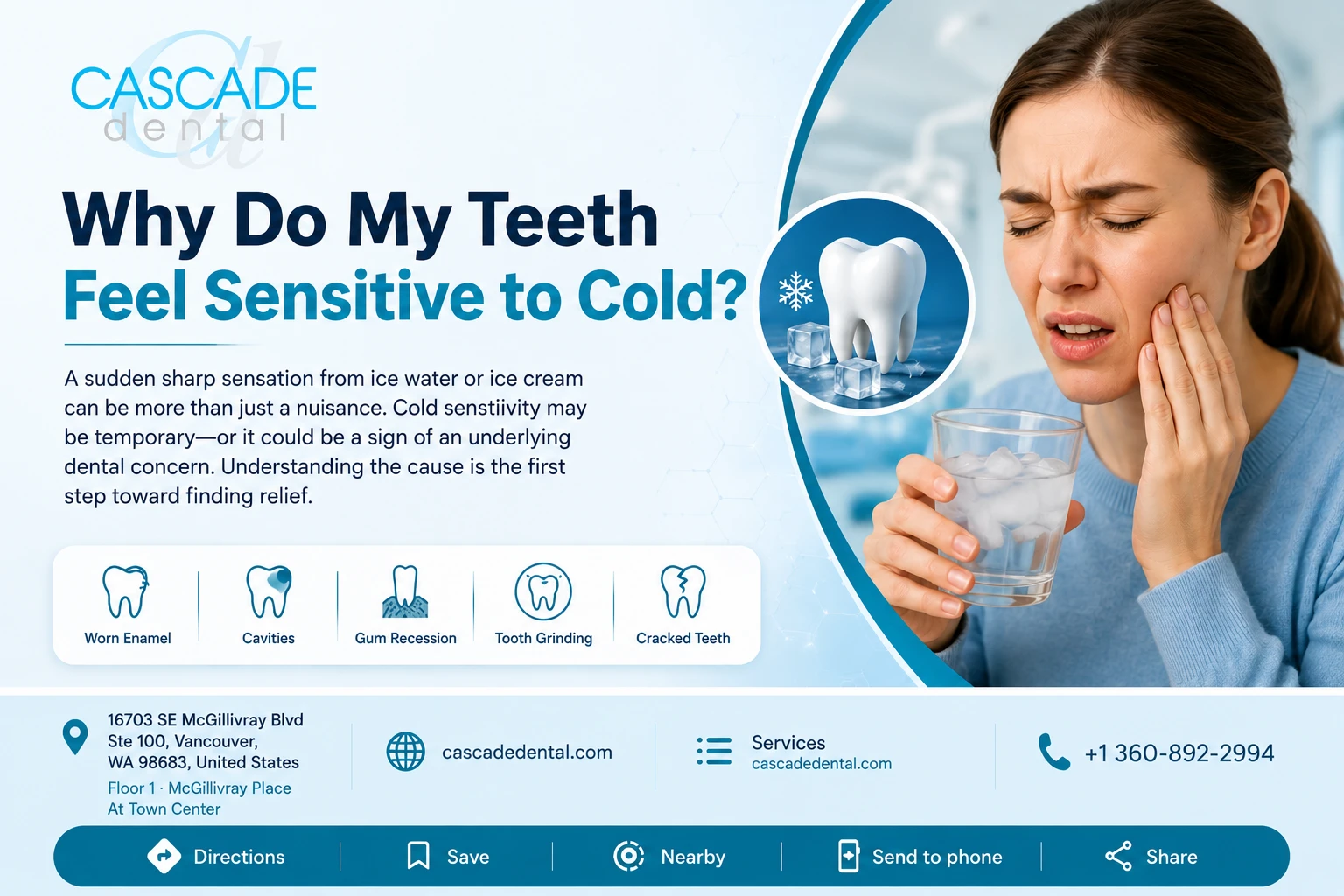
Have you ever taken a sip of ice water or bitten into ice cream only to feel a sudden sharp sensation in your teeth? You’re not alone. Many people experience cold sensitivity at some point, and while it can sometimes be temporary, persistent symptoms may indicate an underlying dental concern.
Teeth become sensitive to cold when the protective layers of the tooth become worn, exposed, or irritated. As a result, cold temperatures can reach the sensitive inner structures of the tooth and trigger discomfort.
Understanding why your teeth react to cold can help you determine whether the sensitivity is a minor irritation or something that deserves professional attention.
Fast Answer: Why Are My Teeth Sensitive to Cold?
Teeth become sensitive to cold when the inner layers of the tooth become exposed or irritated.
Under normal circumstances, enamel protects the outer portion of your teeth while gum tissue covers the roots. When these protective barriers wear down or become compromised, cold temperatures can reach the sensitive inner structures of the tooth and trigger discomfort.
Occasional sensitivity may be temporary and related to factors such as recent dental treatment or dietary habits. However, ongoing or worsening sensitivity can sometimes signal an underlying dental issue that requires attention.
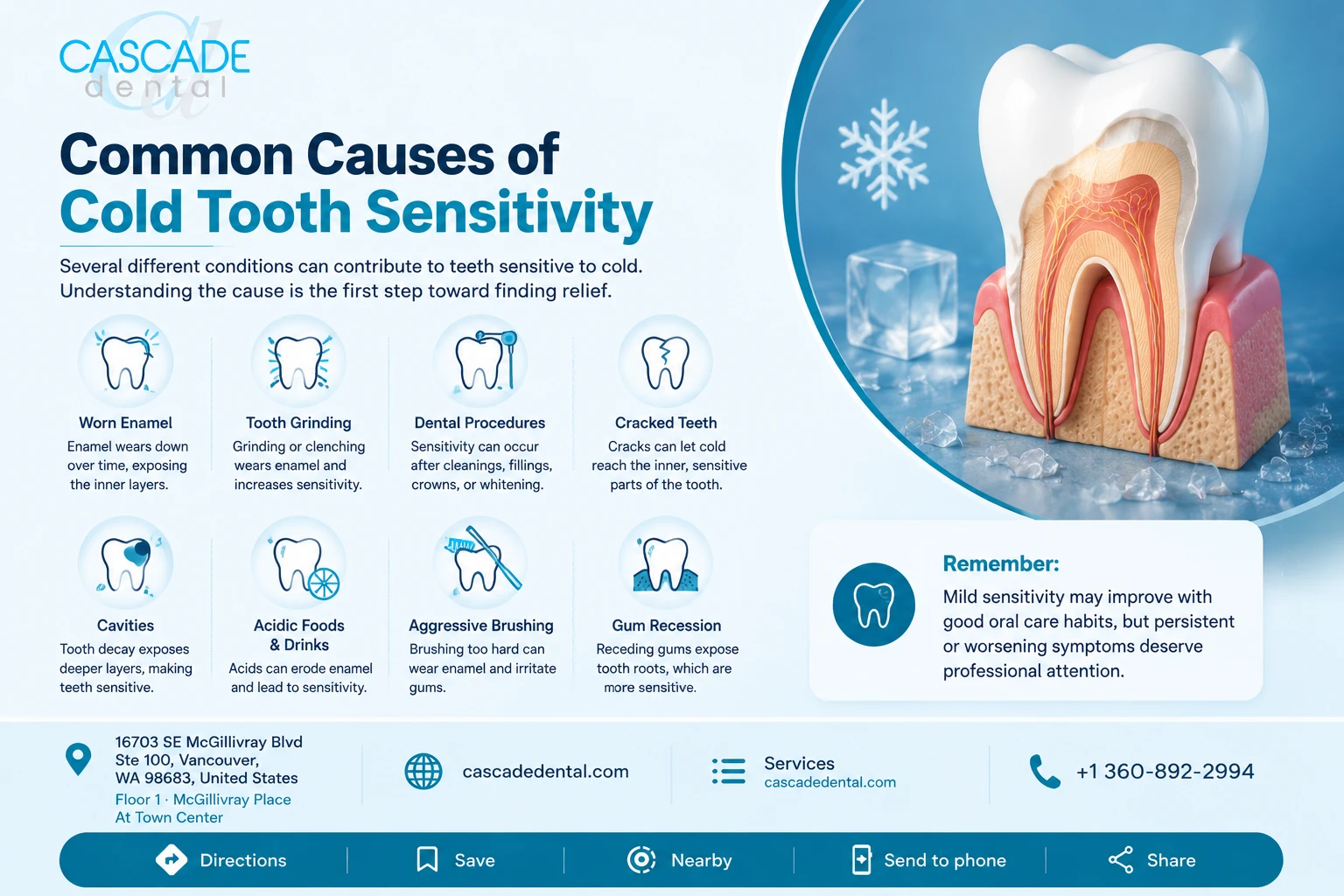
Some of the most common causes include:
- Worn enamel
- Tooth grinding
- Recent dental procedures
- Cracked teeth
- Cavities
- Acidic foods and beverages
- Aggressive brushing
- Gum recession
Understanding the cause is often the first step toward finding relief.
Stop Living With Tooth Sensitivity
Sharp pain when drinking something cold could signal a cavity, worn enamel, or another dental issue. Call today.
Common Causes of Cold Tooth Sensitivity
Several different conditions can contribute to teeth sensitive to cold. In some cases, sensitivity affects multiple teeth, while in others it may be isolated to a single tooth.
Worn Enamel
Enamel is the hard outer layer that protects your teeth. Over time, normal wear and tear can gradually thin this protective layer.
As enamel becomes thinner, temperature changes can more easily reach the inner parts of the tooth, increasing sensitivity.
Tooth Grinding (Bruxism)
Many people grind or clench their teeth during sleep without realizing it.
Over time, grinding can wear down enamel and place excessive stress on teeth, making them more susceptible to temperature sensitivity.
Recent Dental Procedures
Some patients notice temporary sensitivity after dental treatments such as cleanings, fillings, crowns, or whitening procedures.
This type of sensitivity often improves as the tooth settles and recovers.
Tooth Cracks
Even small cracks can create pathways that allow cold temperatures to reach the sensitive inner portions of the tooth.
Cracks may develop from injuries, chewing hard foods, or years of normal use.
Cavities
Tooth decay can gradually break through enamel and expose deeper tooth structures. As the cavity progresses, cold sensitivity may become more noticeable.
Acidic Food and Beverage Exposure
Frequent consumption of acidic foods and drinks may contribute to enamel erosion over time.
Examples include:
- Soft drinks
- Sports drinks
- Citrus fruits
- Energy drinks
- Certain fruit juices
When enamel weakens, sensitivity can become more common.
Aggressive Brushing
Brushing too hard or using a toothbrush with overly stiff bristles can wear away enamel and irritate gum tissue.
Gentle brushing techniques often help protect both teeth and gums from unnecessary damage.
When Cold Sensitivity May Be a Sign of Tooth Decay
One of the most common reasons for cold-sensitive teeth is tooth decay.
As a cavity develops, it gradually penetrates the enamel and may eventually reach deeper layers of the tooth. These inner layers contain microscopic pathways that connect to the tooth’s nerve, making the tooth more responsive to cold temperatures.
While occasional sensitivity does not automatically mean you have a cavity, certain warning signs may suggest that decay is contributing to the problem.

Why “Top-Rated Dentist” Doesn’t Mean What It Used To
You’ve probably noticed something interesting happening in the world of dentistry. People aren’t choosing dentists the same way they used…

Lingering Discomfort
If sensitivity continues for several seconds or longer after the cold source is removed, it may warrant evaluation.
Pain When Eating Sweets
Discomfort triggered by sugary foods or beverages can sometimes indicate developing tooth decay.
Visible Dark Spots
Brown, black, or dark areas on the tooth surface may be signs of a cavity.
Sensitivity That Worsens Over Time
Gradually increasing sensitivity often deserves professional attention, especially if symptoms become more frequent or intense.
Early evaluation may help identify decay before it progresses into a larger dental issue.
How Gum Recession Can Cause Cold Sensitivity
Another common cause of cold sensitivity is gum recession.
When gums recede, they expose portions of the tooth root that are normally protected beneath the gumline. Unlike enamel-covered crowns, tooth roots have less natural protection and tend to be more sensitive to temperature changes.
Several factors may contribute to gum recession.
Gum Disease
Inflammation and infection associated with gum disease can gradually damage supporting tissues and cause gums to pull away from teeth.
Brushing Habits
Brushing too aggressively over time may contribute to gum recession in some individuals.
Aging
Natural changes that occur with age can sometimes increase the likelihood of recession.
Genetics
Some people may be more prone to gum recession due to inherited factors that affect gum tissue thickness and resilience.
When roots become exposed, cold drinks, cold foods, and even cool air may trigger discomfort.
Because gum health and tooth sensitivity are closely connected, evaluating the health of the gums is often an important part of determining the cause of sensitivity.
What You Can Try at Home for Sensitive Teeth
Mild tooth sensitivity may improve with simple changes to your daily routine.
You can try:
- Using toothpaste formulated for sensitive teeth
- Brushing gently with a soft-bristled toothbrush
- Limiting frequent acidic drinks and foods
- Rinsing with water after consuming acidic beverages
- Avoiding chewing ice and other very hard foods
- Wearing a nightguard if recommended for teeth grinding
These steps may help reduce irritation, but they do not treat cavities, cracks, gum disease, or other underlying dental concerns.
If sensitivity continues, worsens, or keeps returning, a professional dental evaluationis the safest next step.
When to Call a Dentist About Cold Sensitivity
Not all cold sensitivity requires immediate treatment, but certain situations may warrant professional evaluation.
Not all cold sensitivity requires immediate treatment, but certain situations may warrant professional evaluation. If discomfort is persistent or becoming more severe, seeking tooth pain relief treatment can help identify the source of the sensitivity and determine whether additional dental care is needed.
Consider scheduling an appointment if you experience:
Persistent Sensitivity
Sensitivity that continues for weeks or months may indicate an underlying issue that needs attention.
Severe Discomfort
Sharp or intense pain should not be ignored, especially if it interferes with daily activities.
Pain Affecting Daily Life
If sensitivity causes you to avoid certain foods, beverages, or normal oral hygiene routines, it is worth discussing with a dental professional.
Sensitivity Isolated to One Tooth
When only one tooth becomes sensitive, it may indicate a cavity, crack, or other localized concern.
Symptoms Continue Despite Sensitivity Toothpaste
Many people find relief with desensitizing toothpaste. If symptoms persist despite consistent use, further evaluation may be appropriate.
Because tooth sensitivity can have many possible causes, professional diagnosis is often the most effective way to identify the underlying issue and determine the best course of action.
FAQs About Teeth Sensitive to Cold
Why are my teeth suddenly sensitive to cold?
Sudden sensitivity can occur for several reasons, including enamel wear, recent dental work, cavities, gum recession, teeth grinding, or small cracks in the tooth structure.
Can a cavity cause cold sensitivity?
Yes. As tooth decay progresses, it can expose deeper layers of the tooth, making it more responsive to cold temperatures.
Is tooth sensitivity always a sign of a dental problem?
Not always. Temporary sensitivity can occur after certain dental procedures or due to short-term irritation. However, persistent symptoms should be evaluated to rule out underlying concerns.
Can gum recession make teeth sensitive?
Yes. Receding gums expose root surfaces that are naturally more sensitive than enamel-covered portions of the tooth.
Does sensitivity toothpaste really work?
Many patients experience improvement with sensitivity toothpaste because it helps reduce the transmission of sensations to the tooth’s nerve. Results vary depending on the underlying cause.
When should I see a dentist for cold-sensitive teeth?
You should consider scheduling an evaluation if sensitivity persists, worsens, affects daily activities, or occurs alongside other symptoms such as visible tooth damage or pain.
Understanding the Cause Is the First Step
Experiencing teeth sensitive to cold can range from a minor annoyance to a sign of an underlying dental issue. Common causes include worn enamel, cavities, gum recession,tooth grinding, cracks, and other factors that expose sensitive portions of the tooth.
While occasional sensitivity may not be cause for concern, persistent or worsening symptoms deserve professional attention. A dental evaluation can help identify the cause, provide appropriate recommendations, and support your long-term oral health.
Cold Tooth Pain Won't Go Away?
Find the cause before it gets worse. Call today to schedule a professional dental exam and get lasting relief.