Dental implants are designed to function much like natural teeth, but they still need consistent care to stay healthy. While the implant itself cannot develop a cavity, the gums and bone surrounding it can become inflamed or infected if plaque is allowed to build up.
That is why dental implant maintenance should become part of your regular oral hygiene routine from the beginning.
Good daily cleaning, professional dental care, and attention to changes around the implant can help protect the tissues that support it. Long-term success also depends on factors such as your bite, overall health, smoking habits, and whether you grind or clench your teeth.
At Cascade Dental, we encourage patients to think of implant care as preventive maintenance. A few consistent habits can make a meaningful difference in keeping an implant comfortable, functional, and healthy for years.
Make Your Dental Implant Last
Protect your new smile with routine implant maintenance and expert dental care. Call today to book your visit.
How Should You Care for a Dental Implant Every Day?
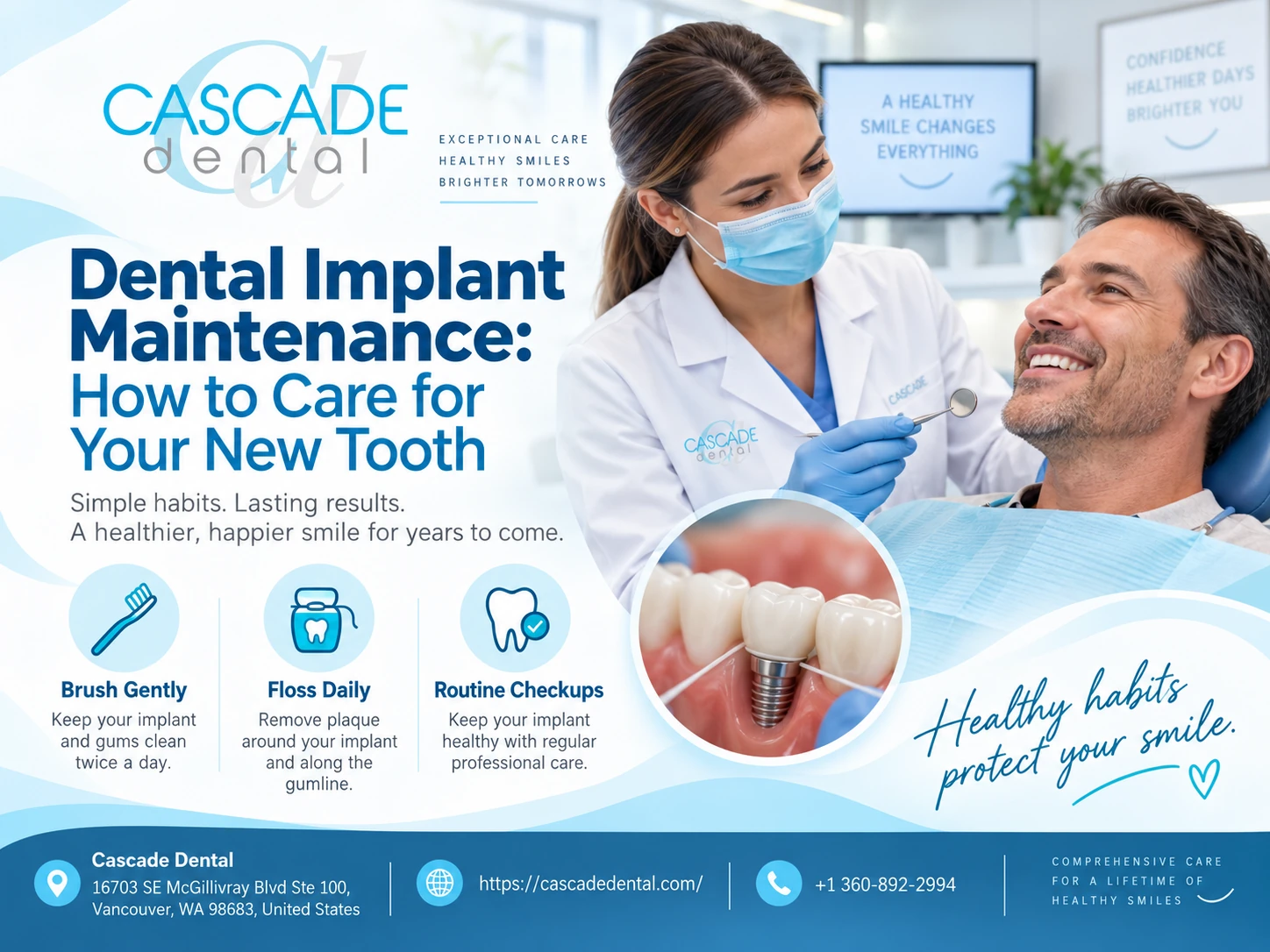
A dental implant should be cleaned every day just like the rest of your mouth.
The goal is to remove plaque and food debris from the implant crown and, most importantly, from the area where the restoration meets the gums.
A good daily routine usually includes:
- Brushing twice a day
- Using a soft-bristled toothbrush
- Cleaning between the implant and neighboring teeth
- Flossing around the implant as instructed
- Using interdental brushes or other cleaning aids if recommended
- Rinsing when your dentist advises it
- Paying attention to any changes in the gums surrounding the implant
Your dentist may recommend specific cleaning tools depending on the position of the implant and the type of restoration.
For example, some patients may find traditional floss easy to use, while others may benefit from floss threaders, small interdental brushes, water flossers, or other specialized products.
The most important thing is consistency.
Plaque should not be allowed to remain around the gumline simply because the tooth is supported by an implant rather than a natural root.
Brush Gently but Thoroughly
Use a soft-bristled toothbrush and clean around the implant crown carefully.
You do not need to scrub aggressively. Excessive pressure can irritate the gums without improving plaque removal.
Pay special attention to the gumline, where bacteria and debris often accumulate.
Electric toothbrushes can also be effective if used correctly. Your dental team can help you determine which brushing method is most appropriate for your mouth.
Clean Between the Teeth
A toothbrush cannot reach every surface.
Plaque can collect between the implant crown and neighboring teeth, making interdental cleaning an important part of dental implant maintenance.
Floss once daily or use another cleaning method recommended by your dentist.
If you have more than one implant, an implant bridge, or a larger restoration, you may need specialized cleaning tools to reach underneath or around the prosthesis.
Why Is Daily Cleaning So Important?
One of the biggest misconceptions about dental implants is that they require less care because they cannot get cavities.
It is true that the implant and artificial crown cannot decay in the same way natural tooth enamel can.
However, the tissues supporting the implant are still biologically active.
Plaque can accumulate around the implant and cause inflammation in the gums. If that inflammation progresses, it may affect the bone that supports the implant.
Early inflammation around an implant is often described as peri-implant mucositis. When bone loss is also involved, the condition may progress to peri-implantitis.
The earlier inflammation is identified and managed, the better.
Daily cleaning helps control plaque before it has a chance to create persistent irritation around the implant.
Good hygiene also supports:
- Healthy gum tissue
- Fresher breath
- Greater comfort while chewing
- Easier professional maintenance
- Better long-term stability of the surrounding tissues
Even if the implant feels perfectly normal, plaque can still accumulate around it. Preventive care is therefore important even when you have no symptoms.
What Role Do Professional Dental Cleanings Play?
Home care is essential, but it does not replace professional maintenance.
Regular dental cleanings allow your dental team to remove plaque and hardened deposits that may be difficult to reach with brushing and flossing alone.
Professional visits also give your dentist or hygienist an opportunity to evaluate areas that patients cannot easily inspect themselves.
During an implant maintenance visit, your dental team may examine:
- The health of the surrounding gums
- Plaque and tartar buildup
- Bleeding around the implant
- Changes in gum levels
- The stability of the implant crown
- Bite alignment
- Wear on the restoration
- The condition of neighboring teeth
- Bone levels when imaging is indicated
The cleaning techniques used around implants may differ from those used around natural teeth. Dental professionals can select instruments that are appropriate for the implant surface and restoration.
Routine appointments are also valuable because implant problems do not always cause obvious pain in their early stages.
A patient may feel that everything is fine while subtle gum inflammation or bite-related stress is beginning to develop.
Professional monitoring gives your dental team a chance to recognize those changes sooner.
What Warning Signs Could Indicate an Implant Problem?
A well-maintained implant should generally feel comfortable and stable.
If something begins to change, it is worth contacting your dentist rather than waiting for the problem to become more noticeable.
Potential warning signs include:
- Bleeding gums around the implant
- Persistent redness
- Swelling
- Tenderness
- Persistent bad breath
- An unpleasant taste near the implant
- Discomfort when biting or chewing
- Gum recession around the implant
- Food repeatedly becoming trapped near the restoration
- A crown that feels loose
- A change in the way your bite feels
- Movement of the restoration
- Pus or drainage around the implant area
These symptoms do not always mean the implant itself is failing.
For example, a loose implant crown may involve a restorative component rather than the implant fixture in the bone. Gum inflammation may also be treatable when it is identified early.
The important thing is to have changes evaluated professionally.

How Much Does a Root Canal Cost in Vancouver WA?
Are you thinking about getting a root canal in Vancouver, WA? Well, you might need to consider the cost especially…
What If the Implant Feels Loose?
A dental implant should not feel mobile.
However, patients can sometimes have difficulty determining whether the implant itself is moving or whether the crown or another component has become loose.
Avoid trying to tighten, push, or manipulate the restoration yourself.
Schedule an examination so your dentist can identify which part is moving and determine the appropriate solution.
How Can You Help Your Implant Last Longer?
Long-term implant care involves more than brushing and flossing.
Several lifestyle and health factors can influence how well the supporting tissues remain healthy.
Avoid Smoking
Smoking can negatively affect gum and bone health and may interfere with long-term implant stability.
If you smoke, reducing or quitting can benefit both your implant and your overall oral health.
Your dentist or healthcare provider may be able to recommend resources that support smoking cessation.
Manage Teeth Grinding
Grinding and clenching can place excessive force on both natural teeth and dental restorations.
Because implants do not have the same shock-absorbing ligament that surrounds natural tooth roots, bite forces require careful management.
If you grind your teeth at night, your dentist may recommend a custom nightguard to reduce stress on the implant crown and surrounding structures.
Do Not Use Your Teeth as Tools
Avoid biting pens, opening packages with your teeth, chewing ice, or using an implant crown to crack hard objects.
The implant may be strong, but the crown and other restorative components can still chip, fracture, or loosen under excessive force.
Maintain Your Overall Health
Conditions that affect inflammation, immune function, or bone health can influence oral health as well.
Follow your physician’s recommendations for managing chronic health conditions and keep your dentist informed about changes to your health or medications.
Eat a Balanced Diet
A balanced diet supports overall tissue health.
Foods that provide protein, vitamins, minerals, and other nutrients help support the gums and bone that surround both implants and natural teeth.
When Should You Schedule Routine Implant Checkups?
The right maintenance schedule varies from patient to patient.
Many patients are seen for routine dental care approximately every six months, but some people need more frequent visits.
Your dentist may recommend shorter intervals if you have:
- A history of gum disease
- Multiple dental implants
- Difficulty controlling plaque
- Smoking habits
- Diabetes or other health concerns
- A history of peri-implant inflammation
- Significant teeth grinding
- Complex implant-supported restorations
During these visits, your dentist can monitor how the implant is functioning over time.
Periodic examinations may include checking the bite, measuring gum health, evaluating the crown, and reviewing dental images when appropriate.
The frequency of X-rays should be based on your individual situation rather than performed automatically at every appointment.
Routine care is important even when you do not notice a problem.
Preventive visits are usually much easier than treating complications after they have progressed.
How Cascade Dental Can Help
At Cascade Dental, we believe successful implant care continues after the final crown is placed.
Our team helps patients understand how to clean around their implant, which tools may make home care easier, and how often professional maintenance should be scheduled.
During routine visits, we can evaluate the health of the surrounding gums, check your bite, inspect the restoration, and look for signs of wear or inflammation.
We can also help you adjust your home care routine if certain areas are difficult to clean.
If you grind your teeth, have a history of gum disease, or have other risk factors that may affect implant health, we can discuss ways to reduce those risks as part of your ongoing dental care.
The goal is not simply to maintain the artificial tooth. It is to protect the gums, bone, bite, and surrounding oral structures that allow the implant to function properly.
Consistent preventive care is one of the most effective ways to protect your investment and support long-term implant health.
FAQs
Do dental implants need to be brushed like natural teeth?
Yes. Dental implants should generally be brushed at least twice a day. Although the implant cannot develop a cavity, plaque can still build up around the gums and contribute to inflammation.
Can you floss around a dental implant?
Yes, but the best technique may depend on the design of your restoration. Traditional floss, floss threaders, interdental brushes, or other aids may be recommended. Ask your dentist or hygienist which method is safest and most effective for your implant.
Can dental implants get gum disease?
The tissues around dental implants can develop inflammatory conditions related to plaque. These include peri-implant mucositis and, in more advanced cases, peri-implantitis involving supporting bone.
Should I use mouthwash around a dental implant?
Do not assume that an antimicrobial rinse is necessary for everyday implant care. Your dentist may recommend one in certain situations, but routine use should follow professional guidance.
How often should dental implants be professionally cleaned?
The appropriate schedule depends on your oral health and risk factors. Many patients follow a routine schedule similar to their regular dental cleanings, while patients with gum disease, multiple implants, or other concerns may need more frequent maintenance.
Why does my implant bleed when I floss?
Bleeding may indicate inflammation in the surrounding gums, especially if it happens repeatedly. It can also result from improper flossing technique. Persistent bleeding should be evaluated by your dental team.
What should I do if my implant crown feels loose?
Contact your dentist. Do not try to tighten or adjust it yourself. A loose crown or implant component should be examined so the cause can be identified.
Can teeth grinding damage a dental implant?
Excessive grinding or clenching can place additional stress on the implant restoration and surrounding structures. Your dentist may recommend a nightguard if bruxism is a concern.
How long can a dental implant last?
Dental implants can function for many years, but there is no guaranteed lifespan. Longevity depends on gum and bone health, oral hygiene, bite forces, professional maintenance, lifestyle factors, and overall health.
Can an implant fail years after it was placed?
Yes, complications can develop even after an implant has functioned successfully for years. Inflammation, bone loss, excessive bite forces, restorative problems, and certain health factors can contribute to late complications.
When should I call my dentist about an implant?
Contact your dentist if you notice persistent bleeding, swelling, discomfort, bad taste, gum recession, a change in your bite, or any movement of the implant crown or restoration.
The foundation of effective dental implant maintenance is simple: clean carefully every day, attend regular professional visits, protect the implant from unnecessary force, and pay attention to changes around the restoration. With consistent preventive care and professional monitoring, you can help keep your implant healthy, comfortable, and functional for many years.
Protect Your New Dental Implant
Keep your implant healthy and strong with professional care. Schedule your dental checkup today.