If you’re deciding between a dental bridge and a dental implant, both options can replace missing teeth and restore your smile. However, they work differently and may be recommended for different situations based on your oral health, treatment goals, timeline, and budget.
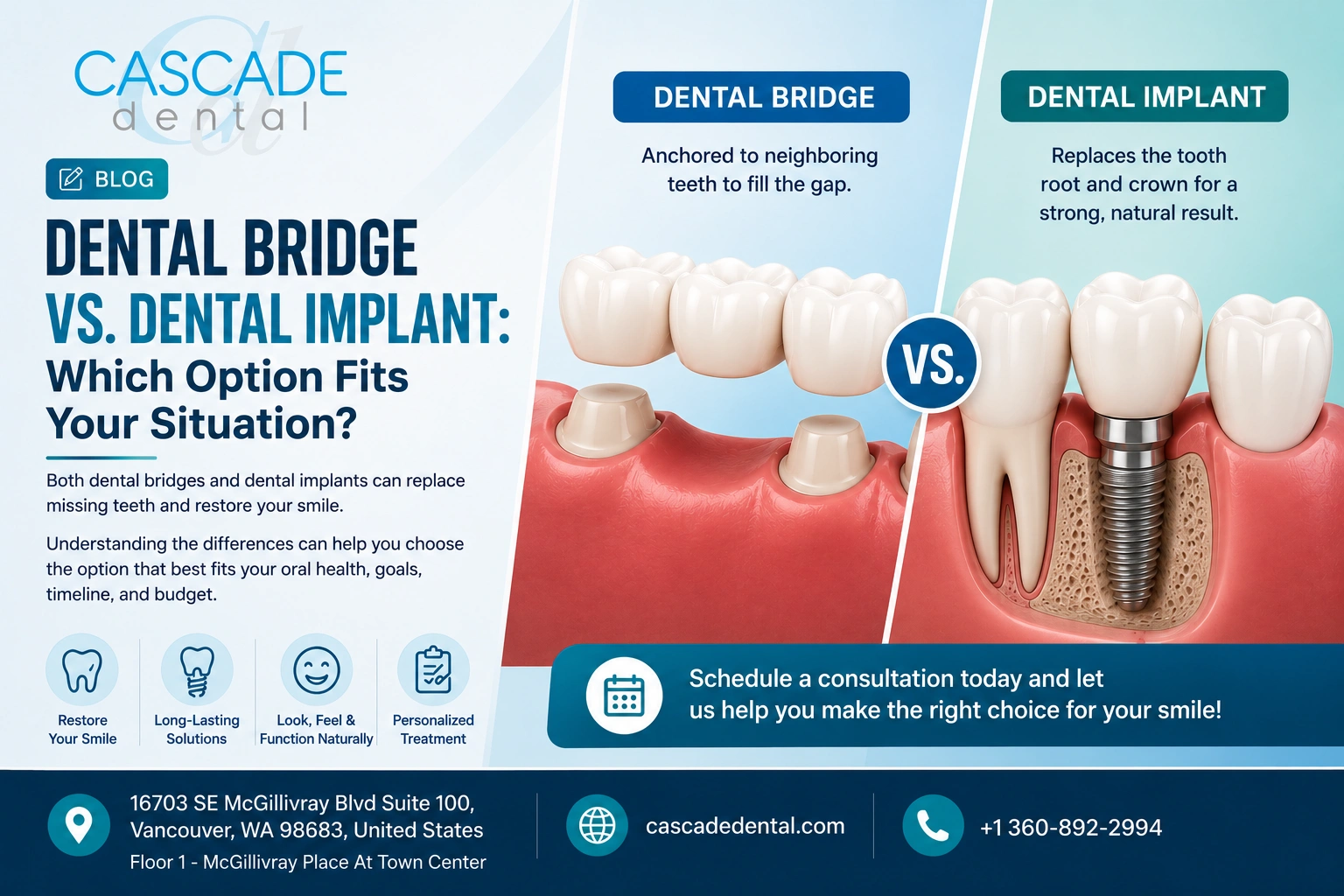
A dental implant replaces both the tooth root and the visible crown, while a dental bridge fills the gap by attaching to neighboring teeth. Understanding these differences can help you have a more informed conversation with your dentist and determine which solution may be the better fit for your needs.
Missing a tooth can affect more than just your smile. It can influence how you eat, speak, and maintain your long-term oral health. Fortunately, modern restorative dentistry offers several reliable solutions for replacing missing teeth, with dental bridges and dental implants being two of the most common options.
If you’re researching dental bridge vs. dental implant treatment, learning how each option works can help you better understand your choices and prepare for a discussion with your dental team.
Dental Bridge or Implant? Get Expert Advice.
Find the right tooth replacement for your smile. Schedule a consultation with our experienced dental team today.
Fast Answer: Bridge vs. Implant
When comparing a dental bridge and a dental implant, the primary difference is how each restoration is supported.
A dental implant replaces both the missing tooth root and the visible crown. The implant is placed into the jawbone, where it functions as an artificial tooth root before supporting a custom restoration.
A dental bridge replaces the visible portion of a missing tooth by using neighboring teeth for support. The bridge spans the gap and is anchored to adjacent teeth that have been prepared to hold the restoration.
Neither option is automatically better for every patient. Factors such as oral health, bone density, treatment goals, budget, timeline preferences, and the location of the missing tooth can all influence the most appropriate recommendation.
Learning about both options can help you understand why one treatment may be suggested over another.
How Dental Implants and Dental Bridges Work
Understanding Dental Implants
Dental implants are designed to replace a missing tooth from the root up. The treatment generally involves three main phases.
First, the implant post is surgically placed into the jawbone where the tooth is missing. This small titanium post functions as an artificial tooth root.
Next comes the healing and integration period. During this phase, the bone gradually fuses with the implant through a natural process called osseointegration. This creates a stable foundation for the future restoration. This creates a stable foundation for the future restoration and plays an important role in dental implant success.
Once healing is complete, a custom crown is attached to the implant. The result is a replacement tooth that looks, feels, and functions similarly to a natural tooth.
Understanding Dental Bridges
Dental bridges replace one or more missing teeth by using neighboring teeth as anchors.
The process typically begins with preparing the supporting teeth located on either side of the gap. These teeth are reshaped to accommodate dental crowns.
Next, impressions are taken so a custom bridge can be fabricated. The bridge includes replacement teeth suspended between crowns that fit over the supporting teeth.
Once the bridge is ready, it is placed, adjusted, and secured to restore appearance and function.
Benefits and Considerations of Each Option
Both treatments offer valuable benefits, but each comes with considerations that may affect suitability.
Dental Implants
Benefits
Independent Tooth Replacement
Implants do not rely on neighboring teeth for support. Each implant functions as a standalone replacement.
Bone Preservation
Because the implant replaces the tooth root, it helps stimulate the jawbone and reduce bone loss that can occur after tooth loss.
Long-Term Durability
With proper care, dental implants can provide a long-lasting solution for many patients.
Natural Appearance
Implants are designed to blend naturally with surrounding teeth while supporting comfortable chewing and speaking. This natural-looking result is one reason dental implants are redefining confidence for many people seeking to restore missing teeth.
Considerations
Surgical Procedure
Implant placement requires a surgical procedure and healing period.
Longer Treatment Timeline
The process typically takes longer because the implant must integrate with the jawbone before the final restoration can be attached.
Higher Initial Investment
Implants generally involve a larger upfront investment compared to bridges.
Dental Bridges
Benefits
Faster Treatment Process
Bridges can often be completed in fewer visits and within a shorter overall timeframe.
Typically Lower Upfront Cost
Many patients find bridges to be more affordable initially than implants.
Effective Tooth Replacement
Bridges successfully restore appearance and function for many individuals with missing teeth.
Considerations
Relies on Neighboring Teeth
Supporting teeth must typically be modified to anchor the bridge.
Does Not Replace the Tooth Root
Because bridges sit above the gumline, they do not replace the missing root beneath the surface.
May Require Future Replacement
Bridges can wear over time and may eventually need repair or replacement.
Ultimately, treatment suitability depends on individual circumstances, which is why a professional evaluation remains important.
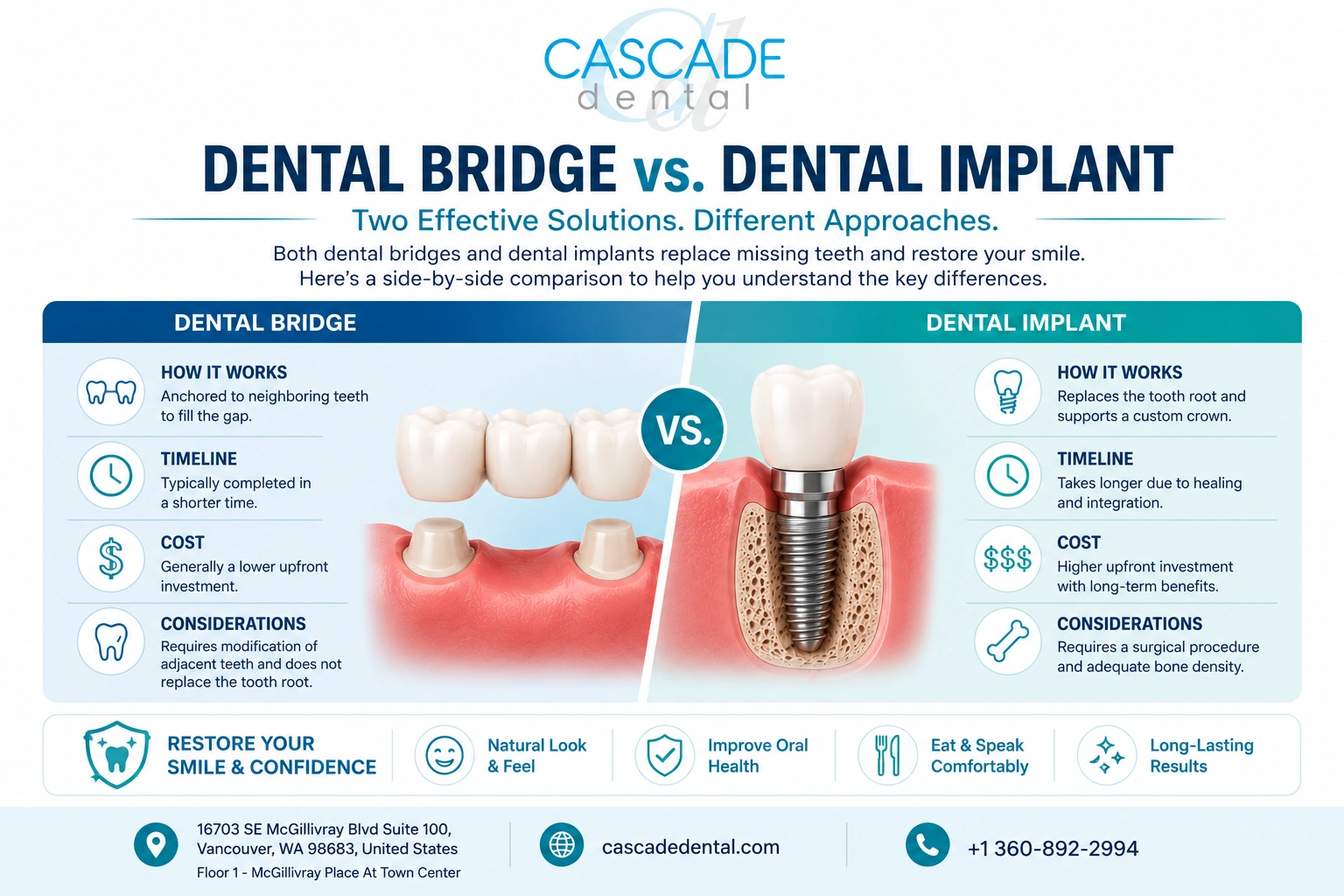
Dental Bridge vs. Implant: Cost and Timeline Considerations
One of the most common questions patients ask when comparing a dental bridge and a dental implant involves cost and treatment timelines.
The truth is that costs vary significantly from one patient to another. Several factors can influence overall treatment expenses, including:
- Number of teeth being replaced
- Existing oral health conditions
- Bone quality and quantity
- Need for additional procedures
- Materials selected for the restoration
- Insurance coverage and benefits
Treatment timelines also differ.
Dental bridges are often completed more quickly because they do not require a healing period within the jawbone. In many cases, treatment can be completed within a relatively short timeframe after preparation and fabrication.
Dental implants typically require additional time because the implant must integrate with the bone before the final restoration can be placed. While this longer process can offer unique benefits, it requires patience throughout the healing phase.
Rather than focusing solely on speed or upfront cost, many patients find it helpful to consider long-term goals, maintenance needs, and overall treatment objectives when evaluating their options.

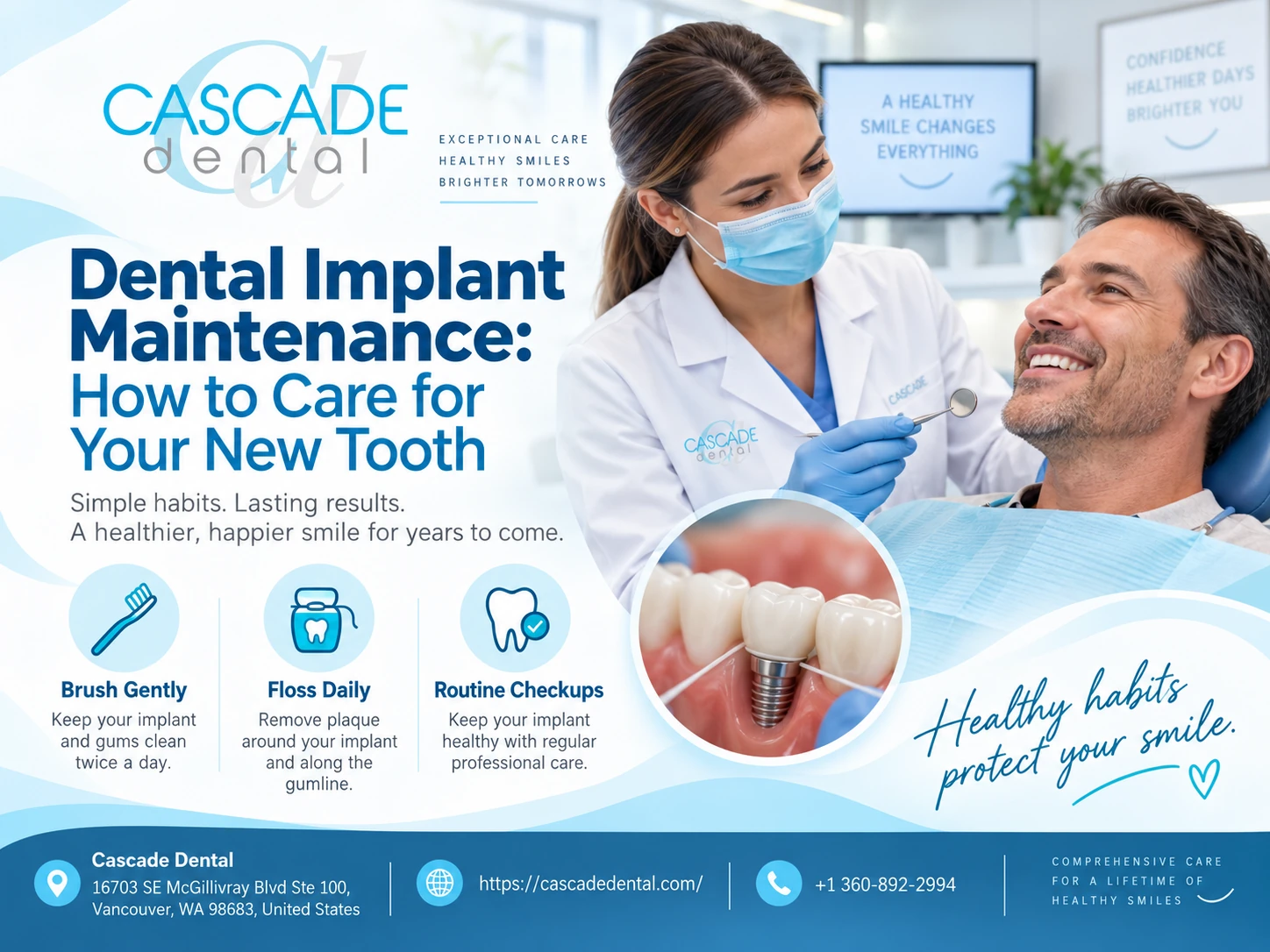
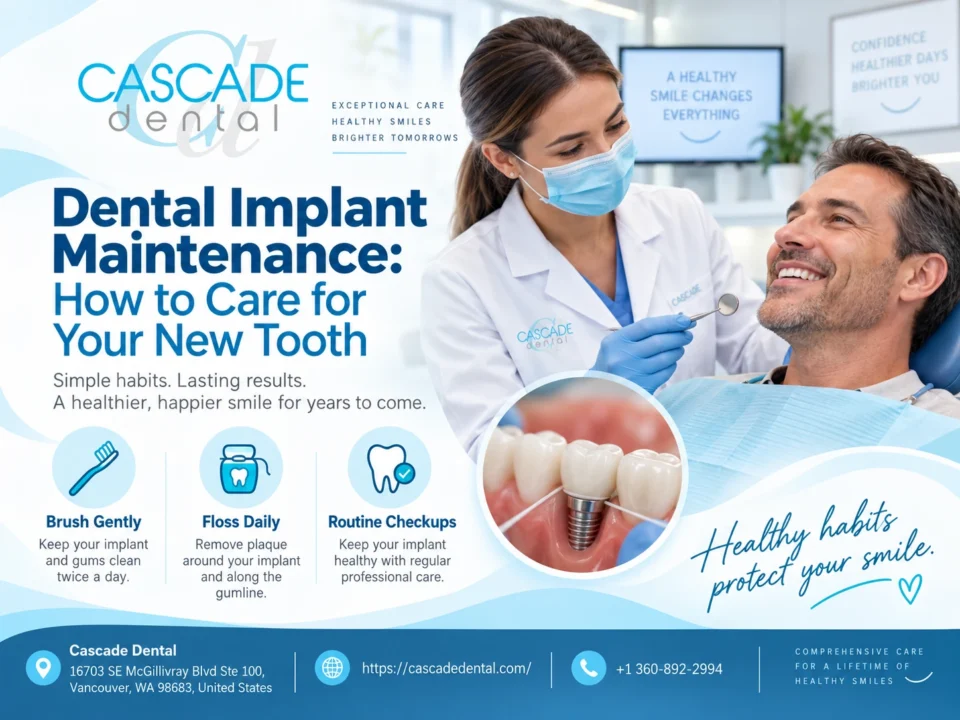
Dental Implant Maintenance: How to Care for Your New Tooth
Dental implants are designed to function much like natural teeth, but they still need consistent care to stay healthy. While…
Other Alternatives to Dental Implants
Alternatives to dental implants can be considered depending on a patient’s specific dental situation and personal preferences. So if you’re going to ask us “what is the best solution for no teeth?”, here are some of these alternatives you may opt for:
Dental Bridges
Dental bridges offer a tried and tested solution for replacing missing teeth. In this approach, a false tooth is positioned within the gap, effectively “bridging” the space left by the missing tooth. This artificial tooth is securely anchored with the assistance of two dental crowns, which are fitted onto the adjacent healthy teeth. Dental bridges provide a fixed, non-removable option for restoring your smile and oral function. You can learn more about this option through our dental bridges services.
Partial Dentures
Partial dentures are a versatile alternative for patients missing one or more teeth in different areas of their mouth. These removable dental prosthetics are custom-designed to fit comfortably and securely. Partial dentures can replace several missing teeth in various locations and are easily taken out for cleaning and maintenance, making them a convenient choice for many patients.
Full Dentures
Full dentures are the go-to solution when all the teeth in either the upper or lower jaw are missing. They provide a comprehensive set of artificial teeth for your entire mouth, restoring both appearance and function. Full dentures are removable, making them practical for daily care and maintenance, while offering a cost-effective way to regain your smile.
Resin-Bonded Bridge (Maryland Bridge)
The resin-bonded bridge, often referred to as a Maryland bridge, is a minimally invasive option for replacing missing teeth. This method involves bonding a false tooth to the adjacent existing teeth on either side of the gap using a resin. Unlike traditional dental bridges, this approach preserves the structure of the adjacent teeth, as it doesn’t require crowns for support. The Maryland bridge is an excellent choice for those who prefer a less intrusive treatment while addressing lost tooth concerns.
Removable Flexible Dentures
Removable flexible dentures are crafted from a pliable resin material, offering a more natural appearance and comfortable fit. These dentures attach to the remaining teeth and gums, giving the wearer a realistic look and feel. They are an appealing option for those seeking a cost-effective, customizable, and aesthetically pleasing solution to replace missing teeth.
Dental Implant-Supported Bridge
For patients missing several teeth, the dental implant-supported bridge is an advanced and durable option. It involves the placement of multiple dental implants in the jawbone to serve as stable anchors for a bridge. This solution not only restores missing teeth but also promotes jawbone health by mimicking the natural tooth structure. For patients considering dental implants for single or multiple teeth, this approach can provide a stable and long-lasting restoration. If you’re exploring implant-based solutions, our dental implants services provide more insight into this treatment option.
Each of these alternatives has its own benefits and drawbacks, and it is important to discuss with your dentist which option would be best for you. Factors such as cost, durability, comfort, and maintenance should all be considered when making a decision about dental work.
How Dentists Determine the Best Option
Selecting between a bridge and an implant involves more than comparing procedures. Several personal factors may influence the most appropriate treatment recommendation.
Your dentist may consider:
- Overall oral health
- Bone density and jawbone condition
- Number of missing teeth
- Location of the missing tooth or teeth
- Budget considerations
- Long-term oral health goals
- Personal treatment preferences
- Desired treatment timeline
Because every smile is different, self-diagnosis is rarely the best approach. A professional examination allows your dental team to evaluate your unique needs and explain which options may align with your situation.
Who May Be a Candidate for Each Treatment?
Not every patient is an ideal candidate for both treatment options.
Dental implants may be considered for patients who:
- Have adequate jawbone support
- Maintain good oral health
- Want an independent tooth replacement
- Are comfortable with a surgical procedure
Dental bridges may be considered for patients who:
- Prefer a shorter treatment timeline
- Are not ideal implant candidates
- Need to replace one or more teeth using adjacent support teeth
- Prefer a non-surgical restoration option
A dental evaluation is the best way to determine which treatment may be appropriate for your situation.
FAQs
Is a dental implant better than a bridge?
Not necessarily. Dental implants offer advantages such as bone preservation and independent support, while bridges often provide a faster and more affordable initial solution. The right choice depends on your individual needs and oral health.
Which option lasts longer?
Dental implants are generally known for long-term durability when properly maintained. Bridges can also last many years but may require replacement sooner depending on wear and oral health factors.
Is getting a dental implant more painful than a bridge?
Experiences vary from patient to patient. Implant treatment involves a surgical procedure, while bridge placement typically does not. Your dentist can discuss comfort measures and recovery expectations based on your treatment plan.
Which treatment is usually completed faster?
Dental bridges are usually completed more quickly because they do not require a bone-healing period. Dental implants generally involve additional healing time before the final restoration is placed.
Can everyone get a dental implant?
Not everyone is automatically a candidate for implants. Factors such as bone density, overall health, and oral health conditions may affect eligibility. Adental evaluationcan determine whether implants are appropriate.
Can a dental bridge or implant replace multiple teeth?
Both options may be used to replace multiple missing teeth, depending on the number and location of the missing teeth and your overall oral health. Your dentist can explain which approach may be most appropriate for your situation.
How do I know which option is right for me?
The best way to determine whether a bridge or implant is right for you is through a professional dental consultation. Your dentist can evaluate your oral health, discuss your goals, and explain which treatment options may best fit your situation.
Final Thoughts
When comparing a dental bridge and a dental implant, both treatments can successfully replace missing teeth and restore confidence, function, and appearance. The key differences involve support structure, treatment timeline, maintenance considerations, and long-term goals.
Understanding these distinctions can help you ask better questions and make informed decisions during your dental consultation. A personalized evaluation remains the most reliable way to determine which treatment aligns with your oral health needs, lifestyle preferences, and long-term goals.
Not Sure Which Option Is Right?
Our dentists will explain the pros and costs of bridges and implants so you can make the best decision.