
Dental anxiety can make even a routine cleaning or examination feel difficult. Telling your dentist that you are nervous before treatment begins can help the dental team understand your concerns, avoid known triggers, and discuss comfort options that may make the visit easier.
You do not need to hide your anxiety or explain it perfectly. Simply saying that dental appointments make you uncomfortable is enough to start the conversation. It can also help to mention specific fears, previous negative experiences, sensitivity, difficulty getting numb, or anything else that has made dental care stressful in the past.
Don’t Let Dental Anxiety Stop You
A simple conversation can make your visit easier. Call today and let our dental team know how we can help you feel comfortable.
Fast Answer: What Should You Tell Your Dentist About Dental Anxiety?
Tell your dentist or dental team that you feel anxious and explain anything that tends to make your anxiety worse.
Useful information can include:
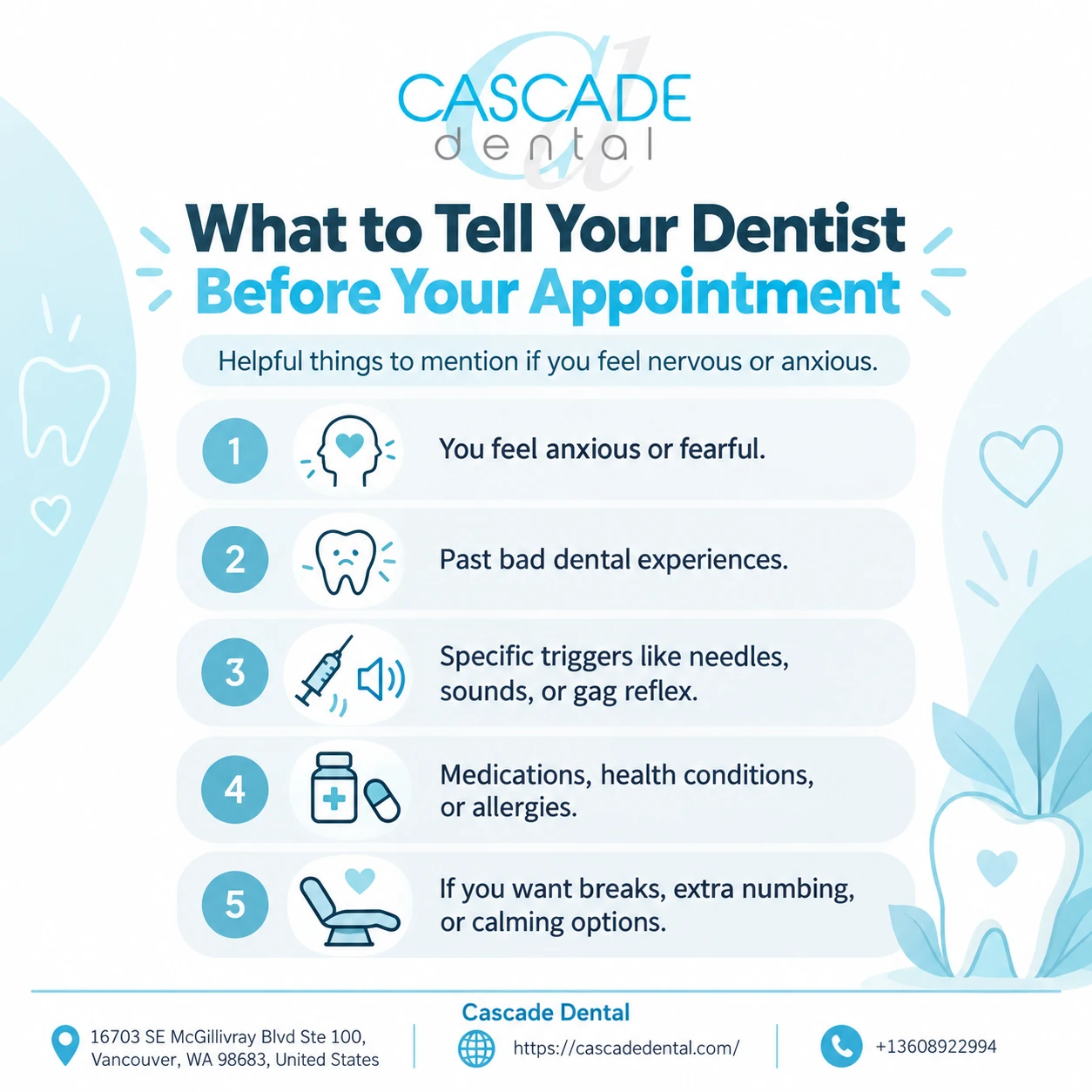
- How nervous you usually feel before or during dental visits
- Whether you have delayed treatment because of fear
- Previous negative dental experiences
- Fear of needles, drilling, pain, or numbness
- Sensitivity to sounds, smells, or certain sensations
- Difficulty keeping your mouth open
- A strong gag reflex
- Fear of feeling trapped or losing control
- Previous difficulty becoming numb
- Whether you would like treatment explained before each step
- Whether you prefer fewer details during treatment
- Whether you want scheduled breaks
- Medications or sedation you have previously received
You can mention these concerns when scheduling the appointment rather than waiting until you are already in the treatment chair.
The more the dental team understands about what makes you uncomfortable, the easier it may be to plan the visit around your needs.
Why Is It Important to Mention Dental Anxiety Before Your Visit?
Dentists regularly treat patients who feel nervous, but they cannot always tell how anxious someone is simply by looking at them.
Some patients openly say they are worried. Others become quiet, tense, restless, or unusually talkative. Someone may appear calm while feeling extremely uncomfortable internally.
Talking about anxiety gives the dental team an opportunity to adjust how the appointment is handled.
For example, they may be able to:
- Allow additional time for the appointment
- Explain what will happen before beginning
- Introduce instruments gradually
- Arrange breaks
- Establish a stop signal
- Discuss numbing options
- Review sedation options when appropriate
- Avoid certain known triggers when possible
- Begin with a consultation rather than treatment
Mentioning anxiety beforehand may also prevent misunderstandings.
If you suddenly raise your hand, tense your jaw, or become uncomfortable during a procedure, the dentist will already understand that anxiety may be contributing.
Communication allows the patient and dental team to work together instead of trying to manage anxiety after it becomes overwhelming.
What Details About Your Anxiety Should You Share?
You do not have to give your dentist your entire personal history.
Focus on information that could help make dental care more comfortable.
Explain How Strong the Anxiety Feels
Dental anxiety varies widely.
One person may feel mildly nervous while sitting in the waiting room. Another may lose sleep for several nights before an appointment.
Some people experience:
- Racing thoughts
- Sweating
- Shaking
- Nausea
- Rapid heartbeat
- Difficulty sleeping
- A feeling of panic
- An urge to cancel the appointment
Letting the dental team know how strongly anxiety affects you can help them understand how much support you may need.
Identify Specific Triggers
Try to identify what part of dental treatment makes you most uncomfortable.
Common triggers include:
- Needles
- Dental drills
- The sound of instruments
- Fear of pain
- Numbing sensations
- Difficulty breathing through the nose
- Having instruments in the mouth
- Feeling unable to swallow
- Reclining in the dental chair
- Fear of receiving bad news
- Concern about being judged
- Loss of control
Not everyone has the same triggers.
Someone who dislikes needles may otherwise tolerate treatment comfortably. Another person may be perfectly comfortable with injections but become anxious when the chair reclines.
Specific information is more useful than simply saying, “I hate going to the dentist.”
Explain What Helps You Feel Calmer
It is also useful to tell the dental team what has helped during previous appointments.
You might prefer:
- Detailed explanations before each step
- Minimal conversation during treatment
- A slower pace
- Frequent breaks
- Music through headphones
- Keeping the chair slightly more upright when possible
- Knowing approximately how long each part will take
- A clear hand signal for stopping
Preferences vary, and not every request is possible during every procedure. However, discussing them gives the dental team a better idea of how to approach your care.
Should You Tell Your Dentist About Past Negative Experiences?
Yes. You do not need to describe everything in detail, but previous dental experiences can provide important context.
For example, tell your dentist if you previously experienced:
- Pain during dental treatment
- An injection that was particularly uncomfortable
- Difficulty becoming fully numb
- Treatment that continued when you wanted it to stop
- A strong gagging episode
- Feeling unable to breathe comfortably
- An unpleasant reaction to medication
- Feeling rushed or ignored
- Embarrassment or criticism about your teeth
A previous negative experience can influence how you respond to future dental care, even when the current situation is different.
The goal of discussing the experience is not to criticize another dentist. It is to help your current dental team understand what you want to avoid.
You can keep the explanation simple.
For example, you might say that you previously had treatment before you felt completely numb and are now particularly nervous about pain.
That gives your dentist specific information that may help them plan the appointment more carefully.
What Comfort Options Can You Ask About?
Comfort options vary by dental office, procedure, medical history, and individual patient needs.
You can ask what is available before treatment begins.
Local Anesthetic
Local anesthetic is commonly used to numb a specific area during many dental procedures.
If you have previously had difficulty becoming numb, tell your dentist before treatment starts.
Do not assume that a previous problem will automatically happen again, but the information may affect how your dentist approaches anesthesia and monitors your comfort.
Topical Numbing Medication
A topical anesthetic may sometimes be placed on the gum before an injection.
It does not replace local anesthesia for procedures that require deeper numbing, but it may make the initial injection more comfortable for some patients.
Nitrous Oxide
Some dental practices offer nitrous oxide, often called laughing gas, to help patients feel more relaxed during treatment.
The patient remains awake and able to communicate.
Whether nitrous oxide is appropriate depends on factors such as medical history, the procedure being performed, and the individual dental practice.
Oral Sedation
Certain patients may be candidates for prescription oral sedation.
Because these medications can cause significant drowsiness and affect coordination or judgment, they require specific instructions and may require someone else to drive the patient to and from the appointment.
Never take someone else’s anti-anxiety medication or additional medication before a dental appointment without discussing it with the dentist or prescribing healthcare professional.
Other Sedation Options
Some dental practices offer deeper forms of sedation for selected patients and procedures.
Availability varies considerably.
The appropriate level of sedation depends on the patient’s health, anxiety level, planned treatment, medications, and other safety considerations.
If sedation is something you think you may need, bring it up before the day of treatment whenever possible.

Lost Filling or Crown: Is It a Dental Emergency?
A lost filling or crown is not always a dental emergency, but it should be treated promptly. Once a filling…
How Can You Prepare Before a Dental Appointment?
A few practical steps can make the appointment feel more predictable.
Contact the Office Ahead of Time
You do not have to wait until you arrive.
When scheduling, you can simply say:
“I have quite a bit of dental anxiety. Can you make a note for the dental team?”
You can also ask whether additional time can be allowed for the visit.
Schedule at a Time That Works for You
Some patients feel less anxious earlier in the day because they have less time to anticipate the appointment.
Others prefer an afternoon visit.
Choose a time when you are less likely to feel rushed by work, childcare, or another commitment.
Avoid Arriving Extremely Early
Arriving with enough time to check in is useful, but sitting in a waiting room for a long period may increase anxiety for some people.
Plan enough time so that you are not rushing without giving yourself an unnecessarily long period to worry.
Follow Eating and Medication Instructions
If your dentist has provided instructions about eating, drinking, or medications, follow them carefully.
This is particularly important if sedation is planned.
Tell the dental office about prescription medications, over-the-counter medications, supplements, and relevant medical conditions as requested.
Do Not Self-Medicate for Anxiety
Do not take extra prescription medication, alcohol, cannabis, or other substances simply to calm yourself before an appointment without discussing them with the appropriate healthcare professional.
Certain substances can interact with medications or sedation used during dental treatment.
Bring Something That Helps You Relax
Depending on the dental office and procedure, you may be able to use:
- Headphones
- Music
- A podcast
- An audiobook
- A small comfort object
Ask the dental team whether headphones or other items are appropriate during your procedure.
Can You Ask for Breaks or a Stop Signal During Treatment?
Yes.
Many anxious patients feel better when they know they can communicate during treatment.
Before treatment begins, agree on a simple signal.
Raising one hand is commonly used.
The signal might mean:
- I need a break.
- I feel something uncomfortable.
- I need to swallow.
- I need to adjust my position.
- I have a question.
- I am becoming anxious.
There may be brief moments during certain procedures when the dentist cannot stop instantly because an instrument must first be safely removed or a step must be completed.
However, establishing a signal helps maintain communication even when you cannot speak.
You can also ask whether planned breaks are possible during longer procedures.
Knowing that you will not have to remain in the chair indefinitely can make treatment feel more manageable.
Is It Okay to Start With Just a Dental Exam?
Yes.
For someone who has avoided dental care because of anxiety, beginning with an examination or consultation may feel much more manageable than scheduling significant treatment immediately.
A first visit may involve:
- Discussing your concerns
- Reviewing your dental and medical history
- Examining your teeth and gums
- Taking necessary dental X-rays
- Identifying urgent concerns
- Discussing possible treatment
- Planning future visits
Exactly what happens depends on the practice and your individual situation.
If you are particularly anxious, ask whether the first appointment can focus primarily on becoming familiar with the office and understanding your dental needs.
However, significant pain, swelling, infection, trauma, or another urgent problem may require more immediate evaluation or treatment.
The dental team can explain what should and should not be delayed.
How Can the Dental Team Help Make Visits More Comfortable?
A supportive dental team can make the experience more predictable and easier to manage.
Communication strategies may include explaining:
- What will happen next
- What sensations you might notice
- How long a step may take
- Whether pressure or vibration is expected
- When you can take a break
Some people find detailed explanations reassuring.
Other patients become more anxious when every instrument or procedure is described.
Tell the dental team which approach works better for you.
A Slower Introduction to Treatment
Patients with significant anxiety may benefit from gradually becoming comfortable with dental care.
For example, early appointments may focus on:
- Examination
- X-rays
- Cleaning
- Preventive care
- Shorter procedures
More involved treatment can then be planned with appropriate comfort strategies.
This is not possible in every situation, particularly when urgent dental problems are present, but gradual exposure can be useful for some patients.
Predictability
Unexpected sensations can increase anxiety.
Knowing that you may feel pressure, water, vibration, or temporary numbness can make those sensations less alarming when they occur.
Respectful Communication
Patients should be able to discuss fear without embarrassment.
Dental anxiety is common, and avoiding dental care because of fear can happen to people of any age.
Your dentist needs accurate information about your concerns, not a performance of how calm you think you should be.
When Should You Discuss Severe Dental Anxiety in Advance?
Contact the dental office before the appointment if anxiety is significant enough that you think it could prevent you from receiving care.
It is especially important to discuss anxiety beforehand if you:
- Regularly cancel dental appointments because of fear
- Have avoided dental treatment for years
- Experience panic attacks related to dentistry
- Become nauseated or physically ill before appointments
- Have previously been unable to complete treatment
- Have a severe gag reflex
- Have significant difficulty tolerating injections or dental instruments
- Think you may need sedation
- Have previously had problems with sedation or anesthesia
- Take medications that could affect sedation planning
Advance communication gives the practice more opportunity to determine what accommodations or sedation services may be available.
If your dental anxiety is severe enough to affect other areas of your life, discussing it with a physician or mental health professional may also be helpful. Approaches such as cognitive behavioral therapy and other anxiety-management techniques may help some people gradually become more comfortable receiving dental care.
Make Your Next Dental Visit More Manageable
Dental anxiety does not have to be kept secret.
At Cascade Dental, patients are encouraged to tell the dental team when they feel nervous, what has made previous appointments difficult, and what helps them feel more comfortable. Clear communication gives the team a better opportunity to explain the visit, plan appropriate breaks, and discuss available comfort options when needed.
You do not need to wait until anxiety becomes overwhelming before mentioning it. Bringing it up when you schedule the appointment can make planning easier.
Whether you have mild nervousness or have avoided dental care for a long time, the first step can simply be a conversation about what you need to feel more comfortable moving forward.
FAQs
Is dental anxiety common?
Yes. Many people experience some degree of nervousness or fear surrounding dental visits.
The intensity varies. Some patients feel slightly uncomfortable before an appointment, while others avoid dental care entirely because of fear.
Will my dentist judge me for being anxious?
Dental professionals regularly see patients who feel nervous about treatment.
Sharing your concerns gives the team useful information that may help them adjust communication and discuss appropriate comfort options.
You also do not need to apologize for feeling anxious.
What should I say when scheduling an appointment?
Keep it simple.
You can tell the scheduler that you have dental anxiety and would like the dentist and clinical team to know before your appointment.
If there is a particular trigger, such as injections or previous difficulty becoming numb, mention that as well.
Can I ask my dentist to explain everything before treatment?
Yes.
If explanations help you feel more comfortable, ask the dentist to tell you what is happening before each step.
If detailed explanations make you more nervous, you can request less detail instead.
Can I wear headphones during a dental procedure?
Sometimes.
Headphones can help reduce awareness of dental sounds and provide a distraction. However, the dentist must still be able to communicate with you.
Ask whether headphones are appropriate for your particular procedure.
What if I am afraid of dental needles?
Tell your dentist before the injection.
Depending on the situation, the dental team may discuss topical anesthetic, injection technique, distraction strategies, or other comfort measures.
Avoid looking at the syringe if seeing needles increases your anxiety.
Can I ask the dentist to stop during treatment?
You can establish a stop signal before the procedure begins, such as raising your hand.
The dentist may need a moment to safely remove instruments before pausing, but having an agreed signal gives you a way to communicate when speaking is difficult.
What if I have trouble getting numb?
Tell your dentist about previous experiences.
Several factors can influence local anesthesia, and the dentist may need to modify the approach or allow additional time depending on the procedure and individual response.
Do not wait until treatment has already started to mention that you have experienced this problem before.
Can sedation completely remove dental anxiety?
Sedation may help reduce anxiety for appropriate patients, but there are different levels and types of sedation, and no single option is suitable for everyone.
The dentist must consider the planned procedure, medical history, medications, anxiety level, and other safety factors.
Ask the practice what options it provides.
Should I cancel an appointment if I feel extremely nervous?
Call the dental office before canceling.
Tell them how anxious you feel and ask whether the visit can be adjusted. In some cases, the team may be able to start with a consultation, allow additional time, or discuss comfort options.
Repeatedly postponing care may allow dental problems to become more complicated, so communicating with the office is usually better than simply avoiding the appointment.
Nervous About Your Dental Visit?
Tell your dentist what makes you anxious and get the personalized, comfortable care you deserve. Call now to schedule your appointment.