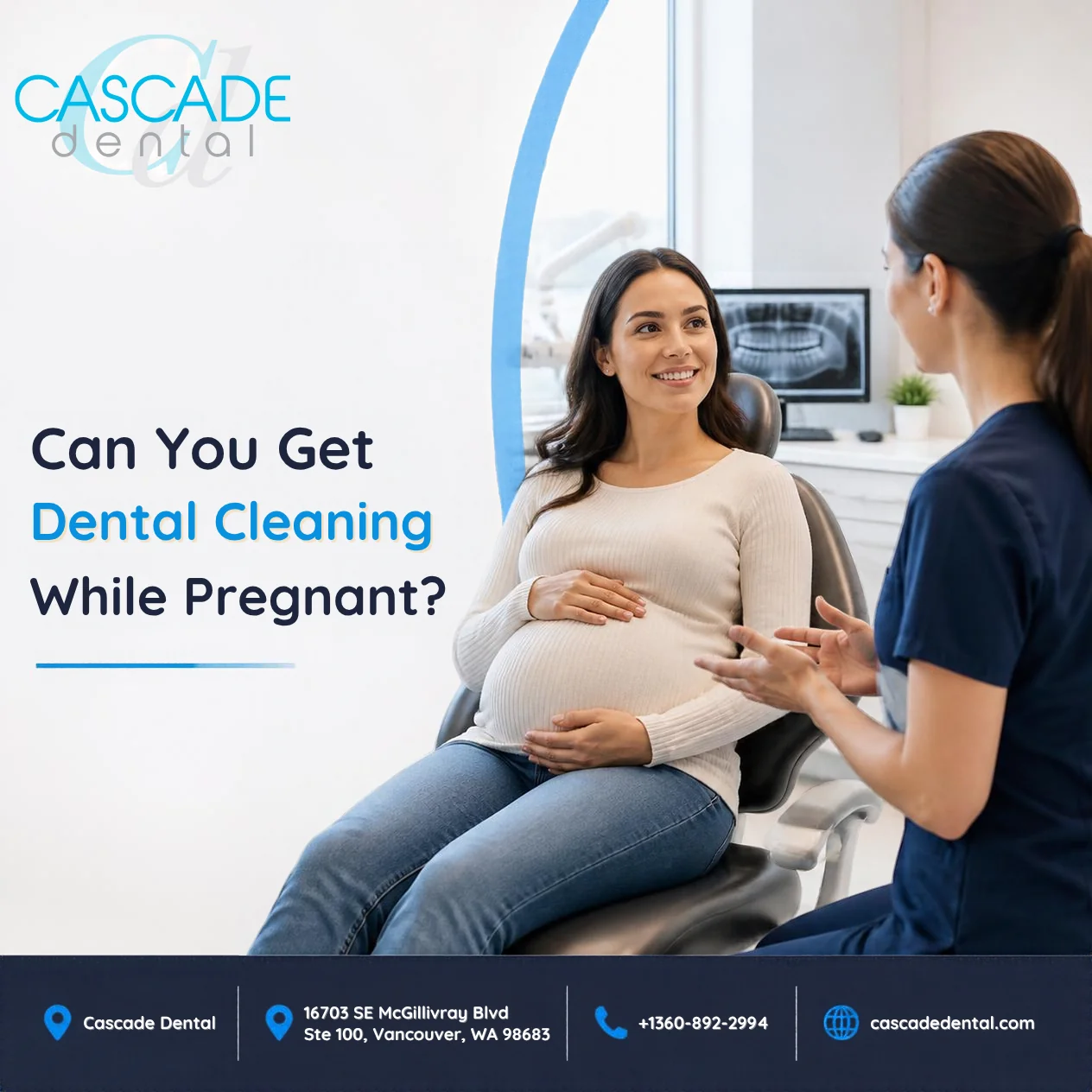
Yes, you can generally get dental cleaning while pregnant, and routine preventive dental care is considered safe throughout pregnancy. Professional cleanings help remove plaque and tartar while allowing your dentist to evaluate gum changes that may occur because of pregnancy hormones.
You usually do not need to postpone a routine cleaning until after delivery. However, your dentist should know that you are pregnant and whether you have any medical complications or specific recommendations from your healthcare provider.
Understanding how pregnancy affects your gums and what happens during an appointment can help you plan dental care confidently.
Pregnant and Due for a Dental Cleaning?
Keep your smile healthy during pregnancy! Schedule a professional dental cleaning for safe, gentle care.
Can You Get Dental Cleaning While Pregnant?
Is professional teeth cleaning safe during pregnancy?
Routine professional teeth cleaning is generally safe during all stages of pregnancy.
The American Dental Association (ADA) and the American College of Obstetricians and Gynecologists (ACOG) support preventive dental care during pregnancy.
A standard cleaning removes plaque, hardened tartar, and surface stains from the teeth. It also gives the dental team an opportunity to assess gum health and identify concerns that may require attention.
The procedure does not usually involve medications or other interventions that require special pregnancy-related precautions.
However, your dentist should review your medical history and adjust the appointment when necessary.
Patients with pregnancy complications or specific medical restrictions may benefit from coordination between their dental and prenatal healthcare providers.
Do you need to wait until after giving birth?
No. Most pregnant patients do not need to delay routine dental cleanings until after delivery.
Postponing preventive care may allow plaque and tartar to accumulate, particularly when pregnancy-related gum sensitivity makes brushing and flossing uncomfortable.
Regular dental care can help identify inflammation before it becomes more difficult to manage.
If you are due for a cleaning, tell the dental office that you are pregnant when scheduling.
Your dental team can explain whether any changes to the appointment are appropriate.
Why Is Preventive Dental Care Important During Pregnancy?
Does pregnancy increase the risk of oral health problems?
Pregnancy can affect oral health in several ways.
Hormonal changes may increase the gums’ inflammatory response to plaque bacteria.
Nausea, vomiting, changes in eating habits, and difficulty maintaining normal brushing routines may also contribute to dental concerns.
Some patients experience dry mouth, increased snacking, or greater sensitivity to certain tastes and smells.
These changes do not mean dental problems are inevitable.
However, they make consistent preventive care particularly valuable.
How do cleanings support healthy gums?
Professional dental cleanings remove plaque and tartar that can contribute to gum inflammation.
Plaque is a sticky bacterial film that accumulates on teeth throughout the day.
When plaque hardens into tartar, regular brushing and flossing cannot remove it completely.
A dental professional uses appropriate instruments to remove these deposits.
Reducing plaque and tartar helps support gum health and makes daily oral hygiene more effective.
However, a cleaning cannot replace consistent brushing, flossing, and other recommended home care.
Can you prevent every dental problem during pregnancy?
No preventive measure guarantees that dental problems will not develop.
However, brushing twice daily with fluoride toothpaste, cleaning between teeth, and attending recommended dental visits can reduce common risks.
If morning sickness causes frequent vomiting, rinse your mouth with water afterward and avoid brushing immediately while acid remains on the tooth surfaces.
Your dentist can recommend an appropriate routine based on your symptoms.
How Can Pregnancy Affect Your Gums?
What is pregnancy gingivitis?
Pregnancy gingivitis is gum inflammation that develops or becomes more noticeable during pregnancy.
Hormonal changes can make gum tissues respond more strongly to plaque bacteria.
The gums may become red, swollen, tender, or more likely to bleed during brushing and flossing.
These changes can occur even when your oral hygiene routine has not changed significantly.
Pregnancy gingivitis commonly develops or becomes more noticeable during the second trimester, although symptoms can appear at other times.
Does pregnancy cause gum disease?
Pregnancy itself does not automatically cause gum disease.
However, hormonal changes can increase susceptibility to gum inflammation when plaque is present.
Gingivitis affects the gum tissues and does not involve the same supporting bone destruction associated with periodontitis.
Periodontitis is a more serious inflammatory condition that can damage the structures supporting teeth.
Your dentist can assess whether symptoms reflect temporary gum inflammation or a condition requiring additional periodontal care.
Can pregnancy cause unusual gum growths?
Some pregnant patients develop localized gum growths sometimes called pregnancy tumors or pyogenic granulomas.
Despite the name, these growths are generally benign and are not cancer.
They may appear red, swollen, and prone to bleeding.
Some resolve after pregnancy, while others require professional evaluation or treatment.
Do not attempt to remove or treat a gum growth yourself.
Any new or changing oral lesion should be examined by a dental professional.
Is It Normal for Gums to Bleed More During Pregnancy?
Why do gums bleed during brushing or flossing?
Bleeding gums are relatively common during pregnancy because hormonal changes can increase inflammation around the teeth.
However, bleeding should not automatically be dismissed as harmless.
Plaque accumulation, gingivitis, and periodontal disease can also contribute to bleeding.
If your gums bleed regularly, inform your dentist.
An examination can help identify the cause and determine whether professional cleaning or additional treatment is appropriate.
Should you stop flossing if your gums bleed?
Usually, no.
Stopping flossing may allow more plaque to accumulate between teeth, potentially worsening inflammation.
Continue cleaning gently between your teeth with an appropriate technique.
Avoid snapping floss into the gums or brushing aggressively.
If bleeding is persistent, significant, or accompanied by pain or swelling, seek dental evaluation.
Your hygienist can demonstrate techniques that make daily cleaning more comfortable.
When Is the Best Time to Schedule a Dental Cleaning?
Can you get a cleaning during the first trimester?
Yes. Routine dental cleanings are generally appropriate during the first trimester.
Some patients experience nausea, fatigue, or increased sensitivity to smells during this stage.
These symptoms may make appointments less comfortable.
If morning sickness is significant, discuss appointment timing and possible accommodations with your dental team.
You do not need to postpone necessary dental care solely because you are in early pregnancy.
Is the second trimester a good time for dental care?
The second trimester is often a comfortable period for routine dental appointments.
For some patients, early pregnancy nausea has improved, and prolonged reclining may still be relatively comfortable.
However, there is no universal requirement to schedule cleanings during this trimester.
A patient who needs dental care during the first or third trimester should not automatically delay treatment.
The best time depends on individual comfort, oral health, and medical circumstances.
Can you get a cleaning during the third trimester?
Yes. Routine dental cleaning can generally be performed during the third trimester.
However, lying flat for an extended period may cause discomfort or dizziness in some patients because the enlarged uterus can affect blood circulation.
Your dental team may adjust the chair position or offer breaks to improve comfort.
Tell your dentist immediately if you feel faint, nauseated, or uncomfortable.
Patients with pregnancy complications should discuss any relevant positioning or appointment restrictions with their healthcare provider.
Are Dental Exams Safe During Pregnancy?
Can your dentist examine your teeth while pregnant?
Yes. Routine dental examinations are considered safe during pregnancy.
The dentist checks for cavities, gum inflammation, existing dental work, and other oral health concerns.
The examination may also identify areas requiring additional treatment or monitoring.
A dental exam does not automatically involve medication or invasive procedures.
Patients can learn more about what happens during an appointment through our dental exams page.
Are dental X-rays safe during pregnancy?
When clinically necessary and performed using appropriate radiation safety practices, dental X-rays are considered safe during pregnancy.
Modern dental imaging uses relatively low radiation doses.
Your dentist determines whether imaging is needed based on your symptoms, examination findings, and dental history.
Not every routine cleaning appointment requires new X-rays.
Tell your dental team that you are pregnant so imaging decisions can be made with your circumstances in mind.
What if your dentist finds a cavity?
Pregnancy does not automatically prevent restorative dental treatment.
The ADA and ACOG explain that necessary dental procedures, including fillings and treatment for dental infections, can be performed during pregnancy.
Delaying treatment may allow an existing problem to become more serious.
Your dentist can explain the procedure, any proposed medications, and whether communication with your prenatal healthcare provider is appropriate.
What Should You Tell Your Dentist Before the Appointment?
Which pregnancy details should you share?
Tell your dentist that you are pregnant and how far along you are.
You should also mention whether the pregnancy is considered high risk or whether your prenatal healthcare provider has recommended specific precautions.
Discuss symptoms that could affect your appointment, including significant nausea, dizziness, or difficulty reclining comfortably.
This information helps your dental team plan appropriate care.
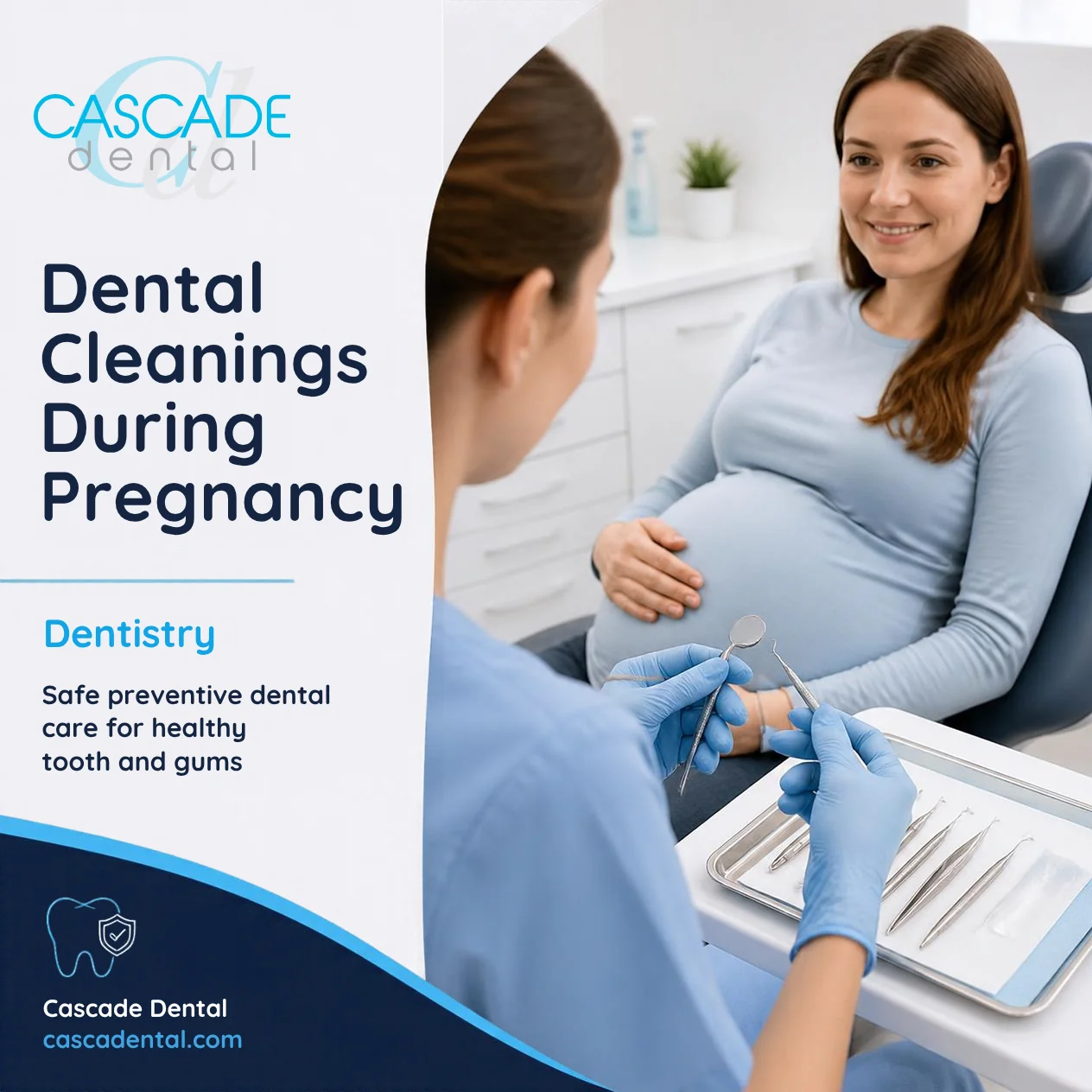
Which medications should you mention?
Provide a current list of prescription medications, over-the-counter products, prenatal vitamins, and supplements.
Also mention medication allergies or previous reactions to dental medications.
Do not stop prescribed medication before a dental visit unless your appropriate healthcare provider specifically instructs you to do so.
If treatment beyond a routine cleaning is recommended, your dentist can review whether medications or additional precautions are necessary.
Should you mention previous dental problems?
Yes.
Tell your dentist if you have experienced gum bleeding, tooth sensitivity, swelling, or persistent bad breath.
Mention previous periodontal treatment or dental infections.
These details help establish whether your current symptoms represent pregnancy-related changes or an existing condition that needs attention.
When Should You Consult Your OB-GYN or Healthcare Provider?
Does every pregnant patient need medical clearance?
No. Routine preventive dental care generally does not require separate medical clearance for every pregnant patient.
However, communication with your prenatal healthcare provider may be helpful when medical complications or specific treatment concerns exist.
Examples include significant pregnancy-related health problems, restrictions on positioning, or questions about medications.
Your dentist may request additional information before recommending certain procedures.
What if you have a high-risk pregnancy?
A high-risk pregnancy does not automatically mean dental care must stop.
However, your dental team should understand the relevant medical concerns.
Your OB-GYN or other prenatal healthcare provider may offer recommendations about appointment timing, positioning, medications, or precautions.
The appropriate approach depends on your individual condition.
Avoid assuming that guidance given to another pregnant patient applies to you.
Should you delay treatment for dental pain?
No. Persistent dental pain, infection, or significant swelling should be evaluated promptly.
Untreated dental infections can worsen and may require more extensive treatment.
If you have severe facial swelling, fever with a suspected dental infection, or difficulty swallowing, seek urgent professional assessment.
Difficulty breathing or rapidly spreading swelling requires emergency medical attention.
What Happens During a Routine Cleaning While Pregnant?
What should you expect at the appointment?
A routine cleaning generally begins with reviewing your dental and medical history.
Your hygienist examines the gums and identifies areas with plaque or tartar accumulation.
Professional instruments are used to remove deposits from the teeth.
The appointment may also include polishing and individualized home-care recommendations.
Your dentist may complete an examination to assess overall oral health.
The exact steps depend on your clinical needs and the type of cleaning recommended.
Will cleaning hurt if your gums are sensitive?
Pregnancy-related gum inflammation may make certain areas more sensitive.
Some patients experience tenderness or mild bleeding during cleaning.
Tell your hygienist if you feel uncomfortable.
The dental team can adjust techniques or discuss appropriate comfort measures.
Significant discomfort should not be ignored.
What if you need a deep cleaning?
A routine preventive cleaning differs from periodontal scaling and root planing, sometimes called a deep cleaning.
Scaling and root planing may be recommended when periodontal disease affects tissues beneath the gumline.
Your dentist determines whether this treatment is necessary based on clinical findings.
If additional periodontal treatment is recommended during pregnancy, discuss the procedure, timing, and relevant medical considerations before proceeding.
When Should Gum Changes Be Evaluated?
Which gum symptoms need professional attention?
Contact your dentist if you experience persistent bleeding, worsening swelling, significant tenderness, or a new gum growth.
Other concerns include gum recession, loose teeth, drainage, or discomfort when chewing.
Although some gum sensitivity is common during pregnancy, persistent or worsening symptoms should be assessed.
An examination can help distinguish manageable inflammation from conditions requiring additional care.
What can you do between dental visits?
Maintain a gentle, consistent oral hygiene routine.
Brush twice daily with fluoride toothpaste and clean between teeth every day.
Choose a soft-bristled toothbrush if your gums are tender.
If nausea makes brushing difficult, discuss practical alternatives with your dental team.
Avoid harsh brushing or attempting to scrape tartar from your own teeth.
Professional guidance can help you maintain oral hygiene comfortably throughout pregnancy.
FAQs
Is it safe to have your teeth professionally cleaned while pregnant?
Yes. Routine dental cleanings are generally considered safe during pregnancy. They help remove plaque and tartar while allowing the dentist to assess gum changes. Tell your dental team about your pregnancy and any relevant medical concerns.
Can dental cleaning cause pregnancy complications?
Routine dental cleaning has not been shown to cause pregnancy complications. Preventive dental care is supported by major professional organizations, including the ADA and ACOG. Individual medical circumstances should still be discussed with the appropriate healthcare providers.
Is the second trimester the safest time for dental cleaning?
The second trimester is often comfortable for routine dental care, but cleanings are generally appropriate during all three trimesters. Appointment timing should consider your symptoms, medical history, and dental needs.
Can pregnancy gingivitis go away after delivery?
Pregnancy-related gum inflammation may improve after delivery as hormone levels change. However, persistent plaque, tartar, or existing periodontal disease may continue causing problems. Professional evaluation and regular oral hygiene remain important.
Do I need to tell my dentist if I am only a few weeks pregnant?
Yes. Tell your dentist as soon as you know you are pregnant. This allows the dental team to consider your medical history and make appropriate decisions about examinations, imaging, medications, and treatment planning.
Should I postpone my dental cleaning if my gums bleed?
Not necessarily. Bleeding gums may indicate gingivitis or another condition that benefits from professional assessment. Rather than postponing care, contact your dentist to explain your symptoms and determine the appropriate appointment.
Plan Comfortable Preventive Dental Care With Cascade Dental
Routine dental cleaning can remain an important part of caring for your oral health throughout pregnancy.
At Cascade Dental, we help patients understand their preventive dental needs and discuss concerns about gum sensitivity, bleeding, appointment timing, and oral hygiene.
We recognize that every pregnancy is different, and we encourage patients to share relevant health information before treatment.
Our team can review your oral health, explain recommended preventive care, and discuss when coordination with your prenatal healthcare provider may be helpful.
Learn more about our professional teeth cleaning and dental exams.
We welcome patients from Camas, WA at our Vancouver dental office.
If you are pregnant and due for a cleaning, contact Cascade Dental to discuss your appointment and any concerns you would like our team to address.
Key Takeaways
Routine dental cleaning is generally safe throughout pregnancy and can help maintain healthy teeth and gums. Pregnancy-related hormonal changes may increase gum inflammation, tenderness, and bleeding, making preventive care especially important.
Most patients do not need to postpone cleanings until after delivery or obtain separate medical clearance for routine appointments. However, individual complications may require coordination with prenatal healthcare providers.
Inform your dentist about your pregnancy, medications, symptoms, and medical concerns. Persistent bleeding, swelling, pain, or unusual gum changes deserve professional evaluation rather than being dismissed as normal pregnancy symptoms.
Don't Skip Dental Cleanings During Pregnancy!
Protect your teeth and gums with pregnancy-friendly dental care. Call today to book your appointment!