Chronic headaches aren’t always caused by stress or migraines. In some cases, the source of the pain may actually come from your teeth.
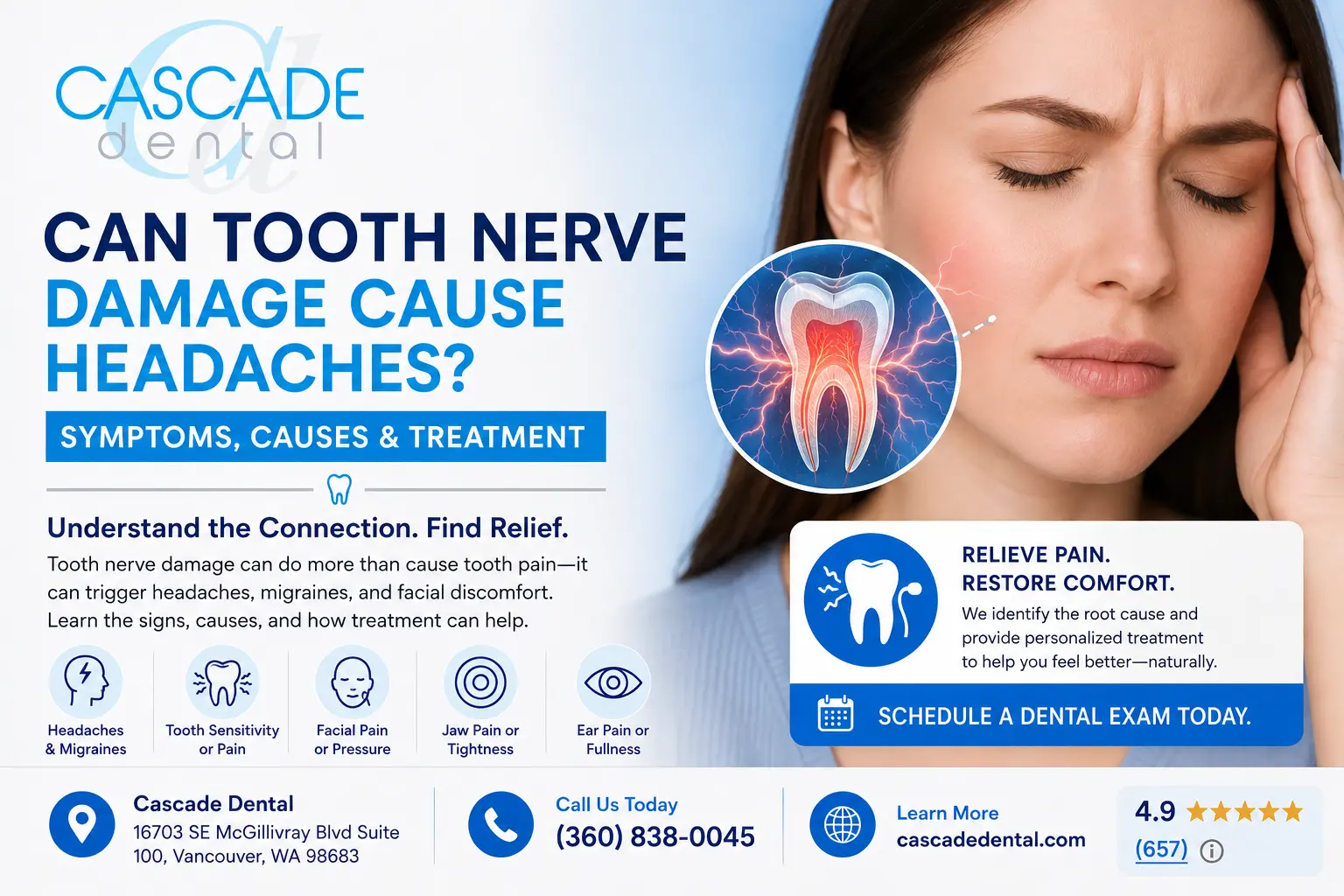
Tooth nerve damage, infections, or bite issues can trigger headaches due to shared nerve pathways between the teeth and head. The trigeminal nerve plays a major role in facial sensation, which helps explain why dental pain can sometimes be felt in the jaw, temples, or head.
In this guide, we’ll explain how dental problems can cause headaches, the symptoms to watch for, and when to see a dentist.
Is Your Toothache Triggering Headaches?
Tooth nerve damage can spread discomfort beyond your mouth. Let’s fix it early.
Why Tooth Problems Can Cause Headaches
Your teeth, jaw, and head are connected through the trigeminal nerve, one of the largest nerves in the body. When this nerve is irritated by dental issues such as infection or nerve damage, pain signals can travel from your teeth to your head, resulting in headaches.
This is known as referred pain, where the brain interprets dental pain as head pain. Because of this nerve connection, even a problem in a single tooth can trigger pain that radiates through the jaw, temples, or even behind the eyes.
Patients searching for tooth pain relief treatment in Vancouver, WA may benefit from having both the painful tooth and related headache symptoms evaluated together.
Common Causes of Tooth Nerve Damage Leading to Headaches
Several dental issues can irritate your nerves and trigger headaches:
Tooth Decay and Infections
Untreated cavities can reach the nerve inside the tooth, causing inflammation and infection. These infections can irritate the trigeminal nerve, producing persistent headaches. If decay is suspected, timely care for dental cavities can help prevent the issue from progressing into nerve pain or infection.
Trauma or Cracked Teeth
A cracked or fractured tooth can expose the inner nerve. Chewing or temperature changes may trigger nerve pain, which can refer to your head.
Bite Misalignment and Bruxism
Jaw misalignment or teeth grinding, also known as bruxism, can stress the muscles and nerves around your jaw, leading to tension headaches and migraines.
Gum Disease
Advanced gum disease can expose nerves or cause swelling that affects surrounding tissues, potentially resulting in head pain.
Impacted Teeth
Wisdom teeth or other impacted teeth can push against neighboring teeth and nerves, creating headaches that might seem unrelated to dental health.
Symptoms to Watch For
Dental-related headaches may present alongside other signs:
- Tooth sensitivity to hot, cold, or sweet foods
- Pain when chewing or biting
- Jaw stiffness or soreness
- Recurrent headaches in the same area
- Swelling around the affected tooth
Experiencing ongoing headaches with tooth sensitivity or jaw pain? A dental exam can help identify if the cause is coming from your teeth. Schedule an appointment with our team today.
Symptoms such as tooth pain that comes and goes can also be important clues, especially when discomfort appears alongside headaches, pressure, or sensitivity.
When Headaches Are Caused by Dental Issues
You may be dealing with a dental-related headache if:
- Pain starts near the jaw or teeth
- Headaches don’t respond to medication
- You have tooth sensitivity or pain when chewing
- You notice jaw clenching or grinding
Identifying these patterns early allows your dentist to provide targeted care and prevent the problem from worsening. In many cases, treating the underlying issue with procedures like root canal treatment can eliminate both the tooth pain and the headaches. Routine general dentistry services and visits to an emergency dentist can also address urgent dental problems that might be causing head pain.

What to Do If Your Child Says Their Tooth Hurts
If your child says their tooth hurts, start by gently checking the area for trapped food, swelling, a loose tooth,…
Diagnosing Dental-Related Headaches
Dentists use a combination of methods to diagnose the cause of headaches:
- Dental exams: A thorough check of teeth, gums, and bite alignment
- X-rays: Identify nerve damage, decay, infections, and impacted teeth
- Bite analysis: Assess jaw alignment and detect bruxism
- Patient history: Understanding headache patterns, triggers, and prior dental work
Once the source is identified, your dentist can recommend a treatment plan designed to address the problem at its root.
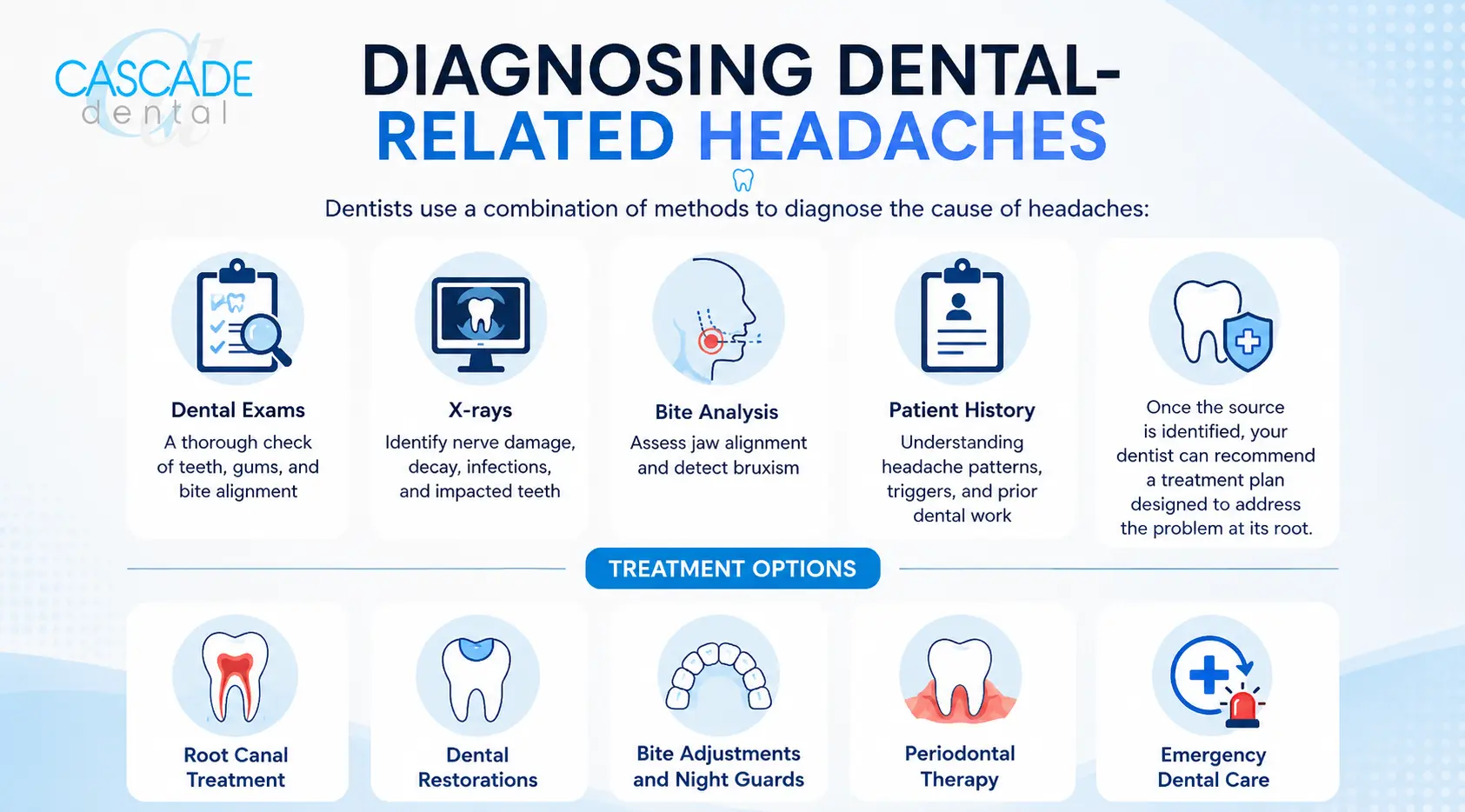
Treatment Options
Treating dental-related headaches focuses on eliminating the source of nerve irritation:
Root Canal Treatment
A root canal removes infected or damaged tissue from inside the tooth, relieving nerve pressure and stopping headaches caused by tooth nerve damage.
Dental Restorations
Crowns, fillings, and other restorations protect teeth that are cracked, decayed, or otherwise compromised.
Bite Adjustments and Night Guards
Correcting misaligned bites or using night guards for teeth grinding can prevent jaw strain and tension headaches.
Periodontal Therapy
Treating gum disease reduces inflammation and eliminates nerve irritation linked to chronic headaches.
Emergency Dental Care
For acute pain, an emergency dentist can provide immediate relief and prevent infections from worsening.
Preventing Dental-Related Headaches
Preventive care can reduce the risk of headaches originating from dental issues:
- Brush and floss regularly to prevent cavities and gum disease
- Schedule regular checkups for early detection of nerve damage
- Address bite misalignment promptly with orthodontic care
- Wear night guards if you grind your teeth
- Seek prompt care for cracked or injured teeth
Proactive dental care not only keeps your teeth healthy but can also prevent chronic headaches and discomfort. For more insight into how dental problems can connect with recurring head pain, read why your jaw hurts in the morning.
Frequently Asked Questions
Can a tooth infection cause headaches?
Yes. Infections can irritate the trigeminal nerve, leading to persistent headaches.
How do I know if my headache is dental-related?
Headaches that start near the jaw or teeth, come with tooth sensitivity, or don’t respond to normal medication may be dental-related.
Will a root canal stop headaches?
If the headache is caused by nerve damage or infection inside a tooth, a root canal can eliminate the source of pain and stop the headaches.
Can jaw clenching cause headaches?
Yes. Teeth grinding and jaw clenching strain muscles and nerves, which can trigger tension headaches and migraines.
Get to the Root Cause of Your Headaches
If your headaches may be linked to dental issues, our team can help diagnose and treat the problem at its source.
- Advanced diagnostics
- Personalized treatment plans
- Trusted dental care in Vancouver, WA
Schedule your visit today!
Tooth Pain Causing Headaches?
Nerve damage could be the reason. Get checked before it gets worse.