Hearing that you may have gum disease can be concerning, especially if you’re unsure what it means for your long-term oral health. One of the most common questions patients ask is: can gum disease be reversed?
The answer depends largely on how early the condition is detected. Gum disease develops in stages, and the earlier it is addressed, the better the chances of preventing long-term damage. Understanding the difference between early and advanced gum disease can help you take the right steps to protect your smile.
Don't ignore bleeding gums.
Healthy gums start with early care. Call today for a professional evaluation and personalized treatment.
Can Gum Disease Be Reversed?
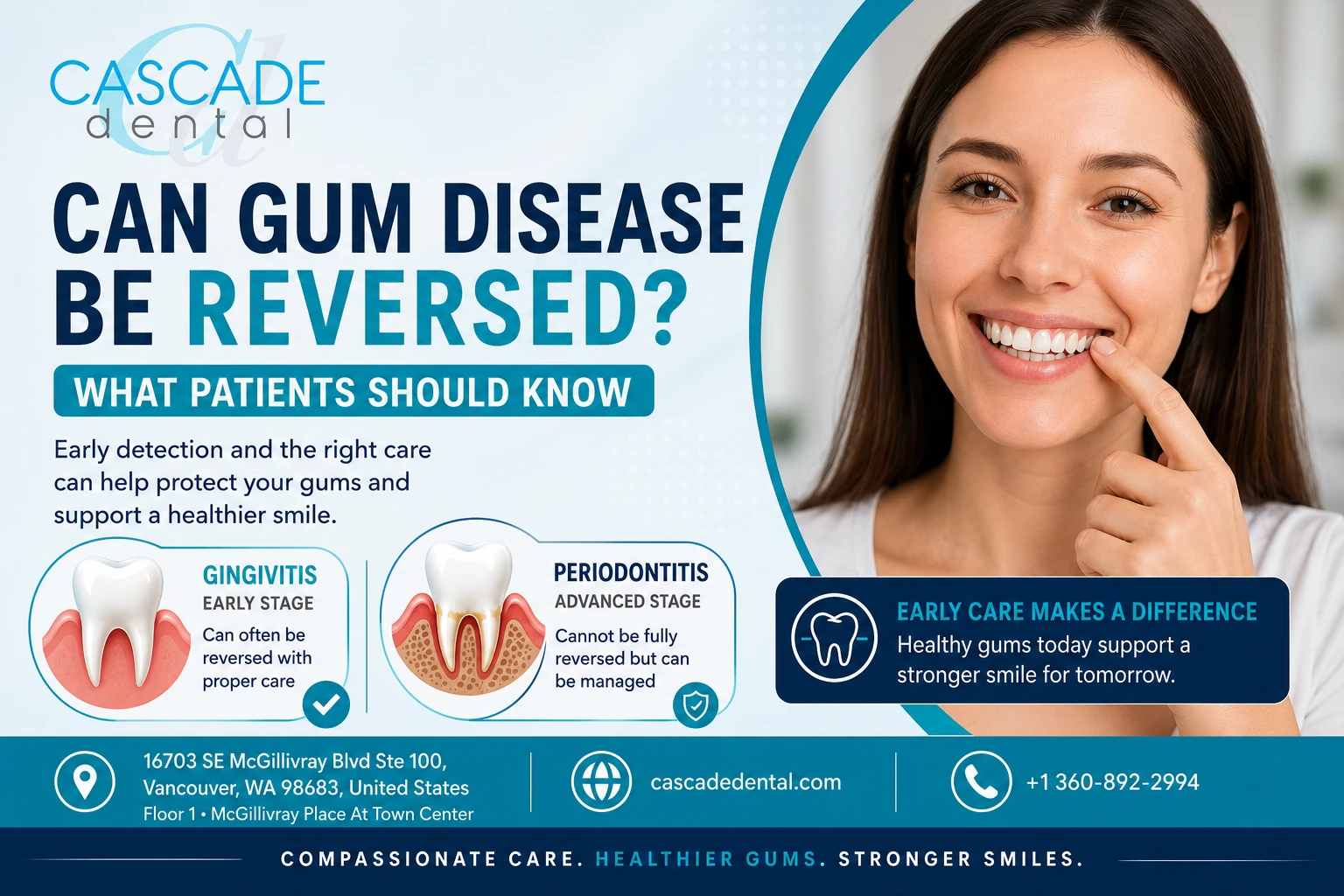
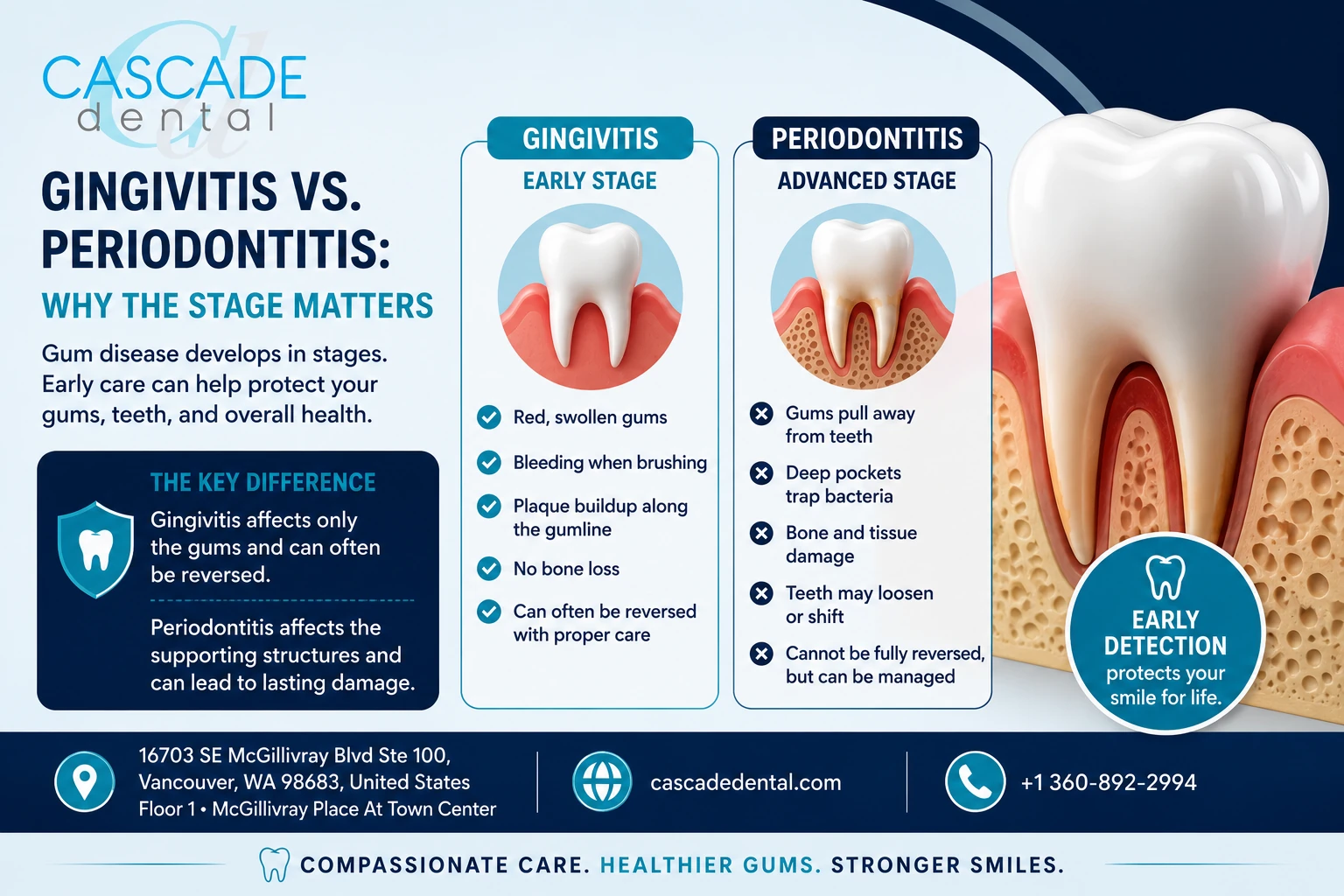
In many cases, early-stage gum disease, known as gingivitis, can often be reversed with proper oral hygiene and professional dental care.
However, advanced gum disease, called periodontitis, generally cannot be fully reversed because it may involve permanent damage to the gums, supporting bone, and other structures around the teeth. While periodontitis cannot usually be undone, it can often be managed and controlled with appropriate treatment and ongoing care.
The key factor is early detection. Identifying gum disease in its earliest stages may help prevent progression and preserve the health of your teeth and gums.
Gingivitis vs. Periodontitis: Why the Stage Matters
To understand whether gum disease can be reversed, it helps to know the difference between its two primary stages.
What Is Gingivitis?
Gingivitis is the earliest stage of gum disease. It develops when plaque and bacteria accumulate along the gumline, causing irritation and inflammation.
Common signs of gingivitis include:
- Red gums
- Swollen gums
- Bleeding during brushing
- Bleeding during flossing
- Mild gum tenderness
At this stage, the condition is typically limited to inflammation of the gum tissue. Because there is usually no permanent damage to the supporting structures of the teeth, gingivitis can often be reversed with timely care and improved oral hygiene habits.
What Is Periodontitis?
If gingivitis is left untreated, it may progress into periodontitis.
Periodontitis is a more advanced form of gum disease that extends beyond the gum tissue and begins affecting the structures that support the teeth.
Over time, periodontitis may impact:
Gum Tissue
The gums can begin pulling away from the teeth, creating pockets where bacteria can accumulate.
Bone Support
The bone that helps anchor teeth in place may gradually deteriorate.
Tooth Stability
As supporting tissues weaken, teeth may become loose or shift position.
Unlike gingivitis, the damage caused by periodontitis is generally not fully reversible. This is why early intervention is so important. Addressing gum disease before it progresses can help preserve healthy tissue and reduce the risk of more significant complications.
Treatment Options for Gum Disease
Treatment recommendations vary depending on the stage and severity of gum disease.
Professional Cleanings
For patients with early signs of gum inflammation, professional dental cleanings may help remove plaque and tartar that contribute to irritation.
Improved Oral Hygiene
Consistent brushing and flossing habits are often an important part of improving gum health and reducing inflammation.
Periodontal Therapy
When gum disease progresses beyond the earliest stages, more specialized periodontal treatment approaches may be recommended to help manage infection and protect supporting structures. These tailored periodontal treatments for gum health can be especially important when dealing with persistent swelling, inflammation, or other signs of periodontal disease.
Ongoing Maintenance Care
Many patients benefit from regular monitoring and maintenance visits designed to support long-term gum health and reduce the risk of recurrence.
Because every patient’s situation is different, treatment plans are typically customized based on the severity of the condition and individual oral health needs.

Can Tooth Nerve Damage Cause Headaches? Symptoms, Causes & Treatment
Chronic headaches aren’t always caused by stress or migraines. In some cases, the source of the pain may actually come…
How Home Care Supports Healthier Gums
Daily habits play an important role in supporting healthy gums and preventing the progression of gum disease.
Brushing Twice Daily
Regular brushing helps remove plaque and bacteria that accumulate throughout the day.
Flossing Regularly
Flossing helps clean areas between the teeth that a toothbrush cannot easily reach.
Using Recommended Oral Hygiene Products
Your dental professional may recommend specific products based on your individual needs, including toothpaste, rinses, or other preventive tools.
Maintaining Regular Dental Visits
Professional evaluations allow dental teams to monitor gum health and identify concerns before they become more advanced.
Consistent home care can help reduce plaque buildup and inflammation, but it works best when combined with professional dental care and regular evaluations.
How to Help Prevent Gum Disease From Getting Worse
You can help protect your gums by:
- Brushing twice daily
- Flossing once daily
- Keeping regular dental cleanings
- Avoiding tobacco products
- Managing dry mouth when present
- Following your dentist’s recommended maintenance schedule
These habits can support healthier gums, but they do not replace professional care if gum disease is already present.
When to See a Dentist for Gum Disease Symptoms
Certain symptoms may indicate that professional evaluation is appropriate.
Persistent Bleeding Gums
Occasional minor irritation can happen, but gums that bleed consistently during brushing or flossing should not be ignored.
Gum Recession
Gums that appear to be pulling away from the teeth may indicate advancing gum disease.
Chronic Bad Breath
Persistent bad breath can sometimes be associated with bacterial buildup and periodontal concerns.
Loose Teeth
Teeth that feel loose or unstable should be evaluated promptly.
Swollen or Tender Gums
Ongoing swelling, tenderness, or discomfort may indicate active inflammation.
Changes in Bite Alignment
Teeth that shift position or changes in how your teeth fit together may warrant professional assessment.
Delaying treatment may allow gum disease to progress, potentially increasing the risk of damage to supporting tissues. For some patients, cosmetic dentistry solutions for gum disease may also be considered when periodontal concerns have affected the appearance of the gums or smile.
Routine professional cleanings remain an important part of preventive care and gum health maintenance.
FAQs About Reversing Gum Disease
Can gingivitis be completely reversed?
In many cases, yes. Gingivitis can often be reversed through improved oral hygiene and professional dental care when addressed early.
Is periodontitis reversible?
Periodontitis generally cannot be fully reversed because it may involve permanent damage to supporting tissues and bone. However, it can often be effectively managed and controlled.
How long does it take to improve gum health?
The timeline varies depending on the severity of the condition and how consistently oral hygiene recommendations are followed. Many patients begin noticing improvements after implementing appropriate care measures.
Why do my gums bleed when I brush?
Bleeding gums are often a sign of inflammation and may indicate gingivitis or another gum-related concern. Professional evaluation can help determine the cause.
Can gum disease go away on its own?
Gum disease typically does not resolve without addressing the underlying plaque and bacterial buildup. Professional care and improved oral hygiene are often necessary.
When should I schedule a dental visit for gum problems?
You should consider scheduling an evaluation if you experience persistent bleeding, swelling, gum recession, bad breath, loose teeth, or other ongoing changes in your gum health.
Early Care Makes a Difference
When asking whether gum disease can be reversed, the answer depends on the stage of the condition. Gingivitis, the earliest form of gum disease, can often be reversed with proper care and professional guidance. More advanced periodontitis generally cannot be fully reversed, but it can often be successfully managed to help protect long-term oral health.
Recognizing warning signs early, maintaining healthy daily habits, and seeking professional evaluation when concerns arise can help support healthier gums and reduce the risk of future complications.
Concerned about gum disease?
The sooner you seek treatment, the better your chances of protecting your teeth and gums. Call today.