A deep cleaning at the dentist, also called scaling and root planing, is a non-surgical treatment used to manage gum disease. Unlike a regular dental cleaning, it removes plaque, tartar, and bacteria from below the gumline while smoothing the tooth roots to help the gums heal and reattach.
For patients in Vancouver, WA, a deep cleaning may be recommended when gum inflammation has progressed beyond simple gingivitis. If your gums bleed when brushing, feel swollen, or your dentist has mentioned periodontal pockets, this treatment may help stop gum disease from getting worse and protect your long-term oral health.
Need a Deep Dental Cleaning?
Treat gum disease early with a professional deep cleaning. Call today to protect your smile and oral health.
Fast Answer: What Is Deep Cleaning?
A deep cleaning is a dental procedure that removes harmful buildup from above and below the gumline. It is most often recommended for patients with periodontal disease, which occurs when bacteria collect under the gums and cause inflammation, gum pocketing, and possible bone loss.
During a deep cleaning, the dentist or dental hygienist carefully removes plaque and tartar from the teeth and root surfaces. The roots are then smoothed to make it harder for bacteria to attach again and to support gum healing.
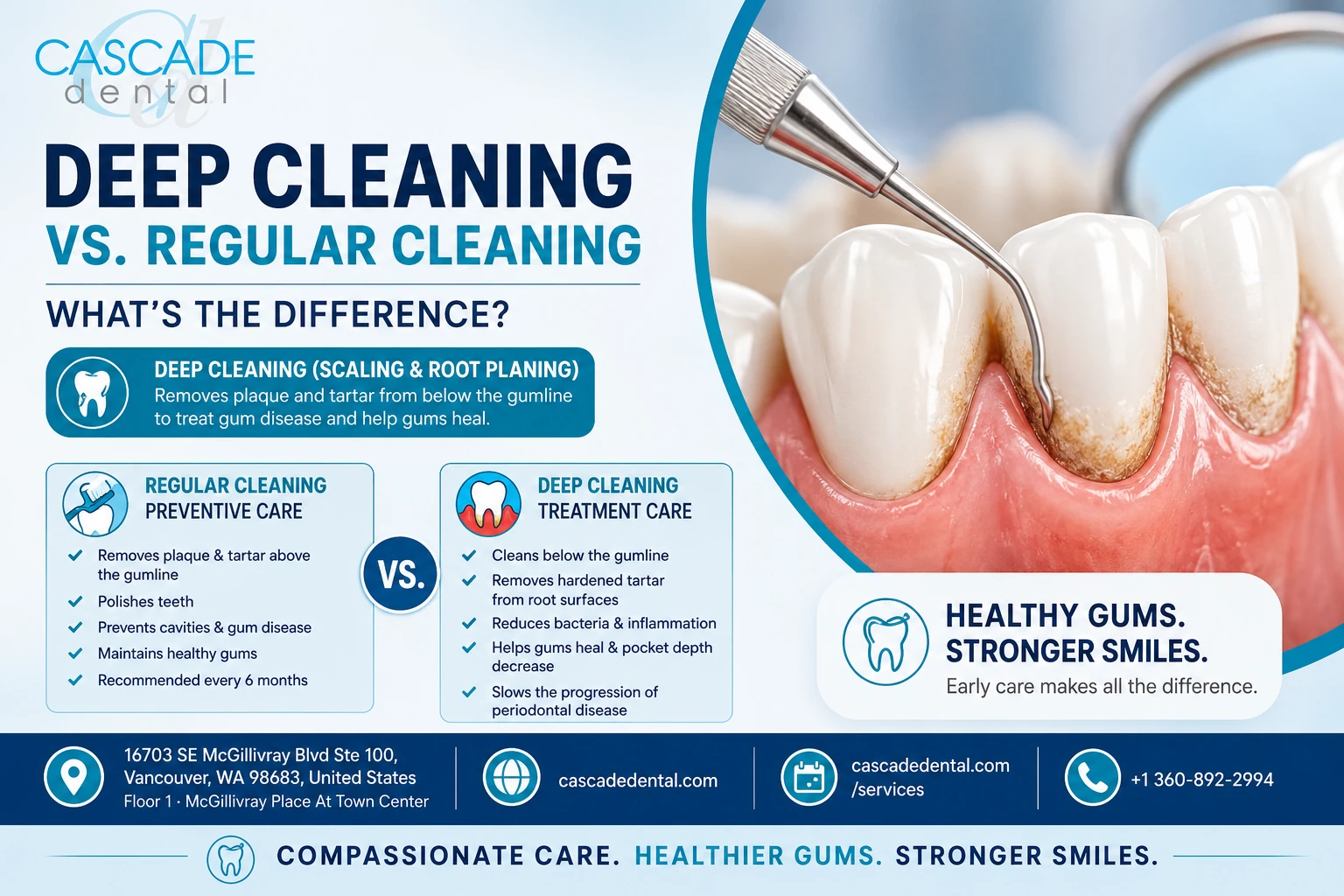
Deep cleaning is not the same as a routine cleaning. A regular cleaning helps prevent dental problems, while a deep cleaning treats an active gum condition.
Deep Cleaning vs. Regular Cleaning
Although both treatments improve oral health, they serve different purposes. The right type of cleaning depends on the condition of your gums, the amount of buildup present, and whether there are signs of gum disease.
Regular Dental Cleaning
A routine dental cleaning is designed to help prevent dental problems by removing plaque and tartar from above the gumline. It is recommended for patients with healthy gums or mild gingivitis.
A regular cleaning helps:
- Remove plaque and tartar
- Polish teeth
- Prevent cavities and gum disease
- Maintain healthy gums
- Keep breath fresher
- Support routine dental checkups
Most patients receive regular dental cleanings every six months, although your dentist may recommend a different schedule based on your needs. If your gums are healthy and there are no deep pockets or bone loss, a regular cleaning is usually enough.
Deep Cleaning
A deep cleaning is recommended when gum disease has caused pockets to form between the teeth and gums. These pockets can trap bacteria, plaque, and tartar below the gumline, where normal brushing, flossing, and routine cleanings cannot fully reach.
This procedure helps:
- Clean below the gumline
- Remove hardened tartar from root surfaces
- Reduce harmful bacteria
- Help gums heal and reduce pocket depth
- Slow the progression of periodontal disease
- Support better long-term gum stability
Deep cleaning is more involved than a routine cleaning because it focuses on treating infection and inflammation beneath the gums. It may be completed in sections of the mouth, especially if several areas need treatment.
Who Needs a Deep Cleaning?
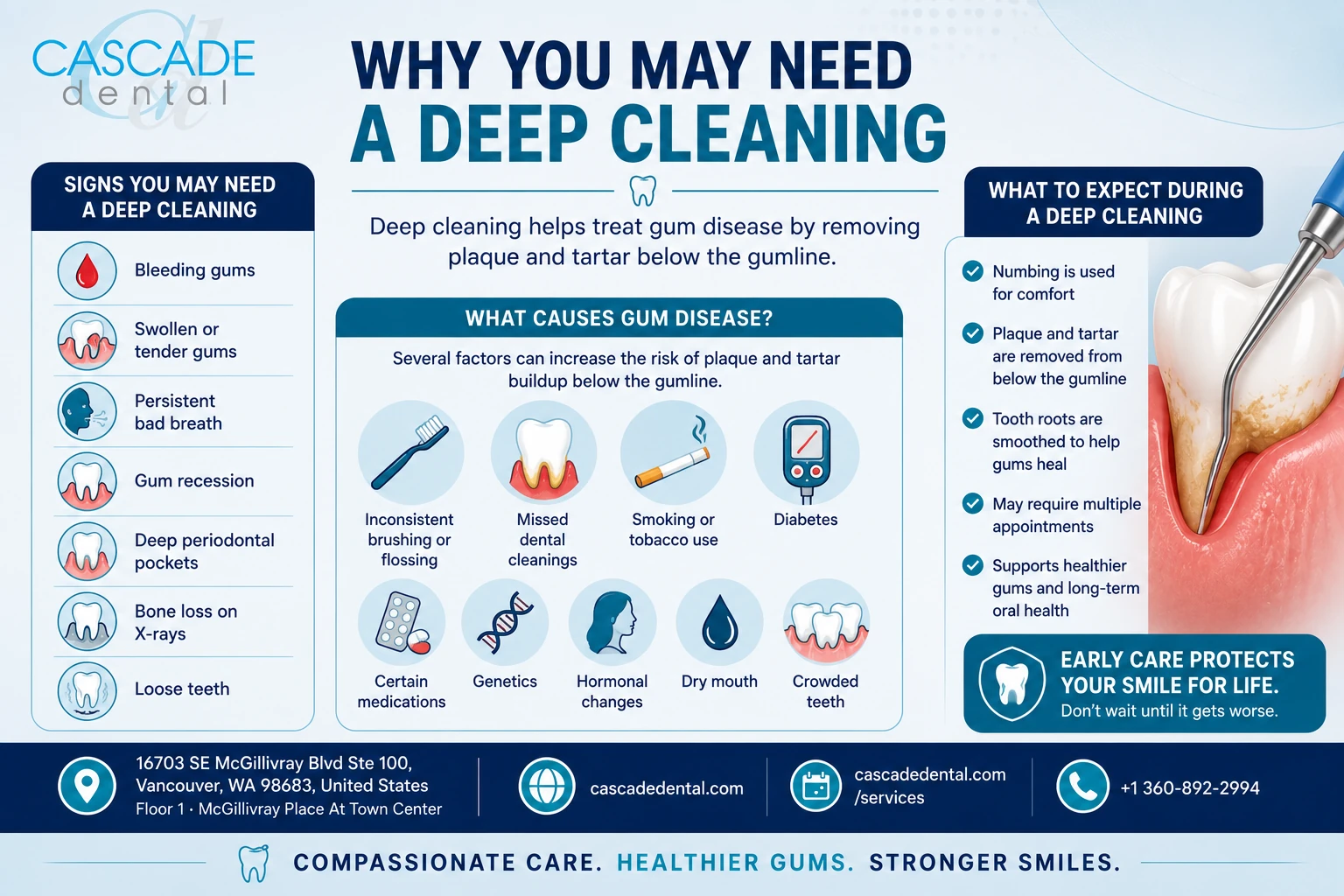
A dentist may recommend a deep cleaning if you have signs of periodontal disease. Gum disease can develop gradually, and some patients do not notice symptoms until the condition has progressed.
Common signs that may lead to a deep cleaning recommendation include:
- Bleeding gums
- Swollen or tender gums
- Persistent bad breath
- Gum recession
- Deep periodontal pockets
- Bone loss visible on dental X-rays
- Loose teeth caused by gum disease
- Heavy tartar buildup below the gumline
- Gums that pull away from the teeth
Your dentist will perform a comprehensive examination to determine whether a deep cleaning is appropriate. This may include measuring the spaces between your teeth and gums, checking for bleeding, reviewing dental X-rays, and evaluating your overall gum health.
Healthy gum pockets are usually shallow and easier to clean. When pockets become deeper, bacteria have more room to collect. If left untreated, this can damage the gum tissue and supporting bone around the teeth.
What Causes the Need for Deep Cleaning?
Deep cleaning is usually needed because plaque and tartar have built up under the gumline. Plaque is a sticky film of bacteria that forms on the teeth every day. If plaque is not removed through brushing, flossing, and professional cleanings, it can harden into tartar.
Tartar cannot be removed with a toothbrush. Once it forms below the gumline, it can irritate the gums and allow bacteria to spread deeper around the teeth.
Several factors can increase the risk of gum disease, including:
- Inconsistent brushing or flossing
- Missed dental cleanings
- Smoking or tobacco use
- Diabetes
- Certain medications
- Genetics
- Hormonal changes
- Dry mouth
- Crowded teeth that are harder to clean
Even patients who brush daily can develop gum disease if tartar collects in hard-to-reach areas. That is why dental exams are important. Your dentist can catch early warning signs before they become more serious.

How Painful is Tooth Extraction and What Should I Expect?
Worried that a tooth extraction is going to hurt? You’re not alone, it’s one of the most common concerns people…
What to Expect During the Procedure
Deep cleaning is often completed over one or more appointments, depending on the extent of treatment needed. Some patients only need treatment in certain areas, while others may need the full mouth treated.
During the procedure, your dentist or dental hygienist will:
- Numb the treatment area for comfort, if needed
- Remove plaque and tartar from beneath the gumline
- Smooth the tooth roots to discourage future bacterial buildup
- Rinse or clean the treated areas
- Provide instructions for home care and healing
Many patients experience only mild discomfort, and local anesthesia is commonly used to improve comfort throughout the procedure. If you feel nervous about dental treatment, let the team know before your appointment. They can explain each step and help you feel more at ease.
Scaling
Scaling is the part of deep cleaning that removes plaque and tartar from the tooth surfaces and below the gumline. Special dental instruments are used to clean areas that brushing and flossing cannot reach.
Root Planing
Root planing smooths the tooth roots after buildup has been removed. Smooth roots make it harder for bacteria to collect again and may help the gum tissue heal more closely around the tooth.
Together, scaling and root planing help reduce inflammation and create a cleaner environment for the gums.
Does Deep Cleaning Hurt?
Many patients worry that deep cleaning will be painful. The experience is different for everyone, but discomfort is usually manageable. If the gums are inflamed or the pockets are deep, your dentist may use local anesthesia to numb the area.
After the appointment, your gums may feel sore or tender for a few days. You may also notice mild sensitivity to hot, cold, or pressure. These symptoms usually improve as the gums begin to heal.
Patients often feel better once the inflammation starts to go down. Bleeding during brushing may also decrease as the gums become healthier.
How Long Does a Deep Cleaning Take?
The length of a deep cleaning depends on how many areas need treatment and how advanced the gum disease is. Some appointments may take about one hour, while more involved cases may require multiple visits.
In many cases, the mouth is divided into sections, such as the left and right sides or the upper and lower areas. This allows the dental team to clean thoroughly while keeping the appointment more comfortable.
Your dentist will explain the recommended treatment plan before beginning, including how many visits may be needed and what to expect afterward.
Aftercare
Following a deep cleaning, your gums may be tender or sensitive for a few days. Good home care is important because healing depends on keeping bacteria under control after treatment.
To support healing:
- Brush gently with a soft-bristled toothbrush
- Floss carefully as instructed
- Rinse with any recommended mouthwash
- Avoid smoking or tobacco use
- Eat softer foods if your gums feel sore
- Avoid very spicy, crunchy, or acidic foods for a short time if they cause irritation
- Attend all recommended follow-up and periodontal maintenance visits
Most patients notice healthier gums and less bleeding as healing progresses. If soreness, swelling, or sensitivity lasts longer than expected, contact your dental office for guidance.
What Happens After Deep Cleaning?
After your deep cleaning, your dentist may schedule a follow-up visit to check how your gums are healing. They may measure your gum pockets again to see whether inflammation has decreased and whether the gums are responding well.
For many patients with gum disease, routine six-month cleanings may not be enough after treatment. Your dentist may recommend periodontal maintenance visits every three to four months. These visits help control bacteria and reduce the risk of gum disease returning.
Periodontal maintenance is different from a standard cleaning because it focuses on managing gum disease over time. It may include more detailed cleaning around the gumline and close monitoring of periodontal pockets.
Why Deep Cleaning Is Important
Treating gum disease early can help protect your teeth, gums, and overall oral health. When periodontal disease is left untreated, it can continue to damage the tissues and bone that support the teeth.
Deep cleaning can help:
- Reduce inflammation
- Control bacterial infection
- Prevent additional bone loss
- Lower the risk of tooth loss
- Improve long-term oral health
- Reduce gum bleeding
- Support fresher breath
- Help gums feel healthier and less irritated
When combined with excellent home care and routine maintenance, deep cleaning is an effective way to manage periodontal disease. It does not “cure” gum disease permanently, but it can help control the condition and slow its progression.
Can Gum Disease Come Back After Deep Cleaning?
Yes, gum disease can return if bacteria and tartar build up again. Deep cleaning is an important treatment, but long-term success depends on consistent care at home and regular dental visits.
To help prevent gum disease from coming back, your dentist may recommend:
- Brushing twice daily
- Flossing once daily
- Using an antibacterial mouth rinse, if advised
- Replacing your toothbrush regularly
- Avoiding tobacco products
- Keeping follow-up appointments
- Scheduling periodontal maintenance as recommended
Your dental team can also show you better ways to clean around problem areas, dental restorations, or tight spaces between teeth.
Is Deep Cleaning Worth It?
Deep cleaning is worth it when gum disease is present because it treats the source of the problem below the gumline. Without treatment, bacteria can continue to damage the gums and bone around the teeth.
Patients often choose deep cleaning because they want to avoid more serious dental problems later. Treating gum disease early may help prevent tooth loss, more advanced periodontal treatment, and ongoing gum discomfort.
If your dentist recommends deep cleaning, it is usually because a regular cleaning would not fully address the buildup and bacteria causing the problem.
Schedule an Evaluation
If you are experiencing bleeding gums, persistent bad breath, gum recession, or other signs of gum disease, a dental evaluation can determine whether a deep cleaning is the right treatment. Early care can help protect your gums, preserve your teeth, and support a healthier smile.
At Cascade Dental, we help patients in Vancouver, WA understand their gum health and treatment options in a clear, comfortable way. If you are concerned about gum disease or have been told you may need scaling and root planing, our team can examine your mouth, explain what we find, and recommend the next step for your care.
Healthy Gums Start Here
Restore your gum health with expert scaling and root planing. Call now to schedule your consultation.