Tooth pain can be confusing. One day, a tooth may feel slightly sensitive when you drink something cold. Another day, that same tooth may ache for hours or feel painful when you bite down.
When symptoms change like this, many patients wonder whether they simply need a filling or whether something more serious is happening inside the tooth.
At Cascade Dental, we know dental symptoms can feel stressful, especially when patients hear the words “root canal.” The good news is that not every toothache means you need root canal treatment. In many cases, a cavity can be treated with a filling when it is caught early.
However, when decay or damage reaches the inner part of the tooth, a filling may no longer be enough to resolve the problem.
Persistent Tooth Pain? It Could Be More Than a Simple Cavity
Get expert diagnosis and treatment from our dental team. Call today to find out if a root canal can save your tooth and relieve your discomfort.
Fast Answer: Signs You May Need a Root Canal
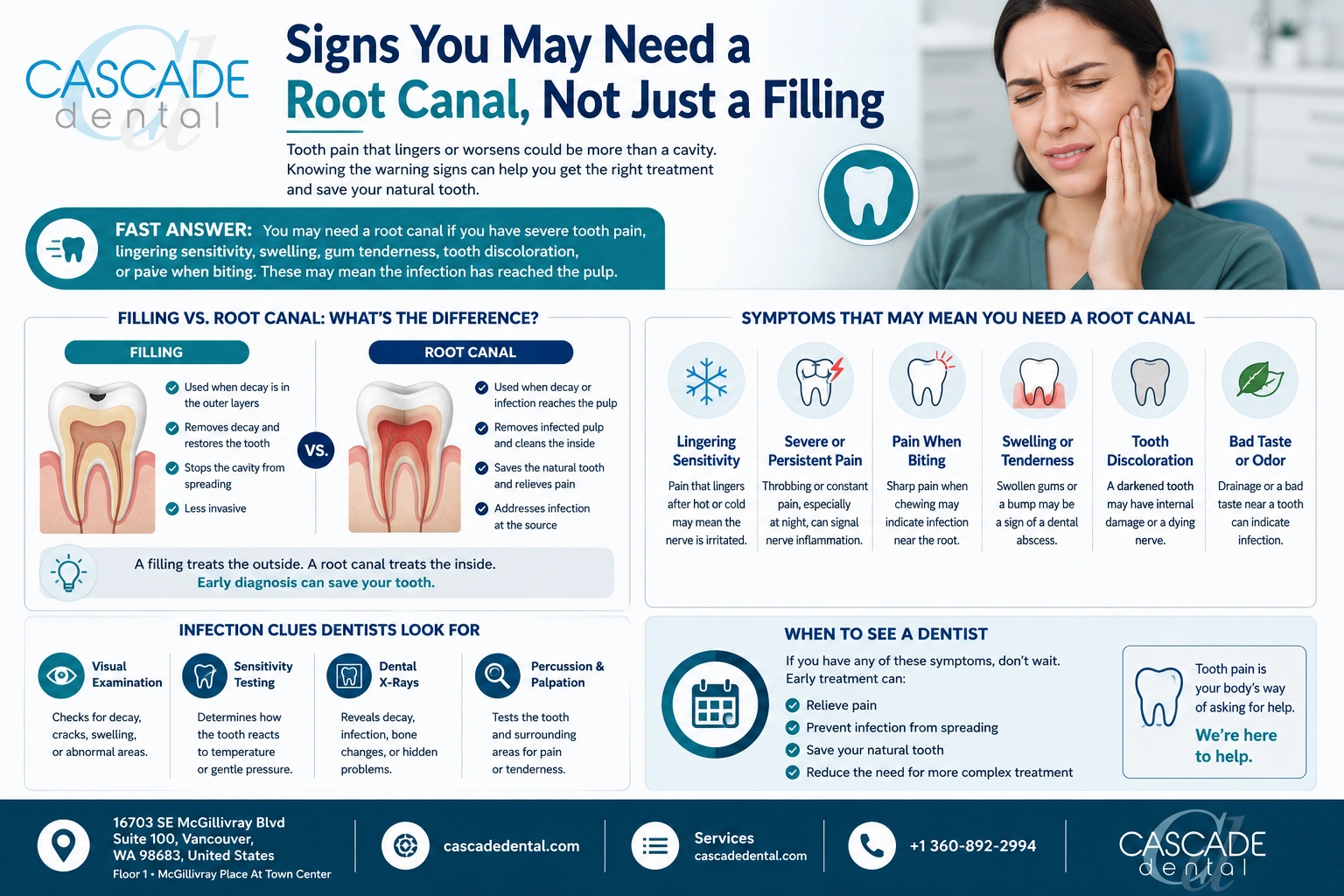
You may need a root canal, not just a filling, if tooth pain is severe, lasts after hot or cold foods are gone, wakes you up at night, or comes with swelling, gum tenderness, tooth discoloration, or pain when biting.
These symptoms may suggest that decay, inflammation, or infection has reached the pulp. The pulp is the inner tissue of the tooth where nerves and blood vessels are located.
A filling is often used when decay affects the outer structure of the tooth but has not reached the nerve. Root canal treatment may be recommended when the tooth’s inner pulp becomes inflamed, infected, or damaged.
The only way to know for sure is to have a dentist examine the tooth.
Filling vs. Root Canal: What Is the Difference?
A filling and a root canal both treat damaged or decayed teeth, but they are used for different levels of dental problems.
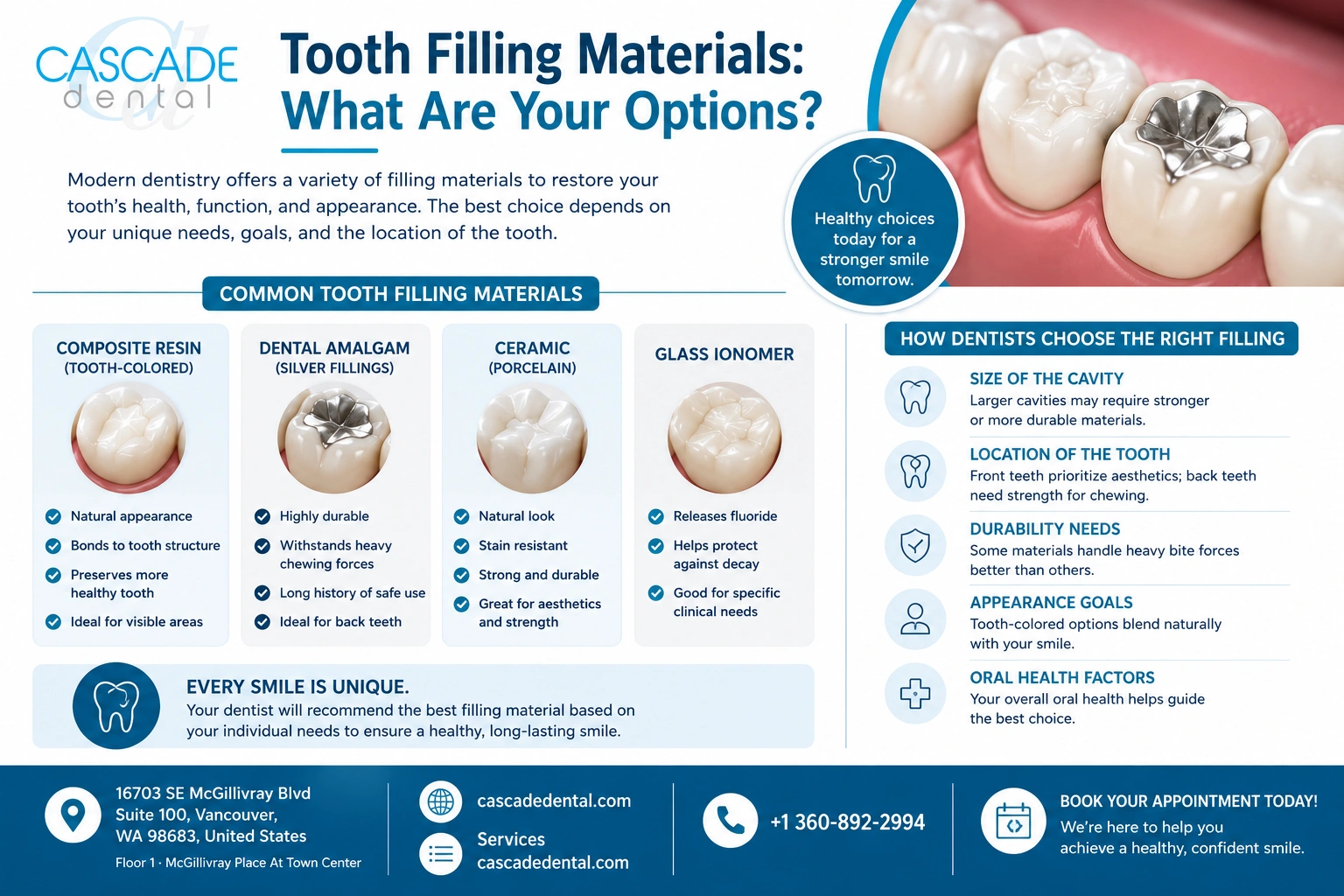
A tooth filling is commonly recommended when a cavity is limited to the enamel or dentin. These are the outer and middle layers of the tooth. During this type of care, the decayed portion of the tooth is removed and the area is restored with filling material.
The goal of a filling is to stop the cavity from spreading and restore the tooth’s shape and function.
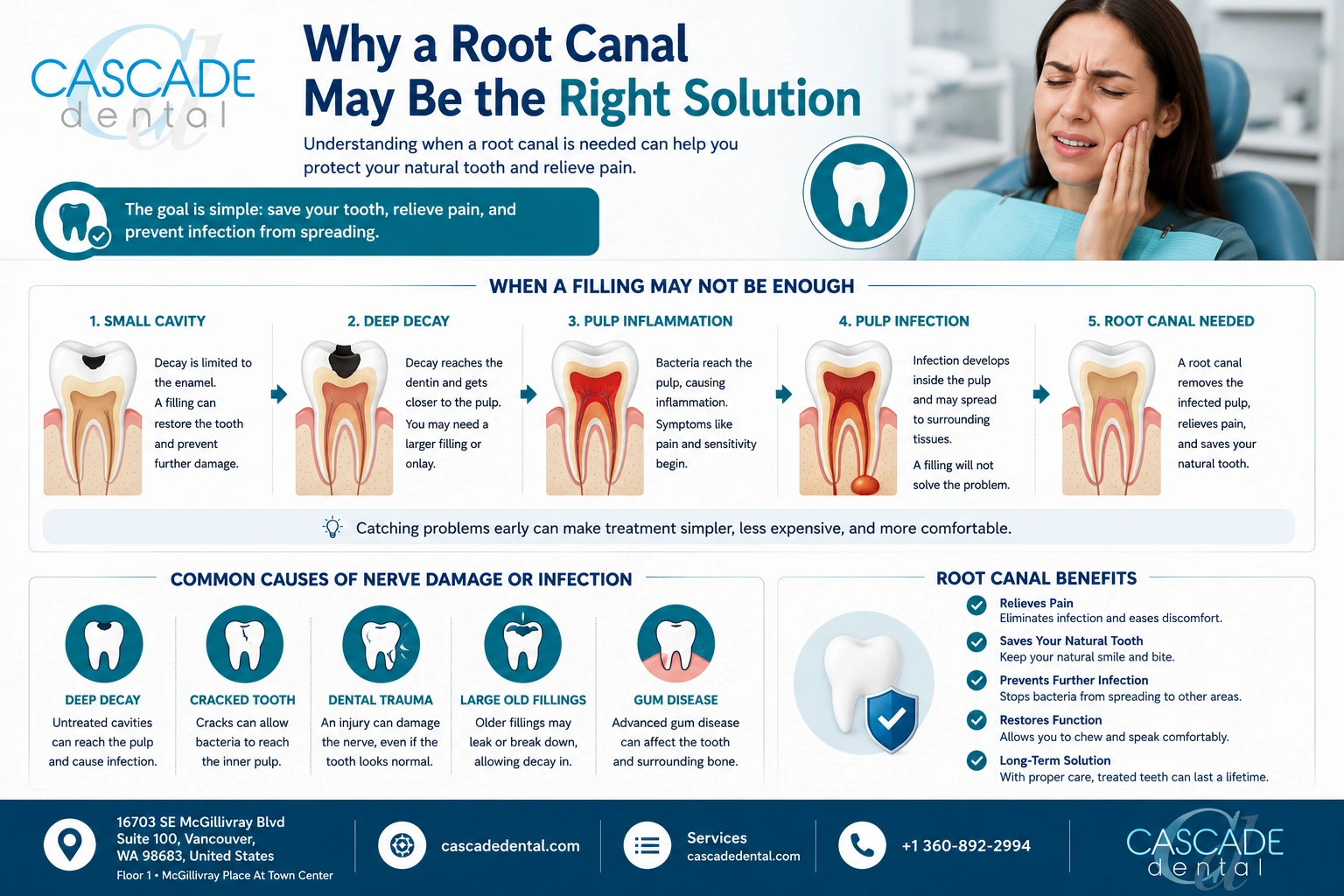
A root canal is considered when the problem has reached the pulp inside the tooth. The pulp contains nerves, blood vessels, and connective tissue. When bacteria enter this area through deep decay, cracks, trauma, or untreated cavities, the pulp can become inflamed or infected.
Once this happens, a filling alone may not address the source of pain or infection.
The main difference is depth. A filling repairs tooth structure affected by decay. A root canal addresses inflammation or infection inside the tooth.
This is why early diagnosis matters. A small cavity may be treated with a filling, but if it continues to progress, bacteria can move deeper into the tooth. At that point, treatment needs may change.
Symptoms That May Mean You Need a Root Canal
Tooth symptoms can vary from mild to severe, and not every symptom automatically means a root canal is needed. Still, certain warning signs may suggest the problem is deeper than a surface-level cavity.
Lingering Sensitivity to Hot or Cold
Mild sensitivity that goes away quickly may be related to enamel wear, gum recession, or a small cavity. However, sensitivity that lingers after the hot or cold source is gone may be a sign that the nerve inside the tooth is irritated.
For example, if you sip cold water and the tooth aches for several seconds or minutes afterward, your dentist may want to evaluate whether the pulp is inflamed.
Severe or Persistent Tooth Pain
A cavity may cause discomfort, but deeper inflammation or infection often causes pain that is more intense or persistent. This pain may feel throbbing, sharp, or deep inside the jaw.
Some patients notice that the pain comes and goes at first, then becomes more constant over time. Others may feel pain that worsens at night or makes it difficult to sleep.
Persistent pain is a good reason to schedule an evaluation, even if it temporarily improves. In some cases, a tooth nerve can become damaged and pain may fade, but infection may still remain.
Pain When Biting or Chewing
Pain when biting down can happen for several reasons, including a cracked tooth, a high filling, gum inflammation, or infection near the root.
When pain feels sharp or focused on one tooth, it may indicate inflammation around the tooth root or pressure from infection.
A dentist can test the tooth and surrounding structures to determine whether the pain is related to decay, nerve involvement, bite pressure, or another issue.
Swelling or Tenderness Around the Gums
Swelling near a painful tooth may be a sign of infection. Some patients notice a small bump on the gums, sometimes called a dental abscess or gum boil. This area may release fluid, feel tender, or come and go.
Swelling is an important warning sign because it may suggest that bacteria have spread beyond the inside of the tooth and into surrounding tissues.
Tooth Discoloration
A tooth that becomes darker than the surrounding teeth may have experienced trauma or internal damage. Discoloration does not always mean a root canal is needed, but it can be a clue that the tooth’s nerve has been affected.
This is especially important if the tooth has a history of injury, deep decay, or previous dental work.
Bad Taste or Odor
A persistent bad taste, drainage near a tooth, or bad breath linked to one specific area may suggest infection.
While many oral health issues can contribute to odor, drainage or a recurring bad taste near a painful tooth should be evaluated by a dentist.
Infection Clues Dentists Look For
Patients can identify symptoms, but dentists use specific diagnostic steps to determine whether a filling or root canal is appropriate. The goal is to understand how deep the problem goes and whether the tooth nerve is healthy, inflamed, or infected.
Visual Examination
Your dentist will begin by looking closely at the tooth and surrounding gums. They may check for visible decay, cracks, worn fillings, gum swelling, or signs of drainage.
Sometimes a cavity is easy to see. Other times, the damage may be hidden between teeth, under an old restoration, or below the gumline.

Can Cosmetic Dentistry Fix Gaps, Chips, and Discoloration?
Not loving what you see in the mirror when you smile? You’re not alone. Small imperfections like gaps, chipped teeth,…
Dental X-Rays
Dental X-rays help dentists see areas that are not visible during a standard visual exam. X-rays may reveal deep decay, infection near the tooth root, bone changes, or problems beneath an existing filling or crown.
X-rays do not always show every early nerve issue, but they are an important part of understanding the tooth’s condition.
Sensitivity Testing
Your dentist may use temperature testing to see how the tooth responds to cold or heat. A healthy tooth usually responds briefly and then returns to normal. A tooth with pulp inflammation may produce a stronger or lingering response.
These tests help determine whether the nerve is irritated, inflamed, or possibly no longer responding normally.
Bite and Pressure Testing
If you have pain while chewing, your dentist may gently test how the tooth reacts to pressure. Pain during bite testing can help identify cracks, root inflammation, or infection around the tooth.
This step is especially helpful when symptoms are difficult to pinpoint.
Gum and Soft Tissue Evaluation
The dentist may also examine the gums around the tooth for swelling, tenderness, deep pockets, or signs of infection.
Because tooth pain can sometimes feel like gum pain, evaluating both the tooth and surrounding tissue is important.
Why Professional Diagnosis Matters
It can be tempting to guess what kind of dental care you need based on symptoms alone, but tooth pain is not always straightforward. A small cavity, cracked tooth, gum infection, sinus pressure, or deep tooth infection can sometimes create similar discomfort.
Professional diagnosis matters because the right treatment depends on the source of the problem.
If decay is limited to the outer layers of the tooth, a filling may be enough to restore the tooth and prevent the cavity from spreading. If the pulp is infected or severely inflamed, a filling would not remove the source of the problem inside the tooth.
In that case, root canal treatment may be recommended to help preserve the natural tooth.
Getting evaluated early can also help prevent complications. When dental infections are left untreated, they may spread to surrounding bone or tissue. Early care may help reduce discomfort, protect the tooth, and lower the risk of more complex dental needs later.
It is also important to remember that modern root canal treatment is designed to relieve pain, not cause it. Many patients feel anxious before treatment but are relieved to learn that the procedure can often save a tooth that might otherwise continue to worsen.
When to Schedule a Dental Visit
You should schedule a dental evaluation if you notice tooth pain that lasts more than a day or two, sensitivity that lingers, swelling, pain when biting, or a tooth that appears darker than nearby teeth.
You should also call a dentist if symptoms seem to improve but then return. Recurring pain may suggest an underlying issue that needs attention.
For patients in Vancouver, WA, Cascade Dental provides preventive, restorative, and general dentistry support for patients with tooth pain, cavities, and signs of possible infection. If you are unsure whether you need a filling or root canal treatment, an exam can help clarify what is happening and what options may be appropriate.
FAQs About Root Canals and Fillings
How do I know if I need a filling or a root canal?
A filling may be enough when decay is limited to the outer tooth structure. A root canal may be needed when the pulp inside the tooth is inflamed, infected, or damaged. A dental exam is the only way to know which treatment is appropriate.
Can tooth pain go away even if I still need a root canal?
Yes. Pain may fade if the nerve inside the tooth becomes damaged, but infection can still remain. This is why symptoms that improve and then return should still be evaluated by a dentist.
Is pain when biting a sign of a root canal?
It can be, but it is not the only possible cause. Pain when biting may also come from a cracked tooth, gum issue, bite problem, or inflammation near the tooth root.
Does tooth discoloration always mean I need a root canal?
No. Tooth discoloration can have several causes. However, a tooth that darkens after trauma, deep decay, or previous dental work should be checked.
Should I wait to see if tooth pain improves?
Mild sensitivity may pass, but lingering pain, swelling, pain when biting, or recurring symptoms should be evaluated. Waiting too long may allow the problem to worsen.
Can a filling prevent the need for a root canal?
In some cases, yes. Treating a cavity early with a filling may help stop decay before it reaches the inner pulp. Once the pulp is infected or severely inflamed, a filling alone may not be enough.
Protecting Your Tooth Starts with Early Answers
A cavity and a tooth infection are not the same thing, but they can be connected. A small cavity may only need a filling when treated early. If decay spreads deeper and reaches the tooth’s inner pulp, root canal treatment may become necessary.
The most important step is not trying to diagnose the problem on your own. Instead, pay attention to symptoms and schedule an evaluation before pain becomes severe or swelling develops.
At Cascade Dental, our goal is to help patients feel informed, comfortable, and confident about their dental care. Whether your tooth needs a simple restoration or a deeper evaluation, early diagnosis can give you a better chance to protect your smile and preserve your oral health.
Severe Tooth Sensitivity After Hot or Cold Foods?
A root canal may be the solution. Contact our experienced dental team today for fast answers and lasting relief.