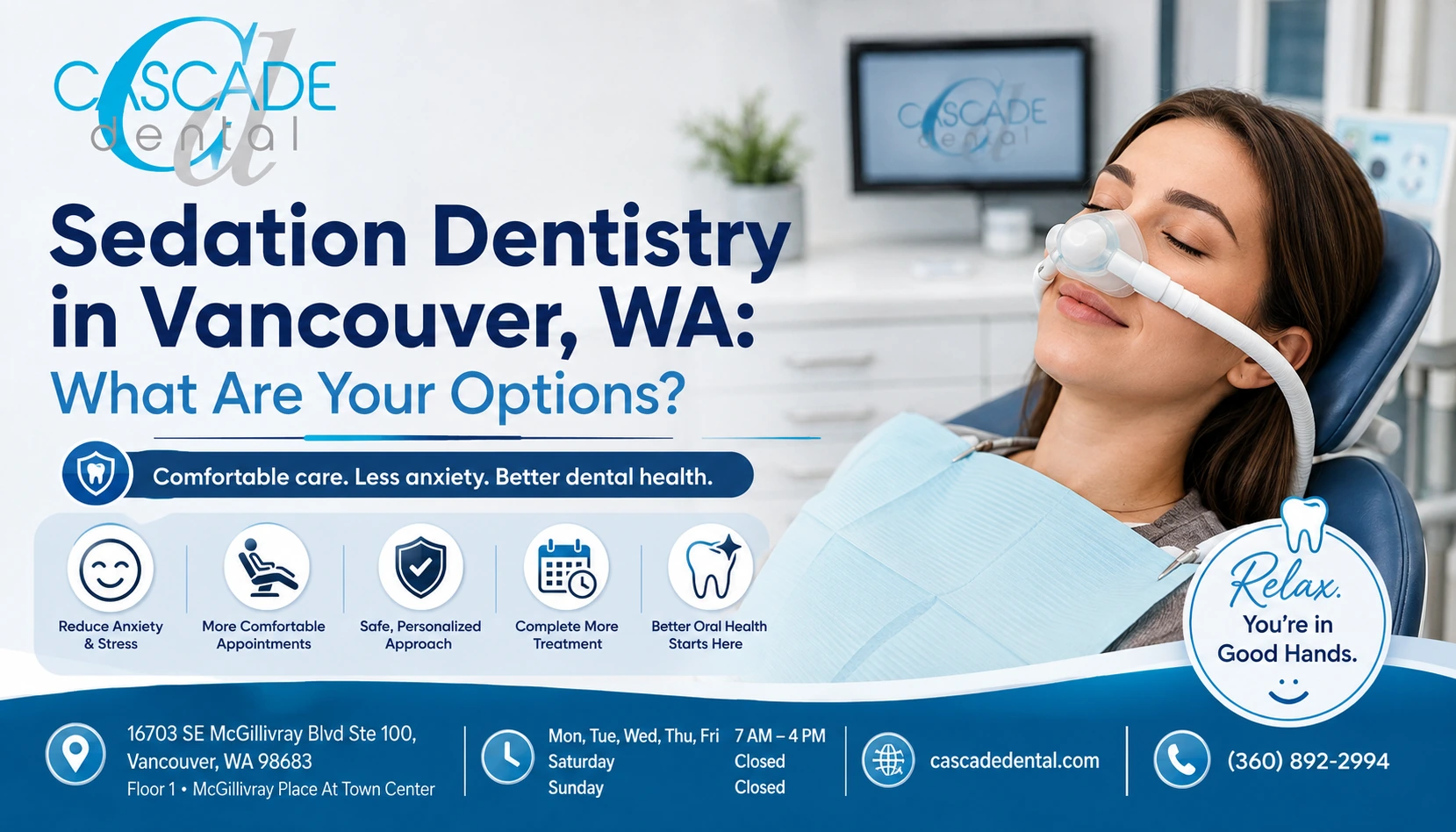
Dental anxiety can make even a routine appointment feel difficult. For some patients, nervousness leads to delayed cleanings, postponed treatment, or avoiding the dentist until pain becomes difficult to ignore. Sedation dentistry can help make dental care feel more manageable by reducing anxiety and helping patients remain comfortable during treatment.
If you are considering sedation dentistry in Vancouver, WA, the right approach depends on your anxiety level, health history, planned procedure, and individual needs. Sedation can range from mild relaxation to deeper forms of sedation used for more involved treatment. A dental evaluation is the best way to determine which comfort options may be appropriate for you.
Nervous About Dental Care?
Feel calm and comfortable with sedation dentistry in Vancouver, WA. Call today to discuss the right option for your visit.
What Is Sedation Dentistry?
Sedation dentistry uses medication to help patients feel calmer and more relaxed during dental care. It may be considered for people who experience dental anxiety, have difficulty remaining comfortable during treatment, or need certain longer or more complex procedures.
Sedation is different from local anesthesia. Local anesthesia numbs the treatment area to control pain, while sedation primarily helps reduce anxiety and awareness of the dental experience. Depending on the procedure, the two may be used together.
The level of sedation can vary, and not every option is appropriate for every patient.
Who May Benefit From Sedation Dentistry?
Sedation dentistry is often associated with severe dental fear, but there are several reasons a patient may discuss it with a dentist.
You may want to ask about sedation if you:
- Experience significant dental anxiety
- Have postponed treatment because of fear
- Have difficulty sitting comfortably for longer appointments
- Have a sensitive gag reflex
- Feel especially nervous about injections or dental procedures
- Need extensive treatment completed
- Have had a difficult dental experience in the past
Sedation should be personalized rather than automatically used for every nervous patient.
What Types of Dental Sedation Are Available?
Dental practices may use different forms of sedation depending on the patient’s needs, the procedure, and the provider’s training.
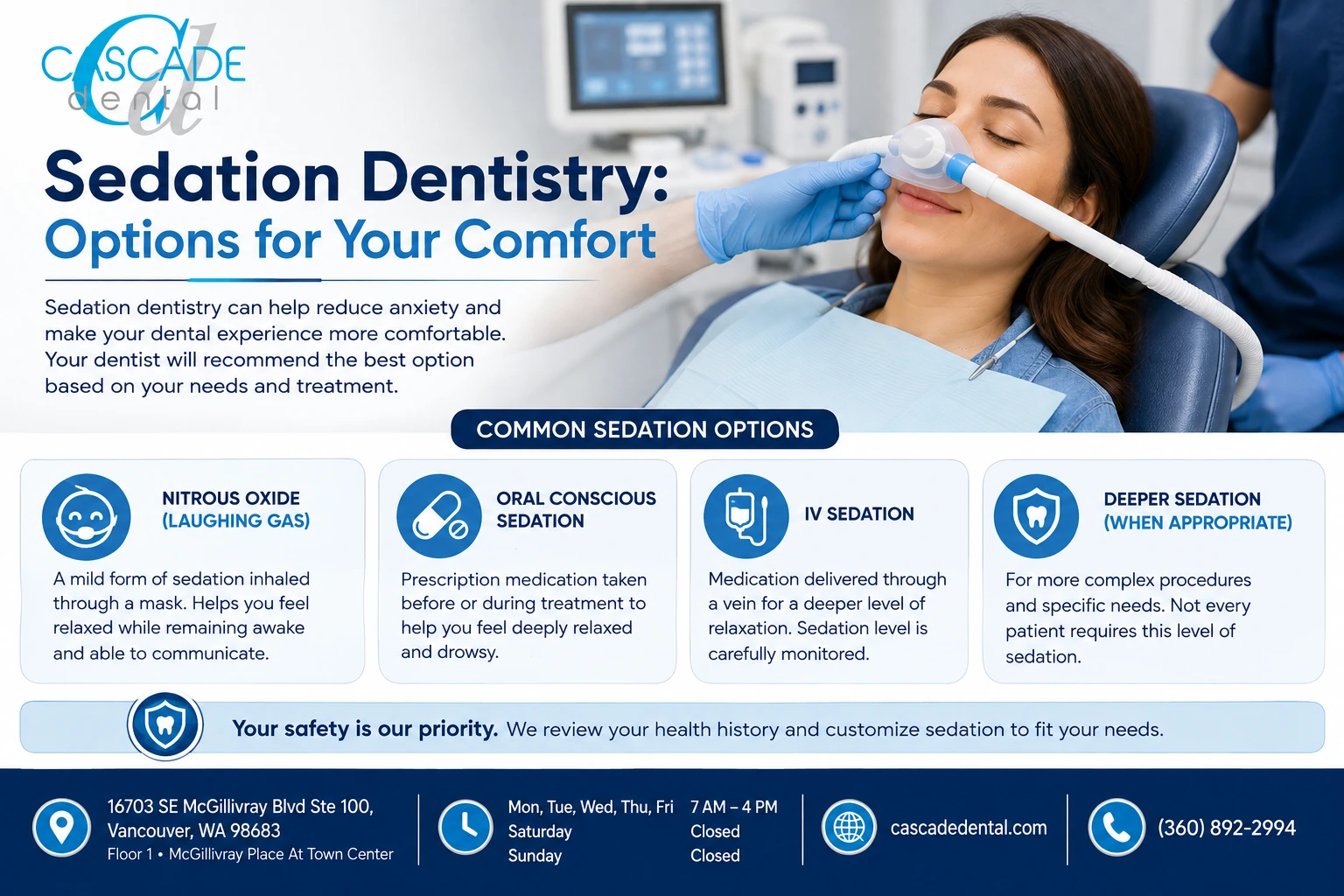
Common approaches can include nitrous oxide, oral conscious sedation, intravenous sedation, and deeper sedation for certain procedures.
Availability varies among dental practices, so patients should ask which options are offered for their specific treatment.
What Is Nitrous Oxide Sedation?
Nitrous oxide is commonly known as laughing gas. It is inhaled through a small mask placed over the nose and is generally considered a lighter form of dental sedation.
Patients typically remain awake and able to communicate during treatment while feeling more relaxed.
Because sedation needs vary, your dentist should review your health history and planned procedure before determining whether nitrous oxide or another option is suitable.
What Is Oral Conscious Sedation?
Oral conscious sedation involves taking prescribed medication to reduce anxiety before or during dental treatment.
Patients generally remain conscious but may feel significantly more relaxed or drowsy. The effects and level of sedation depend on the medication, dosage, and individual response.
Patients receiving oral sedation may need transportation arrangements and specific pre-appointment and post-treatment instructions.
What Is IV Sedation?
Intravenous, or IV, sedation delivers medication through a vein. It can provide a deeper level of relaxation than some lighter sedation methods and allows the sedation level to be managed during treatment.
IV sedation is not necessary for every dental procedure and is not offered in every dental office. Patients considering it should discuss availability, medical considerations, and appropriate alternatives with their dental provider.
Will I Be Awake During Sedation Dentistry?
Whether you remain fully alert depends on the type and depth of sedation being used.
With lighter forms of sedation, patients usually remain awake and can respond to the dental team. With deeper sedation, awareness of the procedure may be reduced considerably.
Sedation should not be confused with automatically being unconscious. Your dentist can explain what you are likely to experience with the particular sedation method being considered.
Understanding this beforehand can also reduce some of the uncertainty that contributes to dental anxiety.
Is Sedation Dentistry the Same as General Anesthesia?
No. Sedation dentistry includes several levels of relaxation, and most forms do not necessarily involve complete unconsciousness.
General anesthesia produces a controlled state of unconsciousness and may be used in specific circumstances.
The appropriate level of sedation depends on factors such as the procedure, medical history, anxiety level, age, and treatment needs. Your dental provider should explain the differences before any sedative medication is used.
Is Sedation Dentistry Safe?
Sedation can be used safely for appropriately selected patients, but every medication and level of sedation requires careful consideration.
Before recommending sedation, your dental team may review your medical history, medications, allergies, previous experiences with anesthesia or sedation, and relevant health conditions.
Be open about your complete medical history, including prescription medications, over-the-counter products, and supplements.
Following preparation and recovery instructions is also important. Some forms of sedation can temporarily affect coordination, judgment, or alertness after the appointment.
Can Sedation Help With Dental Anxiety?
For some patients, sedation can make necessary dental treatment easier to tolerate.
However, medication is only one part of managing dental anxiety.
Clear communication can also make a significant difference. Patients often feel more comfortable when they understand what will happen, know they can ask questions, and feel that their concerns are being taken seriously. Knowing how dentists help manage dental anxiety through communication, comfort measures, and personalized treatment planning can also make appointments feel more predictable.
Cascade Dental emphasizes comfort, communication, and personalized treatment for patients who may feel uneasy about dental visits. Discussing your anxiety before treatment gives the dental team an opportunity to plan around your concerns.
What Should You Tell Your Dentist Before Sedation?
Your dentist needs accurate health information before determining whether sedation is appropriate.
Be prepared to discuss:
- Medical conditions
- Prescription medications
- Over-the-counter medications
- Supplements
- Allergies
- Previous reactions to sedation or anesthesia
- Pregnancy or possible pregnancy
- Alcohol, tobacco, or other substance use when medically relevant
You should also explain what specifically makes dental treatment difficult for you.
Some patients fear pain, while others are uncomfortable with sounds, needles, loss of control, or a previous negative experience. Knowing the source of your anxiety can help your dental team determine how best to support you.
What Happens Before a Sedation Dentistry Appointment?
Preparation depends on the type of sedation and procedure.
Your dental provider may give instructions about eating, drinking, medications, transportation, and when to arrive. These directions should be followed carefully because requirements are not the same for every sedation method.
If your visit also includes a routine evaluation, understanding what happens during a dental exam can help you know what to expect before any treatment recommendations are made.
If transportation is required, arrange for a responsible adult before the appointment rather than waiting until treatment day.
Ask questions whenever an instruction is unclear.
What Happens After Dental Sedation?
Recovery also depends on the sedation method used.
Some lighter forms wear off relatively quickly, while other medications may affect alertness for several hours. Patients may be advised not to drive, work, operate equipment, make important decisions, or participate in certain activities until the sedative effects have passed.
Follow the specific instructions provided by your dental team rather than assuming that recovery will be the same as someone else’s experience.
Can Sedation Be Used for Different Dental Procedures?
Sedation may be considered for several types of dental treatment, depending on patient needs.
A nervous patient might discuss comfort options before restorative care, an extraction, or another procedure. Sedation may also be considered when treatment is more involved or when anxiety would otherwise make receiving necessary care difficult.
Cascade Dental’s current information notes that sedation options may be available to help patients feel more comfortable during procedures. The exact approach should be discussed during treatment planning because the most appropriate option depends on the individual patient and procedure.
How Do I Choose Sedation Dentistry in Vancouver, WA?
Start with a dental consultation rather than selecting a sedation method on your own.
Tell your dentist how you feel about dental care, describe previous experiences, and ask what comfort options are available for the treatment you need.
Useful questions include:
- Which sedation options are available for my procedure?
- How will I feel during treatment?
- Will I remain awake?
- Do I need someone to drive me home?
- Are there eating or drinking restrictions?
- How long should I expect the effects to last?
- Does my medical history affect my options?
The goal is not simply to receive the strongest sedation available. It is to choose an appropriate level of support that helps you receive necessary dental care comfortably.
FAQs About Sedation Dentistry
Does dental sedation put you to sleep?
Not always. Many forms of sedation allow patients to remain awake and responsive while feeling relaxed. Deeper methods may reduce awareness more significantly.
Can I drive after dental sedation?
It depends on the medication. Certain sedation methods require another adult to drive you home. Follow your dentist’s specific instructions.
Can sedation help if I am afraid of the dentist?
Sedation may help some anxious patients feel more relaxed. Communication, treatment planning, and a supportive dental environment can also help manage dental fear.
Is sedation available for routine dental work?
Sedation needs are individualized. Your dentist can determine whether it is appropriate based on your anxiety, medical history, and planned treatment.
Do I still need numbing if I receive sedation?
Often, yes. Sedation primarily manages anxiety and relaxation, while local anesthesia is commonly used to numb the area being treated.
Feel More Comfortable About Your Next Visit at Cascade Dental
Dental anxiety should not have to keep you from addressing problems with your teeth and gums. Understanding your comfort options can make taking the next step feel much more manageable.
At Cascade Dental, we encourage Vancouver patients to talk openly about dental fears, previous experiences, and concerns before treatment begins. Our team can explain the procedure, discuss available sedation and comfort options, and develop a treatment plan based on your individual needs.
If anxiety has caused you to postpone dental care, contact Cascade Dental to schedule an appointment. A conversation about your concerns can be the first step toward receiving the care you need with greater confidence and comfort.
Dental Anxiety? We Can Help
A more relaxed dental experience may be possible with sedation dentistry. Call now to find an option that works for you.