Visiting the dentist for a routine exam is one of the most important steps you can take to protect your oral health. Still, many patients feel unsure about what actually happens during an appointment, especially if they are visiting a new dentist or returning after a long gap in care.
A dental exam is designed to check your teeth, gums, bite, and overall oral health before small problems become more serious. Knowing what to expect can make the visit feel easier, more comfortable, and less stressful.
At Cascade Dental, we believe informed patients feel more confident about their care. Whether you are scheduling your first appointment or staying on track with preventive visits, here is what typically happens during a dental exam.
Don’t Wait Until Tooth Problems Get Worse
A routine dental exam can uncover concerns before they become costly treatments. Contact us today for expert preventive dental care.
Fast Answer: What Happens During a Dental Exam?
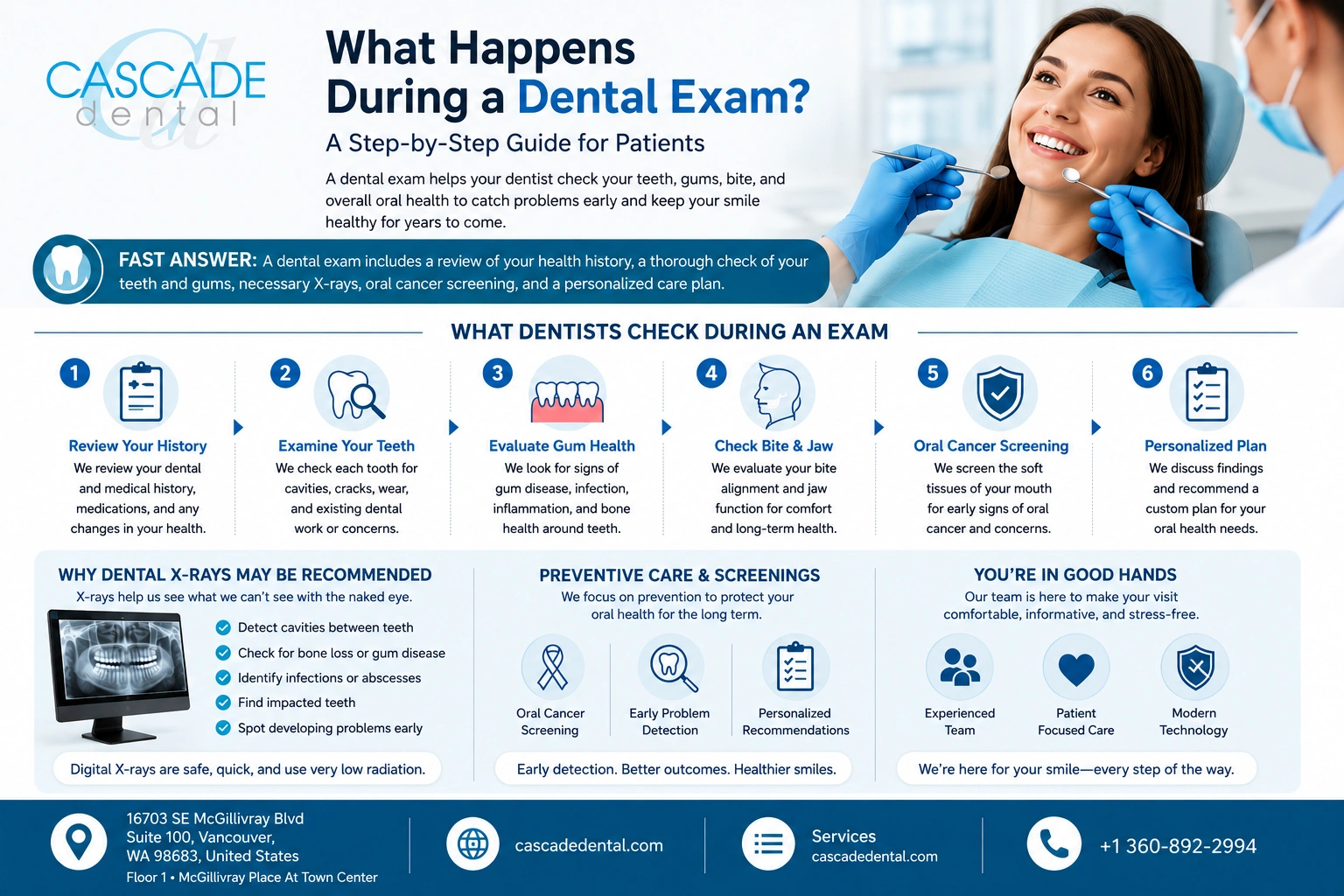
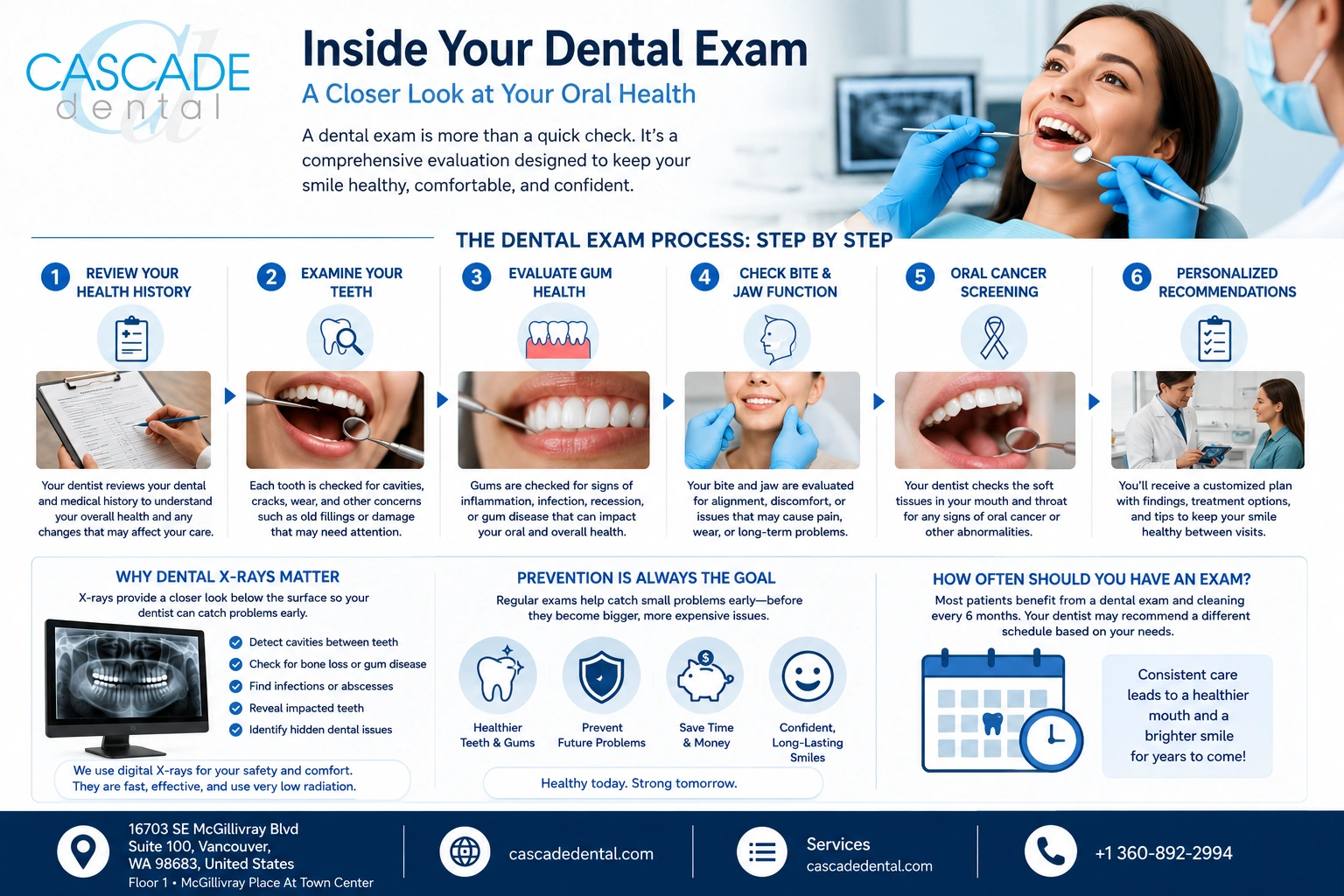
A routine dental exam usually includes a review of your dental and medical history, a visual check of your teeth and gums, cavity detection, gum health evaluation, oral cancer screening, and dental X-rays when needed.
Your dentist looks for signs of tooth decay, gum disease, infection, bite issues, and other concerns that may not be painful or visible yet. In many cases, patients also receive a professional teeth cleaning during the same visit.
The main goal of a dental exam is prevention. Regular checkups help your dentist find potential problems early, often before they require more involved treatment. Understanding what happens during a comprehensive dental exam can also help you feel more prepared for each step of the appointment.
What Dentists Check During an Exam
A dental exam involves much more than checking for cavities. Your dentist looks at the full picture of your oral health, including your teeth, gums, bite, jaw function, and soft tissues.
Reviewing Your Dental and Medical History
Your appointment often begins with a review of your health history and any recent changes. Certain medications, medical conditions, and lifestyle habits can affect your teeth and gums.
Your dental team may ask about:
- Current medications
- Existing medical conditions
- Tooth pain or sensitivity
- Jaw pain or headaches
- Changes in your oral health
- Previous dental treatments
This information helps your dentist understand your overall health and provide recommendations that fit your needs.
Examining the Teeth
Next, your dentist carefully checks each tooth for signs of damage, decay, or wear.
During this part of the exam, your dentist may look for:
- Cavities
- Cracked or chipped teeth
- Worn enamel
- Loose or damaged fillings
- Crowns that may need attention
- Plaque and tartar buildup
Many dental problems start quietly. You may not feel pain until the issue has progressed, which is why routine dental exams are so important.
Evaluating Gum Health
Healthy gums help support healthy teeth. During a dental exam, your dentist checks your gums for signs of inflammation, infection, or periodontal disease.
Common warning signs include:
- Bleeding gums
- Red or swollen gums
- Gum recession
- Deep periodontal pockets
- Bone loss around the teeth
When gum problems are found early, they are often easier to manage. Your dentist may also recommend a cleaning schedule or home care changes based on your gum health.
Checking Bite and Jaw Function
Your dentist may also evaluate how your teeth come together when you bite. Bite alignment problems can contribute to tooth wear, jaw discomfort, teeth grinding, and temporomandibular joint concerns.
Catching these issues early can help protect your teeth and reduce strain on your jaw over time.
Why Dental X-Rays May Be Recommended
One common question patients have is whether dental X-rays are necessary.
A visual exam provides valuable information, but some areas of the mouth cannot be seen without imaging. Dental X-rays help dentists find problems beneath the surface or between teeth.
What Dental X-Rays Can Help Detect
Dental X-rays may reveal:
- Cavities between teeth
- Bone loss related to gum disease
- Impacted teeth
- Tooth root infections
- Developing dental abnormalities
- Changes in bone structure
Because some dental conditions do not cause symptoms right away, X-rays can help your dentist identify concerns before they become more painful or complicated.
Are Dental X-Rays Safe?
Modern digital dental X-rays use very low levels of radiation. Dental professionals also follow safety protocols and only recommend X-rays when they are clinically appropriate.
How often you need X-rays depends on factors such as:
- Age
- Oral health history
- Risk for tooth decay
- Existing dental conditions
- Current symptoms
Some patients need X-rays more often, while others need them less frequently. Your dentist will recommend imaging based on your individual needs.
Oral Health Screenings and Preventive Care
A dental exam is not only about finding cavities. Preventive care also helps your dentist identify early warning signs of oral health problems.
Oral Cancer Screening
Many routine dental exams include an oral cancer screening. During this screening, your dentist checks the soft tissues of your mouth and throat for anything unusual.
This may include the:
- Tongue
- Lips
- Cheeks
- Roof of the mouth
- Floor of the mouth
- Throat tissues
Your dentist looks for lesions, lumps, discoloration, or other changes that may need further evaluation.

Tailored Dental Care: A Patient-Centered Dentist’s View
In modern dentistry, patient-centered care has moved to the forefront, emphasizing a tailored approach that respects each individual’s unique needsand…
Identifying Early Signs of Dental Problems
Routine exams often reveal problems patients have not noticed yet.
These may include:
- Small cavities
- Early gum disease
- Enamel erosion
- Teeth grinding damage
- Oral infections
- Dry mouth concerns
Finding these issues early often gives patients more treatment options and may help prevent more serious problems later.
Personalized Preventive Recommendations
Every patient has different oral health needs. During your visit, your dentist may recommend changes to your home care routine or preventive treatment plan.
These recommendations may include guidance on:
- Brushing technique
- Flossing habits
- Diet and nutrition
- Fluoride use
- Dry mouth management
- Lifestyle factors that affect oral health
These tips help you protect your smile between appointments.
The Role of Professional Teeth Cleanings
Dental exams are often paired with professional teeth cleanings because the two services work together.
A dental exam helps your dentist evaluate your oral health. A professional cleaning removes plaque and tartar that brushing and flossing cannot fully remove at home.
Together, exams and cleanings help reduce the risk of cavities, gum disease, and other oral health concerns.
How Often Should You Schedule Dental Exams?
For many patients, dental professionals recommend routine exams every six months. This schedule allows your dentist to monitor changes, provide preventive care, and catch concerns early.
However, not every patient needs the same schedule.
Some Patients May Need More Frequent Dental Exams
Your dentist may recommend more frequent visits if you have a higher risk of oral health problems.
This may apply to patients with:
- Gum disease
- A history of frequent cavities
- Diabetes
- Smoking habits
- Dry mouth
- Ongoing dental concerns
- A higher risk of oral health complications
Your dentist will recommend a schedule based on your health history, risk factors, and current oral health.
Why Skipping Dental Exams Can Lead to Bigger Problems
When routine dental exams are delayed, small issues may have more time to progress.
Problems that may go unnoticed include:
- Early tooth decay
- Gum disease
- Cracked teeth
- Oral infections
- Bone loss
Many dental conditions do not cause pain right away. Regular exams give your dentist the chance to find and address concerns before they become more disruptive.
Making Dental Visits More Comfortable
It is completely normal to feel nervous about visiting the dentist. Many patients feel anxious because of past experiences, uncertainty, or fear of discomfort.
Routine dental exams are designed to be comfortable, educational, and preventive. Your dental team can explain each step, answer questions, and help you feel more at ease throughout the visit.
If you have concerns before or during your appointment, let your dental team know. Clear communication can make the experience much more comfortable.
Dental Exams in Vancouver, WA
For patients in Vancouver, WA, routine dental exams are an important part of long-term preventive care. Regular visits help your dentist monitor changes in your oral health, recommend care based on your needs, and help you stay ahead of common dental problems.
At Cascade Dental, our team helps patients feel informed, comfortable, and confident during routine exams. Whether you are due for a checkup or establishing care with a new dental office, a dental exam is a simple step toward protecting your smile.
FAQs About Dental Exams
How long does a dental exam take?
Most routine dental exams take about 30 to 60 minutes. The exact length depends on whether X-rays, a cleaning, or additional screenings are included.
Does a dental exam hurt?
A routine dental exam should not be painful. Some patients with sensitive teeth or inflamed gums may feel mild discomfort, but your dental team can adjust as needed.
Are dental X-rays always required?
No. Dental X-rays are recommended based on your oral health history, symptoms, age, and risk factors. Your dentist will only recommend them when they are appropriate for your care.
What is the difference between a dental exam and a teeth cleaning?
A dental exam is when the dentist checks your teeth, gums, bite, and oral tissues. A teeth cleaning removes plaque and tartar buildup from your teeth.
How often should I get a dental exam?
Many patients benefit from dental exams every six months. Some patients may need more frequent visits depending on their gum health, cavity risk, medical history, or current dental concerns.
What should I tell my dentist during an exam?
Tell your dentist about tooth pain, sensitivity, bleeding gums, jaw discomfort, dry mouth, medication changes, or any new health conditions. These details help your dentist make better recommendations for your care.
Protect Your Smile with Preventive Dental Care
Routine dental exams are one of the simplest ways to support long-term oral health. These visits allow your dentist to monitor changes, check for early signs of problems, evaluate gum health, perform important screenings, and provide personalized recommendations.
If you are due for a routine dental exam, Cascade Dental can help you understand your oral health and plan your next steps with confidence. Schedule a dental exam at our Vancouver, WA office to stay ahead of small issues before they become bigger concerns.
Worried About Your First Dental Exam?
Get personalized care, a thorough evaluation, and answers to all your oral health questions. Schedule your dental exam today and take the first step toward a healthier smile.