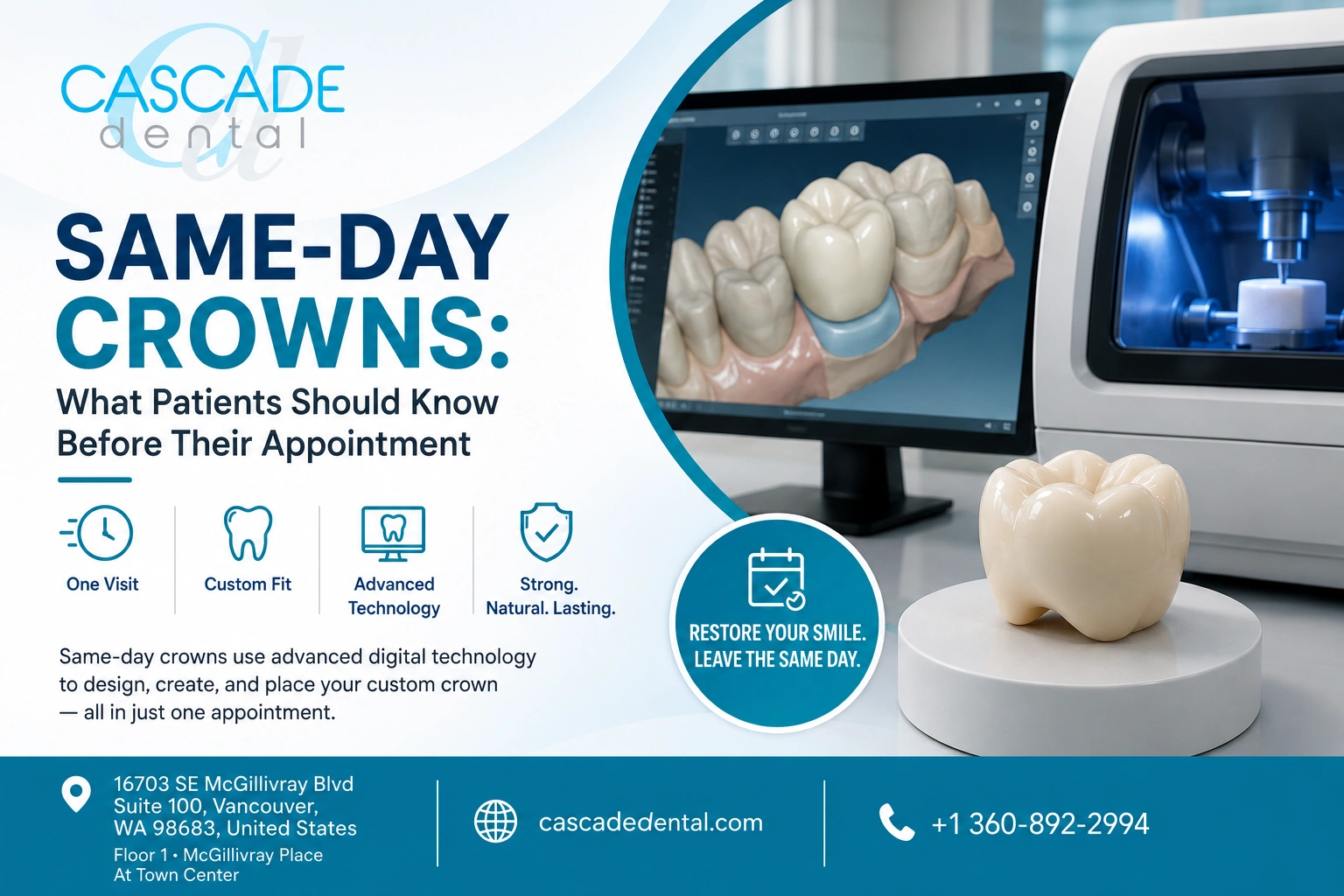
When a tooth becomes cracked, weakened, worn down, or heavily restored, a dental crown may be one of the most effective ways to protect and strengthen it. Traditionally, getting a crown required multiple visits spread out over several weeks. Today, advances in dental technology allow many patients to receive a custom crown in a single appointment.
Same-day crowns are popular with patients who want to restore their smile without multiple office visits. Still, it is natural to have questions before your appointment. How do same-day crowns work? Are they right for every situation? What should you expect during the process?
At Cascade Dental, we believe patients feel more confident when they understand their treatment options. This guide explains how same-day crowns work, what happens during the appointment, and what questions to ask your dentist before treatment.
Questions About Same-Day Crowns? We're Here to Help
Get expert guidance before your visit and find out if a same-day crown is the right solution for your damaged tooth. Schedule your appointment today.
Fast Answer: Same-Day Crowns
Same-day crowns are custom dental restorations that can often be designed, created, and placed during one dental visit. Using digital imaging and in-office milling technology, dentists can create a custom crown without traditional impressions or temporary crowns in many cases.
Same-day crowns may be recommended for teeth that are cracked, weakened, heavily filled, worn down, or in need of additional protection after restorative treatment. If you are dealing with a lost filling or crown, having the tooth evaluated promptly can help determine what type of restoration may be appropriate.
Not every patient or dental condition is a good fit for same-day crown technology, but many patients appreciate the convenience of completing treatment in one appointment.
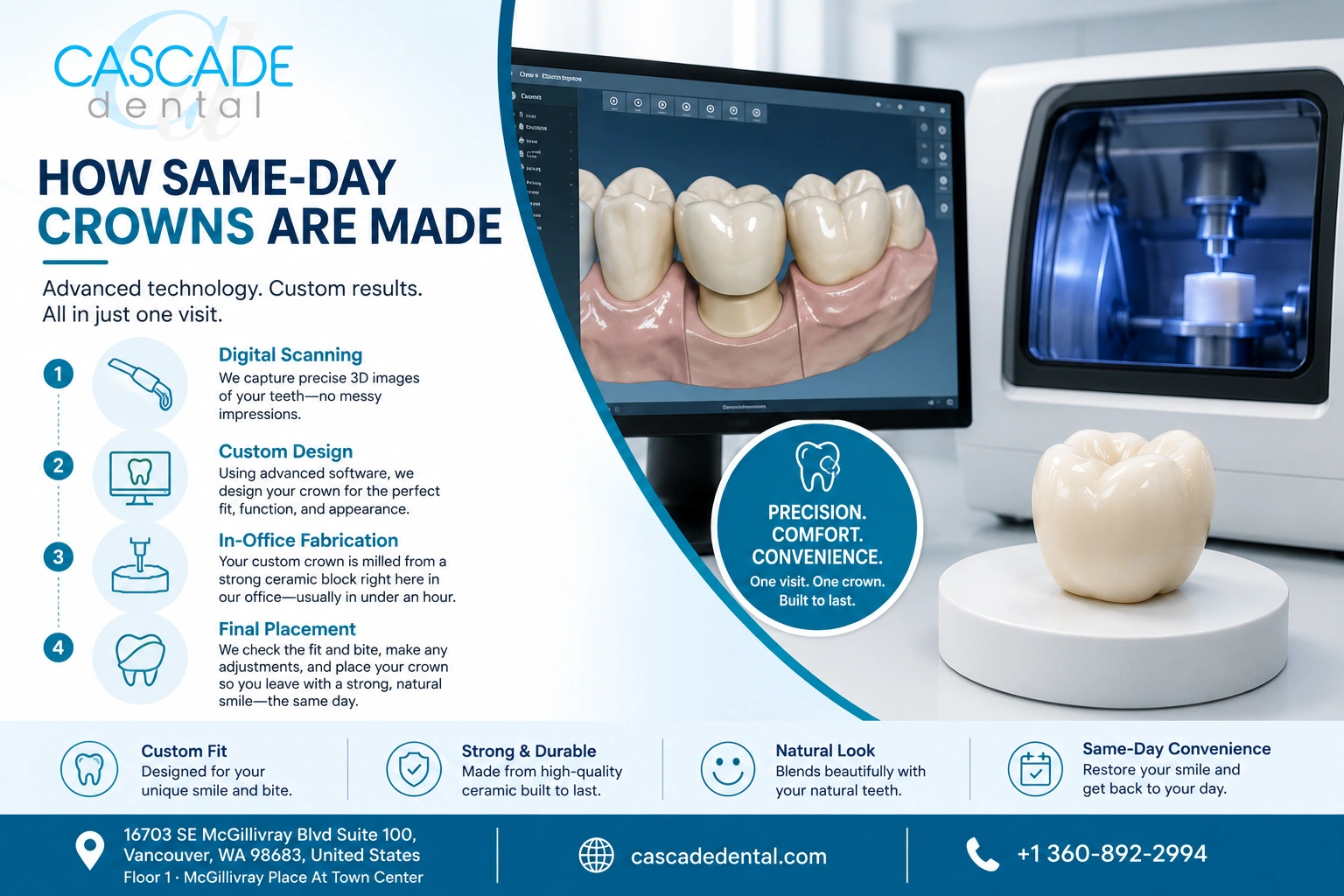
How Same-Day Crowns Are Made
Many patients are surprised to learn that modern dental technology allows a crown to be created inside the dental office.
Traditional crowns usually involve multiple appointments. During the first visit, the tooth is prepared and impressions are taken. Those impressions are sent to a dental laboratory, where the final crown is made. Patients typically wear a temporary crown while waiting for the permanent restoration.
Same-day crown systems streamline this process by combining digital imaging, computer-assisted design, and in-office fabrication.
Digital Scanning Instead of Traditional Impressions
One of the first steps is capturing detailed digital images of your teeth.
Instead of using traditional impression materials, many same-day crown systems use an intraoral scanner. This handheld device creates a precise three-dimensional image of the tooth and surrounding structures.
The digital model gives your dentist the information needed to design the restoration.
Computer-Guided Crown Design
After the digital scan is complete, specialized software helps create a custom crown design.
The dentist can evaluate:
- Tooth shape
- Bite alignment
- Crown contours
- Contact points with nearby teeth
- Overall fit and function
This helps ensure the restoration is designed for your tooth, bite, and smile.
In-Office Crown Fabrication
Once the design is approved, the information is sent to an in-office milling machine.
The machine carves the crown from a durable ceramic block. Depending on the system used and the complexity of the restoration, fabrication often takes less than an hour.
During this time, patients can usually relax while the crown is being made.
Final Placement
After the crown is made, the dentist checks the fit, comfort, appearance, and bite alignment.
Small adjustments may be made before the crown is permanently placed. Once everything fits properly, the restoration is bonded into place, allowing many patients to leave with their completed crown the same day.
Who Is a Good Candidate for a Same-Day Crown?
Dental crowns help strengthen and protect damaged teeth. Same-day crowns may be a good option for many common restorative needs, but the right recommendation depends on your tooth, bite, oral health, and treatment goals.
Cracked Teeth
Cracks can weaken a tooth and increase the risk of further damage. Depending on the size and location of the crack, a crown may help protect the tooth from additional stress during normal chewing.
Early evaluation can often help prevent minor cracks from becoming larger problems.
Large Existing Fillings
Teeth with very large fillings may have less remaining natural tooth structure. Over time, these teeth can become more vulnerable to fractures.
A crown can provide reinforcement by covering and protecting the remaining tooth structure.
Worn Teeth
Years of grinding, clenching, or normal wear can gradually reduce the strength and shape of teeth.
Crowns may be recommended to restore function, improve durability, and help maintain proper bite alignment.
Teeth After Certain Restorative Procedures
Some teeth need extra protection after extensive restorative work.
When a significant portion of the tooth has been affected by decay or damage, a crown may help preserve the remaining structure and improve long-term stability.
Cosmetic and Functional Concerns
In some cases, crowns may be considered to improve both appearance and function. Every recommendation should be based on an individual evaluation of the patient’s oral health needs.
Same-day crowns are not appropriate for every circumstance. Some cases may still benefit from a traditional crown process depending on tooth location, complexity, materials needed, or overall treatment goals.
What to Expect During a Same-Day Crown Appointment
Knowing what to expect can help you feel more comfortable and prepared before your visit.
While every appointment is slightly different, the process usually follows several general steps.
Initial Examination and Evaluation
The appointment begins with a careful evaluation of the tooth.
Your dentist will assess:
- Tooth structure
- Existing restorations
- Signs of damage
- Bite alignment
- Overall oral health
Dental imaging may also be used to evaluate the tooth beneath the surface and confirm whether a crown is an appropriate option.
Tooth Preparation
Before the crown can be placed, the tooth must be carefully prepared.
This involves reshaping the tooth to create space for the custom restoration while preserving as much healthy structure as possible.
Patients are typically made comfortable with local anesthesia when appropriate.
Digital Scanning
After preparation, digital images of the tooth are captured using an intraoral scanner.
Many patients appreciate this step because it avoids traditional impression trays and materials.
The digital scan serves as the blueprint for designing the custom crown.
Crown Design and Fabrication
The dentist creates the crown design using specialized software. Once the design is approved, the information is sent to the in-office milling machine.
During fabrication, patients often have time to relax while the crown is produced.
Fitting and Placement
Once the crown is ready, the dentist checks:
- Fit
- Appearance
- Bite alignment
- Comfort
Small adjustments may be made to support proper function. After the dentist confirms the crown fits correctly, it is bonded securely into place.
Final Evaluation
Before the appointment ends, your dentist will verify that the restoration feels comfortable and functions properly when you bite and chew.
Most patients can return to normal activities shortly after their visit, though specific instructions may vary depending on the situation.
Questions to Ask Before Treatment
Patients often feel more confident when they understand their options and know what to expect.
Before receiving a same-day crown, consider asking your dentist a few important questions.
Am I a Good Candidate for a Same-Day Crown?
Not every dental situation is the same. Your dentist can explain whether same-day technology is appropriate for your specific tooth and treatment goals.
What Material Will Be Used?
Different crown materials offer different benefits. Understanding the recommended material can help you learn more about durability, appearance, and long-term expectations.
How Long Can a Crown Last?
Crown longevity varies from patient to patient. Your dentist can explain factors that influence crown lifespan, including oral hygiene habits, bite forces, and routine dental care.
What Should I Expect After the Appointment?
Knowing what is considered normal after crown placement can help reduce uncertainty. Your dentist can explain what sensations may occur at first and when to contact the office if concerns arise.
Are There Alternative Treatment Options?
Depending on the condition of the tooth, there may be more than one restorative option available. Discussing alternatives can help you make a more informed decision.
How Should I Care for My Crown?
Proper home care plays an important role in protecting both the crown and the surrounding natural tooth structure.
Your dentist can provide personalized recommendations for brushing, flossing, and routine maintenance.
Benefits and Considerations of Same-Day Crowns
Many patients appreciate the convenience of same-day crowns.
Potential advantages include:
- One appointment instead of multiple visits
- No temporary crown in many cases
- Digital scanning instead of traditional impressions
- Faster restoration of function
- Less disruption to busy schedules
At the same time, treatment recommendations should always be based on your dental needs rather than convenience alone.
Your dentist will evaluate whether same-day crown technology is the right choice for your situation and discuss any considerations specific to your oral health.
FAQs About Same-Day Crowns
How long does a same-day crown appointment take?
A same-day crown appointment often takes a few hours, depending on the tooth, the technology used, and the complexity of the restoration. Your dentist can give you a more specific estimate before treatment begins.
Are same-day crowns as strong as traditional crowns?
Same-day crowns can be strong and durable for many patients. The right choice depends on the tooth location, bite forces, material used, and your dentist’s recommendation.
Do same-day crowns hurt?
The procedure should not be painful. Local anesthesia is typically used when preparing the tooth, and your dental team can help keep you comfortable throughout the visit.
Will I need a temporary crown?
In many same-day crown cases, a temporary crown is not needed because the final crown is made and placed during the same visit. However, this depends on your specific treatment plan.
How do I care for a same-day crown?
Care for a same-day crown by brushing, flossing, and keeping up with routine dental visits. Your dentist may also recommend avoiding certain habits, such as chewing ice or using your teeth to open packaging.
Can every tooth be treated with a same-day crown?
No. Same-day crowns are not appropriate for every tooth or every dental condition. Some cases may need a traditional crown process or another type of restorative treatment.
Restoring Your Smile with Confidence
Same-day crowns have made the crown process more convenient for many patients. Through digital scanning, computer-guided design, and in-office fabrication, modern dentistry can often streamline treatment while maintaining precision and comfort.
At Cascade Dental, we want patients throughout Vancouver, WA to feel informed and confident about their dental care decisions. Understanding how same-day crowns work, when they may be recommended, and what to expect during the appointment can help make the experience less stressful and more predictable.
If you have questions about whether a crown may be appropriate for your situation, our team can evaluate your needs and discuss available restorative dentistry options. Early evaluation may help protect your natural tooth and support a healthier smile for years to come.
Need a Crown Today? Get the Facts Before Your Same-Day Appointment
Learn what to expect, how same-day crowns work, and whether you're a candidate. Call now to schedule your consultation and restore your smile in just one visit.