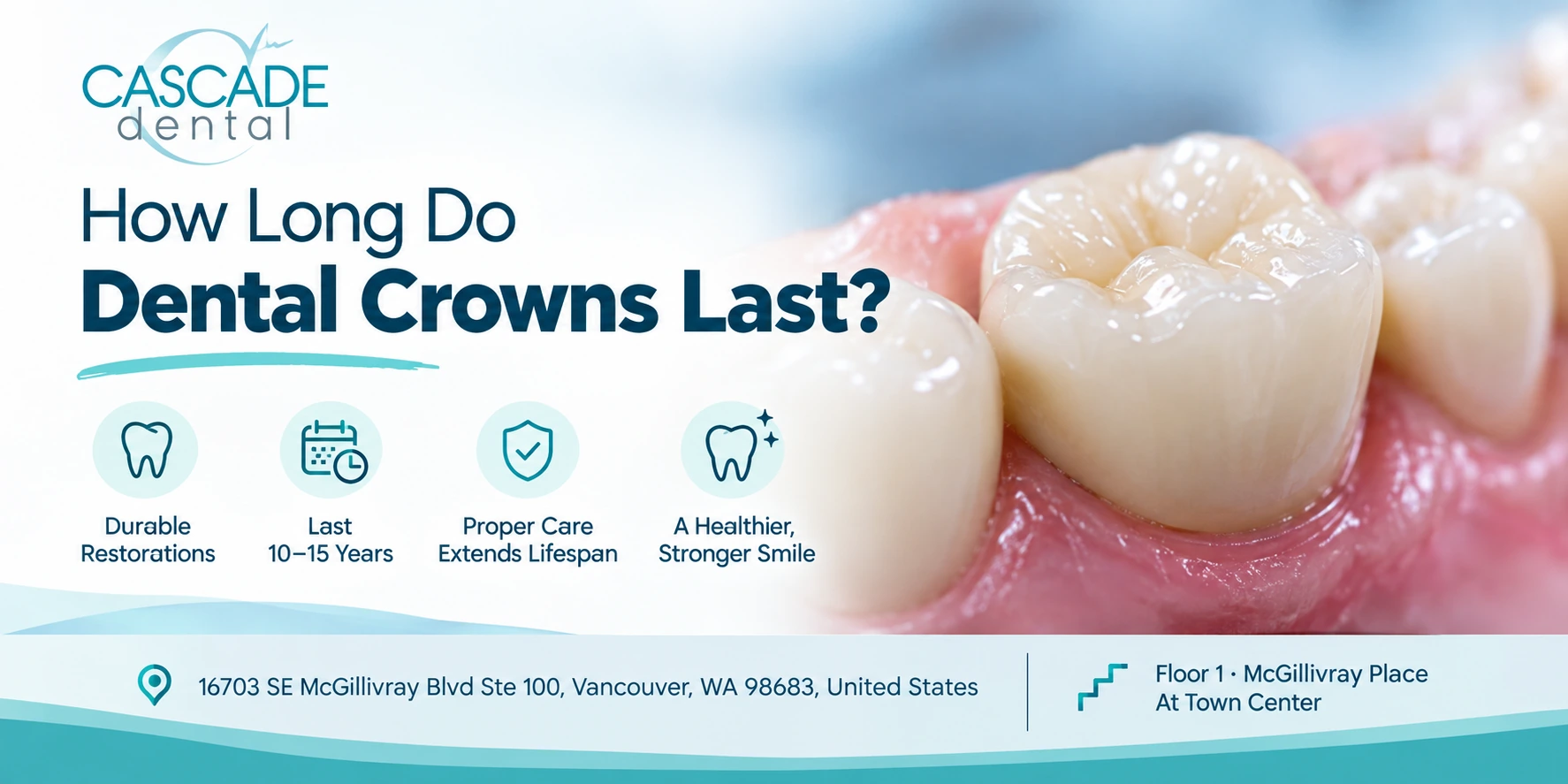
Dental crowns are long-lasting restorations, but they are not designed to last forever. Most dental crowns last 10 to 15 years, and many can last 20 years or longer with proper care, regular dental visits, and healthy daily habits.
For patients in Vancouver, WA, the lifespan of a crown depends on several factors, including the crown material, where it is located in the mouth, how well it fits, your bite, and how consistently you care for your teeth. A crown can protect a weakened or damaged tooth for many years, but the natural tooth underneath still needs ongoing attention.
Make Your Dental Crown Last
Keep your crown strong with professional dental care and routine checkups. Call now to protect your smile.
Fast Answer: How Long Do Dental Crowns Last?
Most dental crowns last 10 to 15 years, although many can last 20 years or longer with proper care. The lifespan of a crown depends on the material used, your oral hygiene, daily habits, bite pressure, and regular dental checkups.
A dental crown is a tooth-shaped cap used to restore, cover, and protect a damaged, weakened, worn, or root canal-treated tooth. The American Dental Association notes that crowns can help protect weak teeth, restore broken teeth, support bridges, cover implants, and improve the shape or appearance of teeth.
Routine maintenance can help extend the life of your restoration and protect the tooth underneath. Even though the crown itself cannot get a cavity, the tooth structure at the edge of the crown can still decay if plaque builds up along the gumline.
What Is the Average Lifespan of a Dental Crown?
Dental crowns are designed to restore damaged or weakened teeth while providing long-term protection. They are made from strong dental materials that can handle everyday chewing, biting, and temperature changes.
On average:
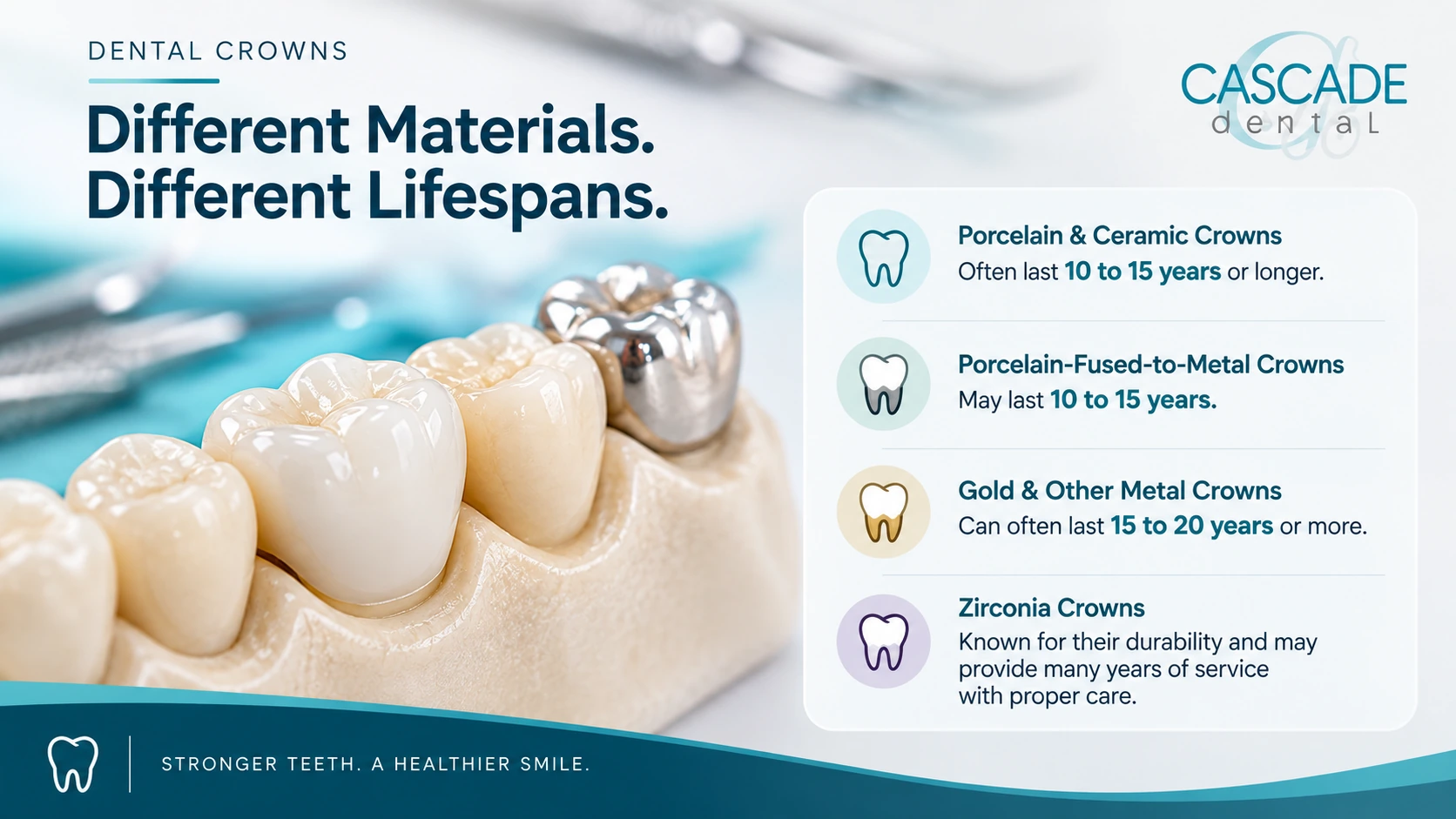
- Porcelain and ceramic crowns often last 10 to 15 years or longer
- Porcelain-fused-to-metal crowns may last 10 to 15 years
- Gold and other metal crowns can often last 15 to 20 years or more
- Zirconia crowns are known for their durability and may also provide many years of service with proper care
Cleveland Clinic states that dental crowns commonly last between five and 15 years with proper care, depending on material, wear, oral hygiene, and personal habits. In everyday dental practice, many crowns last beyond that range when they are well-made, well-fitted, and protected from excess pressure.
Actual longevity varies from person to person. A crown on a back molar may experience more chewing force than a crown on a front tooth. A patient who grinds their teeth may wear down a crown faster than someone with a lighter bite. That is why regular exams are important, even if the crown feels fine.
Are Dental Crowns Permanent?
Dental crowns are considered long-term restorations, but they are not permanent in the sense that they last forever. Over time, crowns can wear, loosen, chip, crack, or stop fitting properly. The tooth underneath can also develop decay or structural problems.
A crown may last for many years, but it still needs to be checked during dental exams. Your dentist can evaluate the edges of the crown, the health of the surrounding gums, your bite, and the condition of the supporting tooth.
A crown that looks normal on the outside may still have an issue underneath. Early detection can help prevent the need for more complex treatment later.
What Affects How Long a Crown Lasts?
Several factors influence the durability of a dental crown. Some are related to the material and placement of the crown, while others depend on daily habits and oral health.
Oral Hygiene
Brushing twice a day, flossing daily, and attending regular dental cleanings help protect the tooth beneath the crown from decay and gum disease.
A crown covers the visible part of the tooth, but it does not make the tooth immune to problems. Plaque can still collect around the crown margin, which is the area where the crown meets the natural tooth. If bacteria build up there, decay can form under or around the crown.
Good oral hygiene helps prevent:
- Decay around the crown edge
- Gum inflammation
- Bad breath
- Crown loosening
- Sensitivity
- Periodontal problems around the tooth
Flossing around a crown is especially important. If you notice floss shredding, catching, or feeling different around a crown, schedule a dental evaluation. This may mean there is a rough edge, open margin, or fit issue that needs attention.
Teeth Grinding
Grinding or clenching your teeth can place excessive pressure on a crown, increasing the risk of chipping, cracking, loosening, or wear. This is especially common at night because many people grind their teeth while sleeping without realizing it.
Signs of grinding may include:
- Jaw soreness
- Morning headaches
- Worn or flattened teeth
- Tooth sensitivity
- Chipped dental work
- Tight jaw muscles
- Crowns that feel sore when biting
If you grind your teeth at night, your dentist may recommend a custom night guard. A night guard does not stop the grinding habit, but it helps protect your teeth and crowns from direct pressure while you sleep.
Eating Habits
Chewing on hard objects such as ice, pens, hard candy, or popcorn kernels can shorten the lifespan of a crown. Crowns are strong, but they can still crack or chip under the wrong kind of force.
Sticky foods can also create problems. Caramels, taffy, and very sticky candies may pull at a crown, especially if it is older or the cement has weakened.
To protect your crown:
- Avoid chewing ice
- Do not bite your nails
- Do not use your teeth to open packages
- Be careful with hard nuts, seeds, and candy
- Avoid chewing pens or other objects
- Limit sticky foods that pull at dental work
Choosing healthier habits helps reduce unnecessary stress on your restoration.
Crown Material
Different materials offer different advantages. Your dentist will recommend the most appropriate crown based on the tooth’s location, appearance, and functional needs.
Porcelain and ceramic crowns are often chosen for their natural appearance, especially on front teeth. Metal crowns are very durable and may be used in areas where appearance is less of a concern. Porcelain-fused-to-metal crowns combine strength with a tooth-colored appearance. Zirconia crowns are known for strength and are commonly used in many areas of the mouth.
No material is perfect for every patient. The best choice depends on your bite, cosmetic goals, tooth location, and the amount of natural tooth structure remaining.
Crown Fit and Placement
A well-fitted crown is more likely to last. The crown should seal properly around the prepared tooth and feel comfortable when you bite. If the crown is too high, too loose, or does not fit closely at the margin, it may wear faster or allow bacteria to collect.
This is why follow-up care matters. If your crown feels uncomfortable, do not wait for it to “settle” for months. A bite adjustment or evaluation may prevent damage to the crown or tooth.
Do Front Crowns Last as Long as Back Crowns?
Front crowns and back crowns experience different types of pressure. Front teeth are used for biting and tearing food, while back teeth handle heavier chewing forces. Because molars take more pressure, crowns on back teeth may wear down faster, especially in patients who grind or clench.
Front crowns may face more cosmetic concerns over time. Gum recession, color changes in nearby teeth, or minor chips can make an older front crown more noticeable.
Both front and back crowns can last many years with good care. The key is choosing the right material, maintaining healthy gums, and protecting the crown from excess force.
Signs a Crown May Need Attention
A dental crown does not always need to be replaced simply because of its age. Some crowns remain healthy and functional for many years beyond the average lifespan. However, certain signs should be checked promptly.
Schedule an evaluation if you notice:
- Pain or sensitivity around the crowned tooth
- A loose or wobbly crown
- Visible cracks or chips
- Gum recession around the crown
- Difficulty chewing
- A crown that no longer fits comfortably
- A bad taste near the crown
- Food getting trapped around the crown
- Bleeding or swelling near the gumline
- A crown that feels too high when biting
Early treatment may prevent additional damage to the underlying tooth. Sometimes a crown only needs a simple adjustment or re-cementing. Other times, it may need replacement if decay, fracture, or fit problems are present.

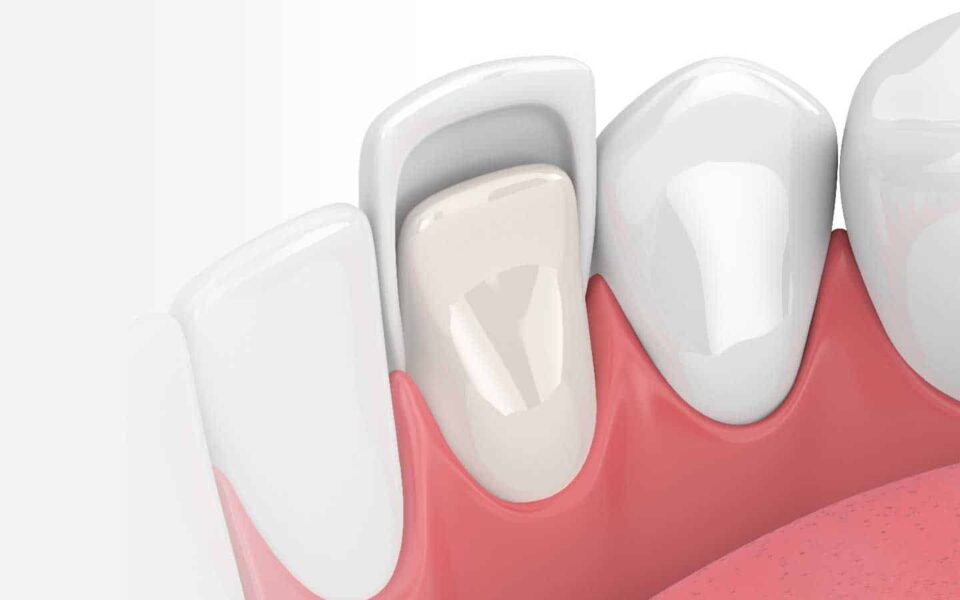
How Long Do Veneers Last and Are They Right for Me?
Thinking About Upgrading Your Smile with Veneers? Thinking about upgrading your smile with veneers? You’re not alone. Veneers are one…
Can a Crown Get a Cavity?
The crown itself cannot develop a cavity because it is made from dental material, not natural enamel. However, the natural tooth underneath the crown can still decay.
Decay often develops near the crown margin, where the restoration meets the tooth. If plaque and bacteria collect there, they can work their way under the edge of the crown. This can weaken the tooth and cause the crown to loosen or fail.
Signs of decay around a crown may include:
- Sensitivity near the gumline
- Pain when biting
- A dark line near the crown edge
- Bad taste or odor
- Gum irritation
- A crown that feels loose
- Food catching around the restoration
Regular dental exams help catch crown-related decay early, often before it causes pain.
How to Care for a Dental Crown
Proper maintenance helps maximize the life of your crown. Caring for a crown is similar to caring for a natural tooth, but you should pay close attention to the gumline and crown edges.
To keep your crown in good condition:
- Brush twice daily with fluoride toothpaste
- Floss carefully around the crown every day
- Avoid chewing ice and other hard objects
- Wear a night guard if recommended
- Visit your dentist for routine exams and professional cleanings
- Report any discomfort or changes promptly
- Use a soft-bristled toothbrush
- Avoid using your teeth as tools
- Keep gum tissue around the crown healthy
Although crowns cannot develop cavities themselves, the natural tooth underneath can still decay if plaque accumulates along the margin. Daily flossing helps clean this area and reduces the risk of gum inflammation.
How Often Should a Crown Be Checked?
Your dentist will check your crown during routine dental exams. For many patients, this happens every six months. Some patients may need more frequent visits if they have gum disease, a history of decay, dry mouth, or multiple restorations.
During a crown evaluation, your dentist may check:
- The fit of the crown
- The health of the gums
- Signs of decay near the margin
- Bite pressure
- Cracks or chips
- Looseness
- X-rays if needed
These checks help ensure that the crown continues to protect the tooth properly.
When Should a Crown Be Replaced?
A crown may need replacement if it no longer protects the tooth or functions properly. Age alone is not always the deciding factor. A 20-year-old crown may still be healthy, while a newer crown may need attention if it is cracked, loose, or affected by decay.
A crown may need replacement if it:
- Becomes loose
- Cracks or fractures
- Shows excessive wear
- No longer fits properly
- Develops decay around the underlying tooth
- No longer provides adequate protection
- Causes bite discomfort
- Has damaged margins
- Traps food or plaque
- Creates ongoing gum irritation
Your dentist will evaluate the condition of both the crown and the supporting tooth before recommending replacement. If the tooth underneath is healthy, replacing the crown may be straightforward. If decay or nerve damage is present, additional treatment may be needed first.
What Happens If You Ignore a Damaged Crown?
Ignoring a damaged crown can allow the problem to get worse. A loose or cracked crown may let bacteria reach the tooth underneath. Over time, this can lead to decay, sensitivity, infection, or fracture.
Possible complications include:
- Tooth decay under the crown
- Crown loosening or falling off
- Tooth fracture
- Gum inflammation
- Tooth pain
- Need for root canal treatment
- Need for extraction in severe cases
Prompt care is usually simpler than waiting. If something feels different around your crown, schedule an exam before the tooth becomes painful.
Can an Old Crown Be Repaired Instead of Replaced?
Sometimes a crown can be repaired, especially if the issue is minor. A small chip may be smoothed or repaired with dental material, depending on the crown type and location. A loose crown may be re-cemented if it still fits properly and the tooth underneath is healthy.
However, replacement may be needed if:
- The crown is cracked through
- Decay is present underneath
- The crown no longer fits
- The bite has changed
- The tooth underneath is damaged
- The crown repeatedly comes loose
Your dentist will recommend the option that best protects the tooth and restores comfortable function.
Protect Your Investment in Your Smile
Dental crowns are a durable and reliable way to restore damaged teeth, but they require ongoing care to achieve their full lifespan. Regular dental cleanings, good oral hygiene, and routine exams help keep both your crown and your natural teeth healthy for years to come.
If you have an older crown, a loose crown, or sensitivity around a crowned tooth,Cascade Dental in Vancouver, WA can evaluate the restoration and recommend the right next step. With the right care, your crown can continue protecting your smile for many years.
Is It Time to Replace Your Crown?
A worn or damaged crown can affect your smile and oral health. Call today for a professional evaluation.