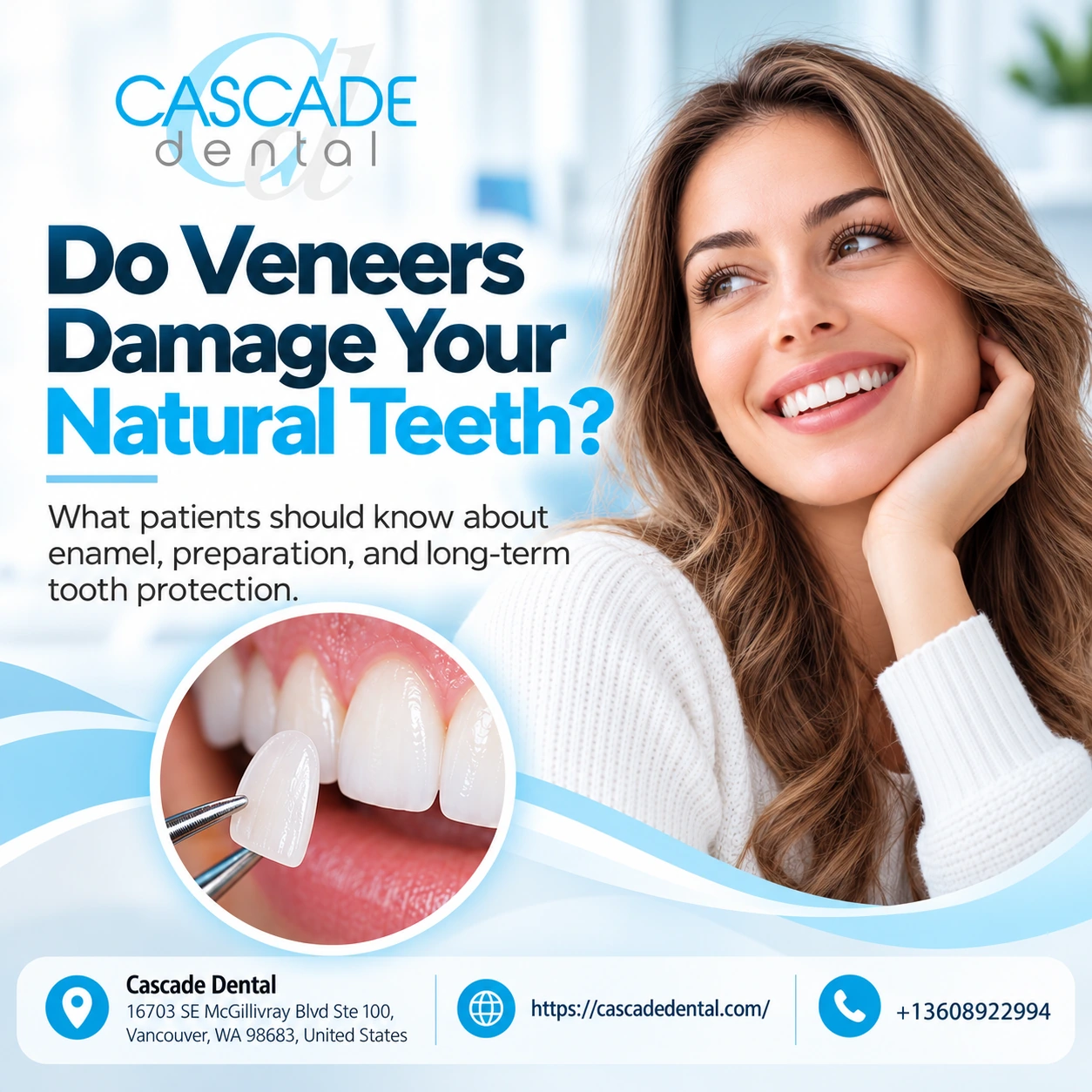
Dental veneers do not automatically damage your natural teeth, but placing them may require permanently removing a small amount of enamel. When treatment is carefully planned and performed by a qualified dentist, veneers can improve the appearance of your smile while preserving much of your natural tooth structure.
However, veneers are not completely risk-free. Understanding how they affect enamel, whether treatment is reversible, and who makes a suitable candidate can help you make an informed decision.
At Cascade Dental, we believe cosmetic improvements should never come at the expense of understanding your long-term oral health.
Fast Answer: Do Veneers Damage Your Natural Teeth?
Veneers do not inherently damage healthy teeth, but traditional veneer placement changes the natural tooth structure by removing some enamel. This preparation helps create space for the veneer and allows it to fit and bond properly.
The amount of enamel removed depends on the type of veneer, tooth position, and desired cosmetic changes.
When performed correctly, treatment can preserve much of the original tooth structure. However, excessive preparation, untreated dental problems, and poor maintenance can increase the risk of complications.
Important facts to understand include:
- Traditional porcelain veneers usually require some enamel removal.
- Enamel does not naturally regenerate once removed.
- Properly fitted veneers should not cause ongoing pain.
- Natural teeth beneath veneers can still develop cavities.
- Teeth grinding and poor oral hygiene can affect long-term results.
- Some patients may benefit from less invasive cosmetic alternatives.
The most important step is determining whether veneers are appropriate for your existing dental health.
How Do Veneers Affect Natural Tooth Structure?
Dental veneers are thin coverings made from porcelain or composite resin. They are bonded primarily to the visible front surfaces of teeth to improve their appearance.
Unlike dental crowns, which typically cover most or all of a tooth above the gumline, veneers generally preserve more natural tooth structure.
What Happens During Tooth Preparation?
Before placing traditional porcelain veneers, your dentist evaluates the shape, alignment, and condition of your teeth.
A controlled amount of enamel may be removed from the front surface and edges to create enough space for the restoration.
This preparation helps prevent the finished veneer from appearing bulky or interfering with your bite.
After preparation, impressions or digital scans may be taken to create veneers that match your dental anatomy.
Why Is Enamel Important?
Enamel is the hard outer layer that protects the softer dentin underneath.
Although enamel is highly resistant to normal chewing forces, it cannot regenerate after being physically removed.
Preserving as much healthy enamel as possible is important because it contributes to tooth protection and provides a favorable surface for bonding.
At Cascade Dental, we encourage patients to understand exactly what preparation their proposed treatment requires before proceeding.
How Much Enamel Is Removed for Veneers?
The amount of enamel removed varies based on the treatment plan.
For many conventional porcelain veneers, preparation may involve approximately 0.3 to 0.5 millimeters of enamel, although some situations require more or less.
Even a small amount matters because enamel removal is permanent.
Traditional Porcelain Veneers
Traditional veneers generally require enough preparation to accommodate the ceramic material without creating an unnatural appearance.
The amount removed depends on tooth shape, position, enamel thickness, and the cosmetic changes being made.
Minimal-Preparation Veneers
Minimal-preparation veneers require less tooth reduction than conventional restorations.
They may be appropriate for certain patients, particularly when teeth are relatively small or additional tooth volume is desirable.
No-Preparation Veneers
Some cases allow veneers to be placed with little or no enamel removal.
However, no-preparation treatment is not suitable for everyone.
Adding material without reducing tooth structure can make teeth appear bulky or create unsuitable contours in certain situations.
A dentist must evaluate your tooth proportions, bite, and cosmetic goals to determine the most conservative approach.
Are Dental Veneers Reversible?
Traditional porcelain veneers are generally irreversible because enamel is removed during preparation.
Once natural enamel has been removed, the tooth cannot return to its exact original condition.
This means patients who receive conventional veneers should expect to maintain, repair, or eventually replace the restorations over time.
Can You Remove Veneers and Return to Natural Teeth?
Although a dentist can remove an existing veneer, removal does not restore previously removed enamel.
Depending on the amount of preparation, the tooth may need another veneer or a different restoration to maintain its appearance and protection.
Are No-Prep Veneers Reversible?
Some no-preparation veneers may offer greater potential for reversibility when no tooth structure has been removed.
However, removing bonded materials can still affect the tooth surface, and not every procedure advertised as no-prep is completely reversible.
Patients should ask whether their specific treatment involves any permanent enamel changes.
What About Composite Bonding?
Composite bonding may sometimes provide cosmetic improvements with little or no enamel removal.
This makes it worth considering for patients who want to address minor cosmetic concerns while preserving natural tooth structure.
The appropriate option depends on the condition and appearance of the teeth.
Can Veneers Weaken Your Natural Teeth?
Veneers do not necessarily weaken teeth when treatment is appropriately planned. However, removing enamel changes the tooth structure, and excessive preparation can increase the risk of sensitivity or other complications.
The effects depend on how much enamel is removed and the condition of the tooth before treatment.
Enamel Preservation Matters
Bonding veneers to healthy enamel generally provides a more favorable foundation than bonding primarily to exposed dentin.
Conservative preparation helps preserve the natural tooth structure needed for long-term stability.
Existing Dental Problems Can Affect Outcomes
Teeth with extensive decay, large fillings, cracks, or weakened structures may not be appropriate for conventional veneers.
In these situations, another restorative treatment may provide better protection.
Bite Pressure Can Create Problems
Patients who grind or clench their teeth can place substantial pressure on veneers.
This may contribute to chipping, loosening, or damage to the supporting tooth.
A dentist may recommend addressing bite-related concerns before proceeding with cosmetic treatment.
Veneers should not be viewed as a way to strengthen teeth that are already structurally compromised.
What Happens to the Tooth Under a Veneer?
The natural tooth remains underneath the veneer, and it continues to require regular dental care.
The veneer covers part of the tooth surface but does not make the underlying tooth immune to decay, infection, or gum disease.
Can Cavities Develop Under Veneers?
Yes. Cavities can develop around veneer margins or on exposed areas of the natural tooth.
Poor oral hygiene allows plaque to accumulate, particularly near the gumline and between teeth.
If decay develops, the veneer may need to be removed or replaced so the affected tooth can receive treatment.
Can Teeth Rot Beneath Veneers?
Veneers do not directly cause teeth to rot.
However, untreated decay, inadequate cleaning, or problems around restoration margins can allow cavities to develop and progress.
Regular dental examinations help identify these issues before they become more serious.
Do Veneers Protect Natural Teeth?
Veneers cover a portion of the tooth and can provide some surface coverage, but they are primarily cosmetic restorations.
They are not a substitute for healthy enamel, good oral hygiene, or appropriate restorative treatment when a tooth is significantly damaged.
Patients should continue brushing twice daily, cleaning between teeth, and attending routine dental appointments.
Who Is a Good Candidate for Veneers?
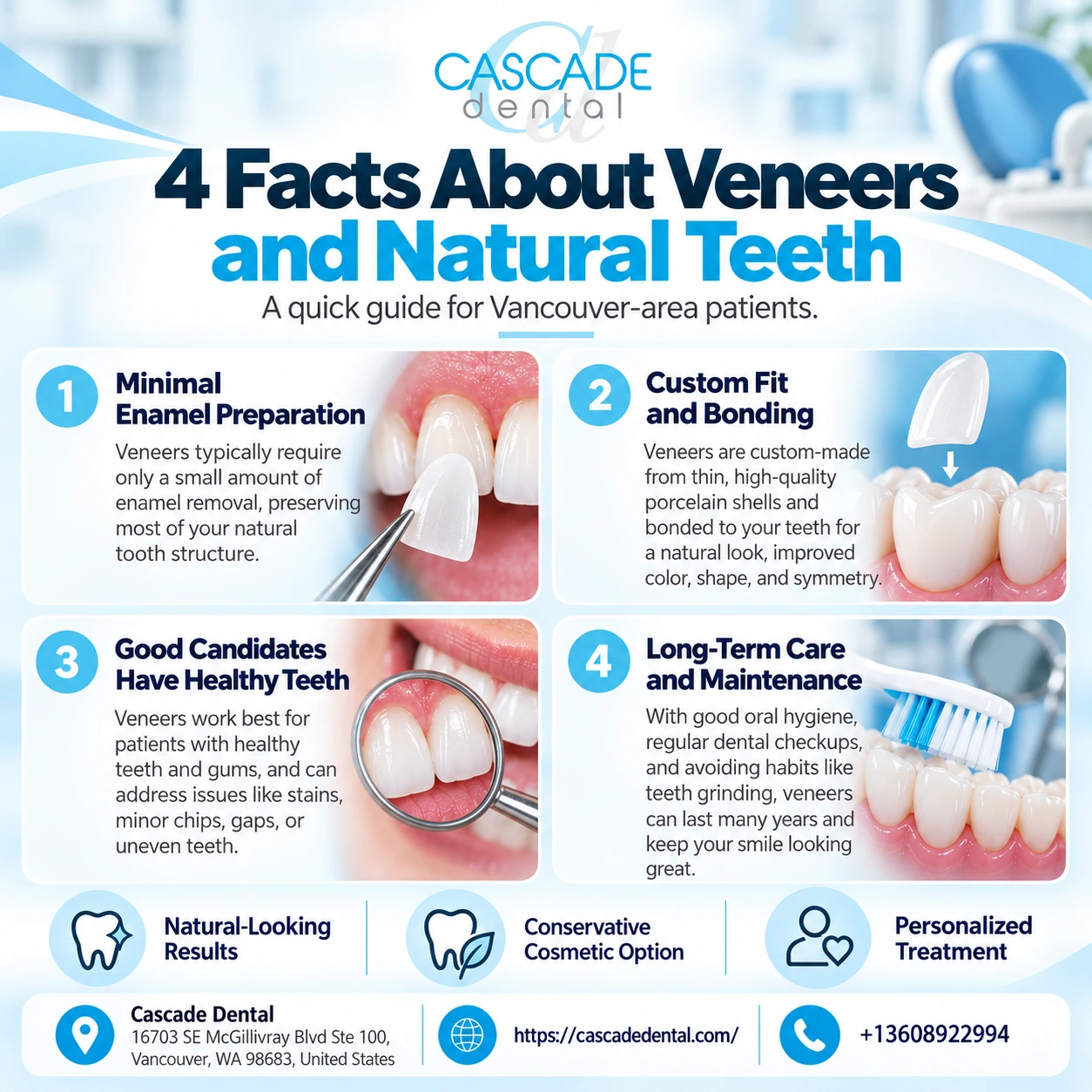
A good candidate for veneers generally has healthy teeth and gums, sufficient enamel, and cosmetic concerns that can be addressed without extensive restorative treatment.
Veneers may be appropriate for patients who want to improve:
- Persistent discoloration: Stains that do not respond adequately to professional teeth whitening.
- Minor chips: Small imperfections that affect the appearance of front teeth.
- Uneven tooth shapes: Teeth that appear unusually short, narrow, or irregular.
- Small gaps: Minor spaces between teeth that do not necessarily require orthodontic treatment.
- Mild cosmetic irregularities: Slight differences in tooth position or appearance.
Why Healthy Teeth Matter
Healthy enamel provides a favorable surface for bonding veneers.
Patients should also have healthy gums, manageable cavity risk, and a bite that does not place excessive stress on their restorations.
At Cascade Dental, we recommend evaluating the condition of the natural teeth before making decisions about cosmetic treatment.
Veneers should address suitable cosmetic concerns rather than conceal dental problems that require treatment.
Who May Not Be a Good Candidate for Veneers?
Not everyone who wants veneers is an appropriate candidate.
Certain oral health conditions may need treatment before veneers can be considered.
Patients With Active Gum Disease
Gum disease can cause inflammation, recession, and changes to the tissues supporting teeth.
These conditions may affect how veneers fit and appear over time.
Treating gum disease first helps establish a healthier foundation for cosmetic treatment.
Patients With Significant Tooth Decay
Placing veneers over untreated cavities can allow existing damage to progress.
Decay should be addressed before cosmetic restorations are considered.
Patients With Insufficient Enamel
Teeth with substantial enamel loss may not provide an ideal bonding surface for conventional veneers.
Your dentist may recommend alternative restorations depending on the remaining tooth structure.
Patients Who Grind Their Teeth
Frequent grinding and clenching increase pressure on restorations.
Although grinding does not automatically rule out veneers, uncontrolled bruxism may increase the likelihood of fractures or bonding failure.
Patients With Significant Bite Problems
Severe crowding, substantial misalignment, or certain bite irregularities may require orthodontic evaluation.
Veneers can change how teeth look, but they do not correct the underlying position of tooth roots or resolve every bite problem.
What Are the Risks and Limitations of Veneers?
Although veneers can produce natural-looking cosmetic improvements, patients should understand their potential disadvantages before treatment.
1. Permanent Enamel Changes
Traditional veneer placement involves irreversible enamel removal.
This is one of the most important considerations, particularly for patients with otherwise healthy teeth.
2. Tooth Sensitivity
Some patients experience temporary sensitivity to hot or cold temperatures following preparation or placement.
Persistent or worsening sensitivity requires dental evaluation.
3. Chipping or Fracturing
Porcelain and composite veneers can chip, crack, or become damaged under excessive pressure.
Repair or replacement may be necessary depending on the severity.
4. Gum Irritation
Poorly contoured restorations or plaque accumulation near veneer margins may contribute to gum inflammation.
Proper fitting and daily hygiene help reduce these concerns.
5. Future Replacement Costs
Veneers are not lifetime restorations.
Porcelain veneers often last approximately 10 to 15 years, while composite veneers generally have a shorter expected lifespan.
Individual results vary, and future maintenance or replacement should be considered when planning treatment.
6. Cosmetic Limitations
Veneers cannot correct every dental concern.
Patients with extensive tooth damage, significant alignment problems, or severe bite issues may benefit more from other treatments.
Understanding these limitations makes it easier to establish realistic expectations.
What Questions Should You Ask Before Getting Veneers?
Before committing to veneers, discuss the treatment process, alternatives, and long-term responsibilities with your dentist.
Consider asking:
- Are my natural teeth healthy enough for veneers? Your dentist should examine enamel, gums, existing restorations, and signs of decay.
- How much enamel will need to be removed? Ask whether traditional, minimal-preparation, or no-preparation veneers may be appropriate.
- Is the treatment reversible? Understand whether permanent changes to your tooth structure are expected.
- Would composite bonding or whitening be a better option? Less invasive treatments may address certain cosmetic concerns.
- Will my bite affect the veneers? Discuss grinding, clenching, or alignment issues that could influence durability.
- What happens if a veneer chips or falls off? Understand the available repair and replacement options.
- What maintenance and future costs should I expect? Ask about cleaning, examinations, possible nightguard use, and eventual replacement.
A thorough consultation should give you enough information to compare your options without feeling pressured to proceed.
FAQs
Do Veneers Ruin Your Teeth Over Time?
Veneers do not automatically ruin natural teeth. However, traditional veneer placement permanently removes some enamel, and complications can develop if oral hygiene is poor or restorations are improperly fitted. Proper treatment planning and regular dental care help reduce these risks.
Are Your Teeth Shaved Down for Veneers?
Traditional porcelain veneers typically require a small amount of enamel removal to create space for the restoration. However, teeth are not usually reduced as extensively as they are for dental crowns. The amount of preparation depends on the treatment plan.
Can You Get Veneers Without Removing Enamel?
Yes, some patients may qualify for no-preparation veneers that require little or no enamel removal. However, these restorations are not suitable for every tooth shape or cosmetic concern. A dental examination is necessary to determine candidacy.
Do Teeth Become Sensitive After Veneers?
Temporary temperature sensitivity may occur after veneer preparation or placement. Persistent sensitivity, pain when biting, or increasing discomfort should be evaluated by a dentist because these symptoms may indicate an underlying problem.
Is It Better to Get Veneers or Keep Natural Teeth?
Preserving healthy natural tooth structure is generally preferable whenever possible. If cosmetic concerns can be addressed with whitening, bonding, or orthodontic treatment, those alternatives may be worth considering before irreversible veneer preparation.
Can Veneers Be Removed Without Damaging Teeth?
A dentist can remove veneers, but previously removed enamel cannot be restored. Removing bonded restorations also requires care to avoid unnecessary damage to the underlying tooth. Whether another restoration is needed depends on the original preparation and remaining tooth structure.
Make an Informed Decision About Veneers at Cascade Dental
Dental veneers can improve the appearance of your smile, but deciding whether they are appropriate requires more than choosing a preferred tooth color or shape.
At Cascade Dental, we believe patients should understand how cosmetic treatment may affect their natural teeth before making a decision.
Our team can evaluate your oral health, discuss your cosmetic concerns, and explain whether veneers or another treatment may be appropriate for your situation.
We also help patients understand the importance of enamel preservation, long-term maintenance, and realistic treatment expectations.
Whether you want to address discoloration, uneven teeth, small chips, or other cosmetic concerns, our goal is to help you make a decision that considers both appearance and dental health.
Schedule a consultation with Cascade Dental to explore your cosmetic dentistry options and learn what treatment may best support your natural teeth and long-term smile goals.