Bone loss is a common concern for patients who are considering dental implants. Because implants are placed into the jawbone, it is natural to wonder whether reduced bone volume automatically means you are no longer a candidate.
In many cases, the answer is no. Dental implants with bone loss may still be possible depending on how much bone remains, where the bone loss is located, the quality of the remaining bone, and your overall oral health.
Some patients may benefit from procedures that rebuild or improve the available bone before implant placement. Others may qualify for different implant sizes or treatment approaches that work with their existing anatomy.
The key is not to rule out implants based on bone loss alone. A comprehensive dental evaluation can help determine which options are appropriate and which approach offers the safest and most predictable result.
Bone Loss? Implants May Still Be Possible
Discover implant solutions designed around your bone health. Schedule your consultation today.
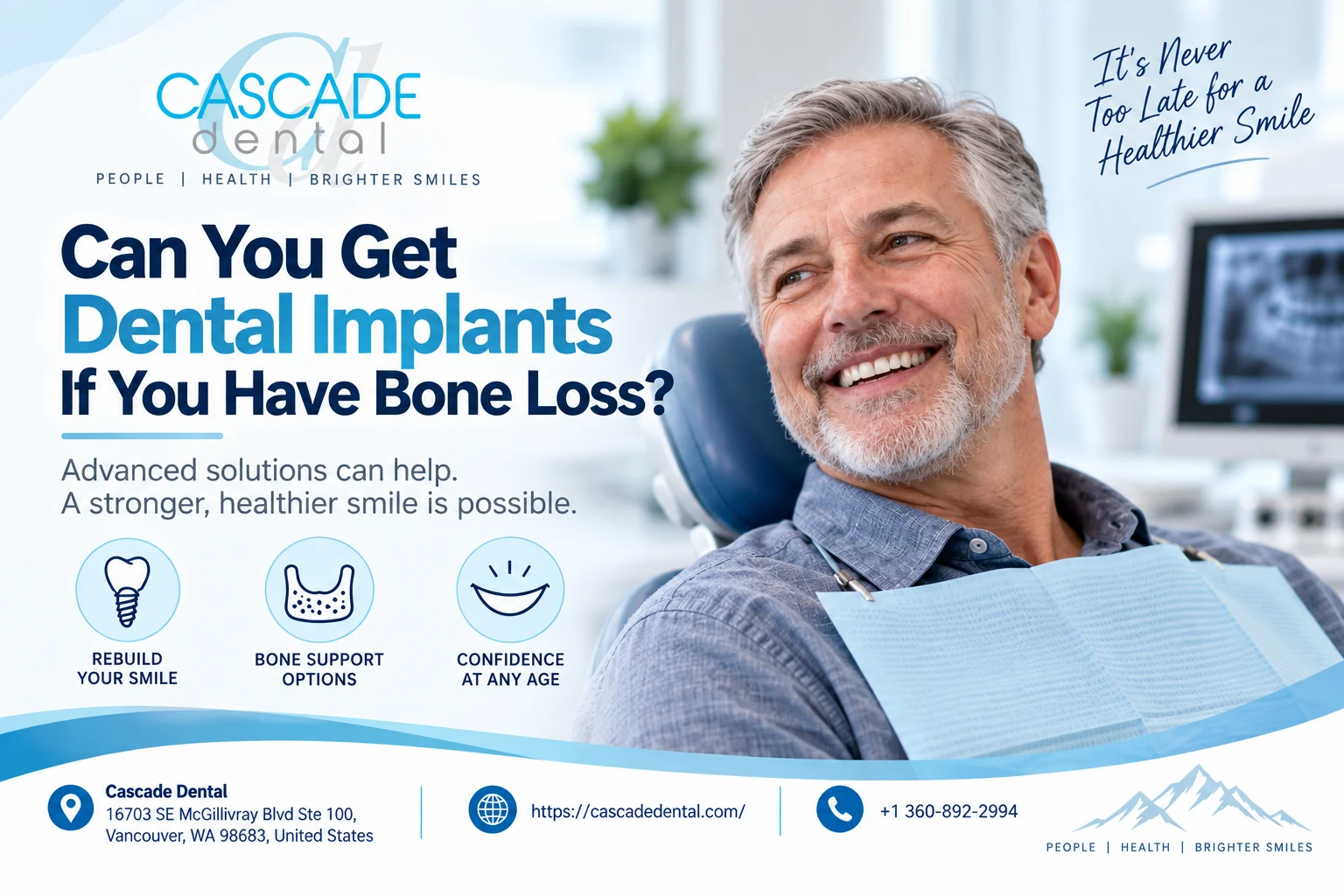
Can You Get Dental Implants If You Have Bone Loss?
Yes, many patients with some degree of jawbone loss can still receive dental implants.
The amount of bone required depends on several factors, including:
- The location of the missing tooth
- The size and type of implant being considered
- The density and quality of the bone
- The number of teeth being replaced
- The type of restoration that will be supported
- The patient’s bite forces
- The health of the surrounding gums
- Whether additional procedures are needed
Mild bone loss may not prevent implant placement at all. Moderate or more significant bone loss may require additional planning or procedures before an implant can be placed safely.
For example, some patients may benefit from a bone graft to increase the width or height of the jawbone. Others may be candidates for mini dental implants or alternative restorative approaches depending on their anatomy.
The most important point is that implant eligibility is individualized.
Two patients with similar-looking bone loss may receive very different recommendations because their bone quality, health history, bite, and treatment goals are different.
Why Does Bone Matter for Dental Implants?
Dental implants rely on the jawbone for support.
An implant is placed into the bone and is designed to become integrated with the surrounding tissue during healing. This process creates the foundation that allows the implant to support a crown, bridge, or denture.
If there is not enough bone in the right location, it may be difficult to position the implant safely or provide the support needed for long-term function.
Why Bone Loss Happens
Jawbone loss can occur for several reasons.
Tooth loss
Natural tooth roots help stimulate the jawbone during chewing. After a tooth is lost, the bone in that area can gradually shrink because it is no longer receiving the same stimulation.
Advanced gum disease
Periodontal disease can damage the tissues and bone that support the teeth. In severe cases, significant bone may be lost around one or more teeth.
Trauma
An injury to the mouth or jaw can damage bone around a tooth or alter the shape of the ridge where an implant would normally be placed.
Long-term denture use
Removable dentures rest on the gums and underlying bone rather than replacing tooth roots. Over time, some patients experience continued changes in the shape and volume of the jawbone.
Previous infections
Dental infections can sometimes damage surrounding bone, especially when they remain untreated for an extended period.
The presence of bone loss does not tell the whole story. Dentists also need to evaluate whether the remaining bone is healthy and strong enough to support treatment.
Could Mini Dental Implants Be an Option?
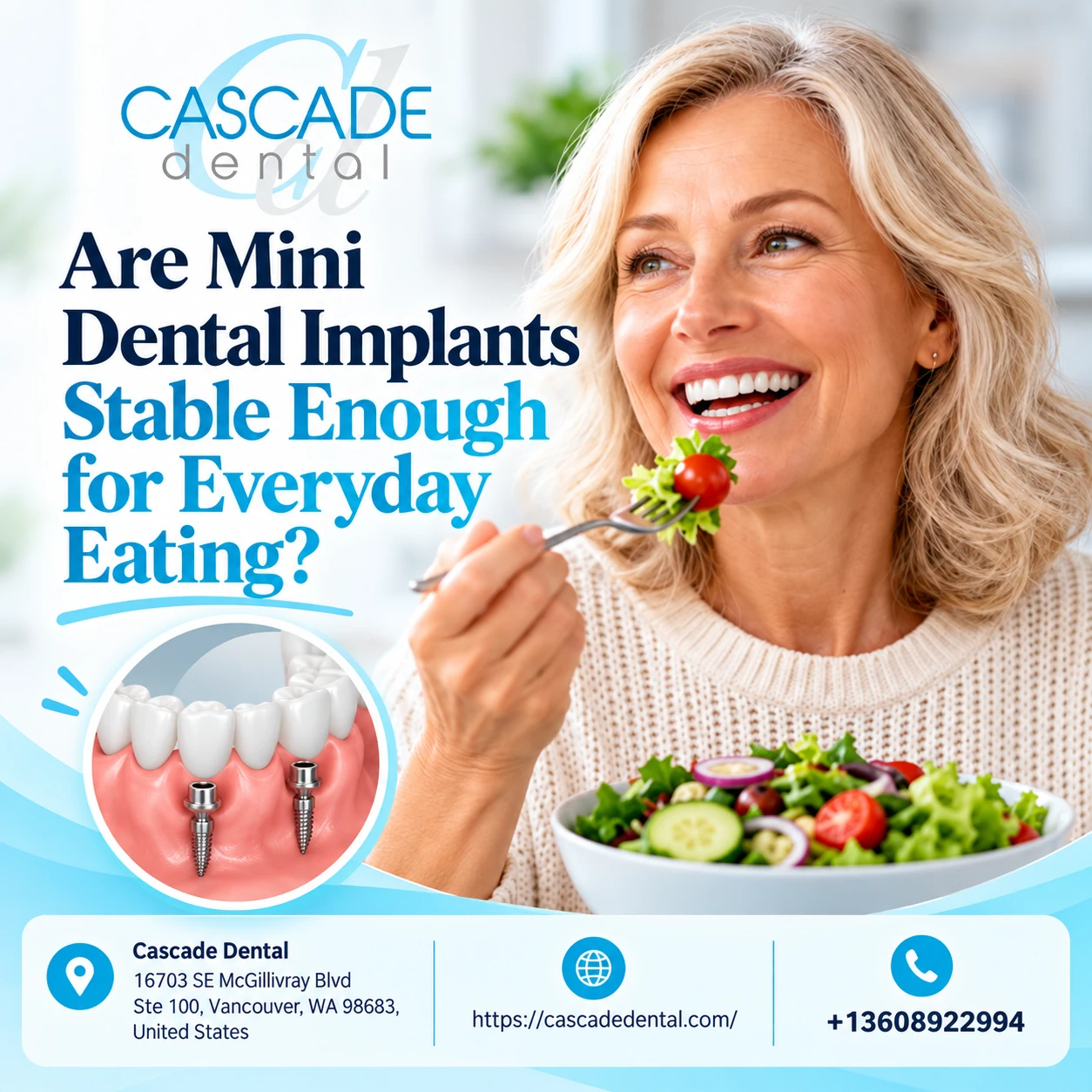
Mini dental implants may be an option for select patients who have limited bone width.
These implants have a smaller diameter than traditional dental implants. Because they are narrower, they may sometimes fit in areas where a standard implant would require additional bone volume.
Mini implants are commonly considered for applications such as stabilizing certain removable dentures. They may also be used in other carefully selected situations.
However, smaller does not automatically mean better.
Mini dental implants are not suitable for every missing tooth or every type of restoration. The amount of chewing force in the treatment area, the quality of the available bone, and the type of restoration being supported all need to be considered.
For example, an implant supporting a lower denture may experience different forces than an implant replacing a molar in the back of the mouth.
That is why mini implants should be considered one possible treatment option rather than a universal solution for bone loss.
A dentist can determine whether their size and design make sense for your specific needs.
What Additional Procedures Might Be Recommended?
When the available bone is not adequate for implant placement, your dentist may discuss procedures designed to improve the treatment area.
The appropriate recommendation depends on the amount and location of the bone loss.
Bone Grafting
Bone grafting is one of the most common procedures used to improve implant candidacy.
A bone graft adds material to an area where the jawbone has become too thin or has lost height. Over time, the body incorporates the grafted material and develops additional bone in the area.
Bone grafting may be recommended:
- At the time a damaged tooth is removed
- Before dental implant placement
- In combination with implant placement in certain cases
- To improve the width of a narrow ridge
- To rebuild an area affected by previous bone loss
Some grafts require a healing period before the implant can be placed, while others may allow the implant and graft to be completed during the same procedure.
Sinus Lift
A sinus lift may be considered when replacing teeth in the upper back portion of the mouth.
The roots of the upper molars and premolars are located near the maxillary sinuses. After these teeth are lost, there may not always be enough vertical bone height available for an implant.
During a sinus augmentation procedure, the sinus membrane is carefully elevated and bone graft material is placed beneath it to create additional support.
Not every patient who needs an upper implant requires a sinus lift. Imaging and clinical evaluation help determine whether it is necessary.

Ridge Augmentation
When tooth loss or trauma has changed the shape of the jaw, ridge augmentation may be used to rebuild the contour of the bone.
This can create a more suitable foundation for an implant and may also help improve the appearance of the final restoration in visible areas.
Alternative Implant Approaches
In certain situations, dentists may be able to use a different implant size, position, or restorative design rather than performing extensive grafting.
These decisions are highly case-specific.
The safest approach is the one that provides adequate support without compromising nearby teeth, nerves, sinuses, or other structures.

CBCT Scan in Vancouver, WA: How Cone Beam CT Improves Dental Implant Planning
In the world of modern dentistry, technology has revolutionized the way we approach various dental procedures, and implant dentistry is…
What Happens During an Implant Evaluation?
An implant evaluation is designed to answer a much more detailed question than simply, “Do I have enough bone?”
Your dentist needs to understand your entire oral condition and how the proposed implant will function within your bite.
A comprehensive evaluation may include:
Review of Your Dental and Medical History
Your dentist may ask about:
- Previous dental procedures
- Gum disease
- Tooth loss
- Smoking
- Diabetes
- Medications
- Bone-related conditions
- Healing problems
- Previous implant or graft procedures
Certain health conditions do not automatically prevent implant treatment, but they may influence planning and healing.
Clinical Examination
Your dentist will examine your teeth, gums, bite, and the area where an implant may be placed.
They may look for signs of inflammation, gum disease, infection, tooth movement, or bite-related concerns.
Dental Imaging
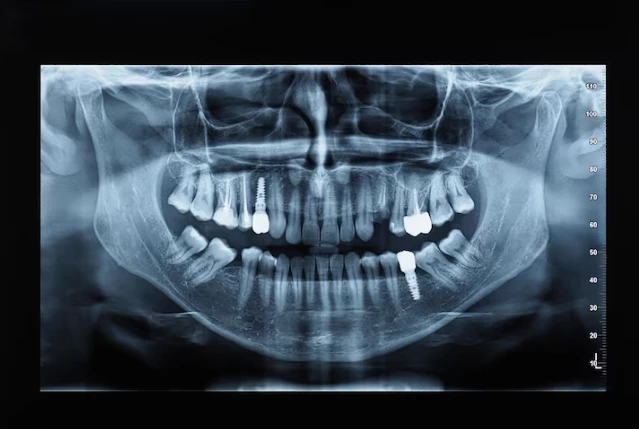
X-rays provide important information about the jaw and neighboring teeth.
In many implant cases, three-dimensional imaging such as cone beam computed tomography may be used to evaluate:
- Bone height
- Bone width
- Bone shape
- Nearby tooth roots
- Nerve locations
- Sinus anatomy
- Potential implant positions
This information helps the dentist determine whether an implant can be placed safely and whether additional procedures may be helpful.
Restorative Planning
Implant planning should begin with the final tooth replacement in mind.
The dentist needs to consider where the crown, bridge, or denture should sit and then determine whether the implant can be positioned to support that restoration correctly.
That is why bone volume is only one part of the evaluation.
Who Is Still a Good Candidate for Dental Implants?
Bone loss alone does not define whether someone is a good implant candidate.
Many patients with reduced bone may still qualify if their overall oral and general health are suitable for treatment.
A good candidate may have:
- Healthy or well-controlled gums
- Adequate bone or a realistic option for improving bone support
- Good daily oral hygiene
- A commitment to regular dental care
- Reasonable overall health
- Realistic expectations about treatment
- A bite that can be managed appropriately
- The ability to heal normally after a dental procedure
Patients with gum disease may need periodontal treatment before implant placement.
People who smoke may also face additional risks because smoking can negatively affect healing and the health of the tissues around dental implants.
Teeth grinding, uncontrolled medical conditions, or poor oral hygiene may also influence treatment recommendations.
These factors do not necessarily eliminate implant treatment, but they need to be addressed as part of a complete plan.
Are You Ever Too Old for Dental Implants?
There is generally no specific upper age limit for dental implants.
Being 65, 75, or 85 does not automatically make someone unsuitable for treatment. In fact, dental implants are increasingly used to replace missing teeth and improve denture stability among older adults. The National Institute of Dental and Craniofacial Research describes dental implants as an increasingly used, safe, and effective method for replacing lost teeth and helping retain lower dentures in older adults.
What matters is whether a person’s health and oral conditions allow an implant to be placed and heal successfully.
Dental implants depend on a biological process known as osseointegration. After the implant is placed into the jaw, the surrounding bone heals around it and helps create a stable foundation for the future restoration. This process can take several months.
A patient’s ability to heal therefore matters more than the number on their driver’s license.
For example, a healthy 78-year-old with adequate jawbone, good oral hygiene, controlled medical conditions, and healthy gums may be a better implant candidate than a much younger person who smokes heavily, has untreated periodontal disease, or has a medical condition that significantly interferes with healing.
Age should be considered as part of a person’s overall health picture, not used as an automatic reason to rule out treatment.
What Health Factors Matter More Than Age?
Dental implant candidacy involves more than checking how many birthdays you have had. Several health factors provide much more useful information about whether implant treatment is appropriate.
Your General Health
Implant placement is a surgical procedure, so your dental team needs to understand your overall health.
The American Academy of Implant Dentistry identifies good medical health as one of the important characteristics of an implant candidate. Medical conditions do not necessarily prevent treatment, but they may need to be well managed before surgery.
Diabetes and Other Medical Conditions
Having diabetes does not automatically mean you cannot receive dental implants. The level of disease control and your individual health circumstances matter.
Uncontrolled diabetes can interfere with normal healing, which may affect implant treatment. The ADA similarly notes that chronic conditions such as diabetes may interfere with healing after implant surgery and need to be considered during treatment planning.
Other medical conditions may also require additional evaluation or coordination with a physician.
Older adults frequently manage one or more chronic conditions, making a careful review of medical history particularly important before elective procedures.
Medication History
Your dentist needs a complete list of prescription medications, over-the-counter drugs, vitamins, and supplements you take.
Some medications can affect bleeding, bone metabolism, immune function, or healing. Rather than stopping any medication yourself, provide your dental team with an accurate medication list so they can determine whether additional precautions or consultation with your physician are appropriate.
Gum Health
Healthy gums are essential around dental implants.
Active gum disease or other oral infections may need to be addressed before implant treatment begins. The AAID recommends establishing good oral health before implant surgery because infection and gum disease can interfere with successful treatment.
This is particularly important for patients who have lost teeth because of advanced periodontal disease.
Smoking and Tobacco Use
Smoking can interfere with healing and negatively affect oral health. The ADA specifically notes that tobacco use can slow healing after implant surgery.
For someone considering dental implants, smoking status is therefore much more clinically meaningful than chronological age.
Your Ability to Maintain the Implant
Dental implants require long-term home care.
Patients need to be able to brush effectively, clean around their implant restorations, and attend regular professional examinations and cleanings. The AAID identifies a commitment to ongoing oral hygiene and professional maintenance as an important part of successful implant care.
For some older adults with limited dexterity or other physical challenges, cleaning techniques or oral hygiene aids may need to be adapted.
Who May Not Be an Ideal Candidate for Dental Implants?
Although many older adults can successfully receive dental implants, implants are not appropriate for everyone.
Someone may not currently be an ideal candidate if they have a condition that significantly compromises healing or makes surgery unsafe.
Potential concerns can include:
- Uncontrolled medical conditions
- Active gum disease or oral infection
- Inadequate bone without an appropriate treatment option
- Heavy smoking or tobacco use
- Certain medications or medical therapies that affect bone or healing
- Difficulty maintaining adequate oral hygiene
- Medical circumstances that make elective surgery inappropriate
Some of these issues are temporary or manageable.
For example, gum disease may be treated first. A patient’s physician may help improve control of a medical condition. Bone grafting may address certain anatomical limitations. Smoking cessation may improve the overall risk profile.
In other circumstances, an implant may simply not be the best option.
That is why patients should avoid deciding for themselves that they are either “too old” or automatically qualified for implants.
A professional evaluation is needed to determine the safest and most predictable approach.
What Factors Should Seniors Consider When Choosing Dental Implants?
When seniors are considering dental implants, there are several important factors to keep in mind. Concern for the patient’s general well-being comes first. Unfortunately, the success of dental implant procedures might be affected by certain medical conditions, such as severe osteoporosis or uncontrolled diabetes, even if the surgery is appropriate for the majority of seniors. It is critical for elderly patients to discuss their oral health with a dentist or oral surgeon to find out if dental implants are a good option for them. You can always contact our team to schedule a consultation and get personalized guidance.
Bone density is another crucial consideration. A certain amount of bone density is necessary to guarantee the stability of the dental implant, as it is supported by the jawbone. Bone grafts are sometimes necessary for elderly patients in order to increase the density of bone that can support dental implants. This is a typical treatment that improves the implant’s chances of success by laying a strong foundation.
Seniors should also consider the cost of dental implants. Their durability and long-term benefits usually justify the higher initial cost compared to alternative tooth replacement solutions like dentures or bridges. To make implants more accessible, many dental offices provide payment plans, and some insurance companies even cover a portion of the expense. Reviewing available payment options can help seniors plan their treatment with confidence.
Lastly, it’s important for seniors to consider their long-term dental care when choosing implants. Proper oral hygiene, including regular brushing, flossing, and professional cleanings, is essential to the longevity of dental implants. Seniors should be committed to maintaining their implants just as they would their natural teeth to ensure long-lasting success.
Dental implants offer seniors an excellent solution to tooth loss, enhancing both their quality of life and oral health. By restoring the ability to chew, speak, and smile confidently, dental implants provide a permanent, comfortable, and natural-looking replacement for missing teeth, helping seniors live fuller, healthier lives.
What If You Were Born Missing Teeth (Hypodontia)?
Hypodontia is a condition where individuals have fewer teeth than expected, and its origins can be traced to both genetic and environmental factors. Understanding these causes is essential for managing the condition effectively.
Genetic Factors
Genetic Predisposition: Hypodontia often runs in families, indicating a genetic component. Certain genes play a crucial role in tooth development, and mutations or abnormalities in these genes can lead to the condition.
Ectodermal Dysplasia: This genetic disorder affects the development of teeth, hair, and sweat glands. Individuals with ectodermal dysplasia may have missing teeth or malformed teeth, contributing to hypodontia.
Environmental Factors
Trauma: Physical injuries to the mouth or jaw during crucial stages of tooth development can lead to missing teeth.
Infections: Severe infections during childhood, especially those affecting the gums or developing teeth, can disrupt normal tooth formation and result in hypodontia.
Effects on Oral Health
Chewing and Speaking Difficulties: Missing teeth can make it challenging to chew food properly and speak clearly. This can impact nutrition and communication, affecting overall quality of life.
Misalignment of Remaining Teeth: The gaps left by missing teeth can cause adjacent teeth to shift out of their proper positions. This misalignment can lead to bite problems, such as overbite or underbite, and exacerbate dental issues.
Increased Risk of Dental Problems: The empty spaces from missing teeth can make it harder to maintain oral hygiene, raising the risk of cavities and gum disease. Food particles and plaque can accumulate in these areas, leading to further complications.
Addressing hypodontia early is crucial for maintaining optimal oral health and preventing these associated issues. Consulting with a dental professional can help in managing the condition effectively and exploring suitable treatment options such as restorative dentistry.
How Dental Implants Help With Hypodontia
Dental implants offer a reliable and effective solution for individuals with hypodontia. Unlike traditional dentures or bridges, which rely on neighboring teeth for support, dental implants are anchored directly into the jawbone.
This process involves placing a titanium post into the bone, which acts as a replacement root for the missing tooth. Once the implant integrates with the bone, a process known as osseointegration, a crown is placed on top, replicating the natural tooth in both function and appearance. Modern planning methods, including cone beam CT scans in implant dentistry, can also help dentists evaluate bone structure and determine precise implant placement.
The preservation of the mandible is one of the most significant benefits of dental implants. The removal of teeth may eventually cause the underlying bone to degenerate. By stimulating the bone, implants stop bone loss and maintain facial structure.
Furthermore, dental implants provide a permanent and stable solution, thereby obviating the necessity for removable appliances and the resulting discomfort. Implants can be customized to meet the unique requirements of each patient, guaranteeing a comfortable and precise fit. In cases where additional support is needed before implant placement, procedures related to other implant treatments may also be considered.
How Cascade Dental Can Help
At Cascade Dental, we understand that hearing you have bone loss can make implant treatment feel uncertain.
The good news is that bone loss does not automatically mean implants are no longer an option.
Our approach begins with evaluating the condition of your gums, remaining teeth, jawbone, bite, and overall oral health. From there, we can discuss whether traditional dental implants, mini implants, bone grafting, another preparatory procedure, or a different tooth replacement option makes the most sense.
We also believe patients should understand why a recommendation is being made.
If additional bone support is necessary, we can explain what the procedure is intended to accomplish. If grafting is not appropriate or another treatment would offer a better outcome, we can discuss those alternatives as well.
The goal is not simply to place an implant. It is to develop a treatment plan that provides a stable, functional, and maintainable replacement for the missing tooth or teeth.
If you have been told that you have bone loss, a comprehensive implant evaluation can help clarify what options are actually available.
FAQs
Can I still get dental implants if I have severe bone loss?
Possibly. Significant bone loss may require additional procedures such as bone grafting or another approach before implant placement. In some cases, an alternative implant design or different tooth replacement may be more appropriate. A clinical examination and imaging are necessary to determine your options.
How much bone do you need for a dental implant?
There is no single amount that applies to every patient. The required bone depends on the implant’s size and location, the quality of the bone, nearby anatomy, and the type of restoration being supported.
Can bone grow back after tooth loss?
Jawbone that has resorbed after tooth loss generally does not completely rebuild itself without treatment. Bone grafting may be used to increase bone volume in areas where additional support is needed.
Does everyone with bone loss need a bone graft?
No. Some patients still have enough healthy bone for implant placement despite having experienced some bone loss. Others may qualify for a different implant size or treatment approach. Imaging helps determine whether grafting is necessary.
What is a bone graft for dental implants?
A bone graft places grafting material in an area where the jawbone needs additional volume or support. Over time, the material becomes integrated with the surrounding bone and can create a stronger foundation for implant placement.
How long do you have to wait after a bone graft before getting an implant?
The timeline varies depending on the type and size of the graft, the location being treated, and the patient’s healing response. Some implants can be placed at the same time as grafting, while other cases require several months of healing first.
Can mini dental implants be used if I do not have enough bone for regular implants?
They may be an option in selected cases because of their smaller diameter. However, mini implants are not appropriate for every restoration or area of the mouth. Your dentist must evaluate the available bone and expected chewing forces before recommending them.
What is a sinus lift, and why would I need one?
A sinus lift is a bone grafting procedure used in the upper back jaw when there is not enough bone height between the mouth and the sinus cavity for an implant. It is only recommended when the anatomy and treatment plan require it.
Can gum disease cause enough bone loss to prevent implants?
Advanced gum disease can cause significant loss of supporting bone. Implant treatment may still be possible, but the gum disease usually needs to be treated and controlled first. The remaining bone and gum health must then be evaluated.
Does wearing dentures cause bone loss?
Jawbone naturally changes after teeth are lost because tooth roots are no longer stimulating the bone. Patients who wear dentures may continue to experience these changes over time because dentures do not replace the tooth roots within the jaw.
How does a dentist check whether I have enough bone for implants?
A dentist typically uses a clinical examination along with dental imaging. Three-dimensional scans may be used to measure bone height, width, and shape and to evaluate important nearby structures.
Should I assume I cannot have implants if another dentist told me I have bone loss?
No. Bone loss is an important factor, but it is only one part of implant candidacy. A complete evaluation can determine whether grafting, mini implants, traditional implants, or another restorative approach may be appropriate.
For patients considering dental implants with bone loss, the most important step is obtaining an individualized evaluation. Modern implant treatment offers several ways to work with reduced bone, but the right solution depends on your anatomy, oral health, and long-term restorative needs. A thoughtful treatment plan can help determine whether implants remain a safe and realistic option for you.
Don’t Let Bone Loss Stop Your New Smile
Find out if dental implants or bone grafting can restore your smile. Call our dental team today.