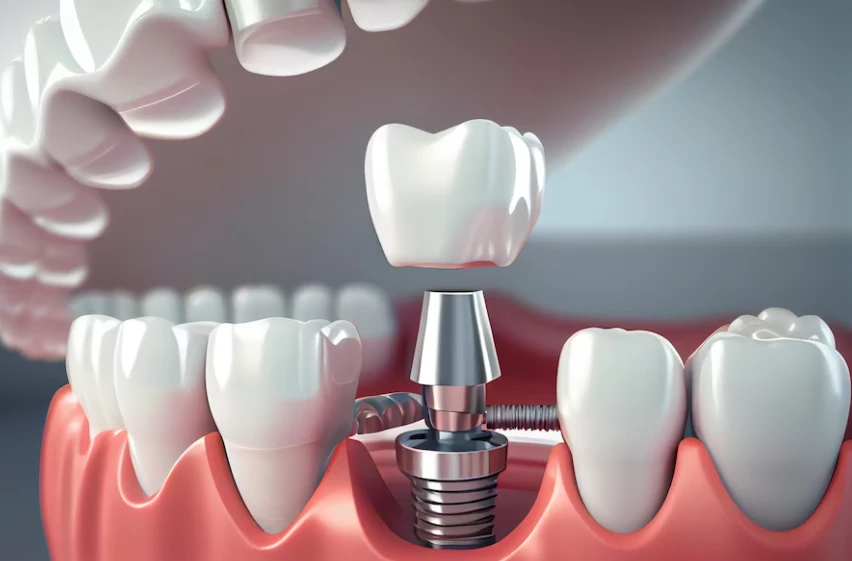
Dentists evaluate jawbone density before dental implants to determine whether the bone can adequately support an implant and allow it to heal properly. They examine both the quality and amount of available bone because these factors can influence implant stability, positioning, and long-term treatment outcomes.
At Cascade Dental, we help patients from Mill Plain, WA, understand why jawbone evaluation is an important part of implant planning. Even if you have experienced bone loss, dental implants may still be possible with the right assessment and, when necessary, additional preparation.
Quick Answer: Why Does Jawbone Density Matter for Dental Implants?
Jawbone density matters because dental implants need suitable bone support to remain stable and function properly. However, dentists evaluate more than density alone. They also assess bone volume, structure, location, and surrounding anatomy.
A dental implant is a small post placed into the jawbone to replace a missing tooth root. Over time, the surrounding bone heals and integrates with the implant through a process called osseointegration.
For this process to succeed, the implant needs appropriate initial stability and healthy bone capable of supporting healing.
Before recommending treatment, dentists typically consider:
- Bone quality: The internal structure and characteristics of the supporting bone.
- Bone quantity: The available height, width, and overall volume of the jawbone.
- Bone location: The position of the proposed implant relative to neighboring teeth and anatomical structures.
- Gum health: Whether inflammation or periodontal disease could affect treatment.
- Medical history: Conditions and medications that may influence bone healing.
- Additional preparation: Whether grafting or another procedure may improve the implant site.
Having lower bone density does not automatically mean dental implants are impossible.
Your dentist must consider the complete condition of your mouth before determining whether additional treatment is necessary.
Bone Quality vs. Bone Quantity: What Is the Difference?
Although bone quality and bone quantity are closely related, they describe different characteristics of your jawbone.
Both are important when evaluating a potential implant site.
What Is Bone Quality?
Bone quality refers to the characteristics of the bone, including its internal structure and how it may respond to implant placement.
Jawbone contains two main types of bone tissue.
Cortical bone is the denser outer layer that provides structural support.
Trabecular bone, also called cancellous bone, forms an internal network of interconnected spaces and bone tissue.
The proportion and arrangement of these structures vary throughout the jaws.
Bone density is one aspect of bone quality, but it does not fully describe the bone’s strength, biological health, or healing potential.
What Is Bone Quantity?
Bone quantity describes how much bone is physically available in the proposed implant area.
Dentists evaluate the height and width of the jawbone to determine whether an implant of an appropriate size can be positioned safely.
For example, a patient may have relatively dense bone but insufficient width to accommodate an implant.
Another patient may have adequate bone volume but characteristics that require additional attention during planning.
Why Do Dentists Evaluate Both?
An implant needs enough space for appropriate placement and bone capable of supporting healing.
Neither density nor volume alone determines whether treatment will succeed.
This is why dentists combine clinical examinations, dental imaging, medical history, and other findings rather than relying on a single measurement.
Why Dental Implants Need Adequate Bone Support
Dental implants function differently from traditional bridges or removable dentures.
Instead of relying entirely on neighboring teeth or gum tissue, an implant is anchored within the jawbone.
Initial Implant Stability
When an implant is first placed, it needs sufficient mechanical stability within the surrounding bone.
This is called primary stability.
The amount and characteristics of the available bone, implant design, and placement technique can all influence this initial support.
An implant that lacks appropriate stability may require a different treatment approach or healing plan.
Healing and Osseointegration
Following placement, bone gradually heals and forms a biological connection with the implant surface.
This process is called osseointegration.
Successful integration helps the implant support a dental crown, bridge, or other restoration.
Healing generally takes several months, although the timeline varies according to individual circumstances.
Long-Term Function
After healing, the implant must withstand everyday chewing forces.
Appropriate positioning, adequate bone support, healthy surrounding tissues, and regular maintenance all contribute to long-term function.
Bone evaluation helps your dentist anticipate potential challenges before implant placement rather than discovering them during treatment.
How Tooth Loss Can Change the Jawbone Over Time
Your jawbone changes throughout life in response to normal biological processes and functional demands.
When a natural tooth is lost, the bone surrounding its root begins to remodel.
What Happens After Tooth Extraction?
The jawbone that once supported the missing tooth no longer receives the same forces through that tooth’s periodontal ligament.
As the extraction site heals, the surrounding bone undergoes changes in shape and volume.
This process can reduce the width and height of the ridge where the tooth was located.
How Quickly Does Bone Loss Occur?
Significant remodeling can occur during the first several months after a tooth is removed.
Further changes may continue over time.
However, the extent of bone loss varies. Some patients retain substantial bone support for years, while others experience more pronounced changes.
What Else Can Affect Jawbone Support?
Tooth loss is not the only factor.
Periodontal disease, dental infections, traumatic injuries, and certain medical conditions may also affect the supporting bone.
The location of the missing tooth matters as well.
For example, bone limitations in the upper back jaw can create different planning challenges than those in the lower front jaw.
Even when a tooth has been missing for several years, an implant may still be an option after proper evaluation.
How Dentists Evaluate the Jawbone Before Implant Treatment
Evaluating jawbone support involves several steps, and not every patient requires the same testing.
At Cascade Dental, we begin by understanding your oral health, medical background, and tooth replacement goals.
Reviewing Your Medical and Dental History
We discuss any previous extractions, gum disease, dental injuries, or problems with healing.
Your dentist may also ask about diabetes, osteoporosis, smoking, and medications that could influence treatment.
Having osteoporosis does not automatically disqualify someone from dental implants. However, the condition and certain osteoporosis medications may require additional consideration.
Examining Your Mouth
The clinical examination includes assessing the missing-tooth area, surrounding gums, neighboring teeth, and bite.
We look for signs of periodontal disease, gum recession, or other concerns that may affect implant planning.
Reviewing Dental Imaging
Dental X-rays help identify important structures and potential concerns involving the teeth and supporting bone.
When three-dimensional information is needed, a CBCT scan may be recommended to evaluate the proposed implant site.
The goal is to determine whether the available bone and surrounding anatomy are suitable for the planned restoration.
When Is 3D Imaging Used for Implant Planning?
Three-dimensional imaging is often valuable when planning dental implants because ordinary dental X-rays cannot show every aspect of the jawbone.
At Cascade Dental, our implant planning process may include digital X-rays and 3D cone beam imaging when clinically indicated.
What Is a CBCT Scan?
Cone beam computed tomography, or CBCT, is a type of dental imaging that creates three-dimensional views of the teeth, jawbone, and nearby structures.
Unlike conventional two-dimensional X-rays, CBCT can show the implant area from multiple perspectives.
This helps dentists evaluate the available bone and plan implant positioning.
Why Might Your Dentist Recommend It?
A CBCT scan may be useful when the dentist needs more information about the width and height of the bone or the relationship between the proposed implant site and nearby anatomical structures.
It can also support planning when bone grafting or other site preparation may be necessary.
Can CBCT Measure Exact Bone Density?
Not in the same standardized way as a medical bone density test.
Although CBCT provides valuable information about jawbone anatomy and structure, its grayscale values are not consistently reliable measurements of bone mineral density.
Dentists therefore interpret these images alongside clinical findings rather than using a single density number to determine implant eligibility.
The need for imaging depends on the information required for your individual treatment plan.
What Does Imaging Show About Bone and Nearby Structures?
Dental imaging helps dentists understand the physical limitations and anatomical features surrounding a potential implant site.
Available Bone Height and Width
Three-dimensional images can help estimate how much bone is available for an implant.
This information supports decisions about implant size, position, and whether additional preparation may be necessary.
Nearby Tooth Roots
An implant must be positioned appropriately in relation to neighboring teeth.
Imaging helps dentists identify nearby roots and determine whether sufficient space is available.
Nerves in the Lower Jaw
Certain areas of the lower jaw contain important nerves.
Identifying their location helps the dentist plan implant positioning and reduce the risk of nerve injury.
Sinus Cavities in the Upper Jaw
The maxillary sinuses are located above the upper back teeth.
After tooth loss, the distance between the jaw ridge and sinus floor may be limited.
Imaging helps determine whether sufficient bone height remains or whether additional treatment should be considered.
Signs of Existing Problems
Dental images may also reveal certain infections, bone defects, or other conditions affecting the proposed implant site.
These findings help your dentist develop a treatment plan based on your anatomy rather than assumptions about bone density alone.
When Might Bone Grafting Be Considered?
Bone grafting may be recommended when the jawbone does not have enough volume or an appropriate shape to support the planned implant.
However, not every patient with bone loss requires grafting.
How Does Bone Grafting Help?
Bone grafting involves placing bone graft material in an area where additional bone support is needed.
As healing occurs, the material may support the development and remodeling of bone in the treated area.
The purpose is to improve the available foundation for an implant.
When May Grafting Be Recommended?
A dentist may consider grafting when a tooth has been missing for an extended period, periodontal disease has damaged bone, or the jaw ridge is too narrow for appropriate implant placement.
The specific procedure depends on the location and extent of the bone deficiency.
Are There Different Preparation Options?
Yes. Depending on the situation, treatment may involve ridge augmentation, socket preservation following extraction, or sinus augmentation for selected upper-jaw implant sites.
Some grafting procedures can be performed alongside implant placement, while others require a separate healing period.
Bone grafts may take several months to heal before the next stage of treatment.
Our dental implant preparation services explain the supporting procedures that may be considered when additional bone is needed.
These treatments are recommended only when the examination and planning findings indicate they may be beneficial.
Can You Still Get Implants With Bone Loss?
Yes. Many patients with some degree of jawbone loss may still be candidates for dental implants.
The important question is whether an implant can be placed in a suitable position with adequate support, either using the existing bone or after appropriate preparation.
Mild Bone Loss
When bone loss is limited, an implant may still be possible without extensive additional procedures.
The decision depends on the available dimensions, anatomical structures, and planned restoration.
Moderate or Significant Bone Loss
More substantial bone loss may require additional planning.
Bone grafting or other site development procedures may be considered when they can improve the proposed implant area.
In selected situations, alternative implant configurations or restorative approaches may also be discussed.
What If Bone Grafting Is Not Appropriate?
Dental implants are not the only tooth replacement option.
Depending on your oral health and preferences, traditional bridges or removable dentures may be alternatives.
Your dentist can explain the benefits and limitations of each approach.
Does Low Bone Density Mean Implant Failure?
No. Lower bone density does not automatically mean an implant will fail.
Treatment outcomes depend on multiple factors, including bone health, implant stability, medical conditions, gum health, healing, and ongoing maintenance.
Some patients with less dense bone can receive successful implant treatment with appropriate planning.
Only a clinical evaluation can determine which options are suitable for your situation.
Dental Implant Preparation in Mill Plain, WA
If you are considering dental implants but are concerned about jawbone loss or reduced bone density, an evaluation can help clarify your options.
At Cascade Dental, we welcome patients from Mill Plain, WA, and surrounding Vancouver communities who want to understand whether their jawbone can support dental implants.
Our team evaluates the condition of your gums, remaining teeth, jawbone, and missing-tooth areas before recommending treatment.
We use dental imaging when appropriate to assess bone dimensions and identify anatomical structures that may influence implant placement.
If the findings suggest that additional preparation is necessary, we explain the possible approaches, limitations, and expected healing considerations.
We also help patients understand whether existing bone support may be sufficient without grafting.
Our office is located at 16703 SE McGillivray Blvd, Suite 100, Vancouver, WA 98683, in the Fisher’s Landing area of east Vancouver.
We serve patients from Mill Plain, Camas, Washougal, Hazel Dell, and nearby communities seeking personalized restorative dental care.
Learn more about our dental implant services and how we evaluate implant treatment options.
FAQs About Jawbone Evaluation Before Dental Implants
How do dentists know if your jawbone is strong enough for implants?
Dentists evaluate your jawbone through an oral examination, dental imaging, and a review of your medical history. They consider bone volume, structure, surrounding anatomy, and overall oral health.
Can dental implants work with low bone density?
Yes, in some cases. Lower bone density does not automatically prevent implant treatment. Your dentist must assess whether the available bone can provide appropriate support and whether additional preparation is needed.
Do I need a bone density test before dental implants?
Not usually a separate medical bone density test. Dentists typically evaluate the implant site using clinical examinations and dental imaging, including CBCT when appropriate.
Can a 3D dental scan show bone loss?
Yes. CBCT can show the shape and dimensions of the jawbone, helping dentists identify areas with reduced bone volume. However, it does not provide a standardized medical bone mineral density measurement.
Will I need bone grafting before dental implants?
Not necessarily. Bone grafting may be recommended when the available bone cannot adequately support the planned implant. Many patients have enough suitable bone without additional grafting.
Does osteoporosis prevent dental implant treatment?
No. Osteoporosis does not automatically disqualify patients from implants. Your dentist will consider your medical history, medications, bone conditions, and other factors before making a recommendation.
Schedule Your Dental Implant Evaluation at Cascade Dental
Understanding your jawbone health is an important step when considering dental implants, especially if you have been missing teeth for several years or have concerns about bone loss.
At Cascade Dental, we help patients from Mill Plain, Vancouver, and surrounding communities explore their tooth replacement options through individualized dental evaluations.
Our team will examine your oral health, review appropriate imaging, and explain whether your existing jawbone may be suitable for implant treatment.
If additional procedures such as bone grafting are recommended, we will discuss why they may be necessary, what they involve, and how they could affect your treatment plan.
We want you to understand your available options before making decisions about restorative dental care.
Call Cascade Dental at (360) 892-2994 or contact our office to schedule a dental implant consultation and learn more about your jawbone support and treatment options.