A cavity on a front tooth feels different from one tucked away on a molar. It is the tooth people see when you talk and smile, so the worry is as much about how the repair will look as about the decay itself.
The reassuring part is that front tooth cavities are usually found early, because they are easier to see, and modern tooth-colored materials blend in well. Here is how to recognize one, why it happens, and what treatment involves.
Noticed a Spot on a Front Tooth?
Find out whether it is a cavity or a stain. Call our Vancouver, WA team to book an exam.
Quick Answer: Can You Get a Cavity on a Front Tooth?
Yes. Cavities are more common on back teeth, but they also form on front teeth, most often between two teeth, along the gumline, or on the back surface facing your tongue. A small front tooth cavity is normally repaired with a tooth-colored filling matched to the shade of your enamel, and in most cases the repair is hard to notice.
Key Takeaways
- Front tooth cavities often start between the teeth or behind them, where they are easy to miss in the mirror.
- A chalky white patch can be the earliest sign of decay and may still be reversible.
- Small cavities are fixed with tooth-colored fillings. Larger ones may need a veneer or crown.
- A dark spot is not always a cavity. Stains and old fillings can look similar, so an exam is the only way to be sure.
Where Front Tooth Cavities Form
| Location | Why decay starts there | How you might notice it |
|---|---|---|
| Between two front teeth | Plaque sits where brush bristles do not reach | A gray or dark shadow, or floss that shreds in one spot |
| Along the gumline | Plaque collects at the gum edge, and exposed roots are softer than enamel | A white, yellow, or brown band near the gum |
| Behind a front tooth | Natural grooves on the tongue side can trap plaque | A rough pit your tongue keeps finding |
| Front surface | Frequent contact with sugary or acidic drinks | A chalky white or brown patch |
What Does a Cavity on a Front Tooth Look Like?
Decay changes appearance as it progresses. The National Institute of Dental and Craniofacial Research lists white, brown, or black staining as signs of tooth decay, with a hole forming once it is more advanced.
- Early: a dull, chalky white spot where minerals have been lost from the enamel
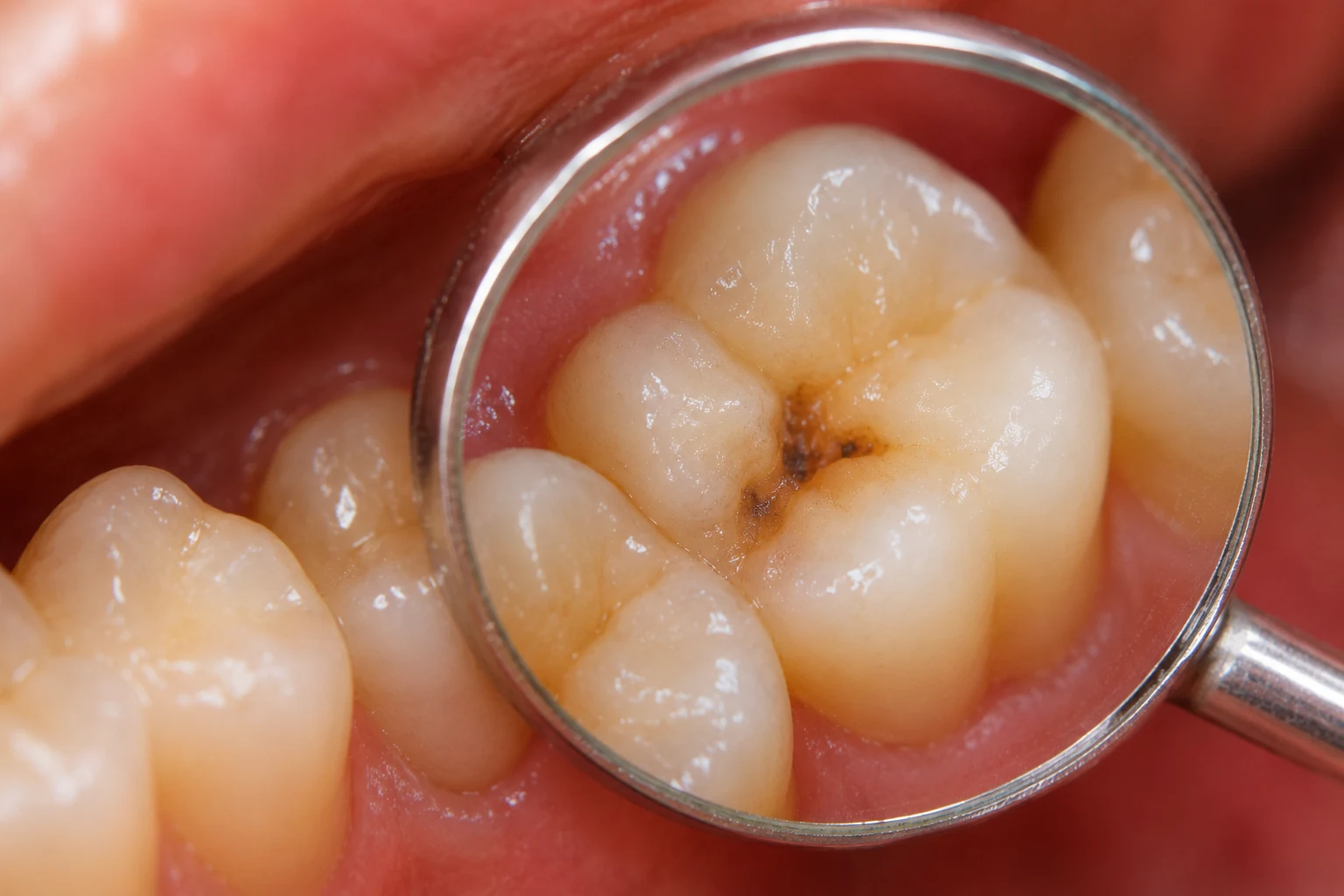
- Progressing: a tan, brown, or gray area that does not brush away
- Established: a visible pit or hole, sometimes with a rough or sharp edge
- Advanced: a tooth that looks darker overall, with pain or lingering sensitivity
White marks have several possible causes. If that is what you are seeing, our article on why white spots appear on teeth covers the other explanations, and what a dark spot on a tooth means does the same for darker marks.
Is It a Cavity or a Stain?
Stains from coffee, tea, or tobacco sit on the surface and tend to appear on several teeth at once. A cavity is usually limited to one spot, may feel rough or sticky, and can come with sensitivity to cold or sweets. The two can look alike, though, and decay between teeth often shows up only on an X-ray. If a mark is new or changing, have it checked.
Why Front Teeth Get Cavities
- Sipping sweet or acidic drinks: Soda, juice, sports drinks, and sweetened coffee wash over the front teeth first, and sipping through the day keeps acid levels high.
- Skipping floss: The contact points between front teeth are a common starting place for decay.
- Dry mouth: Saliva protects enamel. Mouth breathing and many medications reduce it.
- Gum recession: Exposed root surface near the gumline decays faster than enamel.
- Bottles at bedtime: In young children, milk or juice pooling around the upper front teeth overnight is a well-known cause of early decay.
- Braces or aligner attachments: Plaque builds up around them if cleaning is rushed.

How Dental Crowns Use Color Matching for Aesthetic Results
Crowns come in different materials, chosen for strength, location and appearance. Dentists match crown color to your natural teeth using…

How a Front Tooth Cavity Is Treated
Treatment depends on how far the decay has gone. Your dentist will choose the most conservative option that will last.
Early Decay: Fluoride and Monitoring
When a white spot has not yet broken through the enamel, it can sometimes be hardened again. MedlinePlus notes that a fluoride treatment can help enamel repair itself at this early stage.
Small to Medium Cavities: Tooth-Colored Fillings
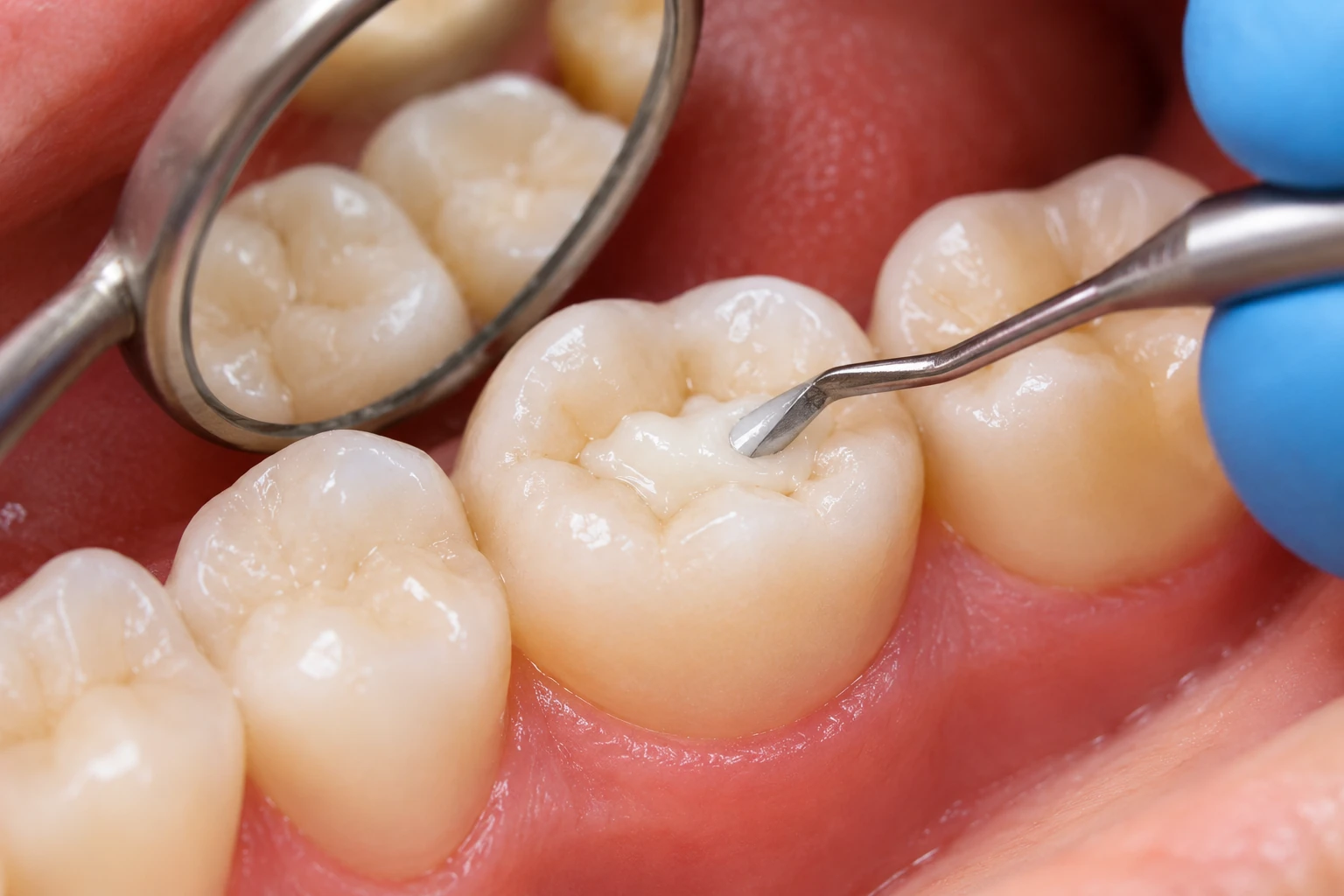
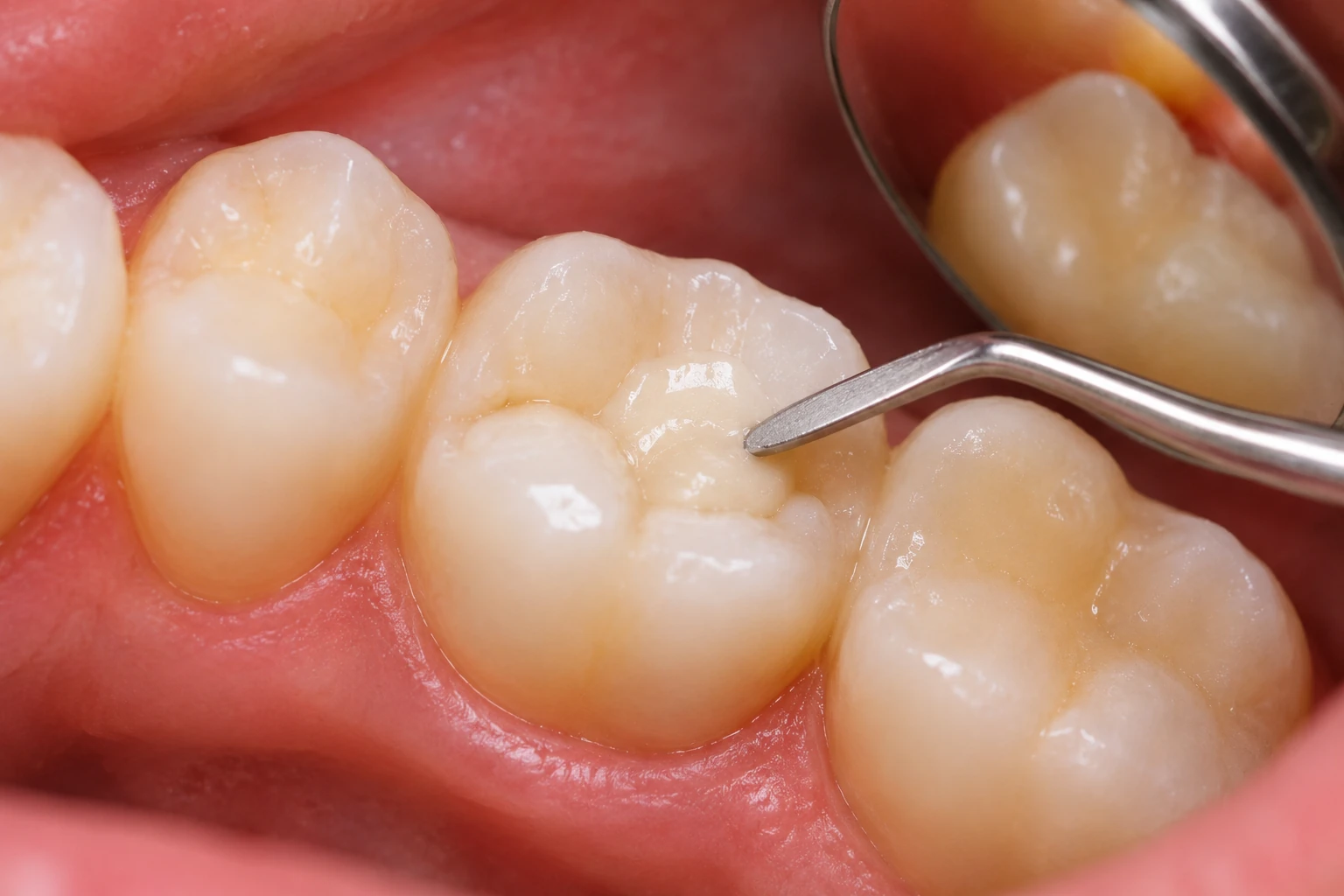
Most front tooth cavities are repaired with composite resin. The decay is removed, and the material is layered, shaped, and polished to match the surrounding tooth. Learn more about tooth fillings at Cascade Dental.
Larger Cavities: Veneers or Crowns
When much of the visible surface is damaged, a dental veneer or a dental crown may give a stronger and more even result than a very large filling.
Decay That Reaches the Nerve: Root Canal Treatment
If the cavity has reached the pulp, root canal treatment removes the infected tissue so the tooth can be kept, usually followed by a crown.
Will the Filling Be Noticeable?
Composite comes in many shades, and your dentist selects and blends them against your natural tooth before placing the filling. A well-matched front filling is difficult to spot at conversational distance. Over the years composite can pick up stain or wear at the edges, and it can be polished or replaced if that happens.
Can a Front Tooth Cavity Go Away on Its Own?
Only the earliest stage, the white spot, can be reversed. Once a hole has formed, the tooth cannot rebuild that structure and the cavity will keep growing. Front teeth are thinner than molars, so decay has less distance to travel before it reaches the nerve. Early treatment keeps the repair small and the tooth looking natural.
Front Tooth Fillings in Vancouver, WA
Cascade Dental treats cavities on front and back teeth for patients across Vancouver, WA and Clark County. If you have noticed a spot on a front tooth, a short exam and X-ray will show whether it is decay, a stain, or something else, and what the simplest fix would be.
FAQs About Cavities on Front Teeth
Are cavities on front teeth common?
They are less common than cavities on molars, but dentists see them regularly, especially between the teeth and near the gumline.
Does filling a front tooth hurt?
The tooth is numbed first, so you should feel pressure but not pain. See does getting a cavity filled hurt for a step-by-step description.
How long does a front tooth filling last?
Composite fillings on front teeth commonly last for years with good care. Biting nails, pens, or hard foods with the front teeth shortens their life.
Can a cavity behind a front tooth be seen?
Usually not in a normal mirror. Your tongue may notice a rough area first, and your dentist will see it with a small mirror during an exam.
Can whitening remove a cavity spot?
No. Whitening lightens stain but does not treat decay, and it can make a decayed tooth more sensitive. Have cavities treated before whitening.
Have a Spot on a Front Tooth Checked
A front tooth cavity is simplest to fix while it is small. Contact Cascade Dental to schedule an exam and find out what the spot is and how to treat it.
Keep Your Smile Looking Natural
Tooth-colored fillings repair front tooth cavities discreetly. Schedule your visit today.