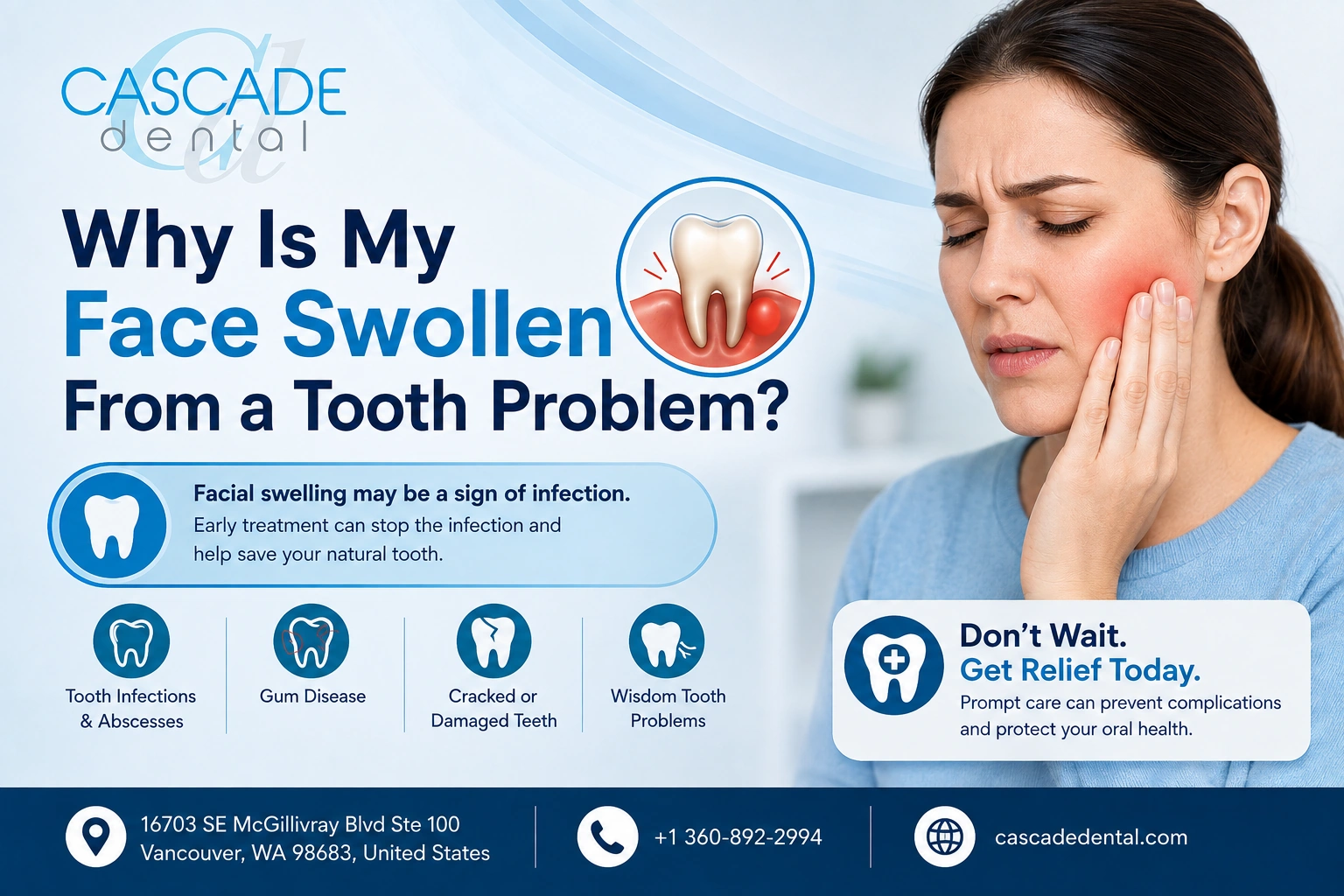
Facial swelling from a tooth problem is often a sign of infection, and it should be taken seriously. When bacteria spread from an infected tooth or gum area into nearby tissues, swelling can develop in the cheek, jaw, gums, or face.
For patients in Vancouver, WA, swelling related to a tooth may start as mild puffiness or pressure, then worsen quickly if the infection is not treated. Even if the pain comes and goes, swelling usually means your body is responding to a problem that needs professional dental care.
Tooth Pain With Facial Swelling?
Facial swelling can signal a dental problem that needs attention. Call today to schedule an evaluation.
Fast Answer: Why Does a Tooth Problem Cause Facial Swelling?
Facial swelling caused by a tooth problem is often a sign of a dental infection, such as a tooth abscess. When bacteria spread from an infected tooth into the surrounding tissues, swelling can develop in the gums, cheek, jaw, or face.
Because dental infections can worsen quickly, facial swelling should be evaluated by a dentist as soon as possible. In some cases, swelling may be connected to a deep cavity, cracked tooth, gum infection, or wisdom tooth problem. The only way to know the cause is to have the tooth and surrounding tissues examined.
If swelling is spreading, you have a fever, or you are having trouble breathing or swallowing, seek emergency medical care immediately.
What Causes Facial Swelling?
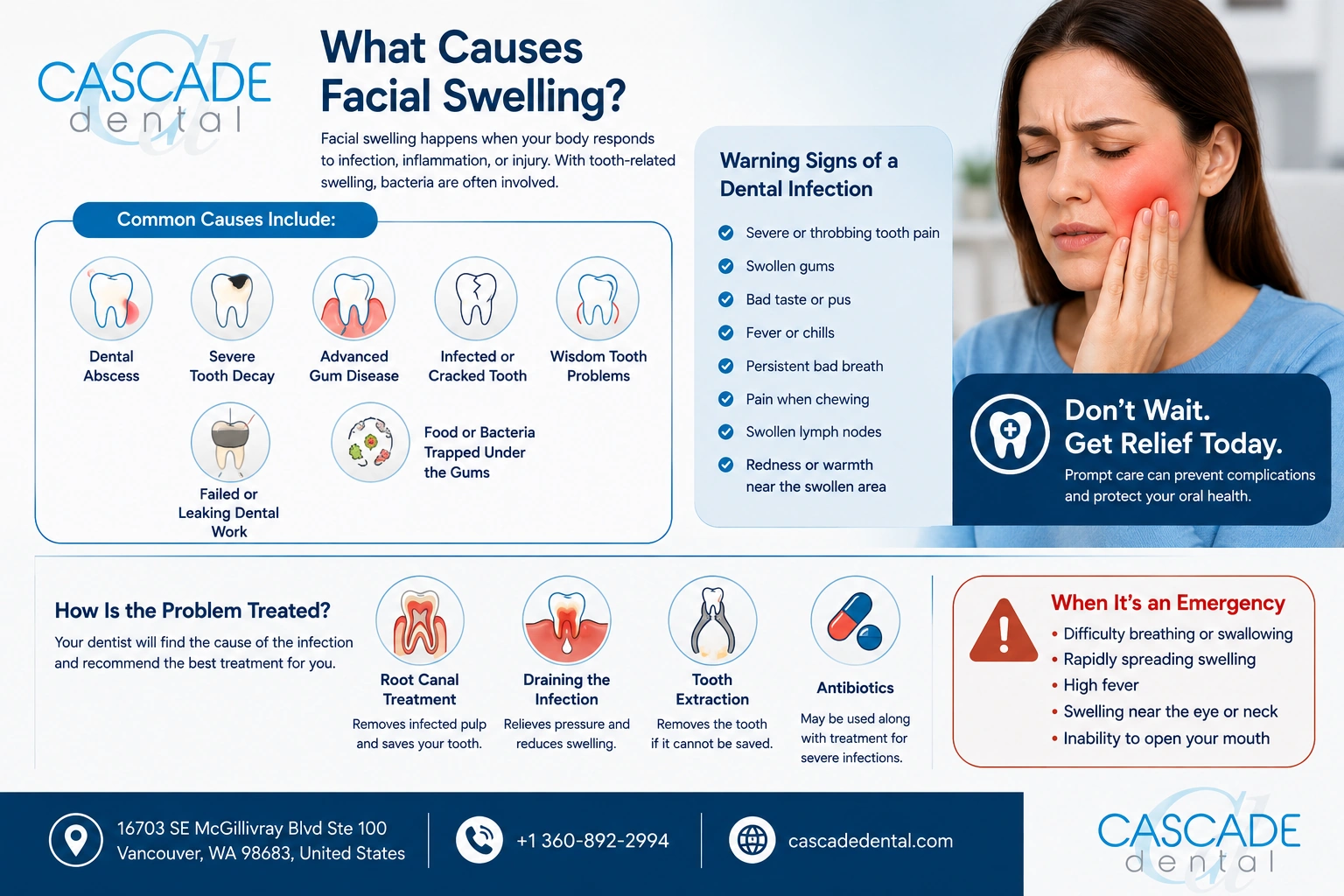
Several dental conditions can cause swelling in the face. Swelling happens when the body responds to infection, inflammation, or injury. With tooth-related swelling, bacteria are often involved.
Common causes include:
- Dental abscess
- Severe tooth decay
- Advanced gum disease
- An infected or cracked tooth
- Complications after a dental injury
- Infection around a partially erupted wisdom tooth
- Failed or leaking dental work
- Food or bacteria trapped under the gums
These conditions allow bacteria to spread into nearby tissues, leading to inflammation and swelling. The swelling may appear near one tooth, along the jawline, under the cheek, or even closer to the eye or neck, depending on where the infection is located.
Can a Tooth Abscess Cause Facial Swelling?
Yes. A tooth abscess is one of the most common dental reasons for facial swelling. An abscess is a pocket of infection that can form at the root of a tooth, in the gums, or in the bone around the tooth.
Understanding dental abscess symptoms can help you recognize when an infection may be getting worse and needs prompt attention.
A tooth abscess may develop when bacteria enter the tooth through:
- A deep cavity
- A cracked or broken tooth
- An old filling or crown with leakage
- Dental trauma
- Advanced gum disease
As the infection grows, pressure can build inside the tissues. This may cause throbbing pain, tenderness, swelling, and a bad taste if pus begins to drain. Sometimes the swelling is visible on the gums as a pimple-like bump. Other times, it may cause the cheek or jaw to look swollen from the outside.
An abscess does not usually go away on its own. Even if the pain improves temporarily, the infection may still be active and can return or spread.
Warning Signs of a Dental Infection
Facial swelling is often accompanied by other symptoms. Some signs may be obvious, while others may seem mild at first.
Warning signs of a dental infection include:
- Severe or throbbing tooth pain
- Swollen gums
- Pain when chewing
- Sensitivity to hot or cold
- A bad taste or pus draining into the mouth
- Persistent bad breath
- Fever or chills
- Swollen lymph nodes in the neck
- A tooth that feels raised when biting
- Difficulty opening the mouth comfortably
- Redness or warmth near the swollen area
These symptoms may indicate that the infection is progressing and requires prompt treatment. Pain may feel sharp, deep, or constant. It may also spread to the ear, jaw, temple, or neck.
Why Is My Cheek Swollen From a Toothache?
A swollen cheek with tooth pain often means infection has spread beyond the tooth into nearby soft tissues. The cheek may feel tight, tender, warm, or painful to the touch. You may also notice that one side of your face looks fuller than the other.
A swollen cheek can happen when:
- An abscess forms near an upper or lower tooth
- A cavity reaches the nerve inside the tooth
- A cracked tooth allows bacteria inside
- A gum infection spreads into nearby tissue
- A wisdom tooth becomes infected
Cheek swelling should not be ignored, especially if it is getting worse. A dentist needs to identify the source of infection and recommend treatment before the swelling spreads further.
Can Gum Disease Cause Facial Swelling?
Yes, advanced gum disease can sometimes lead to swelling, especially if a periodontal abscess forms. Gum disease occurs when bacteria collect along and below the gumline. Over time, the gums can pull away from the teeth and form deeper pockets where bacteria can multiply.
A gum-related infection may cause:
- Swollen or tender gums
- Bleeding when brushing or flossing
- Bad breath
- A bad taste in the mouth
- Loose teeth
- Gum recession
- Pain when chewing
- Pus near the gumline
If infection becomes trapped in a gum pocket, swelling may develop around the tooth and sometimes spread into nearby facial tissues. Treatment may involve draining the infection, deep cleaning, periodontal care, or other gum treatment, depending on the severity.
Can a Wisdom Tooth Cause Facial Swelling?
Yes. A partially erupted or impacted wisdom tooth can cause swelling if bacteria and food become trapped around the gum tissue. This condition often affects the back of the mouth and may make the jaw or cheek feel swollen.
Symptoms of an infected wisdom tooth may include:
- Pain in the back of the mouth
- Swelling near the jaw
- Difficulty opening the mouth fully
- Bad taste or odor
- Tender gums behind the last molar
- Pain when chewing
- Swollen lymph nodes
Wisdom tooth infections can become painful and may spread if untreated. A dentist can evaluate whether the area needs cleaning, medication, drainage, or wisdom tooth removal.
What Should You Do?
If you develop facial swelling from a tooth problem, contact a dentist immediately for an evaluation. Swelling is not something to wait on, especially if it is increasing or comes with pain, fever, or drainage.
Knowing the signs you need immediate dental care can help you decide when symptoms should be evaluated without delay.
While waiting for dental care, you can:
- Apply a cold compress to the outside of your face to help reduce swelling
- Stay hydrated and rest
- Eat soft foods if chewing is painful
- Avoid chewing on the affected side
- Take over-the-counter pain medication only as directed, if appropriate
- Keep the area clean with gentle brushing
- Rinse gently with warm salt water if advised or tolerated
Avoid placing aspirin directly on the gums, as it can damage the tissue. Do not try to drain the swelling yourself. Poking, squeezing, or cutting the area can make the infection worse and increase the risk of spreading bacteria.
Prompt care can help prevent the infection from spreading and may improve the chance of saving the affected tooth.

What Should You Do If You Have a Severe Toothache?
A bad toothache is hard to ignore, but a severe toothache can feel impossible to deal with. It can hit…

What Should You Avoid If Your Face Is Swollen?
When facial swelling is related to a tooth, certain actions can make the problem worse or delay needed treatment.
Avoid:
- Waiting several days to see if swelling improves
- Trying to pop or drain an abscess at home
- Putting aspirin directly on the gums
- Using heat on the swollen area unless your dentist advises it
- Chewing on the painful side
- Ignoring fever, chills, or spreading swelling
- Taking leftover antibiotics without dental guidance
- Assuming pain relief means the infection is gone
Pain medication may reduce discomfort temporarily, but it does not remove the source of infection. Antibiotics may help in some cases, but dental treatment is usually needed to treat the cause.
How Is the Problem Treated?
Treatment depends on the cause of the swelling. Your dentist will examine the area, ask about your symptoms, and may take dental X-rays to see whether the infection involves the tooth root, surrounding bone, or nearby teeth.
Your dentist may recommend one or more of the following treatments.
Root Canal Treatment
If the tooth can be saved, root canal treatment removes the infected pulp, cleans the inside of the tooth, and seals it to prevent further infection.
The pulp is the soft tissue inside the tooth that contains nerves and blood vessels. When bacteria reach this area, the tooth can become painful and infected. A root canal allows the dentist to remove the infected tissue while keeping the natural tooth in place.
After root canal treatment, a crown may be recommended to strengthen and protect the tooth, especially if a large cavity or fracture weakened it.
Draining the Infection
If an abscess is present, draining the infection may help relieve pressure and reduce swelling. Drainage may be done through the gum tissue or as part of treatment for the affected tooth.
Drainage can help remove pus, but it may not fully solve the problem by itself. The source of infection still needs to be treated so the abscess does not return.
Tooth Extraction
If the tooth cannot be restored, removing it may be the best option to eliminate the source of infection. Extraction may be needed if the tooth is severely broken, badly decayed, fractured below the gumline, or has lost too much support.
After the infection is controlled, your dentist can discuss tooth replacement options if needed. These may include a dental implant, bridge, or partial denture, depending on your situation.
Antibiotics
Antibiotics may be prescribed when the infection has spread beyond the tooth or when significant swelling is present. However, they are usually used in addition to treating the source of the infection rather than as the only treatment.
Antibiotics alone may reduce symptoms temporarily, but the infection can return if the tooth, abscess, or gum problem is not treated.
Will Facial Swelling Go Away With Antibiotics Alone?
Not always. Antibiotics may help control bacterial spread, especially when swelling is significant, but they usually do not remove the source of a dental infection. If the infection is inside a tooth, under the gums, or trapped in an abscess, dental treatment is often required.
The swelling may improve after antibiotics, but the problem can return if the infected tooth is not treated. That is why your dentist may recommend a root canal, drainage, extraction, periodontal treatment, or another procedure, depending on the diagnosis.
Never rely on leftover antibiotics or someone else’s medication. The wrong medication, dose, or timing may not help and can create other risks.
When Should You Call Immediately?
Seek immediate dental care if you notice facial swelling that may be related to a tooth. Waiting can allow the infection to spread and become more serious.
Call a dentist right away if:
- Your face or jaw is noticeably swollen
- Swelling is increasing rapidly
- You have severe tooth pain
- You develop a fever
- Pus is draining from your gums
- You have difficulty opening your mouth
- You feel pain when biting or chewing
- You notice a bad taste that keeps returning
- Your gums are red, swollen, or tender
- A tooth feels loose or raised
Even if symptoms seem manageable, facial swelling should be checked quickly.
When Is Facial Swelling a Medical Emergency?
Some symptoms may mean the infection is spreading into areas that can affect breathing, swallowing, or overall health. These situations require emergency medical care.
Seek emergency medical care immediately if you have:
- Difficulty breathing
- Difficulty swallowing
- Rapidly spreading swelling involving your face or neck
- Swelling under the jaw or near the throat
- Swelling near the eye
- High fever
- Confusion or extreme weakness
- Inability to open your mouth normally
These symptoms may indicate a serious infection that requires urgent medical attention. After medical care, you may still need dental treatment to remove the source of infection.
Can You Prevent Tooth-Related Facial Swelling?
Many cases of dental swelling start with problems that can be treated earlier, such as cavities, cracked teeth, gum disease, or failing dental restorations. Regular dental care helps catch these issues before they become infections.
To lower your risk:
- Brush twice daily with fluoride toothpaste
- Floss once a day
- Schedule routine dental exams and cleanings
- Treat cavities early
- Do not ignore cracked or chipped teeth
- Replace damaged fillings or crowns when recommended
- Wear a mouthguard for sports
- Ask about a night guard if you grind your teeth
- Avoid tobacco products
- Call your dentist if tooth pain lasts more than a day or two
Early care is usually simpler than emergency treatment. A small cavity can often be restored with a filling, but untreated decay can reach the nerve and lead to infection, swelling, and more involved treatment.
Do Not Wait to Treat Facial Swelling
Facial swelling related to a tooth is often a sign of an infection that will not resolve on its own. Early diagnosis and treatment can relieve pain, stop the infection from spreading, and improve the chances of saving your natural tooth.
If you notice swelling in your face or jaw, contact a dental professional as soon as possible. Cascade Dental in Vancouver, WA can evaluate the cause of the swelling, explain your treatment options, and help you get the care you need to protect your oral health.
Face Swollen From a Tooth Problem?
Don’t wait for the swelling to get worse. Call now for prompt dental care and get the source of the problem checked.