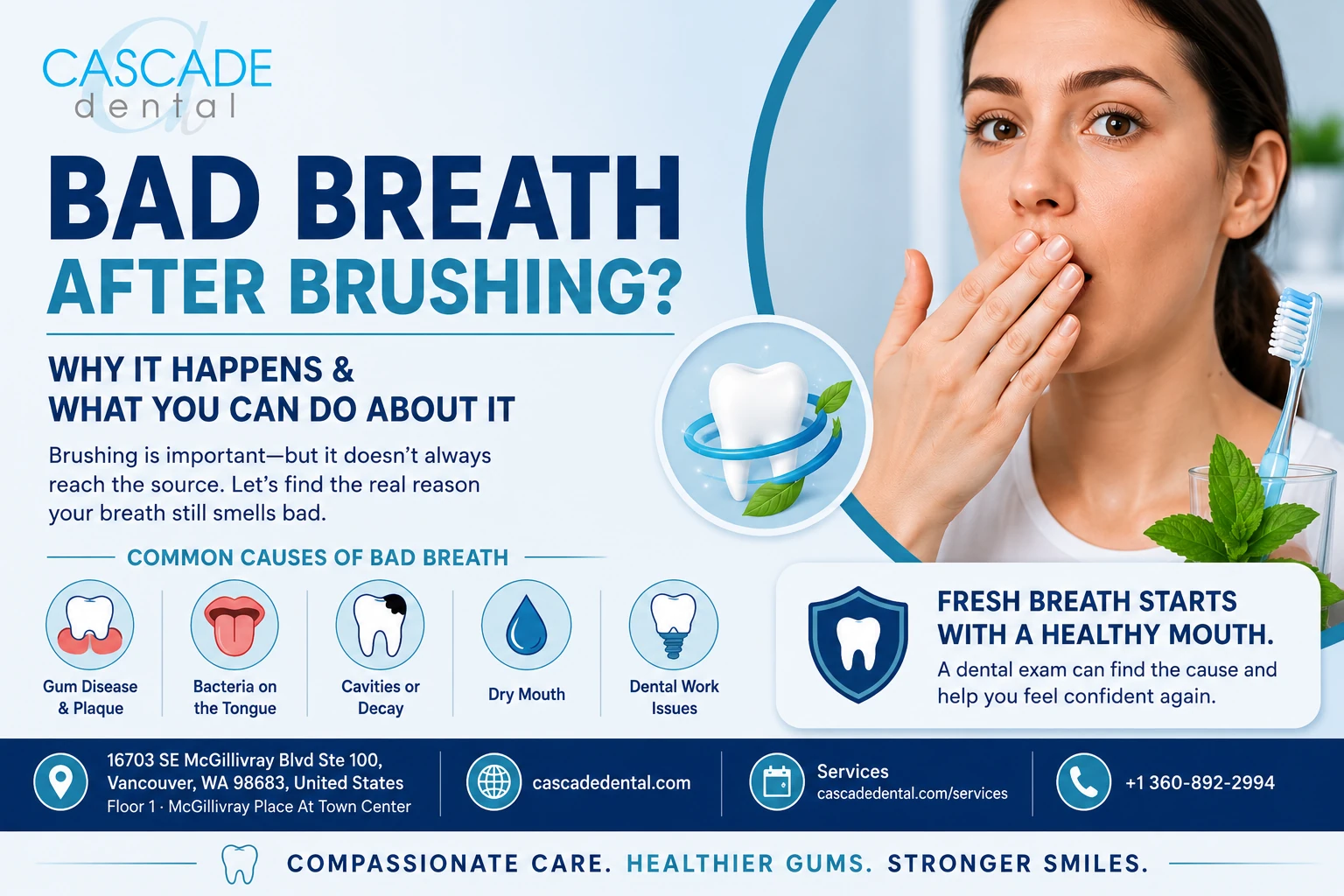
Bad breath after brushing often means the odor is coming from something brushing alone cannot fully remove. Plaque buildup, gum disease, dry mouth, bacteria on the tongue, cavities, or trapped food around dental work can all cause breath to smell bad even after you clean your teeth.
For patients in Vancouver, WA, persistent bad breath can be frustrating and embarrassing, especially when you are already brushing every day. The good news is that most mouth-related causes of bad breath can be identified during a dental exam and improved with the right treatment and home care routine.
Fast Answer: Why Does Bad Breath Continue After Brushing?
If your breath still smells bad after brushing, the cause may be more than leftover food particles. Plaque buildup, gum disease, dry mouth, tooth decay, bacteria on the tongue, or poorly fitting dental restorations can all contribute to persistent bad breath.
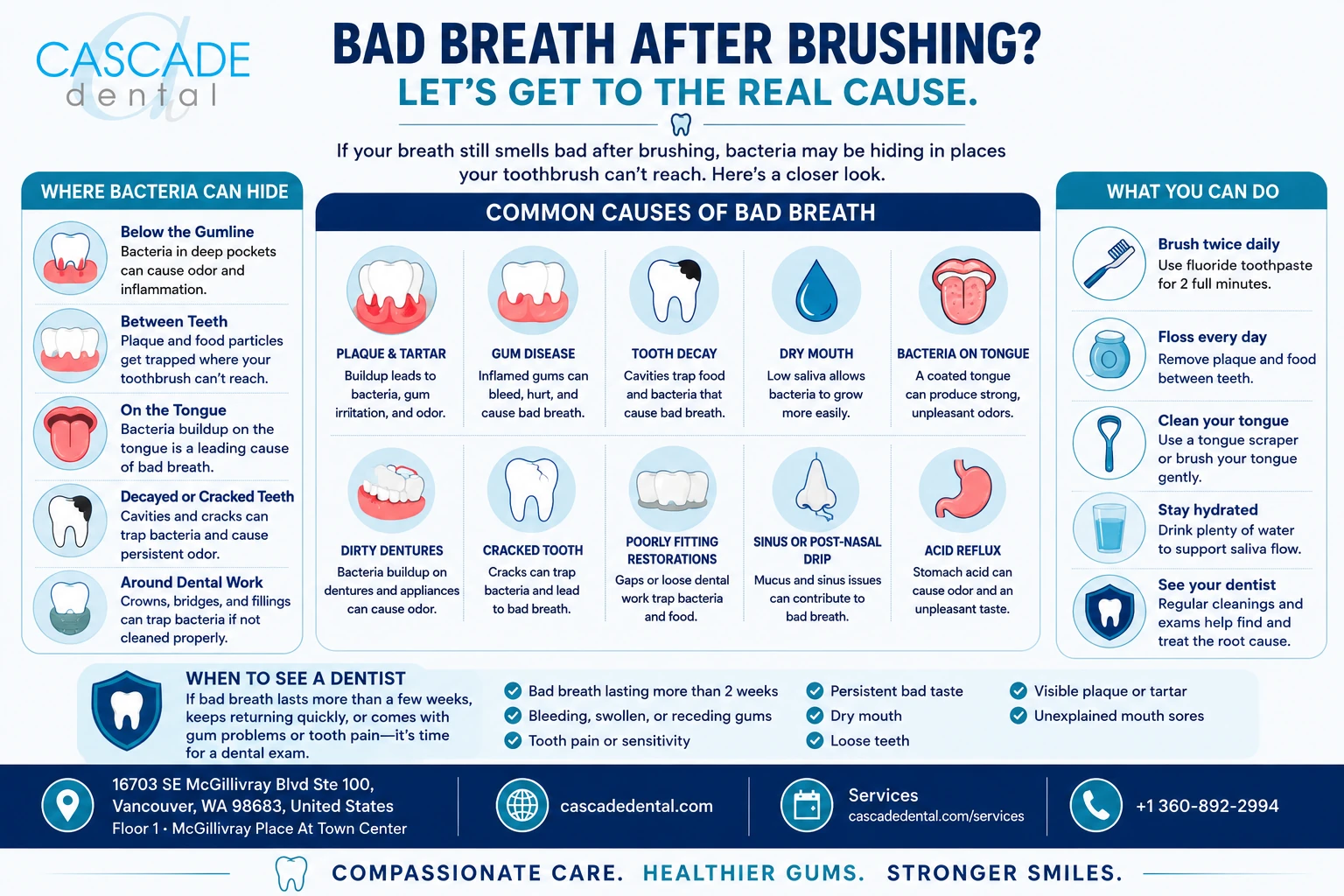
Brushing is important, but it mainly cleans the surfaces of your teeth. It may not fully remove bacteria between teeth, under the gumline, on the tongue, around dental crowns, or inside deep gum pockets. When bacteria remain in these areas, they can release unpleasant odors that return soon after brushing.
A dental exam can help identify the source and recommend the right treatment. If bad breath has lasted for several weeks, keeps coming back quickly, or occurs with bleeding gums, tooth pain, or a bad taste, it is time to have your mouth checked.
Common Causes of Bad Breath
Bad breath, also called halitosis, often begins inside the mouth. While foods like garlic, onions, and coffee can temporarily affect your breath, ongoing bad breath is often linked to bacteria, gum inflammation, or dental problems.
Common causes include:
- Plaque and tartar buildup
- Gum disease
- Tooth decay
- Food trapped between teeth
- Bacteria on the tongue
- Dry mouth
- Poorly cleaned dentures or dental appliances
- Cracked teeth or leaking dental restorations
- Infected teeth
- Wisdom teeth that are difficult to clean
In some cases, persistent bad breath may also be linked to certain medical conditions, sinus drainage, acid reflux, or medications. That is why a professional evaluation is important if symptoms continue despite good brushing and flossing habits.
Why Does My Breath Smell Bad Right After Brushing?
If your breath smells bad shortly after brushing, bacteria may still be present in areas your toothbrush cannot reach. Brushing your teeth for two minutes helps clean visible tooth surfaces, but it does not always clean between the teeth, below the gumline, or the back of the tongue.
Your breath may return quickly after brushing if:
- You are not flossing daily
- Tartar has built up near or under the gums
- Your tongue is coated with bacteria
- You have dry mouth
- You have an untreated cavity
- Food is trapped around a crown, bridge, denture, or retainer
- Gum disease is present
Mouthwash may temporarily freshen breath, but it will not solve the problem if the cause is tartar, gum disease, decay, or infection. Treating the source is the key to longer-lasting fresh breath.
Plaque and Gum Disease
Plaque is a sticky film of bacteria that forms on teeth every day. If it is not removed with brushing, flossing, and regular dental cleanings, it hardens into tartar and can irritate the gums.
Once tartar forms, it cannot be removed with a toothbrush at home. Tartar buildup around the gumline can trap more bacteria, leading to inflammation and odor. This is one reason some people brush regularly but still notice bad breath.
Signs that gum disease may be contributing to bad breath include:
- Bleeding gums
- Swollen or tender gums
- Gum recession
- Persistent bad taste in the mouth
- Loose teeth in advanced stages
- Gums that look red or irritated
- Deep pockets around the teeth
Gum disease can cause bad breath because bacteria collect below the gumline. These bacteria can produce unpleasant smells and continue to irritate the surrounding tissue. Treating gum disease often improves breath while protecting your oral health.
If gum disease is mild, a professional cleaning and improved home care may help. If it has progressed, your dentist may recommend periodontal treatment, such as scaling and root planing, also known as deep cleaning.
Dry Mouth
Saliva helps wash away bacteria and food particles that contribute to bad breath. It also helps neutralize acids and keep the mouth more balanced. When your mouth becomes dry, bacteria multiply more easily, causing unpleasant odors.
Dry mouth may be worse in the morning because saliva flow naturally decreases while you sleep. However, if your mouth feels dry throughout the day, bad breath may continue even after brushing.
Dry mouth may be caused by:
- Certain medications
- Mouth breathing
- Dehydration
- Smoking or tobacco use
- Some medical conditions
- Alcohol-based mouthwash
- Snoring
- Stress
- Caffeine or alcohol intake
Drinking water regularly and addressing the underlying cause can help improve symptoms. Your dentist may also recommend saliva-supporting products, fluoride treatments, or changes to your oral care routine if dry mouth is increasing your risk of cavities or gum irritation.
Bacteria on the Tongue
The tongue is one of the most common places for odor-causing bacteria to collect. The surface of the tongue has small grooves that can trap bacteria, dead cells, and food particles. This buildup can create a coating, especially toward the back of the tongue.
If you brush your teeth but do not clean your tongue, your breath may still smell unpleasant.
You can clean your tongue by using:
- A tongue scraper
- A soft toothbrush
- Gentle strokes from back to front
- Water to rinse away loosened buildup
Tongue cleaning should not be painful. Avoid scraping too hard, especially if your tongue feels sore or irritated. If you notice a thick coating that does not improve, patches, burning, or unusual changes, schedule a dental exam.
Other Dental Problems
Bad breath may also result from untreated dental conditions that allow bacteria to collect in hard-to-reach areas. These problems may not always cause obvious pain at first, which is why regular dental checkups are important.
Bad breath may be connected to:
- Cavities
- Broken or cracked teeth
- Food trapped around dental crowns or bridges
- Infected teeth
- Wisdom teeth that are difficult to clean
- Old fillings with gaps or rough edges
- Loose dental restorations
- Poorly fitting dentures or appliances
A cavity can trap bacteria and food debris inside damaged tooth structure. A cracked tooth can create a small space where bacteria collect. A crown or bridge that no longer fits properly may allow food and plaque to build up along the edges.
These problems cannot be corrected by brushing harder. In fact, aggressive brushing may irritate the gums without solving the odor. A dentist can identify whether decay, infection, or a dental restoration is contributing to the problem.
Can Cavities Cause Bad Breath?
Yes, cavities can cause bad breath. Tooth decay happens when bacteria damage the tooth enamel and create a hole or weakened area. As the cavity grows, it can trap food particles and bacteria. This may create a bad smell or bad taste that does not go away after brushing.
You may have a cavity if you notice:
- Tooth sensitivity
- Pain when biting
- A dark spot on a tooth
- Food catching in one area
- A rough or broken edge
- Bad taste near one tooth
Early cavities are often easier to treat than advanced decay. If bad breath is coming from a cavity, a dental filling or other restorative treatment may be needed to remove the decay and seal the tooth.
Can Dental Crowns, Bridges, or Dentures Cause Bad Breath?
Dental restorations and appliances can contribute to bad breath if plaque or food collects around them. Crowns and bridges need careful cleaning around the edges because bacteria can gather where the restoration meets the natural tooth.
Dentures, retainers, nightguards, and aligners can also hold bacteria if they are not cleaned properly. Wearing an appliance for long periods without cleaning it can lead to odors and irritation.
To reduce odor from dental appliances:
- Clean removable appliances daily
- Rinse them after meals when possible
- Brush around crowns and bridges carefully
- Floss under bridges using the tools your dentist recommends
- Store appliances as instructed
- Bring dentures or appliances to dental visits for evaluation
If a crown, bridge, denture, or retainer smells bad even after cleaning, it may need adjustment, repair, or replacement.
What You Can Do at Home
Good daily habits can reduce bad breath and improve oral health. A consistent routine helps control plaque, remove food particles, and reduce odor-causing bacteria.
Try to:
- Brush twice a day with fluoride toothpaste
- Floss daily
- Clean your tongue with a tongue scraper or toothbrush
- Drink plenty of water
- Limit tobacco use
- Replace your toothbrush every three to four months
- Schedule routine dental cleanings and exams
- Clean dentures, retainers, or nightguards daily
- Avoid brushing too aggressively
- Use mouthwash as recommended by your dentist
If bad breath persists despite good oral hygiene, professional treatment may be needed. At-home care can help, but it cannot remove hardened tartar, treat active gum disease, fill cavities, or correct failing dental restorations.
Does Mouthwash Fix Bad Breath?
Mouthwash can help reduce odor temporarily, but it may not fix the underlying cause. Some mouthwashes freshen breath for a short time by masking odor. Others may help reduce bacteria, depending on the ingredients.
However, mouthwash will not remove tartar, treat cavities, or cure gum disease. If your bad breath keeps returning, relying on mouthwash alone may delay needed care.
If you have dry mouth, be cautious with alcohol-based rinses because they may make dryness worse. Ask your dentist which rinse is best for your situation.
When Should You Schedule a Dental Visit?
You should schedule a dental visit if bad breath lasts for several weeks or does not improve with brushing, flossing, and tongue cleaning. Persistent bad breath is often a sign that bacteria are collecting somewhere in the mouth.
See your dentist if:
- Bad breath lasts for several weeks
- Brushing and flossing do not improve symptoms
- Your gums bleed regularly
- You have tooth pain or sensitivity
- You notice loose teeth or gum recession
- You experience a persistent bad taste in your mouth
- You have swelling around a tooth or gum area
- Food keeps getting stuck in the same spot
- You have not had a dental cleaning in a while
A comprehensive dental examination can identify the cause and help prevent more serious oral health problems. Your dentist may check your gums, teeth, tongue, dental restorations, and X-rays to look for signs of disease, decay, or infection.
How Can a Dentist Treat Bad Breath?
Treatment depends on the cause. If plaque and tartar are the issue, a professional cleaning may help. If gum disease is present, periodontal treatment may be recommended. If a cavity, cracked tooth, or infected tooth is causing odor, restorative care may be needed.
A dentist may recommend:
- A routine dental cleaning
- Deep cleaning for gum disease
- Cavity treatment
- Replacement or repair of old dental restorations
- Gum disease maintenance visits
- Dry mouth management
- Better flossing or appliance-cleaning tools
- Evaluation of dentures, retainers, or nightguards
The goal is to treat the source of the odor, not just cover it up. Once the underlying problem is managed, breath often improves along with overall oral health.
Fresh Breath Starts With a Healthy Smile
Persistent bad breath is often a sign that something in your mouth needs attention. Early diagnosis can help treat gum disease, cavities, dry mouth, or other dental concerns before they become more serious.
Regular dental visits, professional cleanings, and consistent home care are the best ways to maintain fresh breath and a healthy smile. If your breath still smells bad after brushing, Cascade Dental in Vancouver, WA can help identify the cause and recommend the right next step for your oral health.