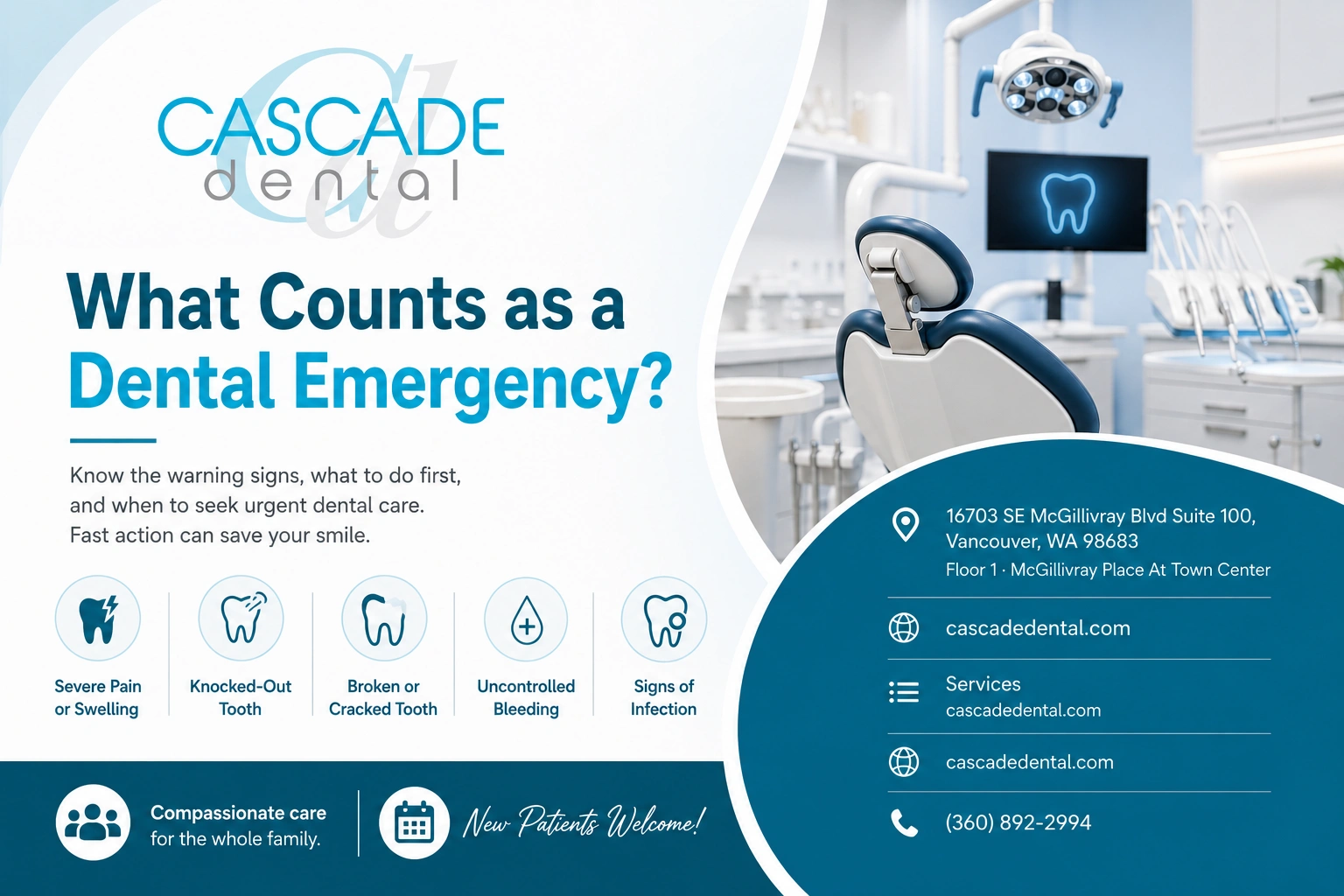
Dental pain can be confusing. Some problems feel intense but may not require same-day care, while others can look minor at first and still need prompt attention. The safest approach is to understand the warning signs, take the right first steps, and call a dental office when symptoms point to infection, injury, or worsening damage.
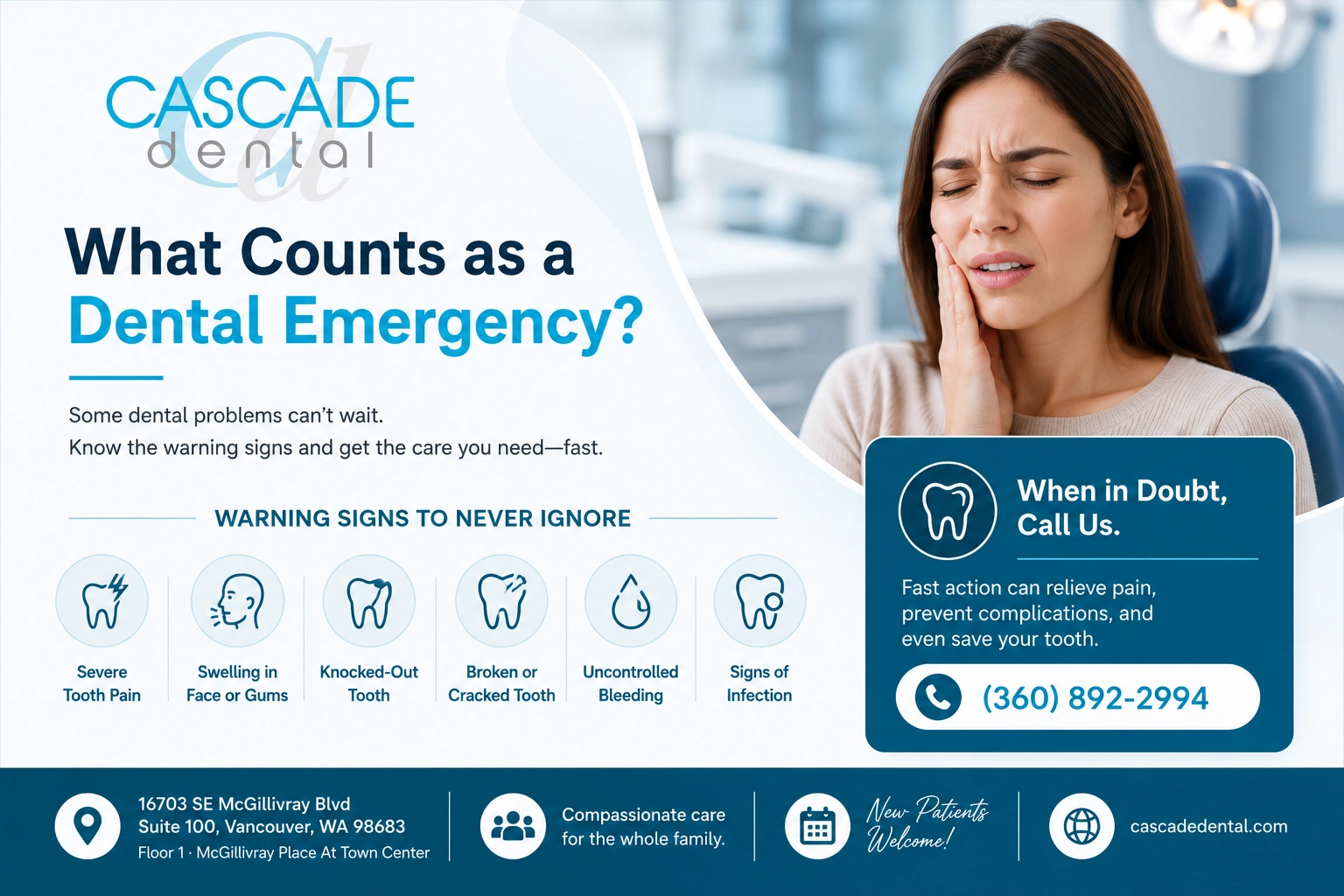
A dental emergency is usually any situation where waiting could lead to severe pain, spreading infection, tooth loss, uncontrolled bleeding, or permanent damage. Common examples include a knocked-out tooth, facial swelling, severe toothache, dental abscess symptoms, a broken tooth with pain, or bleeding that does not stop. The American Dental Association notes that fast action can make the difference between saving and losing a tooth in certain emergencies, especially when a permanent tooth has been knocked out.
For urgent dental concerns, patients can visit our emergency dentistry services page to learn more about care options. Understanding the psychology of emergency dentistry can also help patients recognize why fear, anxiety, and pain sometimes make it harder to decide when to seek treatment. For non-urgent concerns, a dental exam can help identify problems before they become emergencies.
Don’t Wait on a Dental Emergency
Severe tooth pain, swelling, or injury needs prompt care. Call today for help.
Fast Answer: What Is a Dental Emergency
A dental emergency is a dental problem that needs prompt professional attention because it involves severe pain, infection, trauma, bleeding, or risk of losing a tooth.
You may be dealing with a dental emergency if you have:
- Severe tooth pain that does not improve
- Swelling in the gums, jaw, cheek, or face
- A knocked-out permanent tooth
- A broken, cracked, or chipped tooth with pain
- Bleeding that will not stop
- Signs of infection, such as fever, pus, bad taste, or facial swelling
- Pain when biting that suddenly becomes intense
- An injury to the mouth, teeth, lips, or jaw
Some dental problems are uncomfortable but not true emergencies. Others should not be ignored. If you are unsure, it is better to call a dentist and describe your symptoms rather than wait and hope the problem settles on its own.
Symptoms That Need Prompt Care
Certain symptoms deserve fast attention because they can point to infection, nerve damage, trauma, or a problem that may worsen quickly.
Severe or constant tooth pain should be evaluated, especially if it is throbbing, keeps you awake, or spreads toward the jaw, ear, head, or neck. A toothache may come from decay, a cracked tooth, gum infection, or inflammation inside the tooth. Pain that gets worse instead of better is a strong sign that you should call.
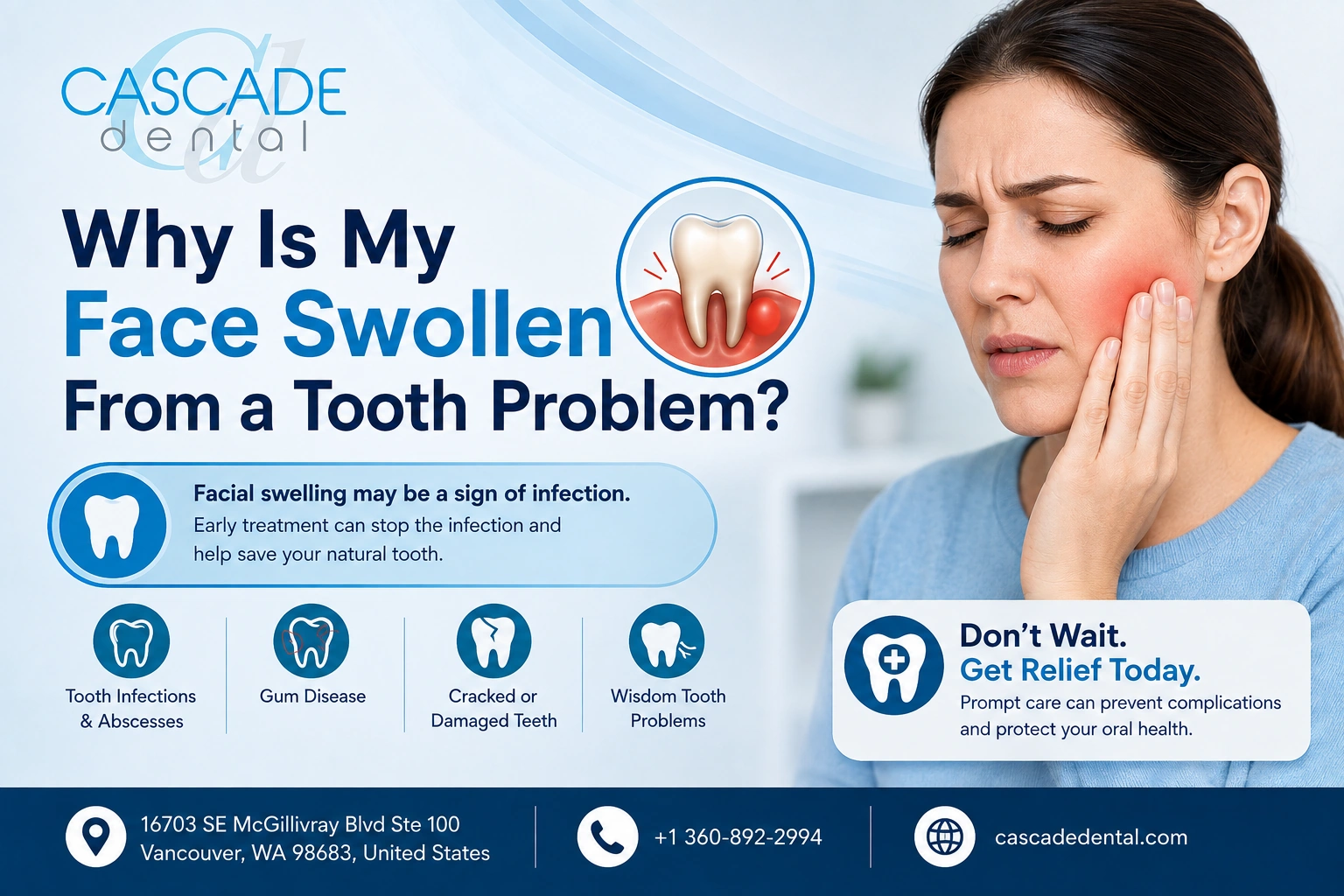
Swelling in the face, cheek, jaw, or gums can be a warning sign of infection. A dental abscess is a pocket of pus caused by bacterial infection, and Mayo Clinic notes that untreated abscesses can lead to serious complications. Symptoms can include severe throbbing pain, fever, facial swelling, tender lymph nodes, sensitivity to temperature, and pain when chewing.
A knocked-out permanent tooth is one of the most time-sensitive dental emergencies. If handled correctly and treated quickly, there may be a chance to save the tooth. Understanding why time matters with a knocked-out tooth is important because every minute can affect the chances of successful treatment. The American Association of Endodontists recommends acting quickly, ideally within 30 minutes, and handling the tooth by the crown rather than the root.
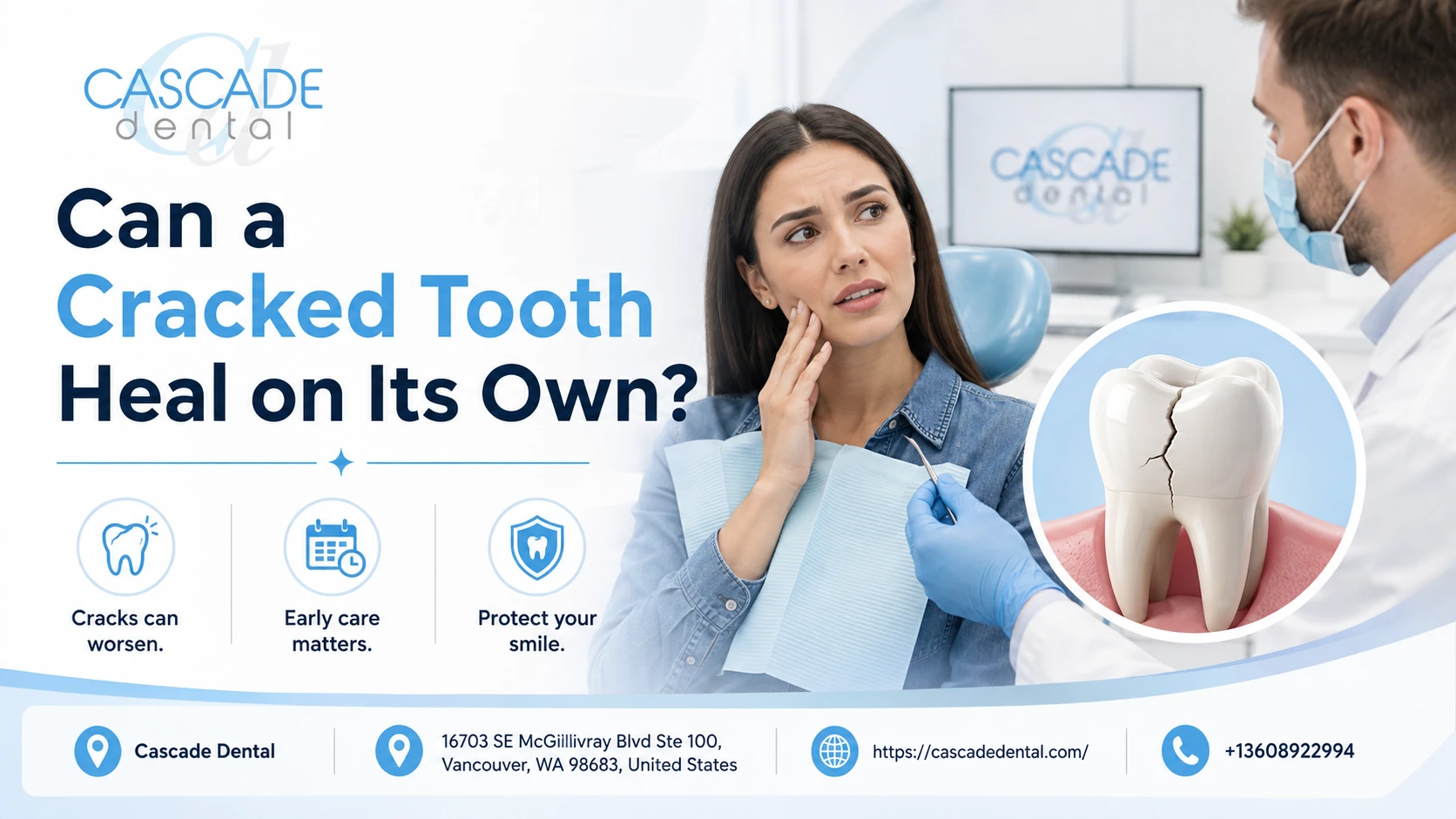
A broken or cracked tooth with pain should also be taken seriously. Even if the tooth is not fully knocked out, a crack can expose sensitive inner layers or allow bacteria to enter. If the tooth is sharp, painful, or sensitive to air, temperature, or biting pressure, call a dentist.
Bleeding that does not stop after a mouth injury needs urgent attention. Light bleeding from irritated gums may not be an emergency, but heavy bleeding, bleeding after trauma, or bleeding that continues after applying gentle pressure should be addressed quickly.
Fever, pus, or a bad taste in the mouth may point to infection. If these symptoms appear with swelling or severe pain, do not delay. If swelling affects breathing or swallowing, or if you have fever with facial swelling and cannot reach a dentist, Mayo Clinic advises going to an emergency room.

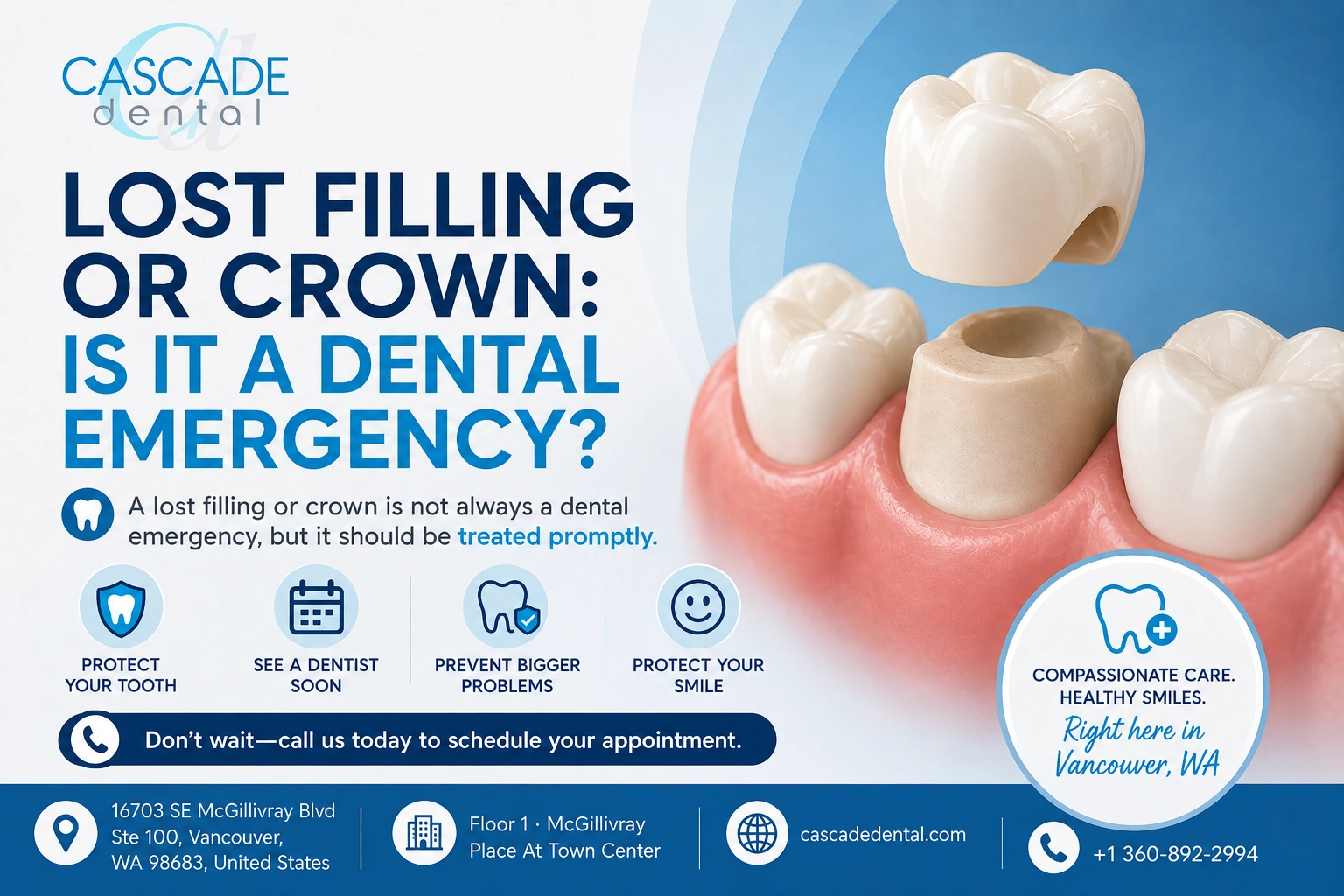
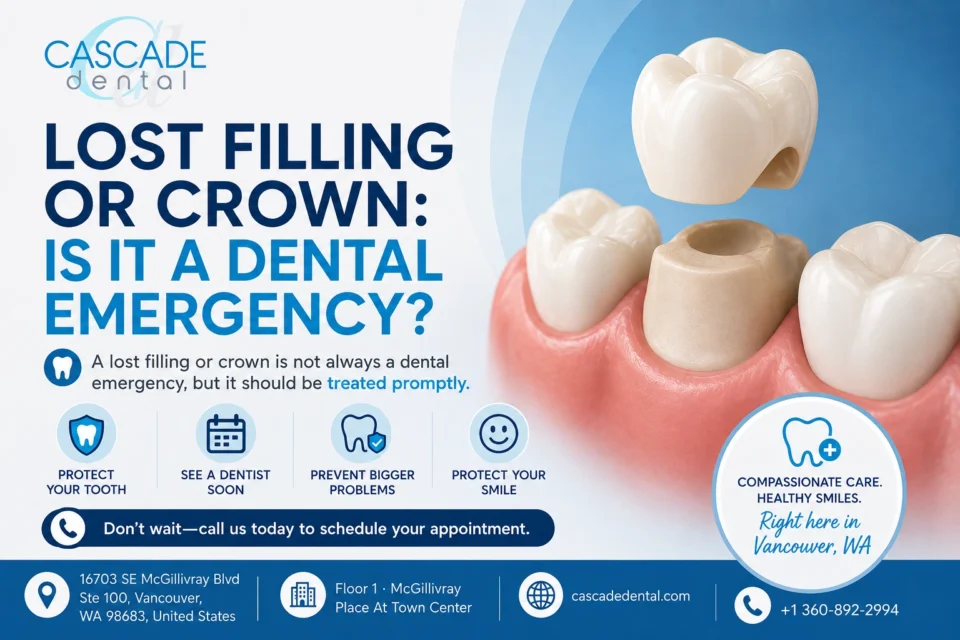
Lost Filling or Crown: Is It a Dental Emergency?
A lost filling or crown is not always a dental emergency, but it should be treated promptly. Once a filling…
What Can Usually Wait
Not every dental issue requires same-day emergency treatment. Some concerns still need a dental appointment, but they may be able to wait briefly if pain is mild, there is no swelling, and there are no signs of infection.
A small chip without pain can often wait for a regular dental visit. You should still schedule an appointment, especially if the edge is rough or the chip affects your bite, but it may not be an emergency if there is no bleeding, swelling, or sensitivity.
A lost filling, crown, or veneer may not always require emergency care if you are not in pain. However, the exposed tooth may be more sensitive or vulnerable to further damage, so avoid chewing on that side and call to schedule care.
Mild tooth sensitivity can sometimes wait, especially if it comes and goes with cold drinks or sweets. Sensitivity may be caused by enamel wear, gum recession, cavities, or small cracks, so it should be checked during a dental exam if it continues.
A dull ache that improves with basic care may not be urgent, but it should not be ignored. Pain that keeps returning can be an early warning sign. A routine dental exam can help find the cause before the problem becomes more serious.
Food stuck between teeth can usually be handled at home first. Try gently flossing. Do not use sharp objects, pins, or tools that could cut your gums or damage the tooth.
Even when something can wait, it is still worth calling the dental office if symptoms change. A minor issue can become urgent if pain increases, swelling develops, or chewing becomes difficult.
What to Do First
When a dental problem happens suddenly, the first step is to stay calm and protect the tooth or injured area. What you do in the first few minutes can make treatment easier and may improve the chance of saving a tooth.
For a knocked-out permanent tooth, pick it up by the crown, not the root. If it is dirty, gently rinse it with water. Do not scrub it, dry it, or wrap it in tissue. If possible, place it back in the socket without forcing it. If you cannot place it back, keep it moist in milk or saliva and call a dentist right away. The ADA also advises keeping a knocked-out tooth moist at all times.
For a broken or chipped tooth, rinse your mouth with warm water. Save any pieces if you can. Use a cold compress on the outside of the cheek if there is swelling. Avoid chewing on that side until the tooth is evaluated.
For a severe toothache, rinse gently with warm water and floss around the area to remove anything trapped between the teeth. Avoid placing aspirin directly on the gums or tooth, as this can irritate or burn the tissue. Call a dentist if pain is severe, constant, or worsening.
For swelling, use a cold compress on the outside of the face and contact a dental office promptly. Swelling can be a sign of infection, especially if it is paired with fever, pus, or a bad taste in the mouth.
For bleeding after an injury, apply gentle pressure with clean gauze or a clean cloth. If bleeding does not slow down, or if the injury is severe, seek urgent care.
For a lost crown or filling, keep the area clean and avoid sticky or hard foods. Do not chew on that side. Call to schedule an appointment, especially if the tooth feels sharp, painful, or sensitive.
When to Call
Call a dentist as soon as possible if you have severe pain, swelling, trauma, a knocked-out tooth, a broken tooth with sensitivity, or signs of infection. You should also call if symptoms are confusing and you are not sure whether the problem can wait.
When you call, be ready to explain:
- When the pain or injury started
- Whether there is swelling, bleeding, fever, or pus
- Whether the tooth is broken, loose, or knocked out
- What makes the pain worse
- Whether you can chew or close your bite normally
- Any medications you have already taken
These details help the dental team understand how urgent the situation may be and what next steps make sense.
For patients near our office, our Vancouver, WA location can help make it easier to find care when a dental concern needs attention. If your symptoms include swelling that affects breathing or swallowing, severe facial swelling, high fever, or signs that infection is spreading, seek emergency medical care right away.
Dental emergencies are stressful, but quick action can protect your health and may help save your tooth. When in doubt, call. A short conversation with a dental team can help you understand whether you need urgent treatment, a same-day visit, or a routine appointment.
Is Your Dental Pain an Emergency?
Get fast, professional emergency dental care. Call now to protect your smile.