Many parents feel confused when their child gets a cavity even though they brush every day. It can feel frustrating, especially when brushing is already part of the morning or bedtime routine. The truth is that brushing is very important, but it is only one part of cavity prevention.
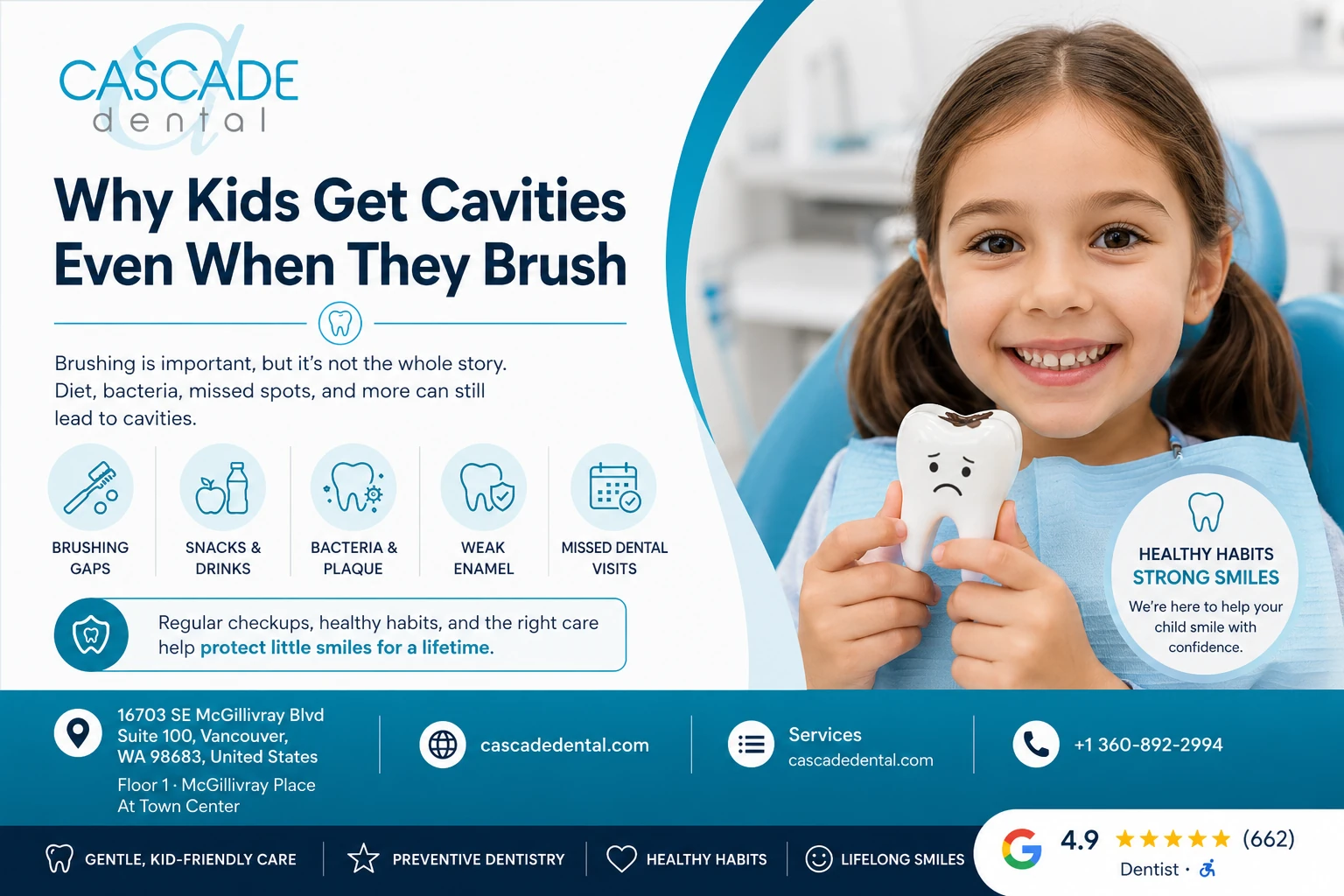
Children can still develop cavities because of brushing technique, snack habits, sugary drinks, oral bacteria, weak enamel, missed flossing, or delayed dental visits. Cavities form when bacteria in the mouth feed on sugars and starches, creating acids that wear down tooth enamel over time. Frequent snacking and sipping sweet drinks can keep those acids on teeth longer, increasing the risk of decay.
Worried About Your Child’s Cavities?
Schedule a gentle dental visit today and help protect your child’s smile.
Fast Answer: Why Kids Get Cavities
Kids can get cavities even when they brush because brushing does not always remove all plaque, food particles, or bacteria from every surface of the teeth. Young children often miss the back molars, gumline, and spaces between teeth. Brushing may also be too quick, too gentle, or done without enough fluoride toothpaste.
Diet plays a major role too. Sticky snacks, crackers, candy, dried fruit, juice, sports drinks, soda, and frequent grazing can all raise cavity risk. Even foods that do not seem sweet can break down into sugars and feed cavity-causing bacteria.
Some children are also more prone to cavities because of enamel strength, tooth shape, dry mouth, crowded teeth, oral bacteria, or family history. Deep grooves in molars can trap food and plaque, making them harder to clean with a toothbrush alone.
Regular dental visits matter because cavities often begin before a child feels pain. A dentist can spot early signs, recommend preventive care, and guide parents on brushing, flossing, fluoride, sealants, and diet habits.
Common Brushing Gaps in Children
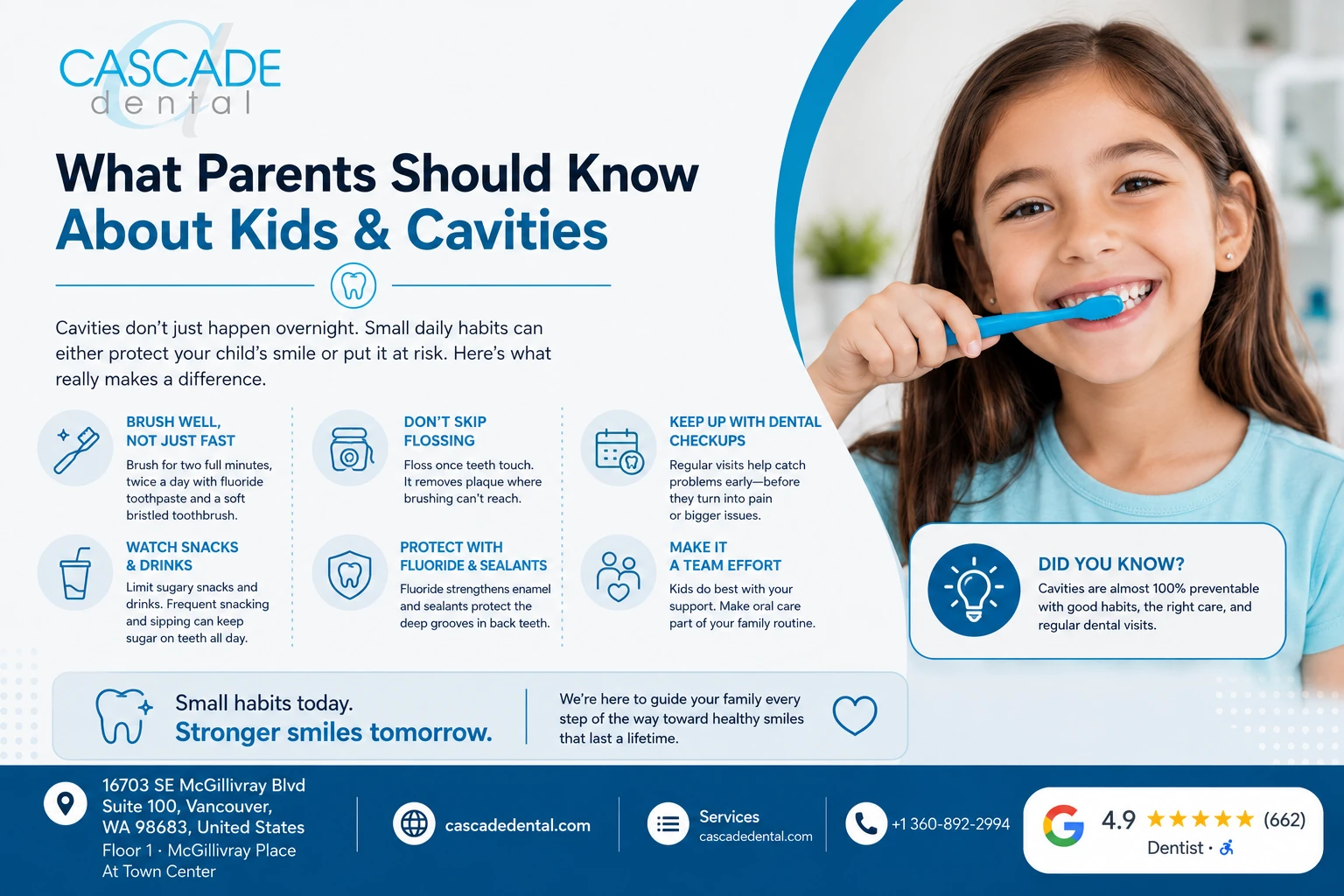
Brushing every day is a great habit, but children usually need help to brush well. Many kids move the toothbrush around their mouth without fully cleaning each tooth. They may focus on the front teeth because those are easiest to see, while missing the back teeth where cavities commonly form.
Back molars are especially vulnerable because they have grooves and pits that can trap food. If a child rushes brushing, those areas may not get cleaned properly. Plaque can stay in the grooves and slowly weaken the enamel.
Another common issue is brushing time. A quick 20-second brushing session is usually not enough. Children need enough time to clean the front, back, chewing surfaces, and gumline. Parents often need to supervise or assist until a child has the coordination to brush thoroughly.
Flossing is another piece that often gets missed. A toothbrush cannot fully clean between teeth that touch. If food and plaque stay between teeth, cavities can develop in areas parents may not notice right away. Flossing can be especially important once a child’s teeth begin to fit closely together.
To help improve brushing at home:
- Use a soft-bristled toothbrush that fits your child’s mouth.
- Brush twice a day with fluoride toothpaste.
- Help your child brush the back teeth and gumline.
- Use a timer, song, or visual chart to encourage longer brushing.
- Floss once teeth touch side by side.
- Replace toothbrushes regularly, especially when bristles fray.
- Supervise brushing until your child can do it well alone.
Brushing should feel like a team effort, not a punishment. The goal is to build a routine your child can eventually manage with confidence.
How Snacks and Drinks Affect Teeth
Snacks and drinks are one of the biggest reasons children get cavities even when they brush. It is not only about how much sugar a child eats. How often they eat or sip matters too.
Every time a child eats sugary or starchy foods, bacteria in the mouth can produce acid. If a child snacks frequently throughout the day, the teeth may not get enough time to recover between acid attacks. This can slowly weaken enamel and lead to cavities.
Sticky foods are especially tricky. Fruit snacks, gummy candy, dried fruit, caramel, and chewy granola bars can cling to teeth. Even crackers, chips, cereal, and other refined carbohydrates can break down into sugars and stick in the grooves of molars.
Sugary drinks can also create problems. Juice, soda, flavored milk, sports drinks, and sweetened beverages can bathe teeth in sugar. Sipping these drinks slowly over time can be more harmful than drinking them with a meal because the teeth are exposed for longer periods.
Water is usually the best everyday drink for children’s teeth. It helps rinse the mouth and does not feed cavity-causing bacteria. If your child drinks juice, it is better to keep it limited and serve it with meals rather than allowing constant sipping.
Practical snack and drink tips include:
- Offer water between meals.
- Keep juice and sweet drinks limited.
- Serve sugary foods with meals instead of as frequent snacks.
- Choose tooth-friendly snacks like cheese, yogurt, vegetables, fresh fruit, and nuts when age-appropriate.
- Avoid letting children fall asleep with bottles or cups containing milk, juice, or sweet drinks.
- Encourage rinsing with water after sticky or sweet snacks.
- Create set snack times instead of allowing all-day grazing.
Parents do not need to eliminate every treat. What matters is reducing frequent sugar exposure and helping children clean their teeth consistently.

Tooth Pain That Comes and Goes: What It Might Mean
Tooth pain that comes and goes is often a sign that something is irritating the tooth, nerve, gums, or surrounding…

Early Warning Signs of Cavities
Cavities in children do not always cause pain right away. In the early stages, a child may not complain at all. That is why routine dental visits are important, even when everything seems fine.
One early sign can be a white, chalky spot on the tooth. This may appear near the gumline or on the surface of a tooth and can indicate early enamel weakening. Brown or dark spots may also appear as decay progresses.
Sensitivity can be another warning sign. Your child may say that cold drinks, sweet foods, or brushing feels uncomfortable. Some children may avoid chewing on one side of the mouth or complain that a tooth feels “weird” rather than painful.
Bad breath that does not improve with brushing may also be a sign of trapped food, plaque buildup, or decay. Swollen gums, bleeding while brushing, or food getting stuck in the same area repeatedly may also deserve attention.
Watch for signs such as:
- White, brown, or dark spots on teeth
- Tooth sensitivity
- Pain when chewing
- Avoiding certain foods
- Complaints about a tooth hurting
- Food getting stuck between teeth
- Bad breath that continues after brushing
- Swollen or tender gums
- A visible hole or rough area on a tooth
Tooth pain should never be ignored. If your child says a tooth hurts, or if you notice swelling, fever, or trouble eating, schedule a dental visit as soon as possible. Understanding what happens if you wait to fill a cavity can also help parents see why early treatment matters before decay becomes more extensive.
When to Schedule a Dental Visit
Parents should schedule a dental visit if they notice possible signs of a cavity, if their child complains of tooth pain, or if they are unsure whether brushing and flossing are being done effectively. It is better to check early than to wait until a cavity becomes painful.
Routine visits are also important, even when there are no symptoms. Dentists can spot early decay, clean areas that are difficult to reach at home, and recommend preventive steps like fluoride, sealants, brushing guidance, flossing support, and dietary changes.
A dental visit may be especially helpful if your child:
- Has had cavities before
- Frequently snacks or drinks juice
- Has deep grooves in molars
- Has crowded teeth
- Struggles with brushing or flossing
- Wears braces or dental appliances
- Complains of sensitivity
- Has visible spots on teeth
- Has not seen a dentist recently
If a cavity is found, the next step depends on the size, location, and severity of the decay. Some cavities may need a filling, while early enamel changes may be managed with preventive care and better home habits. Your child’s dentist can explain what is happening and recommend the most appropriate next step. Learning about tooth filling materials and the available options can also help parents understand what type of restoration may be recommended if treatment is needed.
Families near Vancouver, WA, can schedule a visit with Cascade Dental for guidance tailored to their child’s needs.
Help Your Child Build a Healthier Smile with Cascade Dental
If your child brushes regularly but still gets cavities, you are not alone. Cavities can happen for many reasons, including diet, brushing technique, flossing habits, enamel strength, bacteria, and missed preventive care. The good news is that parents do not have to figure it out alone.
Cascade Dental is here to help families understand their child’s cavity risk, improve daily prevention habits, and address dental concerns early. Whether your child needs a routine visit, preventive guidance, or care for a possible cavity, our team can help you choose the right next step.
Schedule a pediatric dental visit with Cascade Dental today to support your child’s healthy smile.
Help Stop Cavities Early
Book your child’s dental checkup today for a healthier, brighter smile.