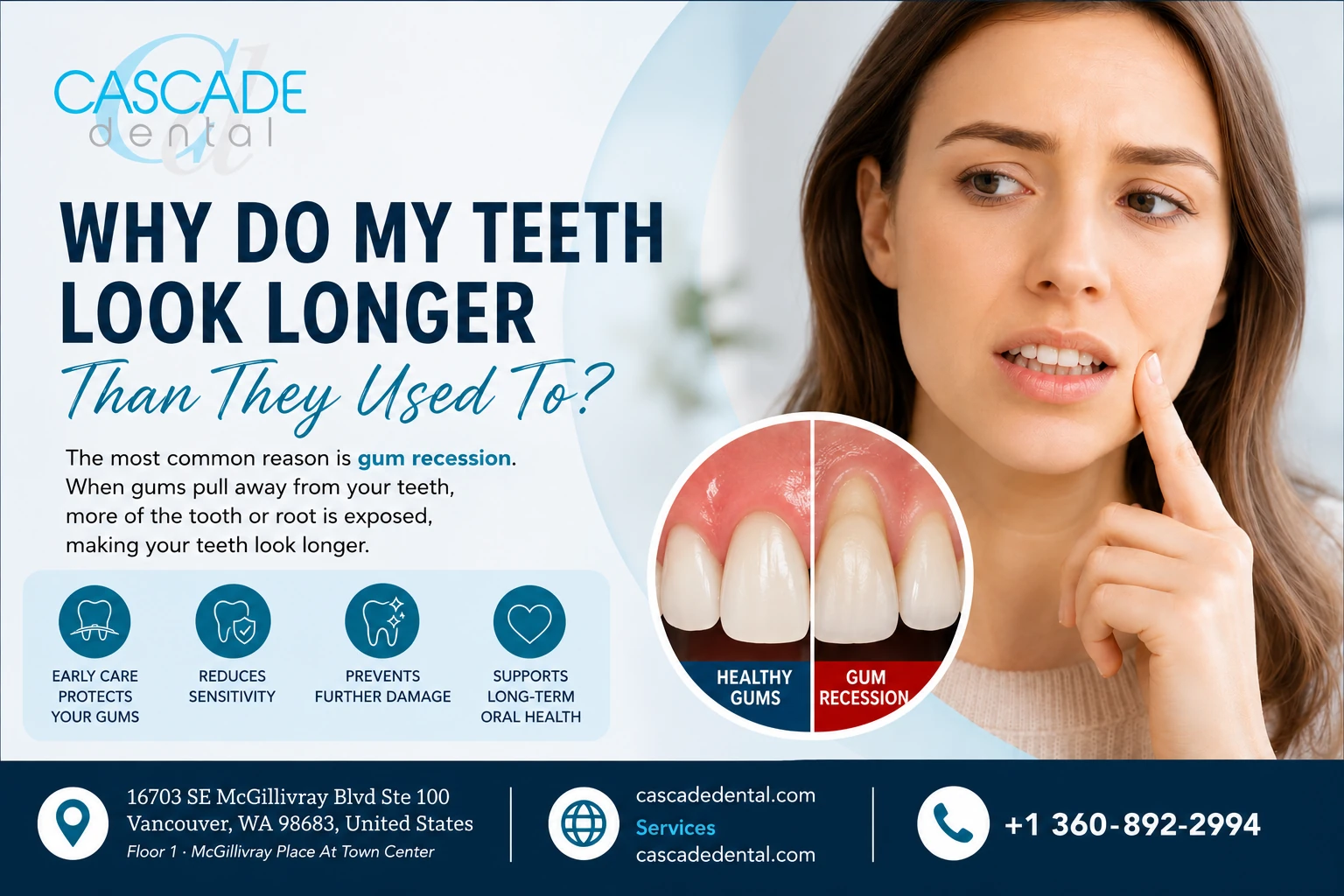
If your teeth look longer than they used to, the most common reason is gum recession. Your teeth are not actually growing, but your gum tissue may be pulling away and exposing more of the tooth or root surface.
For patients in Vancouver, this change can feel concerning, especially if it also comes with sensitivity, bleeding gums, or changes in the way your smile looks. Gum recession can happen slowly over time, but an early evaluation can help identify the cause, reduce further damage, and protect your long-term oral health.
Notice Your Teeth Getting Longer?
Don’t ignore changes in your gumline. Call today for a professional evaluation and personalized care.
Fast Answer: Why Do My Teeth Look Longer?
If your teeth appear longer than they used to, the most common reason is gum recession. As gum tissue pulls away from the teeth, more of the tooth root becomes exposed, making the teeth look longer.
Gum recession can be caused by gum disease, aggressive brushing, teeth grinding, misaligned teeth, tobacco use, genetics, aging, or other factors. A dental exam can determine the cause and help prevent further recession.
The earlier gum recession is found, the easier it may be to manage. Some cases can be stabilized with improved oral hygiene, professional cleanings, and periodontal care. More advanced recession may require additional treatment to protect exposed tooth roots and improve comfort.
Why Do Teeth Look Longer?
Your teeth themselves are not growing longer. Instead, the gums are gradually receding, exposing more of each tooth. When the gumline moves away from its normal position, the visible part of the tooth appears larger.
As the gumline moves downward on upper teeth, or upward on lower teeth, you may notice:
- Teeth appearing longer than before
- Spaces developing between teeth
- Increased tooth sensitivity
- A change in your smile’s appearance
- Notches near the gumline
- Darker or yellower areas near the roots
- Food catching near the gumline
Because gum recession usually happens slowly, many people do not notice it until it becomes more advanced. You may first see it in photos, while brushing, or when comparing your smile to how it looked years ago.
Even mild recession should be checked. Receding gums do not grow back on their own, and identifying the cause can help prevent the problem from progressing.
What Is Gum Recession?
Gum recession happens when the gum tissue around the teeth pulls back or wears away. This exposes more of the tooth surface and, in some cases, the tooth root.
The roots of your teeth are normally protected by gum tissue. Unlike the crown of the tooth, the root is not covered by strong enamel. That means exposed roots can be more vulnerable to sensitivity, decay, and irritation.
Gum recession can affect one tooth, several teeth, or the entire mouth. It may be mild and barely noticeable at first, or it may become more obvious over time.
Common signs of gum recession include:
- Teeth that look longer
- Sensitivity near the gumline
- Gumline notches
- Uneven gum levels
- Exposed yellowish root surfaces
- Tender gums
- Bleeding when brushing or flossing
A dentist can measure the gumline, check for periodontal pockets, and determine whether the recession is linked to gum disease, brushing habits, bite pressure, or another cause. Patient-centered dental care can also help ensure that recommendations are tailored to your specific gum health, comfort, and long-term needs.
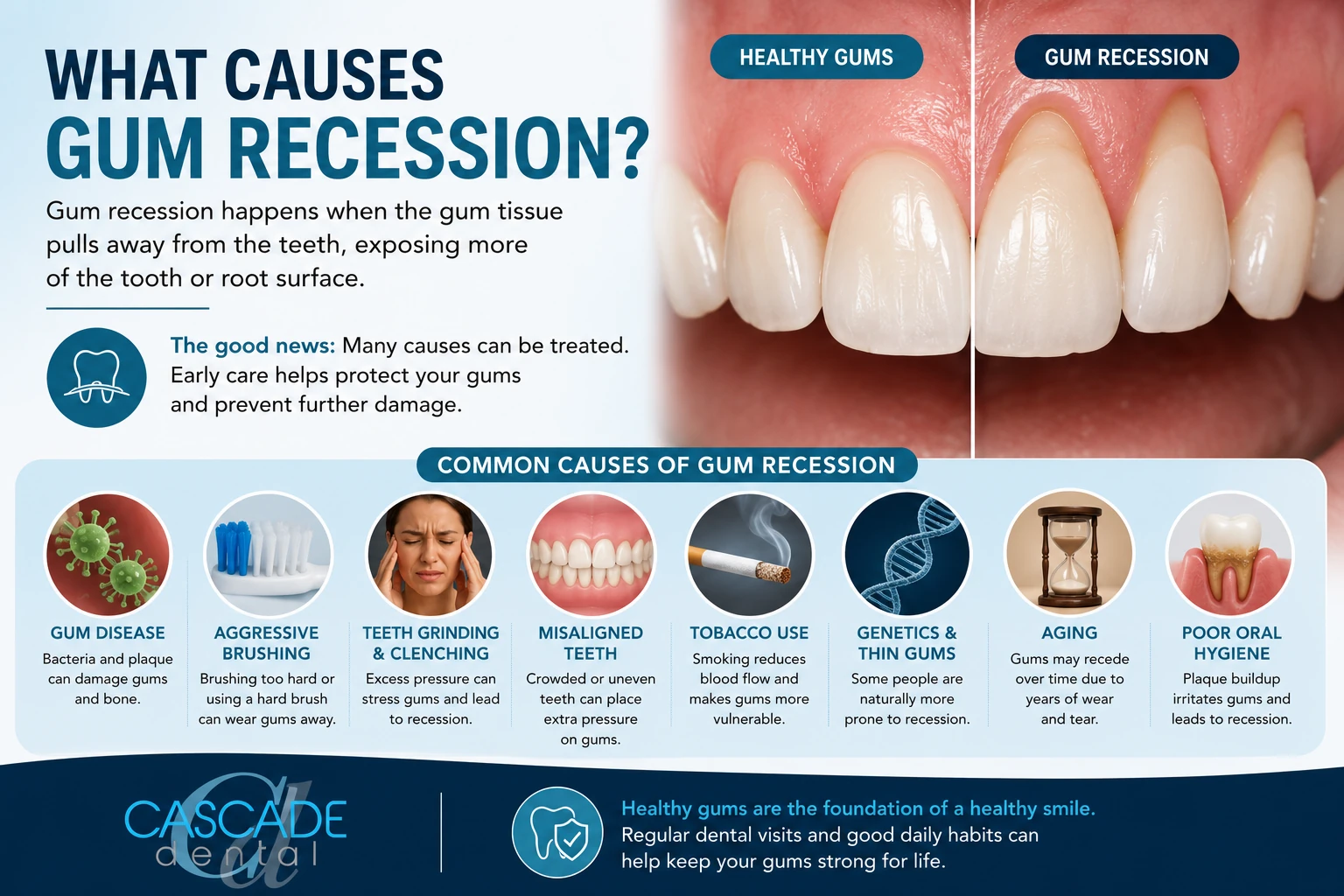
What Causes Gum Recession?
Several factors can contribute to receding gums. Sometimes one clear issue is responsible. In other cases, gum recession happens because of several factors working together over time.
Gum Disease
One of the leading causes of gum recession is periodontal disease. Gum disease begins when plaque and bacteria collect along the gumline. If plaque is not removed with brushing, flossing, and professional cleanings, it can harden into tartar and irritate the gums.
Over time, bacterial infection can damage the gum tissue and supporting bone. As the disease progresses, the gums may pull away from the teeth and form deeper pockets where more bacteria can collect.
Signs of gum disease include:
- Bleeding gums
- Swollen or tender gums
- Persistent bad breath
- Loose teeth
- Deep pockets around teeth
- Gum recession
- A bad taste in the mouth
- Pain or pressure when chewing
Gum disease should be treated early. Gingivitis, the earliest stage, can often be improved with professional care and better home hygiene. More advanced periodontal disease may require deeper cleaning, periodontal maintenance, or other treatment.
Aggressive Brushing
Brushing too hard or using a hard-bristled toothbrush can gradually wear away gum tissue over time. Many people brush aggressively because they want their teeth to feel extra clean, but more pressure does not mean better cleaning.
The gums are delicate. Scrubbing hard near the gumline can cause irritation, enamel wear, and recession. You may notice this more on the side of the mouth where you apply the most pressure.
To protect your gums:
- Use a soft-bristled toothbrush
- Brush with gentle pressure
- Hold the toothbrush at a slight angle toward the gumline
- Use small circular motions instead of hard back-and-forth scrubbing
- Replace your toothbrush every three to four months
- Consider an electric toothbrush with a pressure sensor
If your toothbrush bristles flare out quickly, you may be brushing too hard. Your dentist or hygienist can show you a safer brushing technique.
Teeth Grinding and Clenching
Grinding or clenching your teeth places excessive pressure on the teeth and supporting tissues. This pressure may contribute to gum recession in some patients, especially when combined with thin gum tissue, misaligned teeth, or existing gum inflammation.
Teeth grinding, also called bruxism, often happens during sleep. Many people do not realize they are doing it until a dentist notices wear patterns or they develop symptoms.
Signs of grinding or clenching may include:
- Jaw soreness
- Morning headaches
- Worn or flattened teeth
- Tooth sensitivity
- Cracked or chipped teeth
- Tight jaw muscles
- Gum recession near specific teeth
If grinding is contributing to recession, your dentist may recommend a custom night guard. A night guard does not stop the habit, but it can help protect your teeth from excess pressure while you sleep.

What Causes Bad Breath Even After Brushing?
Bad breath after brushing often means the odor is coming from something brushing alone cannot fully remove. Plaque buildup, gum…
Misaligned Teeth or Bite Problems
Teeth that are crowded, rotated, or positioned outside the ideal arch may be more likely to develop recession. When a tooth is angled or positioned too far forward, the gum tissue around it may be thinner and more vulnerable.
Bite problems can also place uneven pressure on certain teeth. Over time, this pressure may affect the supporting gum and bone tissue.
If alignment or bite issues are contributing to your gum recession, your dentist may discuss orthodontic evaluation or bite-related treatment options. The goal is to reduce stress on vulnerable teeth and protect the gums from further damage.
Tobacco Use
Smoking and other tobacco use can increase the risk of gum disease and gum recession. Tobacco affects blood flow to the gums, makes it harder for gum tissue to heal, and can make signs of gum disease less obvious.
Some tobacco users do not notice bleeding gums even when gum disease is present because tobacco can reduce normal bleeding responses. This may allow periodontal problems to progress without clear early warning signs.
Quitting tobacco can support better gum health and improve healing after dental treatment.
Genetics and Thin Gum Tissue
Some people are naturally more prone to gum recession because of their genetics or gum type. Thin gum tissue can be more likely to recede, especially when exposed to plaque, brushing pressure, orthodontic movement, or bite stress.
Having a family history of gum disease or recession does not mean you will definitely develop the same problem. It does mean you may benefit from closer monitoring, excellent home care, and regular dental visits.
Aging
Gum recession becomes more common with age, but it should not be dismissed as “just getting older.” While years of brushing, chewing, and plaque exposure can contribute to gum changes, noticeable recession still deserves attention.
A dental exam can determine whether the recession is stable or actively progressing. If it is still getting worse, your dentist can recommend ways to slow or stop further damage.
Why Are Receding Gums a Concern?
Receding gums are more than a cosmetic concern. As gums recede, the tooth roots become exposed. Since roots are more sensitive and less protected than enamel-covered tooth crowns, they can develop problems more easily.
Gum recession can lead to:
- Increased sensitivity to hot, cold, or sweet foods
- Greater risk of root cavities
- Higher risk of gum infection
- Loose teeth in advanced cases
- Changes in the appearance of your smile
- Food getting trapped near the gumline
- Difficulty cleaning certain areas
- Further gum and bone loss if gum disease is present
Exposed roots can feel sharp, sensitive, or uncomfortable during brushing. Some patients avoid cleaning sensitive areas, which can allow plaque to build up and make the problem worse.
Early treatment helps reduce the risk of further damage and protects the foundation that supports your teeth.
Can Receding Gums Grow Back?
In most cases, receded gum tissue does not grow back naturally. Once the gumline has pulled away, the main goal is to stop or slow further recession, manage sensitivity, and protect exposed root surfaces.
However, treatment may still improve your gum health and comfort. Depending on the cause, your dentist may recommend professional cleaning, periodontal therapy, improved home care, a night guard, or referral for gum grafting.
Gum grafting may be considered in more severe cases where root coverage or added gum support is needed. Not every patient needs grafting, and your dentist can explain whether it is appropriate for your situation.
What Treatments Are Available?
Treatment depends on the underlying cause and the severity of the recession. Your dentist will first identify why the gums are receding. Treating the cause is important because cosmetic improvement alone will not prevent the recession from continuing.
Your dentist may recommend:
- Professional periodontal treatment
- Deep cleaning, also called scaling and root planing
- Improved brushing and flossing techniques
- More frequent professional cleanings
- A custom night guard if teeth grinding is contributing
- Desensitizing toothpaste or fluoride treatment for sensitivity
- Repair or replacement of dental restorations that trap plaque
- Orthodontic evaluation if tooth position is a factor
- Referral for gum grafting in severe cases
The earlier recession is identified, the more treatment options may be available. Mild recession may only need monitoring and habit changes. Advanced recession may require more involved care.
How Can I Prevent My Teeth From Looking Longer?
You can reduce the risk of further recession by protecting your gums every day. Good home care and regular dental visits are the best starting points. Building healthy dental habits beyond routine checkups can make a meaningful difference in protecting your gums and maintaining oral health over time.
To support healthier gums:
- Brush twice daily with a soft-bristled toothbrush
- Floss gently once a day
- Avoid aggressive scrubbing
- Use fluoride toothpaste
- Clean along the gumline carefully
- Schedule routine dental cleanings
- Treat gum disease early
- Avoid tobacco products
- Wear a night guard if recommended
- Ask your dentist about sensitivity or gum changes
Prevention is especially important if you already have recession. While lost gum tissue may not return on its own, the right care can help keep the condition from getting worse.
When Should You Schedule a Dental Exam?
Schedule a dental evaluation if you notice changes in your gumline or the appearance of your teeth. Even if there is no pain, gum recession should be checked because it may be linked to gum disease or bite issues.
You should see a dentist if you notice:
- Teeth looking longer
- Bleeding gums
- Gum recession
- Tooth sensitivity
- Loose teeth
- Persistent bad breath
- Pain while chewing
- Spaces forming between teeth
- Gums pulling away from the teeth
- Food getting trapped near the gumline
A comprehensive exam can determine whether gum disease or another condition is causing the changes. Your dentist may measure your gums, review X-rays, check for bone loss, evaluate your bite, and look for areas where plaque or tartar has built up.
Protect Your Gums and Your Smile
If your teeth seem longer than they once were, gum recession may be the cause. Early diagnosis can help slow or stop further recession, relieve sensitivity, and protect your teeth for years to come.
Routine dental exams and periodontal care are key to maintaining healthy gums and a confident smile. At Cascade Dental in Vancouver, we can evaluate your gums, explain what may be causing the change, and recommend the next step to help protect your oral health.
Your Teeth Shouldn’t Suddenly Look Longer
Changes in your gumline deserve professional attention. Call now to find out what’s causing it.