
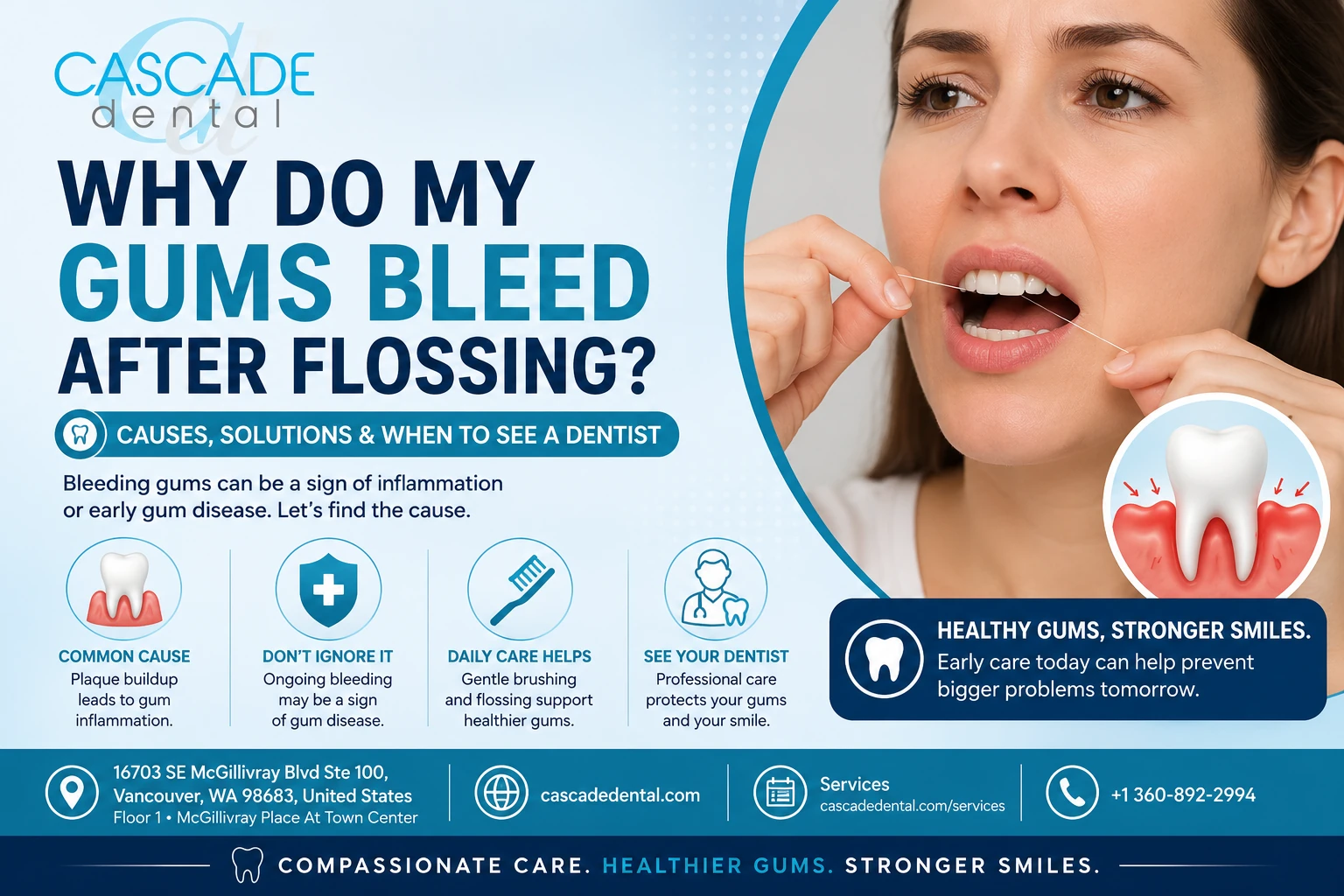
Bleeding gums after flossing are often caused by gum inflammation, especially when plaque has built up along the gum line. If you are in Vancouver and notice bleeding when you floss, it may be temporary, but it can also be an early warning sign that your gums need professional attention.
Healthy gums should not bleed regularly during normal brushing or flossing. Occasional light bleeding may happen when you restart flossing after a long break, but bleeding that continues, worsens, or comes with swelling, bad breath, gum recession, or tenderness should be checked by a dentist.
Stop Gum Bleeding Early
Healthy gums shouldn't bleed every time you floss. Speak with our dental team and get the care your smile deserves.
Fast Answer: Why Do Gums Bleed After Flossing?
Bleeding gums after flossing are commonly caused by gum inflammation, also called gingivitis, especially if you do not floss regularly. Mild bleeding may improve within a week or two of consistent flossing as plaque is removed and the gum tissue begins to heal.
However, bleeding that continues or occurs alongside swelling, pain, persistent bad breath, or gum recession may be a sign of gum disease. In that case, a dental exam can help identify the cause and determine whether you need a professional cleaning, periodontal evaluation, or other treatment.
The important thing is not to ignore ongoing bleeding. Your gums are soft tissue, and bleeding is often their way of showing irritation, inflammation, or infection.
Is Bleeding After Flossing Normal?
Occasional bleeding can happen if you are new to flossing or have not flossed consistently. When plaque sits between the teeth and along the gumline, it irritates the gums. Once you start flossing again, the inflamed tissue may bleed because it is already sensitive.
That does not mean flossing is bad for your gums. In many cases, it means your gums need more consistent cleaning.
Healthy gums generally should not bleed during normal brushing or flossing. If they do, plaque buildup along the gumline may be irritating the gum tissue. This is one of the most common reasons dentists encourage daily flossing, because brushing alone cannot fully clean between the teeth. Bleeding gums when brushing can also be a sign of the same inflammation and may indicate early gum disease if the problem continues.
Other temporary causes of bleeding may include:
- Flossing too aggressively
- Sensitive gums
- Minor irritation from food trapped between teeth
- Recent dental treatment
- Using a new flossing tool incorrectly
- Brushing too hard near the gumline
If the bleeding is light and improves with regular flossing, it is often temporary. If it keeps happening every day, it is worth scheduling a dental visit.
Can Starting a New Flossing Routine Cause Bleeding?
Yes. If you have recently started flossing after a long break, your gums may bleed for several days because they are inflamed from plaque buildup. The bleeding does not usually come from the floss itself. It often happens because the gums were already irritated before flossing began.
As plaque is removed and the gums heal, the bleeding often decreases. Many people notice improvement within one to two weeks of consistent, gentle flossing.
To help your gums recover:
- Floss gently once a day
- Brush twice daily with fluoride toothpaste
- Avoid snapping the floss against your gums
- Curve the floss around each tooth in a C-shape
- Move the floss gently under the gumline
- Continue flossing consistently unless instructed otherwise by your dentist
Stopping flossing because your gums bleed can allow inflammation to worsen. Instead, adjust your technique and stay consistent. If the bleeding does not improve, your gums may need professional cleaning or further evaluation.
Could Bleeding Gums Mean Gum Disease?
Yes. Persistent bleeding is one of the earliest warning signs of gingivitis, the first stage of gum disease. Gingivitis happens when plaque collects along the gumline and causes inflammation. The gums may look red, swollen, or irritated, and they may bleed when touched by a toothbrush or floss.
Additional symptoms may include:
- Red or swollen gums
- Tenderness
- Persistent bad breath
- Gum recession
- Teeth that appear longer
- Bleeding while brushing
- A bad taste in the mouth
- Loose teeth in more advanced cases
When treated early, gingivitis can often be reversed with professional care and good oral hygiene. This usually includes a dental cleaning, better brushing and flossing habits, and regular follow-up visits.
If gingivitis is not treated, it can progress into periodontitis, a more serious form of gum disease. Periodontitis affects the bone and tissues that support the teeth. Over time, it can lead to deeper gum pockets, bone loss, gum recession, and even tooth loss.
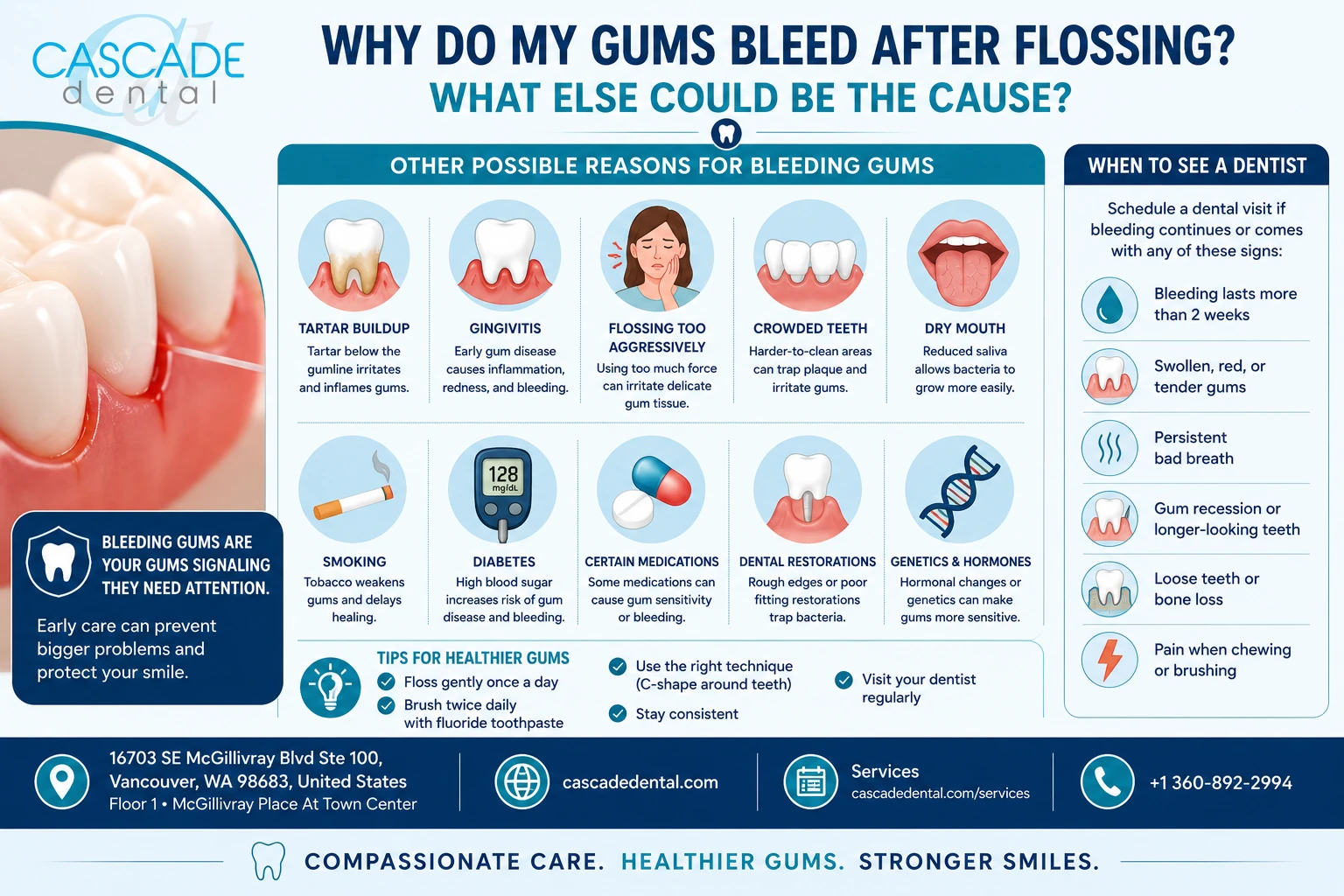
Why Do Gums Bleed Even When I Floss Every Day?
If you already floss every day and your gums still bleed, there may be another issue involved. Daily flossing helps, but bleeding can continue if plaque or tartar has built up below the gumline. Tartar is hardened plaque that cannot be removed with brushing or flossing at home.
Common reasons gums may bleed despite daily flossing include:
- Tartar buildup below the gumline
- Gum disease
- Flossing with too much force
- Using the wrong flossing technique
- Crowded teeth that are hard to clean
- Dental restorations that trap plaque
- Dry mouth
- Smoking or tobacco use
- Certain medical conditions or medications
This is why a dental exam is important when bleeding does not improve. A dentist or hygienist can check your gums, measure gum pocket depths, look for tartar buildup, and determine whether you need a routine cleaning or periodontal treatment.

Can You Get Dental Cleaning While Pregnant?
Yes, you can generally get dental cleaning while pregnant, and routine preventive dental care is considered safe throughout pregnancy. Professional…

Am I Flossing Too Hard?
Sometimes bleeding happens because the floss is being forced into the gums. Flossing should clean the sides of the teeth and gently reach below the gumline, but it should not cut into the tissue.
You may be flossing too hard if:
- Your gums feel sore after flossing
- You notice cuts or sharp pain
- Bleeding happens only in certain spots
- You snap the floss down quickly between the teeth
- Your gums feel more irritated after flossing
A better technique is to guide the floss slowly between the teeth, curve it around one tooth, and move it up and down gently. Then repeat on the neighboring tooth before moving to the next space.
If traditional floss feels difficult, you can ask your dentist about floss picks, interdental brushes, or water flossers. The best tool is the one you can use correctly and consistently.
When Is Bleeding Not Normal?
Bleeding is not something to ignore when it happens often or does not improve. While mild bleeding after starting a new flossing routine can be common, ongoing bleeding may point to gum disease or another oral health concern.
If you’re wondering when to see a dentist about bleeding gums in Vancouver, WA, persistent bleeding or additional changes in your gums are good reasons to schedule an evaluation.
Schedule a dental evaluation if:
- Your gums bleed every time you floss or brush
- Bleeding continues for more than two weeks
- Your gums are swollen or painful
- You notice pus around your teeth
- Your gums are receding
- You have persistent bad breath
- Your teeth feel loose
- Your bite has changed
- You notice deep spaces forming between your teeth and gums
These symptoms may indicate periodontal disease or another oral health condition that requires treatment. The sooner you have your gums checked, the easier it may be to prevent the problem from getting worse.
Can Bleeding Gums Be Caused by Something Besides Flossing?
Yes. Flossing may reveal bleeding, but it is not always the root cause. In many cases, flossing simply touches gum tissue that is already inflamed.
Other possible causes of bleeding gums include:
- Poor plaque control
- Gingivitis
- Periodontal disease
- Vitamin deficiencies
- Hormonal changes
- Diabetes
- Blood-thinning medications
- Tobacco use
- Ill-fitting dental appliances
- Dry mouth
- Recent dental work
This does not mean you should assume something serious is happening. It simply means persistent bleeding should be evaluated rather than guessed at. A dental exam can help separate temporary irritation from a condition that needs treatment.
What Should You Do Next?
If your gums bleed occasionally, start by improving your daily oral hygiene. Gentle consistency is usually better than aggressive cleaning.
You can help protect your gums by:
- Continuing to floss gently every day
- Brushing thoroughly twice daily
- Using a soft-bristled toothbrush
- Brushing along the gumline carefully
- Scheduling regular dental cleanings
- Replacing your toothbrush every three to four months
- Avoiding tobacco products, which increase the risk of gum disease
- Drinking water to help reduce dry mouth
- Following any instructions from your dental team
If bleeding continues despite good oral hygiene, a comprehensive dental exam can identify the cause and determine whether periodontal treatment is needed.
Should You Stop Flossing If Your Gums Bleed?
In most cases, you should not stop flossing just because your gums bleed. If plaque is causing inflammation, stopping flossing may allow more plaque to build up, which can make bleeding and gum irritation worse.
Instead, floss more gently and consistently. Give your gums time to heal. If you are using proper technique and bleeding continues after about two weeks, schedule an appointment with your dentist.
There are some situations where your dentist may give specific instructions to pause or change your flossing routine, especially after certain dental procedures. Follow your dentist’s guidance if you have recently had treatment.
How Can a Dentist Help With Bleeding Gums?
A dentist can examine your gums and determine why they are bleeding. At your visit, the dental team may check for plaque, tartar, gum inflammation, gum pocket depth, recession, and signs of bone loss.
Depending on what they find, they may recommend:
- A routine dental cleaning
- Improved home care techniques
- Periodontal maintenance
- Scaling and root planing, also called deep cleaning
- Antibacterial rinses
- More frequent cleaning visits
- Treatment for gum disease
If the bleeding is caused by gingivitis, early care can often help your gums return to a healthier condition. If the bleeding is related to more advanced periodontal disease, treatment can help control the infection and protect the teeth and supporting bone.
How Can You Keep Your Gums Healthy Long-Term?
Healthy gums need daily care and regular professional cleanings. Even if your teeth feel fine, your gums can still become inflamed if plaque is left along the gumline.
To support long-term gum health:
- Brush twice a day for two minutes
- Floss once a day
- Clean gently under the gumline
- Use fluoride toothpaste
- Visit your dentist as recommended
- Do not ignore bleeding, swelling, or recession
- Avoid smoking and tobacco use
- Ask about periodontal care if you have a history of gum disease
Good gum care is not only about stopping bleeding. It also helps protect the bone and tissue that keep your teeth stable.
Keep Your Gums Healthy
Healthy gums should not bleed regularly. While occasional bleeding after starting a flossing routine is common, persistent bleeding is a sign that your gums need attention. Early diagnosis and treatment can help prevent gum disease from progressing and protect your long-term oral health.
If your gums bleed when you floss, Cascade Dental in Vancouver can help determine whether the cause is temporary irritation, gingivitis, tartar buildup, or periodontal disease. Our team can evaluate your gum health, explain your options clearly, and help you take the next step toward healthier gums and a more confident smile.
Do Your Gums Bleed When Flossing?
Don't ignore bleeding gums. Get a professional dental evaluation to find the cause and protect your oral health before it gets worse.