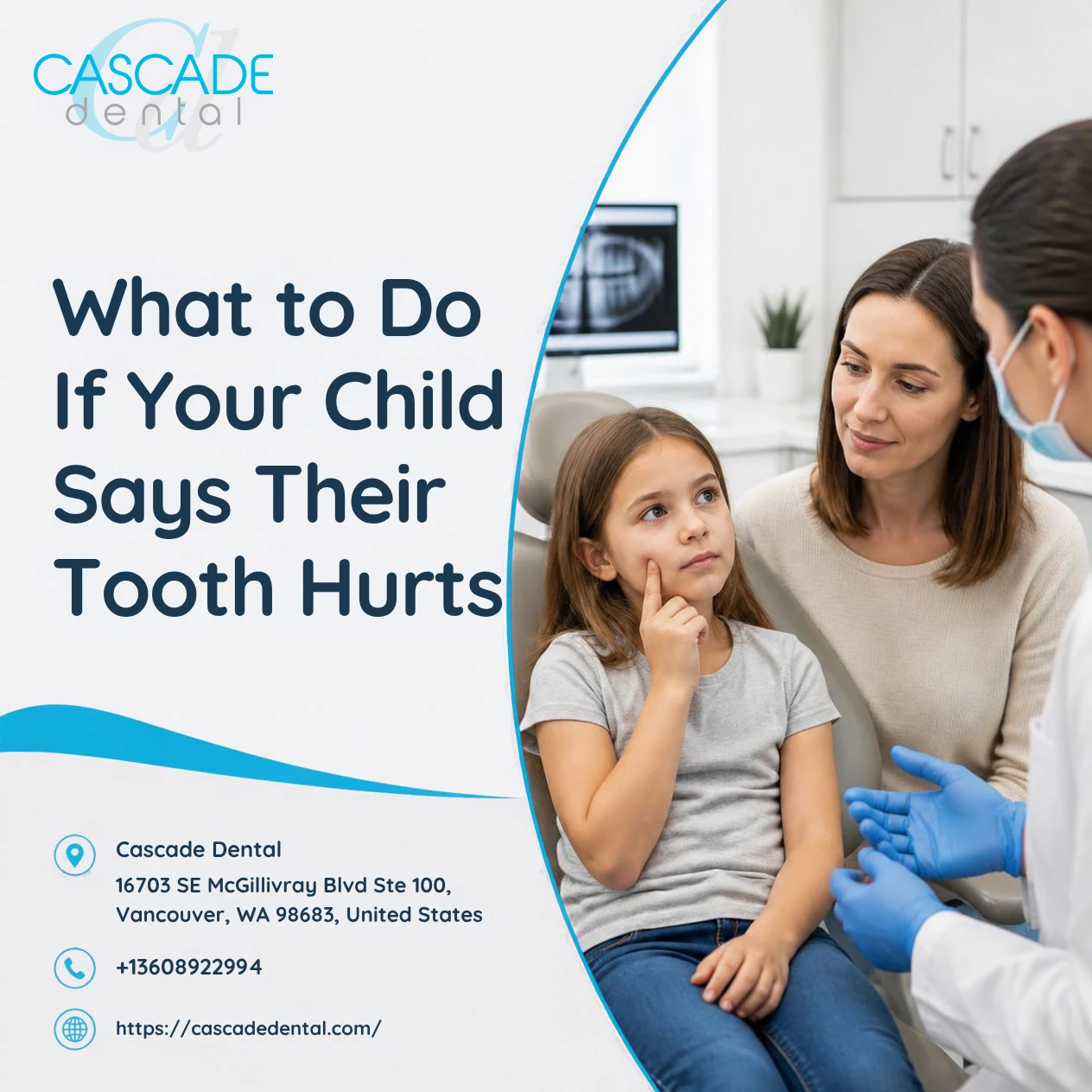
If your child says their tooth hurts, start by gently checking the area for trapped food, swelling, a loose tooth, visible damage, or another obvious source of irritation. Tooth pain should not be ignored, especially when it persists, interferes with eating or sleeping, or comes with swelling or fever.
At Cascade Dental, we recommend staying calm, keeping your child comfortable, and arranging a dental evaluation when the cause is unclear. Toothaches in children can have many causes, from normal tooth eruption to cavities or injuries, and a dentist can determine what is actually happening.
Your Child’s Tooth Hurts? Call Today
Get the tooth checked early and find out what’s causing the pain. Schedule a dental visit now.
Fast Answer: What Should You Do If Your Child Has Tooth Pain?
When a child complains about tooth pain, parents can take a few simple steps right away.
Start by asking where the pain is located and when it began. Then:
- Look for visible swelling, redness, or injury.
- Check whether the tooth is loose.
- Look for food caught between the teeth.
- Ask whether chewing, cold drinks, or hot foods make the pain worse.
- Gently clean around the painful area.
- Have the child rinse with warm water if they are old enough to rinse and spit safely.
- Use a cold compress on the outside of the face if swelling is present.
- Contact your dentist if the pain continues, worsens, or does not have an obvious temporary cause.
The American Academy of Pediatric Dentistry advises parents to arrange dental care promptly when a child develops a toothache rather than trying to determine the exact cause at home.
Pain can sometimes be managed temporarily, but pain relief does not treat the dental problem causing the toothache.
What Are the Most Common Causes of Tooth Pain in Children?
A child saying “my tooth hurts” can mean several different things.
Some causes are relatively minor, while others require prompt dental treatment.
Tooth Decay
Cavities are one of the most common reasons children develop tooth pain.
Decay can begin without obvious symptoms. As it progresses deeper into the tooth, children may notice sensitivity, discomfort while chewing, or persistent pain.
Food Stuck Between Teeth
A piece of food wedged tightly between two teeth can place pressure on the gums and make the area surprisingly uncomfortable.
This is one reason gentle flossing can be useful when a toothache begins suddenly after eating.
Loose Baby Teeth
A baby tooth approaching the end of its natural life may feel tender when a child bites, brushes, or moves it with their tongue.
Some discomfort can be normal, but significant swelling or severe pain should still be evaluated.
Teeth Coming In
Erupting teeth may create pressure, gum tenderness, or soreness.
This may happen when baby teeth first appear or when permanent teeth begin replacing primary teeth.
Dental Injury
Children may injure teeth while playing, participating in sports, falling, or biting something hard.
A tooth does not always need to be visibly broken to have been injured.
Gum Irritation
Tender or inflamed gums can sometimes feel like tooth pain, particularly to younger children who have difficulty identifying exactly where discomfort originates.
Because several conditions can produce similar symptoms, parents should avoid trying to diagnose the problem based on pain alone.
What Can Parents Check at Home?
A quick visual check can give parents useful information to share with the dental office.
Have your child open their mouth somewhere with good lighting.
Look for:
- Swelling around a tooth
- Red or irritated gums
- A visibly loose tooth
- A chipped or broken tooth
- A dark spot or visible hole
- Food trapped between neighboring teeth
- Bleeding
- A bump or pimple-like area on the gums
- Changes in tooth color
- Facial swelling
Ask your child whether the area hurts all the time or only when they chew.
It may also help to determine whether cold water, warm foods, sweets, or biting cause discomfort.
Avoid repeatedly pressing on a painful tooth or swollen gum to test it. Parents do not need to identify the diagnosis before calling the dentist.
Instead, note what you see and describe the symptoms as accurately as possible.
For example:
“My child has been complaining about the lower right tooth since last night, and it hurts when they chew.”
That information can help the dental team determine how soon the child should be evaluated.
Can a Cavity Cause a Child’s Toothache?
Yes. A cavity can cause tooth pain in children, although early cavities may cause no symptoms at all.
Tooth decay occurs when acids produced by bacteria contribute to the breakdown of tooth structure. As decay progresses deeper into a tooth, sensitivity or pain may become more noticeable.
A child with a cavity might complain that a tooth hurts:
- While eating
- When biting down
- After eating something sweet
- When drinking something cold or hot
- At bedtime
- Without an obvious trigger
Pain that disappears does not necessarily mean the cavity has resolved.
Tooth decay does not heal simply because the tooth stops hurting. A dentist needs to examine the tooth and determine whether treatment is necessary.
Baby teeth also matter. Although they eventually fall out, untreated problems in primary teeth can still cause pain, infection, difficulty eating, and other complications.
That is why persistent tooth pain deserves professional attention even when the affected tooth is a baby tooth.
Can Loose or Erupting Teeth Cause Pain?
Yes. Normal tooth development can sometimes cause temporary discomfort.
Loose Baby Teeth
As permanent teeth develop underneath primary teeth, the roots of baby teeth gradually resorb. The baby tooth becomes increasingly loose until it eventually falls out.
During this process, children may notice tenderness when eating or brushing around the tooth.
Encourage children to let naturally loose teeth come out at their own pace rather than aggressively pulling or twisting them.
Erupting Permanent Teeth
Permanent teeth pushing through the gums can also cause mild soreness or pressure.
Parents may notice swollen gum tissue around the area where a tooth is emerging.
The important distinction is how severe and persistent the symptoms are.
Mild temporary tenderness around an obviously loose or erupting tooth may be expected. Significant pain, facial swelling, pus, fever, trauma, or symptoms that continue should not automatically be blamed on normal tooth development.
A dental examination can rule out another problem occurring in the same area.
What Can You Do to Keep Your Child Comfortable?
Until your child can be evaluated, simple measures may help reduce discomfort.
Gently Clean the Area
Food and plaque around a painful tooth can increase irritation.
Have your child brush gently with a soft-bristled toothbrush. Floss carefully between neighboring teeth if food may be trapped.
Rinse With Warm Water
Children who are old enough to rinse and spit reliably can gently rinse their mouth with warm water.
The AAPD also advises warm salt water for an irritated area when appropriate.
Use a Cold Compress
If the cheek or face is swollen or sore after an injury, place a cold compress against the outside of the face for short intervals.
Do not place ice directly against the skin.
Choose Comfortable Foods
If chewing hurts, temporarily offer softer foods and encourage the child to chew away from the painful tooth.
Very hot, cold, hard, sticky, or sugary foods may increase sensitivity in some cases.
Use Pain Medication Appropriately
For short-term dental pain in children, current ADA clinical guidance supports non-opioid medications such as acetaminophen or NSAIDs such as ibuprofen when appropriate for the child and used according to recommended dosing.
Parents should follow the product directions, their child’s healthcare provider’s advice, and age and weight restrictions. Do not give a child medication that is unsuitable for them because of allergies, health conditions, interactions, or other medical considerations.
Most importantly, medication should be viewed as temporary pain control rather than a substitute for dental care.
Do not place aspirin or another pain medication directly against a child’s tooth or gums. The AAPD specifically advises against placing aspirin on the affected area.

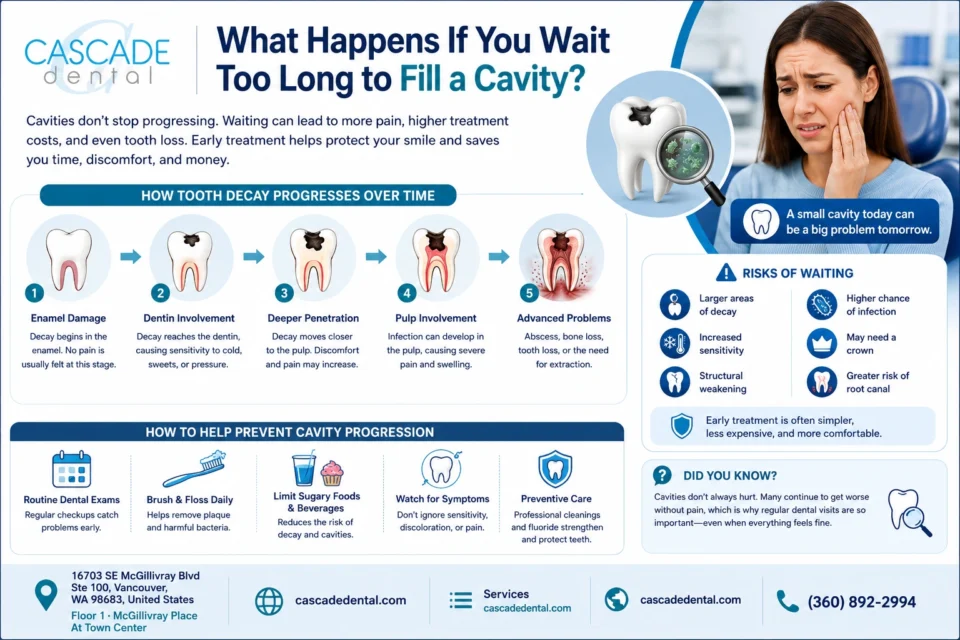
What Happens If You Wait Too Long to Fill a Cavity?
If you have been told that you have a cavity, it may be tempting to postpone treatment, especially if the…
When Is a Child’s Toothache an Emergency?
Not every toothache requires an emergency room visit, but some symptoms require urgent attention.
The American Academy of Pediatric Dentistry identifies problems such as facial swelling, oral infections, uncontrolled bleeding, significant dental pain, and facial or dental trauma among situations requiring emergency dental care.
Contact a dentist promptly when your child has:
- Significant facial or gum swelling
- Severe or rapidly worsening pain
- A dental injury
- Uncontrolled oral bleeding
- Signs of infection
- Pain that prevents normal eating or sleeping
- A broken or displaced tooth
- A tooth knocked out during an injury
If swelling is rapidly spreading or your child has difficulty breathing, swallowing, or managing their saliva, seek immediate emergency medical care.
Those symptoms may indicate that the problem extends beyond a routine toothache and requires immediate assessment.
What Warning Signs Should Parents Watch For?
Children do not always describe dental symptoms clearly.
A younger child may simply say their mouth hurts, refuse dinner, or become unusually irritable.
Watch for behavioral and physical changes such as:
- Chewing only on one side
- Suddenly avoiding cold drinks
- Refusing hard foods
- Waking during the night with pain
- Holding or rubbing the cheek
- Crying while brushing
- Avoiding brushing one particular area
- Swollen gums
- A swollen cheek or jaw
- Bad taste or drainage around a tooth
- Fever accompanying dental symptoms
- A darkened tooth after an injury
- Pain that repeatedly returns
A child who stops complaining should still be evaluated if other warning signs remain.
Symptoms can fluctuate, and the severity of pain alone does not reliably tell parents how serious a dental problem may be.
When Should You Schedule a Pediatric Dental Visit?
Parents should contact the dental office whenever a child’s toothache persists, repeatedly returns, or has no clear explanation.
A dental appointment is especially important when:
- Pain lasts more than a short period.
- The same tooth repeatedly causes discomfort.
- Biting or chewing hurts.
- The child has visible tooth damage.
- There is a suspected cavity.
- The gums are swollen or irritated.
- A tooth has changed color.
- The child recently experienced a dental injury.
- Pain is interrupting meals, school, play, or sleep.
You do not need to wait until pain becomes severe.
Earlier evaluation often gives the dentist more opportunity to identify the source of discomfort before symptoms become more difficult for the child.
At Cascade Dental, parents can describe the symptoms when scheduling. Details such as when the pain started, whether swelling is present, and whether an injury occurred can help the team determine an appropriate appointment timeframe.
What Will the Dentist Check During the Appointment?
The first goal is to determine where the pain is coming from and why it is happening.
The dentist may ask the parent and child:
- When did the pain start?
- Does it happen constantly or occasionally?
- Does chewing trigger it?
- Is the tooth sensitive to temperature?
- Has the child recently fallen or been hit in the mouth?
- Has there been swelling?
- Does the pain wake the child at night?
The dentist will then examine the teeth, gums, bite, and surrounding tissues.
Depending on the child’s symptoms and age, dental X-rays may be recommended to look for problems that cannot be seen during a visual examination.
The evaluation may identify decay, a loose or erupting tooth, trauma, gum irritation, infection, or another dental issue.
Treatment depends on what the examination finds.
Some children may only require monitoring or preventive guidance. Others may need treatment for a cavity, damaged tooth, infection, or another problem.
The purpose of the visit is not simply to stop the pain temporarily. It is to identify and address its underlying cause.
Parents wondering what to do if your child says their tooth hurts do not need to diagnose the problem themselves. Check for obvious concerns, keep your child comfortable, watch for warning signs, and contact the dental office when pain persists or something does not look right.
FAQs
Should I worry if my child only complains about tooth pain at night?
Nighttime tooth pain is worth discussing with a dentist, particularly if it happens repeatedly or wakes your child from sleep. The timing alone cannot determine the cause, so recurring symptoms should be evaluated.
Can food stuck between teeth cause significant pain?
Yes. Food trapped tightly between neighboring teeth can irritate the gums and create pressure. Gentle flossing may help. If discomfort remains after the area has been cleaned, contact your dentist.
Should I put aspirin on my child’s painful tooth?
No. Do not place aspirin or other pain medication directly against a child’s tooth or gums. The AAPD advises against this practice because it can damage oral tissues.
Can my child go to school with a toothache?
That depends on the severity of the symptoms. Mild temporary discomfort may not prevent normal activities, but significant pain, swelling, fever, injury, or difficulty eating warrants prompt attention. If symptoms are interfering with your child’s normal day, contact the dental office.
What if my child’s tooth hurts after being bumped?
Contact your dentist even when the tooth does not appear broken. Dental injuries can sometimes affect structures beneath the visible portion of the tooth. More urgent evaluation is appropriate if the tooth has moved, broken, become very loose, or there is substantial bleeding or swelling.
Can I wait to see whether a child’s toothache goes away?
A brief episode caused by something like food stuck between the teeth may resolve after the area is cleaned. Persistent, recurring, unexplained, or worsening pain should be evaluated rather than repeatedly waiting for it to disappear.
Is Your Child Complaining About a Toothache? Contact Cascade Dental
When a child says a tooth hurts, parents do not need to figure out the diagnosis before asking for help. Tooth pain can come from cavities, normal tooth changes, trapped food, injuries, gum irritation, or other dental problems, and many of these conditions can look similar at home.
If your child’s pain persists, keeps returning, interferes with eating or sleeping, or is accompanied by swelling or another warning sign, contact Cascade Dental. Our team can examine the area, determine what is causing the discomfort, and explain the appropriate next steps.
Schedule a dental visit with Cascade Dental today if your child has ongoing tooth pain or you are concerned about a change in their teeth or gums.
Don’t Ignore Your Child’s Tooth Pain
Persistent tooth pain may need professional attention. Call now to schedule an evaluation.