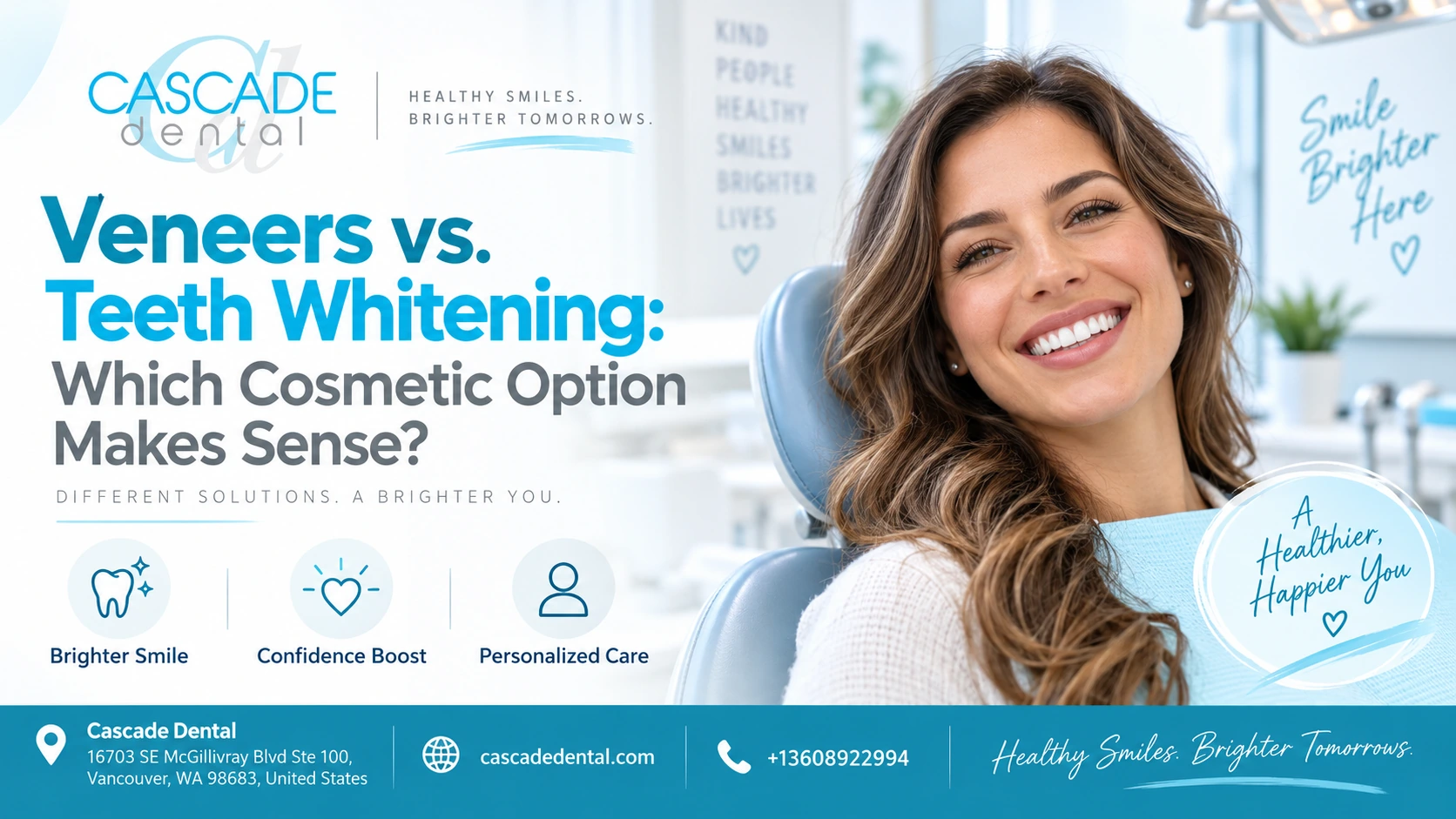
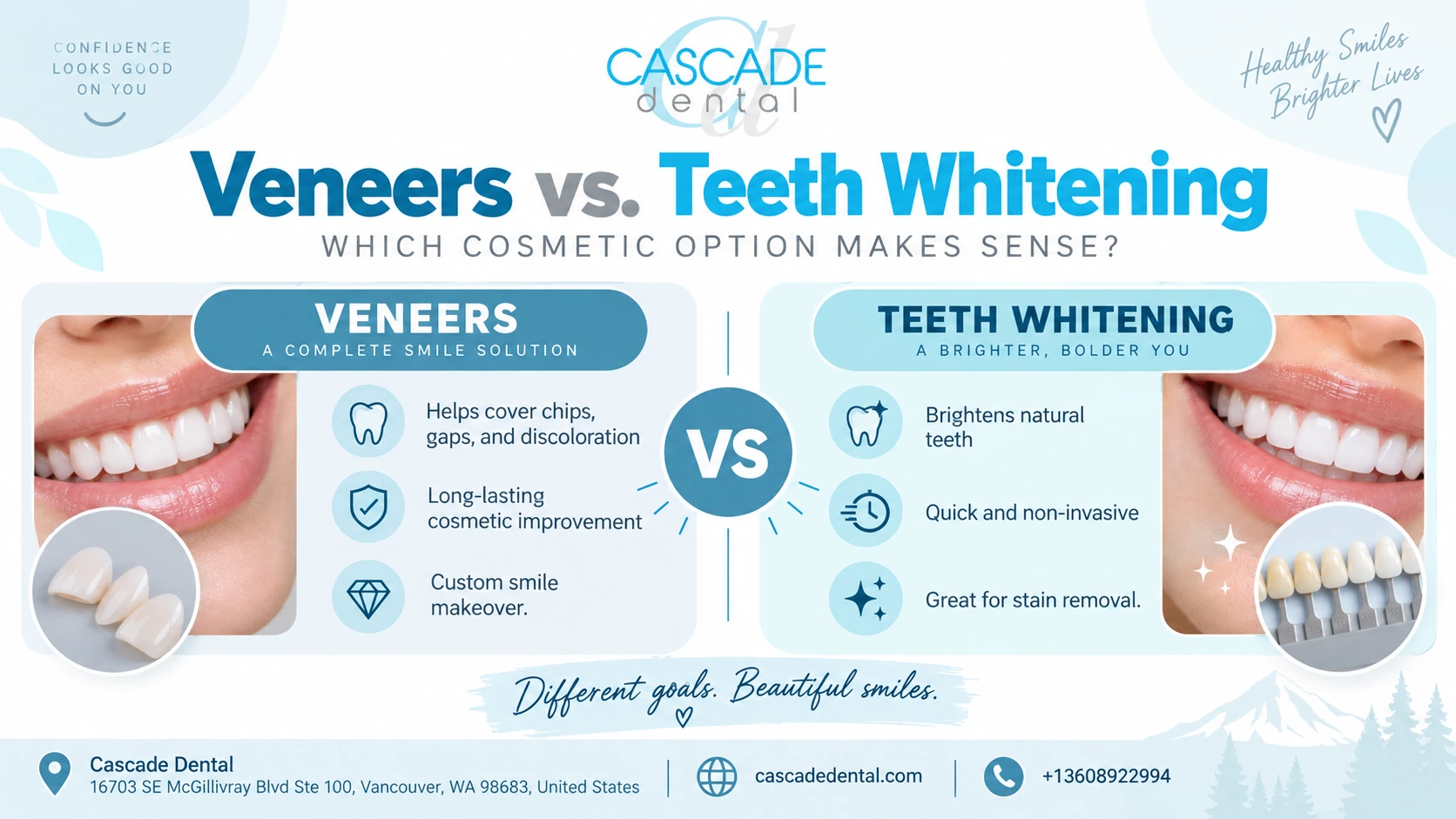
Veneers and teeth whitening can both create a brighter smile, but they solve different cosmetic concerns. Teeth whitening primarily changes the color of natural teeth, while veneers can change color as well as the visible shape, size, proportions, and surface appearance of selected teeth.
The better choice depends on why your teeth look discolored and what you want to change. Someone with otherwise healthy, evenly shaped teeth and common staining may benefit from whitening. A person who also wants to address irregular shape, worn edges, small gaps, or discoloration that does not respond predictably to bleaching may be better suited to veneers.
Understanding those differences can help you discuss realistic options with your dentist.
Fast Answer: Veneers vs Teeth Whitening
If your main concern is that your natural teeth look yellow or stained but you are happy with their shape and alignment, teeth whitening is often the more conservative place to start.
Veneers may make more sense when you want to address several cosmetic concerns at once, such as:
- Persistent discoloration
- Uneven tooth shape
- Small or undersized teeth
- Worn or chipped edges
- Minor spacing concerns
- Certain surface imperfections
- Differences in tooth proportions
Whitening does not physically reshape a tooth. It uses bleaching agents to lighten natural tooth structure.
Veneers are thin restorations bonded to the front surfaces of teeth. They can therefore affect both the shade and visible contours of the smile.
Neither treatment is automatically better. The appropriate choice depends on your teeth, oral health, expectations, budget, and the amount of change you want.
What Is the Main Difference Between Veneers and Whitening?
The simplest difference is color change versus structural cosmetic change.
Teeth Whitening
Professional whitening is intended to lighten the existing color of natural teeth. Peroxide-based whitening agents interact with colored compounds in enamel and dentin, helping create a lighter overall shade.
Whitening may be useful if you like the general shape and position of your teeth but feel that your smile has become:
- Yellow
- Dull
- Darker with age
- Stained by coffee, tea, red wine, or other pigmented foods and drinks
The treatment does not add material to the teeth and does not intentionally change their dimensions.
Veneers
Veneers cover the visible front surface of selected teeth.
Because the restoration itself determines much of the tooth’s final visible appearance, veneers can be designed to alter:
- Color
- Shape
- Length
- Width
- Symmetry
- Surface texture
- Certain minor spacing or alignment appearances
Porcelain veneers may require removal of some natural enamel and can be an irreversible treatment, so the decision requires more planning than simply choosing a lighter shade.
Which Types of Tooth Stains Respond Best to Whitening?
Not every type of discoloration behaves the same way.
Dentists generally consider whether discoloration is extrinsic, intrinsic, or a combination of both before recommending a whitening approach.
Extrinsic Stains
Extrinsic stains occur primarily on the outside of the enamel.
Common contributors include:
- Coffee
- Tea
- Red wine
- Dark-colored foods
- Tobacco
- Certain environmental exposures
Surface stains may sometimes improve through professional cleaning or stain-removing products. Deeper color changes may respond to peroxide-based bleaching.
Intrinsic Discoloration
Intrinsic discoloration comes from within the tooth.
Possible causes include:
- Natural aging
- Certain developmental conditions
- Fluorosis
- Previous dental trauma
- Some medications taken during tooth development
- Changes involving the dental pulp
- Natural differences in enamel and dentin color
Professional bleaching can improve some forms of intrinsic discoloration, but results vary considerably depending on the cause and severity. The ADA notes, for example, that some tetracycline-related discoloration may respond but can require a much longer treatment period.
That is why determining why a tooth is discolored matters before choosing a cosmetic procedure.
A single tooth that suddenly becomes darker should also be evaluated rather than simply covered or whitened. Trauma, pulpal changes, decay, restorations, and other conditions can contribute to single-tooth discoloration.
When Can Veneers Be Better for Discoloration?
Veneers may be considered when whitening alone cannot predictably create the appearance a patient wants.
This can include cases involving:
- Significant discoloration that responds poorly to bleaching
- Uneven color from one tooth to another
- Certain developmental enamel defects
- Multiple cosmetic issues occurring together
- Teeth that need both color and shape improvements
Veneers can mask the visible tooth surface rather than relying entirely on bleaching the underlying tooth structure.
That does not mean every deeply stained tooth should automatically receive a veneer.
A dentist first needs to determine why the discoloration exists and whether a more conservative option could work. Depending on the situation, whitening, bonding, internal bleaching for certain non-vital teeth, or another treatment could be appropriate.
Existing restorations also matter.
Whitening products lighten natural teeth but do not whiten crowns, veneers, implants, or tooth-colored restorations in the same way. This can create a shade mismatch if a person whitens the surrounding natural teeth.
Your dentist may therefore plan whitening before replacing visible restorations when appropriate.
Can Whitening Change the Shape or Size of Teeth?
No.
Whitening changes tooth color. It does not significantly change the physical:
- Length
- Width
- Position
- Shape
- Spacing
- Edge contours
For example, suppose two front teeth are healthy but one is visibly shorter than the other. Whitening could make both teeth lighter, but the height difference would remain.
Similarly, bleaching cannot close a visible gap or rebuild a chipped edge.
Patients sometimes expect that making their teeth dramatically brighter will correct everything they dislike about their smile. Whitening may make the smile look fresher, but the original tooth proportions remain essentially the same.
That limitation is important when comparing veneers vs teeth whitening.
If color is the only significant concern, changing the tooth structure may be unnecessary.
If color is only one part of the concern, another cosmetic treatment may provide more complete improvement.
How Veneers Can Address Shape, Size, and Minor Imperfections
Veneers provide greater flexibility because the dentist and dental laboratory can control the visible dimensions and appearance of the restoration.
Depending on the clinical situation, veneers may be used to improve the appearance of teeth that are:
Small or Disproportionate
A tooth that appears undersized relative to nearby teeth can sometimes be visually widened or lengthened with a veneer.
Worn Along the Edges
Teeth can gradually shorten because of grinding, erosion, or years of use.
After determining why the wear occurred, veneers may sometimes be used as part of a cosmetic or restorative plan.
Mildly Chipped
A veneer can cover certain visible chips or irregularities on the front surface.
However, small chips may also be treatable with less invasive options such as dental bonding or contouring.
Irregularly Shaped
Some people naturally have teeth with uneven contours or proportions.
Veneers can create greater visual symmetry while preserving a natural-looking result when carefully planned.
Slightly Spaced
Selected small gaps can sometimes be visually reduced by adjusting veneer width.
Larger spacing or more significant alignment problems may be better addressed orthodontically.
Discolored and Irregular at the Same Time
This is one of the situations in which veneers have a clear cosmetic advantage over whitening.
A veneer can alter both the visible color and contours of a tooth during the same treatment plan.
However, greater versatility also comes with a greater commitment. Veneers generally require substantially more planning and long-term maintenance than whitening.
How Do Veneers and Whitening Compare in Treatment Time?
Treatment timelines vary based on the whitening system, number of veneers, laboratory process, condition of the teeth, and whether additional treatment is needed.
Professional Teeth Whitening Timeline
Whitening can be performed through several approaches, including:
- In-office bleaching
- Dentist-supervised take-home trays
- A combination of office and home treatment
Some in-office procedures can create noticeable improvement during a single appointment.
Custom take-home whitening normally progresses more gradually. Depending on the whitening agent and prescribed protocol, treatment may continue over several days or weeks.
More difficult intrinsic stains can require substantially longer.
Veneer Timeline
Veneers generally involve several stages.
These may include:
- Cosmetic consultation and examination
- Smile planning
- Selecting tooth shape and shade
- Preparing the teeth when required
- Impressions or digital scans
- Temporary restorations in some cases
- Laboratory fabrication for porcelain veneers
- Final fitting and bonding
Because veneers physically alter the visible surface of a tooth, careful planning matters more than speed.
The exact schedule depends on the type of veneer and individual case.
What Cost Factors Should You Consider?
Whitening and veneers are very different investments.
Teeth whitening is usually the less expensive treatment because it does not require individually fabricated restorations for each tooth.
The price of professional whitening may depend on:
- Whether treatment is performed in-office or at home
- The whitening system used
- How much discoloration is present
- How many sessions are required
- Whether custom trays are provided
- Whether future touch-ups are needed
Veneers normally involve a higher initial cost.
Pricing can depend on:
- Number of teeth treated
- Veneer material
- Laboratory fees
- Complexity of the cosmetic plan
- Amount of tooth preparation required
- Need for preliminary dental care
- Temporary restorations
- Future maintenance or replacement
Another important difference is long-term cost.
Whitening may require periodic touch-ups as staining gradually returns.
Veneers generally last considerably longer but are not necessarily lifetime restorations. Once teeth have been prepared for veneers, replacement restorations may be required later.
Cosmetic dental procedures also may not be covered by dental insurance when performed solely for appearance. Coverage varies by plan, so patients should review their individual benefits rather than assuming a treatment will or will not be covered.
How Long Do Results Typically Last?
Both treatments can provide long-lasting improvement, but they age differently.
Teeth Whitening
Whitening is not permanent.
Teeth can gradually accumulate new stains from:
- Coffee
- Tea
- Wine
- Tobacco
- Dark foods and beverages
- Normal aging
Cleveland Clinic gives a broad estimate of approximately six months to three years for whitening results, although individual results vary considerably.
Some people periodically use dentist-recommended touch-up treatment to maintain their preferred shade.
Veneers
Veneers usually remain cosmetically stable for much longer than whitening results.
Cleveland Clinic estimates a general lifespan of approximately five to 15 years for veneers, although some can last longer depending on their material, condition, maintenance, bite forces, and individual habits.
Factors that may affect veneer longevity include:
- Oral hygiene
- Tooth decay
- Gum health
- Teeth grinding
- Clenching
- Biting hard objects
- Trauma
- Changes in the surrounding teeth and gums
A veneer can also chip, fracture, loosen, or eventually need replacement.
Neither treatment eliminates the need for routine dental examinations and good oral hygiene.
How to Choose Between Veneers and Teeth Whitening
The most useful starting question is:
What exactly are you trying to change?
Consider Whitening When:
- Your main concern is tooth color.
- Your teeth already have a shape you like.
- Your alignment is acceptable to you.
- You want a conservative cosmetic treatment.
- Your discoloration is expected to respond reasonably well to bleaching.
- You understand that maintenance or occasional touch-ups may be needed.
Consider Discussing Veneers When:
- Whitening has not adequately improved the discoloration.
- Several teeth have noticeably different colors.
- You want to change tooth proportions as well as color.
- Teeth have visible surface irregularities.
- Small chips or worn edges affect the appearance of your smile.
- Certain minor spacing or shape concerns are present.
- You understand that veneer treatment may involve permanent alteration of natural tooth structure.
Do Not Base the Decision on Shade Alone
It can be tempting to choose veneers because they can produce a dramatic color change.
However, removing healthy tooth structure simply to achieve a whiter shade may not be necessary when bleaching could provide a satisfactory result.
Likewise, continuing to whiten teeth repeatedly will not correct concerns involving tooth proportions, missing structure, or significant shape differences.
The most conservative treatment capable of meeting realistic cosmetic goals is often worth considering first.
At Cascade Dental, the process begins by determining what is causing the concern, rather than assuming every cosmetic problem requires the same solution.
Talk With Cascade Dental About Your Cosmetic Options
Choosing between veneers and teeth whitening becomes much easier when the treatment is based on your actual teeth rather than before-and-after photos from someone else’s smile.
At Cascade Dental, cosmetic planning begins with evaluating the color, shape, condition, restorations, gums, and overall health of your teeth. The team can then discuss which changes whitening can realistically provide and whether veneers or another cosmetic option should be considered.
Some patients only need a brighter shade. Others are trying to address color, proportions, wear, or several cosmetic concerns together.
The goal is not to automatically recommend the more extensive treatment. It is to identify an option that fits your smile, expectations, oral health, and long-term plans.
FAQs
Are veneers better than teeth whitening?
Not necessarily. Veneers and whitening accomplish different things.
Whitening may be the more appropriate choice when discoloration is the primary concern and the patient is satisfied with tooth shape and position. Veneers may be considered when color needs to be changed along with tooth shape, size, surface appearance, or certain minor imperfections.
Should you whiten your teeth before getting veneers?
Sometimes.
Whitening the untreated natural teeth before choosing the final veneer shade may help create a more consistent result. Once veneers are placed, whitening products will not lighten the veneer material in the same way they lighten natural tooth structure.
Your dentist can determine the correct treatment order.
Can veneers become stained?
Porcelain veneers are generally resistant to many types of staining, but their appearance can still change over time because of surface changes, surrounding natural teeth, gum changes, plaque accumulation, or staining near restoration margins.
Good oral hygiene and regular dental visits remain important.
Can teeth whitening fix a chipped tooth?
No.
Whitening may lighten the tooth, but it does not replace missing enamel or rebuild the chipped area.
Depending on the chip, possible options could include smoothing, bonding, a veneer, or another restoration.
Does teeth whitening work on crowns or veneers?
No. Standard bleaching products primarily affect natural tooth structure.
Crowns, veneers, implants, and many other restorative materials do not whiten in the same way.
This is one reason a dentist should evaluate existing restorations before whitening treatment.
Does professional teeth whitening cause sensitivity?
Temporary tooth sensitivity is one of the most commonly reported effects of whitening. Gum irritation can also occur, particularly if whitening material contacts the gingival tissues. These effects are generally temporary, although individual responses vary.
Patients with existing sensitivity should discuss it with their dentist before treatment.
Can veneers straighten crooked teeth?
Veneers can sometimes make mildly irregular teeth appear more even, but they do not actually move the roots or reposition teeth the way orthodontic treatment does.
More significant crowding, rotation, or bite concerns may require orthodontic treatment rather than simply covering the teeth.
Which lasts longer, veneers or teeth whitening?
Veneers generally maintain their cosmetic appearance much longer than a whitening treatment. Whitening gradually fades and may require touch-ups, while veneers can remain functional for many years before needing replacement.
However, veneers are also a much more involved treatment and may require permanent alteration of the treated teeth.
How do I know whether my stains will respond to whitening?
The answer depends on the cause of the discoloration.
Surface stains and many common age-related color changes can respond well, while certain intrinsic stains can be less predictable or require extended treatment. A dental examination can identify the likely source of the discoloration and help determine whether whitening is worth trying.
Is it better to try whitening before veneers?
When color is the primary concern and the teeth are otherwise healthy and cosmetically acceptable, whitening is often worth discussing because it is more conservative.
If significant shape, size, surface, or structural concerns also need to be corrected, whitening alone may not achieve the desired result. A cosmetic evaluation can help determine whether whitening, veneers, bonding, orthodontics, or a combination of treatments makes more sense.