Dental numbness after a filling usually lasts about two to four hours, although some people regain feeling sooner or remain numb longer. The duration depends on the local anesthetic used, the amount administered, the injection location, and how your body responds.
Your lips, tongue, cheeks, or gums may remain numb even after the filling is finished.
During this time, avoid chewing and consuming hot foods or drinks until normal sensation returns. If numbness lasts considerably longer than your dentist expected, does not improve, or develops alongside unusual symptoms, contact your dental office for guidance.
Still numb after your dental filling?
Get professional advice and peace of mind. Call today to speak with our dental team!
How Long Does Dental Numbness Usually Last After a Filling?
What is the typical numbness duration?
Most patients can expect the effects of routine dental local anesthesia to gradually wear off over several hours.
A commonly used estimate is approximately two to four hours, although the specific anesthetic and injection technique can produce shorter or longer effects.
The tooth itself may regain sensation before the surrounding lips, cheeks, or tongue feel completely normal.
This happens because the anesthetic can affect different nerve fibers and tissues for different periods.
For example, you may notice that the filled tooth no longer feels numb while part of your lower lip still feels unusually heavy.
This does not necessarily indicate a complication.
The important consideration is whether sensation returns progressively within the expected period for your treatment.
Why is your mouth still numb after the filling is finished?
Local anesthesia temporarily blocks nerve signals that normally carry pain and other sensations from the treatment area.
The medication remains active after the dentist completes the procedure.
Finishing the filling does not immediately reverse its effects.
Your body gradually absorbs and processes the anesthetic, allowing normal nerve signaling to return.
The American Dental Association explains that local anesthetics work by blocking nerves responsible for transmitting pain sensations during dental treatment.
Because the medication acts on nearby tissues as well as the treated tooth, numbness may extend beyond the filling itself.
Why Does Numbness Last Longer for Some Patients?
Does the type of anesthetic affect recovery time?
Yes. Different local anesthetic medications have different durations of action.
Dentists select medications based on the procedure, medical history, treatment location, and anticipated need for pain control.
Some anesthetics provide relatively short periods of numbness, while others are designed to last longer.
Certain formulations also contain epinephrine, which narrows local blood vessels and slows the removal of anesthetic from the injection area.
This can extend the medication’s effectiveness.
Your dentist can explain which anesthetic was used and what duration is expected.
Does the amount of anesthetic matter?
The amount administered can influence how long numbness lasts.
Some fillings require additional injections because the tooth is difficult to numb or treatment involves a larger area.
A patient receiving multiple injections may experience prolonged soft tissue numbness compared with someone receiving a smaller amount.
However, the relationship is not identical for everyone.
Individual circulation, tissue characteristics, and the specific medication also affect recovery.
Can individual health factors change numbness duration?
Yes. People process medications differently.
Your health history, circulation, medication use, and individual response can influence how local anesthesia behaves.
Previous experiences may provide useful information, although they do not guarantee the same response during every appointment.
Tell your dentist if you have experienced unexpectedly prolonged numbness or unusual reactions to dental anesthetics.
This information can help guide future treatment planning.
Does the Location of the Filling Affect Numbness Duration?
Why do lower fillings sometimes cause more widespread numbness?
Lower molars often require a nerve block rather than an injection focused only around the tooth.
A nerve block places anesthetic near a larger nerve that supplies sensation to several structures.
As a result, numbness may affect the lower lip, chin, tongue, or other areas on the treated side.
The sensation can feel more extensive than expected if you have previously received anesthesia for an upper tooth.
This wider area of numbness does not automatically mean the medication will last longer, but it can make the effects more noticeable.
Are upper teeth numbed differently?
Upper teeth are frequently treated using infiltration anesthesia.
This technique places anesthetic near the tooth so the medication can reach the surrounding nerve endings.
Depending on the injection location, numbness may involve nearby gums, the upper lip, or portions of the cheek.
The affected area is often more localized than with a lower jaw nerve block.
However, injection techniques vary according to the tooth and clinical circumstances.
Your dentist can explain why a particular approach was selected.
What Does Normal Numbness Feel Like?
What sensations are common after local anesthesia?
Dental numbness can produce several temporary sensations.
You may notice a heavy feeling in your lip, reduced sensation in your cheek, or difficulty judging the position of your tongue.
Some patients describe their mouth as feeling swollen even when there is no significant visible swelling.
Speech may sound slightly different because the lips and tongue are less responsive.
Drinking from a cup may also feel awkward.
These effects generally improve as the anesthetic wears off.
Is tingling a sign that numbness is wearing off?
Often, yes.
As normal sensation returns, you may notice tingling, mild pins and needles, or gradual changes in how the tissues feel.
One area may recover before another.
For example, sensation may return to the cheek while the lip remains partially numb.
Temporary tingling during recovery can be expected.
However, persistent, worsening, or unusual tingling should be discussed with your dentist.
Is it normal for your lips to feel swollen?
A numb lip can feel larger than it actually is because normal sensory feedback is temporarily reduced.
However, visible swelling is different from the sensation of swelling.
If your lip becomes noticeably swollen, painful, or increasingly inflamed, contact your dentist.
Rapid swelling involving the tongue, throat, or breathing requires emergency medical attention.
Is It Safe to Eat While Your Mouth Is Still Numb?
Should you wait until the numbness wears off?
Yes. Waiting until normal sensation returns is generally the safest approach.
When your mouth is numb, you may not recognize where your lips, cheeks, or tongue are positioned while chewing.
This increases the risk of accidentally biting soft tissues.
You may also have difficulty sensing food temperature.
Even a familiar meal can cause injury if you cannot properly feel the affected area.
For these reasons, avoid chewing until you can comfortably control your mouth and feel the tissues normally.
What if you are hungry before feeling returns?
If you need something before numbness has completely worn off, ask your dentist what is appropriate for your specific treatment.
Cool or room-temperature liquids may be easier to manage than solid foods, provided you can swallow safely.
Take small, careful sips rather than drinking quickly.
If your tongue or lips remain significantly numb, waiting is preferable.
Do not test your mouth by chewing food simply to determine whether sensation has returned.

What Is Deep Cleaning at the Dentist?
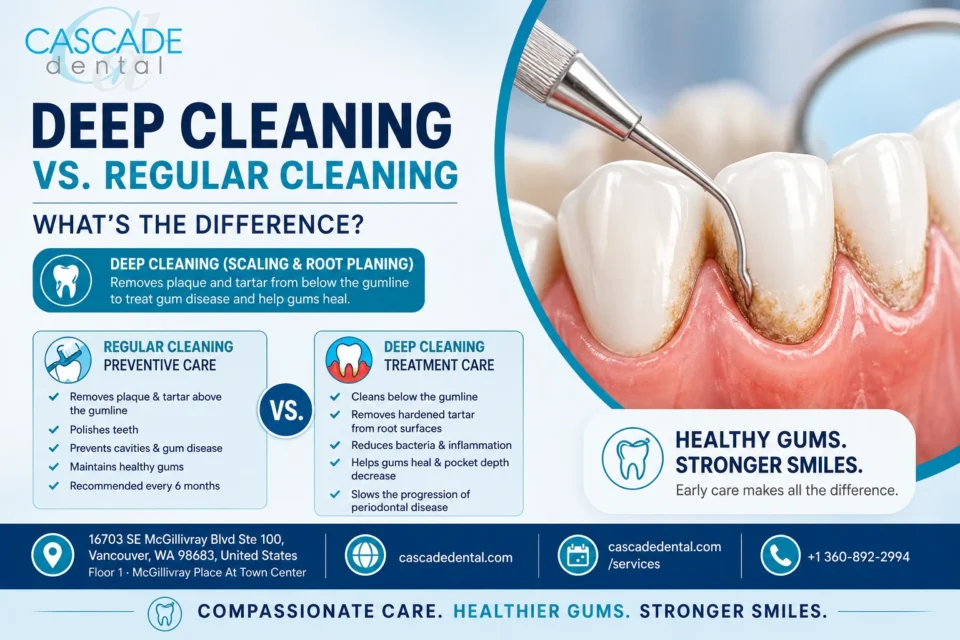
A deep cleaning at the dentist, also called scaling and root planing, is a non-surgical treatment used to manage gum…
Why should children be monitored more carefully?
Children may not understand that their lips or cheeks remain numb after dental treatment.
Some repeatedly bite, chew, or touch the affected area because the sensation feels unfamiliar.
This can cause tissue injuries that become noticeable only after anesthesia wears off.
A parent or caregiver should supervise the child until normal sensation returns.
Follow the child’s dentist’s instructions regarding eating, drinking, and activity after treatment.
What Foods and Drinks Should You Avoid Until Feeling Returns?
Why are hot drinks a concern?
Hot coffee, tea, soup, and other heated foods can cause burns when normal temperature sensation is reduced.
A numb mouth may not recognize that food or liquid is excessively hot.
Wait until sensation returns before consuming hot items.
Even after numbness resolves, begin with moderate temperatures if the treated tooth feels sensitive.
Which foods are difficult to eat while numb?
Foods that require forceful chewing create additional risks.
Avoid crunchy, chewy, sticky, or hard foods until normal sensation returns.
Examples include nuts, hard candy, tough meats, and chewy snacks.
These foods require precise control of your cheeks, tongue, and jaw.
You may accidentally bite soft tissues or place unnecessary pressure on the newly treated area.
What can you eat once your mouth feels normal?
After sensation returns, many patients can resume eating according to their dentist’s instructions.
Soft foods may feel more comfortable initially.
Examples include yogurt, scrambled eggs, oatmeal that has cooled sufficiently, and soft pasta.
The filling material and treatment details may influence whether additional eating restrictions apply.
Follow the specific instructions provided by your dental team.
Can You Make Dental Numbness Wear Off Faster?
Is there a reliable home remedy?
There is no dependable home method that immediately reverses routine dental numbness.
The anesthetic must gradually wear off as your body processes the medication.
Drinking extra water, chewing gum, or repeatedly moving your mouth has not been established as a reliable way to eliminate numbness quickly.
Avoid vigorous rubbing or massaging of numb tissues because you may injure an area without noticing discomfort.
The safest approach is usually to allow time for sensation to return.
Can your dentist reverse the numbness?
A prescription medication used by dental professionals can shorten soft tissue numbness from certain local anesthetics in selected situations.
However, reversal medication is not necessary or appropriate for every patient.
Its use depends on the original anesthetic, patient characteristics, and clinical circumstances.
It should not be confused with a home remedy.
If prolonged numbness has caused difficulties during previous visits, ask your dentist whether any changes to the anesthetic plan would be appropriate in the future.
When Is Prolonged Numbness a Concern?
Is numbness lasting five or six hours abnormal?
Not always.
Some local anesthetic formulations and nerve blocks can produce effects lasting longer than the commonly expected two-to-four-hour period.
The meaning of prolonged numbness depends on which medication was used, where it was injected, and whether sensation is gradually returning.
If your dentist expected several hours of numbness and the area is steadily improving, the experience may still be consistent with the planned anesthesia.
However, do not assume that every extended period of numbness is normal.
Contact your dentist if recovery exceeds the timeframe you were given.
What if numbness remains the next day?
Persistent numbness into the following day deserves prompt discussion with your dentist, particularly if there has been little or no improvement.
Occasionally, altered sensation may be related to nerve irritation or injury rather than simply the continuing action of an anesthetic.
This is uncommon, and persistent numbness does not automatically indicate permanent damage.
Nevertheless, evaluation may be needed to determine the cause.
Your dentist may ask about the exact location, whether symptoms are changing, and whether you also experience tingling, weakness, or pain.
Early communication helps establish an appropriate follow-up plan.
When Should You Call Your Dentist?
Which symptoms deserve a follow-up call?
Contact your dentist when numbness lasts longer than expected, fails to improve, or produces unusual symptoms.
You should also report persistent tingling, altered sensation, unexpected swelling, or increasing discomfort.
Other reasons to call include significant pain after the anesthetic wears off or difficulty biting normally.
If numbness is accompanied by sudden facial weakness, speech difficulty, or other neurological symptoms, seek emergency medical assessment rather than assuming the anesthetic is responsible.
Trouble breathing or swelling of the tongue or throat also requires immediate emergency care.
What information should you provide?
When contacting the office, explain:
- When your filling appointment ended.
- Which tooth or side was treated.
- Which areas remain numb.
- Whether sensation has improved.
- Whether you have pain, swelling, tingling, or weakness.
- Whether you received additional anesthetic injections.
These details help the dental team understand your symptoms and recommend the appropriate next step.
What Should You Expect Once the Numbness Wears Off?
Is mild sensitivity normal after a filling?
Some patients notice temporary sensitivity after dental filling treatment.
The tooth may respond to cold foods, pressure, or temperature changes while the surrounding tissues recover.
Sensitivity can vary depending on the size and depth of the filling.
Mild symptoms may gradually improve.
However, worsening pain, spontaneous throbbing, or sensitivity that persists should be evaluated.
A dentist can determine whether the restoration, bite, or underlying tooth requires attention.
What if your bite feels uneven?
Once normal sensation returns, pay attention to how your teeth meet when you close your mouth.
A new filling that contacts the opposing tooth too early may feel unusually high.
This can cause discomfort when chewing or biting.
Contact your dentist if the filling seems to interfere with your normal bite.
An adjustment may be appropriate after an examination.
Do not attempt to file or reshape the filling yourself.
How should you care for the treated tooth?
Continue brushing with fluoride toothpaste and cleaning between your teeth as recommended.
Follow any specific aftercare instructions given during your appointment.
Avoid chewing hard foods on a tender tooth until you know what feels comfortable.
If you are unsure whether symptoms are related to the filling or another dental concern, an examination can help clarify the cause.
FAQs
How long does Novocaine last after a filling?
The term Novocaine is often used casually to describe dental numbing injections, although dentists commonly use other local anesthetics today. Numbness often lasts a few hours, but the duration depends on the specific medication and injection technique.
Why is my lip still numb but my tooth feels normal?
Different tissues can regain sensation at different times. Soft tissue numbness in the lips or cheeks may continue after the tooth itself begins feeling normal. Contact your dentist if sensation does not return within the expected period.
Can I drink water after a filling while numb?
Small amounts of cool or room-temperature water may be manageable if you can swallow normally. Drink carefully and avoid hot liquids. If your lips or tongue remain significantly numb, waiting until sensation returns is safer.
Is tingling normal when dental anesthesia wears off?
Temporary tingling can occur as sensation returns. It should generally improve as the anesthetic effect resolves. Persistent or worsening tingling should be discussed with your dentist.
Why does my jaw feel strange after a filling?
Local anesthetic injections can affect sensation in nearby tissues, making the jaw or surrounding area feel unfamiliar. Keeping your mouth open during treatment can also contribute to temporary muscle soreness. Persistent pain or other unusual symptoms warrant evaluation.
What should I do if my mouth is still numb after eight hours?
Contact your dental office for advice, particularly if you were told to expect a shorter duration or sensation has not improved. The dentist can review the anesthetic used and determine whether further evaluation is necessary.
Get Answers About Your Filling Recovery With Cascade Dental
Dental numbness after a filling is usually temporary, but recovery time varies depending on the anesthetic and individual response.
At Cascade Dental, we help patients understand what to expect before and after restorative dental treatment.
We encourage patients to ask questions about numbness, eating safely, sensitivity, and symptoms that may require follow-up care.
If you recently received a filling and are uncertain whether your symptoms are expected, we can discuss your concerns and help determine the next appropriate step.
Learn more about our tooth fillings and dental exams.
We also welcome patients from Fisher’s Landing and surrounding Vancouver communities.
Contact Cascade Dental if you have questions about recovery after your filling or need an evaluation for persistent discomfort.
Key Takeaways
Dental numbness after a filling commonly lasts approximately two to four hours, although some anesthetics may work longer. Duration depends on medication type, injection location, dosage, and individual response.
While numb, avoid chewing and hot foods or drinks to prevent accidental bites and burns. Tingling may occur as sensation gradually returns.
Contact your dentist if numbness lasts longer than expected, does not improve, or occurs with unusual symptoms. Once feeling returns, mild sensitivity may occur, but worsening pain or an uneven bite should be evaluated.
Worried your dental numbness is lasting too long?
Don't ignore your concerns. Call our dental team for trusted guidance and care!