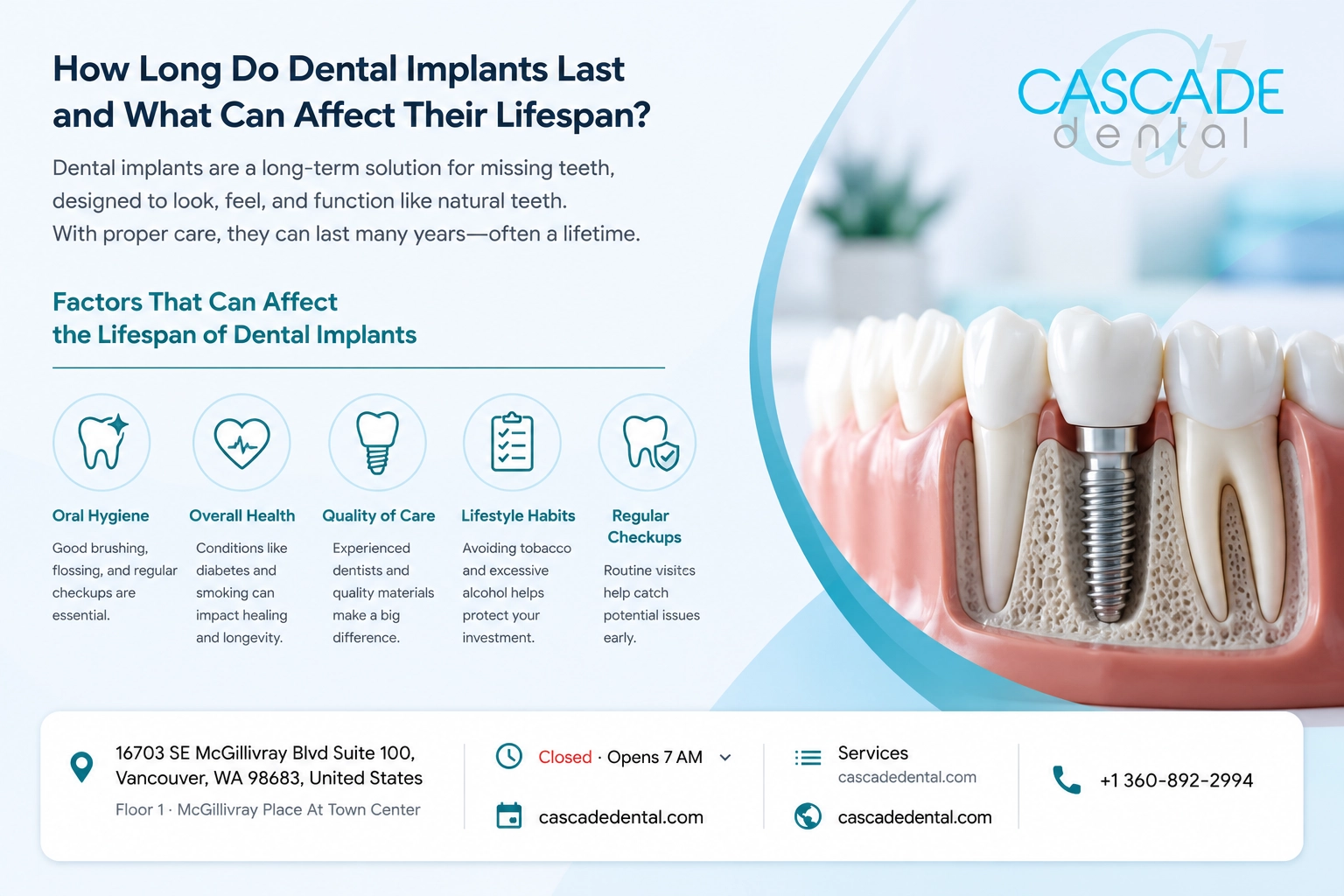
Dental implants can last for decades when properly placed and maintained. Many implants remain successful for 20 years or longer, while some patients keep them for a lifetime with good oral hygiene and regular dental care.
The overall dental implant lifespan depends on several factors, including bone health, gum condition, lifestyle habits, and maintenance routines. Understanding what affects implant longevity helps patients protect their investment and reduce the risk of future complications or replacement procedures.
Need Long-Lasting Dental Implants?
Get trusted implant solutions designed for comfort, strength, and confidence.
Can Dental Implants Last a Lifetime?
Yes. In some cases, dental implants can last a lifetime if the implant remains healthy and surrounding tissues stay stable.
For many patients, the confidence boost from dental implants can be just as meaningful as their long-term functional benefits.
However, lifetime success depends heavily on patient habits and oral health.
Bone Support Plays a Major Role
Healthy jawbone support is critical for implant stability.
Bone loss around the implant can weaken support over time.
Conditions that may affect bone health include:
- Gum disease
- Smoking
- Poor oral hygiene
- Uncontrolled diabetes
Maintaining healthy bone structure improves long-term implant survival.
Daily Care Matters
Patients who maintain strong oral hygiene often experience better implant outcomes.
Important habits include:
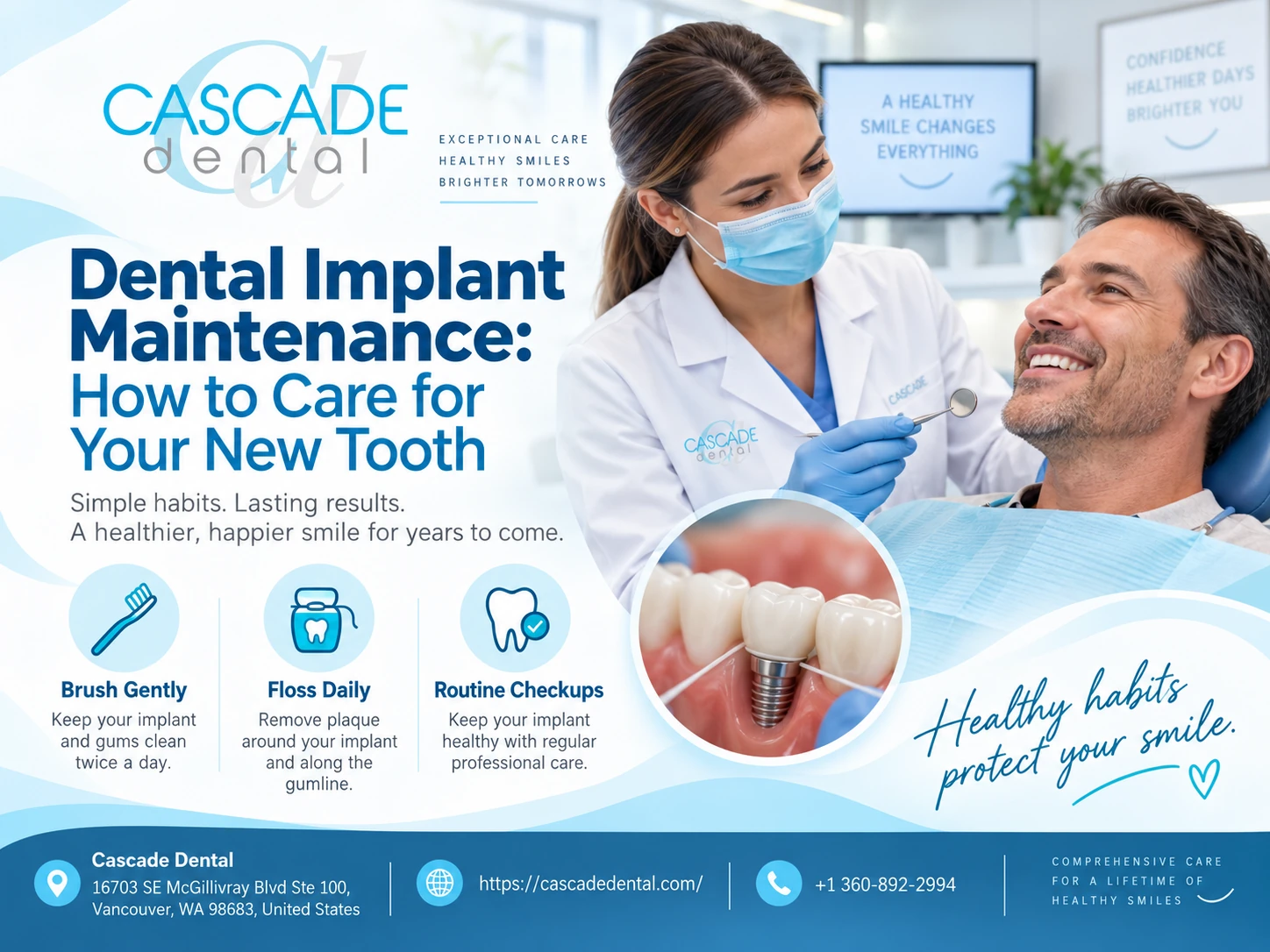
- Brushing twice daily
- Flossing carefully around implants
- Attending regular dental visits
- Avoiding tobacco use
Consistent care reduces inflammation and bacterial buildup.
Bite Pressure Also Affects Longevity
Grinding or clenching teeth can place excessive force on implants.
Over time, excessive pressure may damage:
- Implant components
- Crowns
- Supporting bone
Night guards may help protect implants in patients who grind their teeth.
Not Every Implant Lasts Forever
Even well-placed implants may eventually develop complications.
However, many failures are preventable with proper monitoring and maintenance.
What Causes Dental Implants to Fail?
Implant failure can result from infection, poor bone integration, excessive pressure, or underlying health conditions.
Failures may occur shortly after placement or years later.

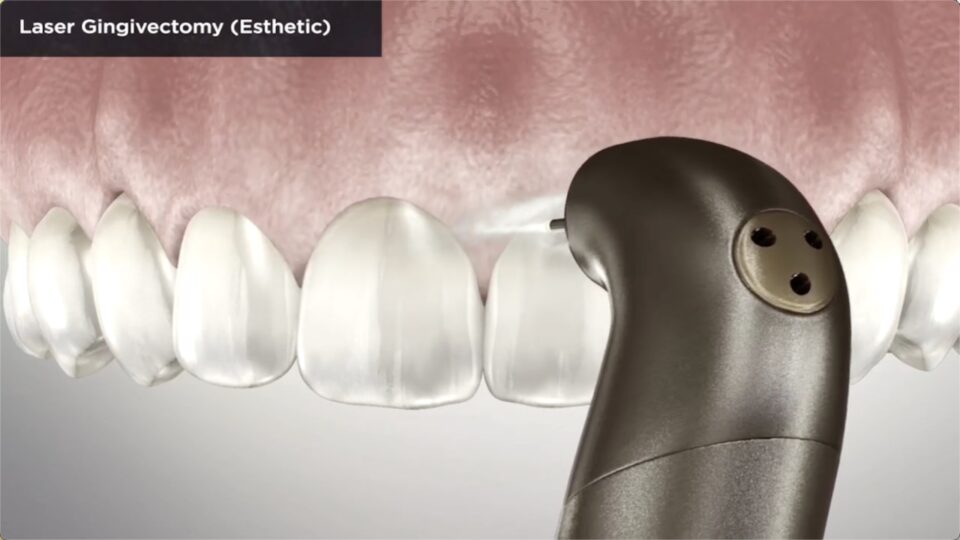
Is Laser Dentistry Better Than Traditional?
What if going to the dentist could be quicker, quieter, and a lot less stressful? That’s exactly what laser dentistry…
Infection Around the Implant
Peri-implantitis is one of the most common causes of implant failure.
This condition involves inflammation and infection around the implant.
Symptoms may include:
- Bleeding gums
- Swelling
- Bone loss
- Implant looseness
- Bad breath
Untreated infection can compromise implant stability.
Poor Osseointegration
Successful implants must bond properly with the jawbone.
Failure to integrate may happen because of:
- Smoking
- Poor bone quality
- Medical conditions
- Premature pressure on the implant
When integration fails, the implant may loosen or fail completely.
Excessive Biting Force
Heavy chewing forces may stress implant components.
This can occur with:
- Teeth grinding
- Misaligned bites
- Poor implant positioning
Excessive force may damage the crown, abutment, or surrounding bone.
Smoking Significantly Increases Risks
Smoking reduces blood flow and slows healing.
Smokers often face increased risks of:
- Infection
- Bone loss
- Delayed healing
- Implant failure
Quitting smoking can improve long-term implant outcomes.
How Do You Maintain Dental Implants for Long-Term Success?
Good oral hygiene and regular professional care are essential for preserving the dental implant lifespan.
Implants still require ongoing maintenance even though they cannot develop cavities like natural teeth.
Brush and Floss Consistently
Plaque can still accumulate around implants.
Patients should clean implants carefully using:
- Soft-bristle toothbrushes
- Implant-safe floss
- Interdental brushes
- Non-abrasive toothpaste
Daily cleaning helps protect the surrounding gums and bone.
Routine Dental Visits Remain Important
Regular dental checkups help detect problems early.
Professional evaluations may include:
- Implant stability checks
- Gum measurements
- X-rays
- Bite analysis
- Professional cleaning
Early intervention can prevent more serious complications.
Avoid Damaging Habits
Certain habits may shorten implant lifespan.
These include:
- Smoking
- Nail biting
- Chewing ice
- Opening objects with teeth
Reducing unnecessary pressure helps protect implant components.
Gum Health Must Stay Stable
Healthy gums support implant longevity.
Even patients with implants can still develop gum disease.
Managing inflammation is critical for long-term success.
Do Dental Implants Wear Out Like Crowns or Dentures?
The implant post itself does not usually wear out, but attached components may eventually need maintenance or replacement.
This is an important distinction for patients considering implants.
Implant Posts Are Highly Durable
Titanium implant posts resist corrosion and normal chewing pressure very well.
They are designed for long-term integration with the jawbone.
Many remain functional for decades.
Crowns May Eventually Require Replacement
The crown attached to the implant experiences regular mechanical wear.
Over time, dental crowns may develop:
- Chips
- Cracks
- Surface wear
- Cosmetic discoloration
Replacing the crown does not necessarily mean the implant has failed.
Dentures and Implants Function Differently
Traditional dentures rest on top of the gums and may loosen over time.
Implants anchor directly into the jawbone, which often provides:
- Better stability
- Improved chewing function
- Reduced bone loss
- Longer-term support
For patients dealing with missing teeth, general dentistry for tooth loss restoration can also help identify appropriate options for rebuilding oral function and appearance.
This contributes to the strong reputation of dental implants for durability.
Maintenance Still Matters
Even durable implants can develop complications if neglected.
Routine care helps extend both implant and crown longevity.
Does Age Affect the Lifespan of Dental Implants?
Age alone does not usually prevent implants from lasting successfully.
Overall health and bone quality matter more than age itself.
Older Adults Can Still Be Excellent Candidates
Many older patients successfully receive implants with long-lasting results.
Healthy seniors often benefit from implants because they provide:
- Better chewing ability
- Improved comfort
- Increased stability
- Better confidence
Age itself is rarely the deciding factor.
Bone Density Matters More Than Age
Adequate jawbone support is critical.
Bone loss from missing teeth or osteoporosis may affect treatment planning.
Some patients may require:
- Bone grafting
- Additional imaging
- Specialized evaluation
Strong bone support improves implant success rates.
Medical Conditions May Influence Healing
Certain health conditions can affect implant longevity.
These may include:
- Diabetes
- Autoimmune disorders
- Osteoporosis
- Smoking-related complications
Controlled medical conditions often allow successful treatment.
Younger Patients May Need Long-Term Monitoring
Younger implant patients may keep their restorations for many decades.
This increases the likelihood that crowns or components may eventually need maintenance or replacement over time.
How Often Do Dental Implants Need to Be Replaced?
The implant post itself may never need replacement, but crowns and other components sometimes require maintenance throughout the years.
Replacement frequency varies from patient to patient.
Implant Posts Often Remain Permanent
If the implant stays healthy and integrated, replacement may never become necessary.
Long-term success depends on:
- Bone stability
- Gum health
- Proper hygiene
- Bite balance
Crowns May Require Replacement After Years of Use
Implant crowns may eventually wear down from daily function.
Some crowns last:
- 10 to 15 years
- Longer with excellent care
Replacement often involves only the visible restoration rather than the implant itself.
Early Intervention Reduces Complications
Small issues are easier to manage when identified early.
Regular monitoring helps detect:
- Bone changes
- Gum inflammation
- Crown wear
- Bite pressure problems
Prompt care may extend the overall dental implant lifespan significantly.
What Warning Signs Could Indicate an Implant Problem?
A healthy dental implant should generally feel comfortable and stable once treatment and healing are complete.
If something changes, it is better to have the implant evaluated early rather than waiting for the problem to become more severe.
Contact your dental team if you notice:
- Persistent pain or tenderness around the implant
- Swelling or redness in the surrounding gums
- Bleeding around the implant, especially if it continues
- Pus or an unusual taste around the implant area
- Gum recession that exposes more of the implant or restoration
- A crown, abutment, or implant that feels loose
- New discomfort when biting or chewing
- Difficulty chewing normally
- A noticeable change in the way your teeth come together
Inflammation and progressive bone loss around an implant can be associated with peri-implantitis, which may threaten implant stability when left untreated.
Not every symptom means that the implant itself is failing. For example, sometimes a crown or another component may loosen while the implant remains integrated with the bone. A dental examination is needed to determine exactly what is happening.
What Is The Average Failure Rate For Dental Implants Over Time?
While dental implants boast a high success rate, they are not infallible. Studies indicate that dental implants have an average success rate of around 95% over ten years. This means that about 5% of implants may fail within this period. However, the failure rate can vary based on the factors mentioned earlier, such as patient health, oral hygiene, and lifestyle choices.
Early implant failure, occurring within the first few months post-surgery, is often due to issues with the initial healing and osseointegration process. Factors such as surgical technique, implant placement, and immediate post-operative care can influence early success. Late implant failure, occurring after the implant has successfully integrated, is typically related to long-term factors such as oral hygiene, gum disease, or mechanical stress.
It’s important to note that while some implants may fail, many patients experience successful, long-lasting results. The success rates and durability of dental implants are still being improved by developments in dental technology and procedures.
When taken care of appropriately, dental implants can offer a long-lasting and attractive replacement for lost teeth. A number of variables, including the dentist’s expertise, the caliber of the materials, the patient’s lifestyle, and general health, affect how long implants last. It’s crucial to get routine dental exams to keep an eye on the condition of the implants and to quickly address any problems.
While certain conditions and habits can shorten the lifespan of implants, the overall success rate remains high, offering patients a reliable option for tooth replacement. By understanding these factors, patients can take proactive steps to ensure their dental implants last for many years. Patients in Vancouver WA who want a lasting tooth replacement option often benefit from staying consistent with checkups and home care after treatment.
FAQs
How long do dental implants last on average?
Many dental implants remain functional for decades. Long-term studies have reported high implant survival rates at 10, 15, and 20 years, although individual results depend on oral health, general health, lifestyle, bite forces, and maintenance.
Do dental implants need to be replaced?
The implant post does not automatically need replacement after a certain number of years. If it remains healthy and securely integrated with the bone, it may stay in place for decades or potentially for life. The crown attached to the implant is more likely to require replacement because it experiences normal wear.
How often do implant crowns need to be replaced?
There is no exact replacement schedule. The lifespan of an implant crown depends on its material, location in the mouth, bite forces, grinding habits, oral hygiene, and other factors. Some crowns function well for many years before replacement becomes necessary.
Can you get gum disease around a dental implant?
Inflammatory diseases can develop in the tissues around implants. Peri-implant mucositis affects the soft tissue, while peri-implantitis involves inflammation accompanied by progressive supporting bone loss. Maintaining good plaque control and receiving professional dental care are important preventive measures.
Can dental implants get cavities?
The implant and implant crown cannot decay in the same way natural tooth enamel does. However, that does not mean they can be neglected. Plaque can still collect around the implant and contribute to inflammation or disease in the surrounding gums and bone.
Is bleeding around a dental implant normal?
Occasional minor irritation can occur, but persistent or recurring bleeding around an implant should be evaluated. Bleeding, swelling, tenderness, or other changes can indicate inflammation around the implant.
What happens if my dental implant feels loose?
A loose implant restoration should be examined promptly. Sometimes the crown or abutment may be loose rather than the implant itself. Because it can be difficult to tell the difference at home, avoid chewing heavily on the area and contact your dental team for an evaluation.
Should I floss around a dental implant?
Yes. Daily cleaning between teeth and around implant restorations is important for controlling plaque. Depending on the design of your restoration, your dental team may recommend traditional floss, an interdental brush, a floss threader, or a water flosser.
Does smoking shorten the lifespan of dental implants?
Smoking is associated with lower implant survival and a greater risk of complications involving the tissues around implants. Avoiding tobacco is one of the most meaningful lifestyle choices patients can make to support long-term implant health.
How can I make my dental implant last as long as possible?
Focus on the habits you can control: brush thoroughly twice a day, clean between your teeth daily, avoid tobacco, wear a nightguard if prescribed, avoid chewing extremely hard objects, keep your gums healthy, and maintain the dental examination and cleaning schedule recommended by your dentist.
With careful home care and ongoing professional maintenance, a well-integrated dental implant has the potential to serve you comfortably for many years and, in some cases, for a lifetime.
Final Thoughts
The overall dental implant lifespan depends on oral hygiene, gum health, bone support, lifestyle habits, and long-term professional care.
While many dental implants can last 20 years or longer, crowns and other components may eventually require maintenance or replacement.
Smoking, infection, excessive bite pressure, and poor oral hygiene can shorten implant longevity significantly. Routine dental visits and consistent home care remain critical for preventing complications.
Patients who maintain healthy gums and follow professional recommendations often experience excellent long-term results with dental implants and improved overall oral function.
Long-Term Implant Success Starts With Proper Care
At Cascade Dental, we believe successful implant treatment involves more than simply replacing missing teeth. Our team focuses on long-term oral health, careful planning, and ongoing maintenance to help patients protect their investment for many years.
Whether you are researching how long do dental implants last or considering treatment for the first time, we are committed to providing personalized care and honest guidance. We help patients understand how daily habits, gum health, and preventive care all contribute to long-lasting implant success.
Thinking About Dental Implants?
Find out how long they last and what you can do to maintain them. Call today.