
When a tooth is damaged by decay, cracks, or wear, dentists usually recommend either a dental crown or a filling based on how much healthy tooth structure remains. Fillings repair smaller areas of damage, while crowns protect teeth that are weakened, cracked, or no longer strong enough for normal chewing pressure.
The right option depends on tooth strength, cavity size, bite force, fracture risk, and long-term durability. Understanding how dentists compare these factors can help patients feel more confident when reviewing treatment recommendations.
Cracked Tooth or Cavity? Get the Right Treatment Fast.
Our dental team can determine whether you need a filling or crown and help prevent further damage with professional care you can trust.
Fast Answer: Crown vs Filling
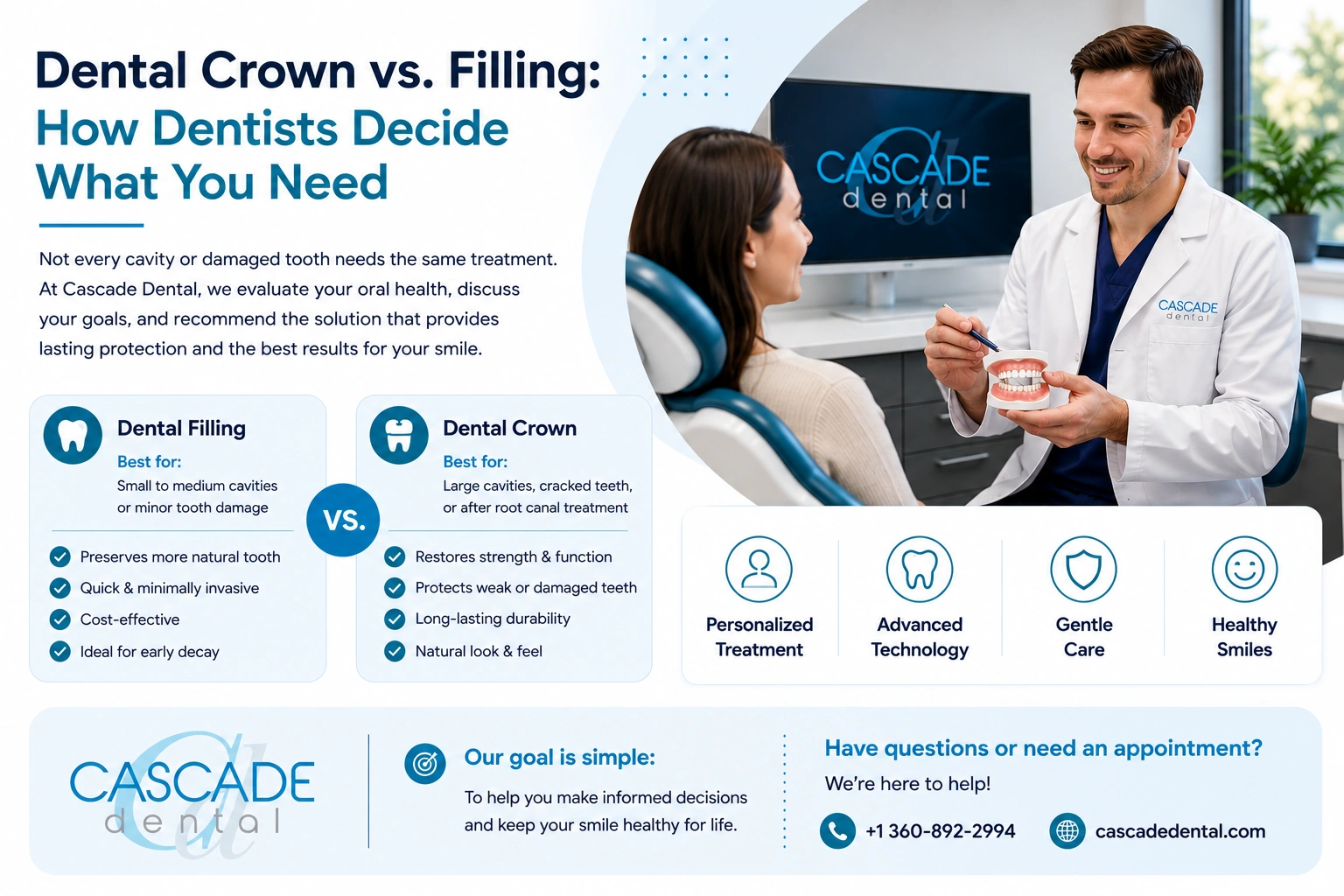
A filling is used when tooth damage is small to moderate and enough natural structure remains to support the repair. A crown is used when the tooth needs stronger protection because it has lost significant structure or is at risk of breaking.
Both treatments restore function, protect the tooth, and help prevent further damage. The difference is how much support the tooth needs.
What a Filling Does
A filling replaces decayed or damaged tooth material.
Dentists commonly recommend fillings for:
- Small cavities
- Minor chips
- Limited enamel damage
- Early decay
- Smaller worn areas
Fillings are designed to preserve as much natural tooth structure as possible.
What a Crown Does
A crown covers the visible portion of the tooth.
Dentists may recommend crowns for:
- Large cavities
- Cracked teeth
- Severely worn teeth
- Teeth with large old fillings
- Teeth treated with root canals
Crowns provide more coverage and reinforcement than fillings. Modern crowns are no longer just repairs for severely damaged teeth; they can also help restore strength, function, and protection when a tooth is at increased risk of fracture.
When a Filling Works
A filling works best when the tooth is still structurally stable.
Dentists usually choose fillings when damage is limited and the remaining tooth can handle everyday biting and chewing forces.
Small to Moderate Cavities
Fillings are commonly used for cavities that have not destroyed a large portion of the tooth.
After removing decay, the dentist places filling material to restore shape and function. This helps stop the cavity from spreading while keeping the treatment conservative.
Enough Healthy Tooth Remains
A filling needs surrounding tooth structure for support.
If the remaining enamel and dentin are strong, a filling may provide reliable protection. If too much structure is missing, the filling may place extra stress on the tooth.
Minor Chips or Wear
Small chips or worn areas may also be repaired with filling material.
This is often appropriate when the damage does not affect the strength of the tooth or create a high fracture risk.
Conservative Treatment Goals
Dentists often prefer the most conservative option that can still protect the tooth properly.
When a filling can restore the tooth safely, it may be recommended before considering a crown.

Why Do My Teeth Look Longer Than They Used To?
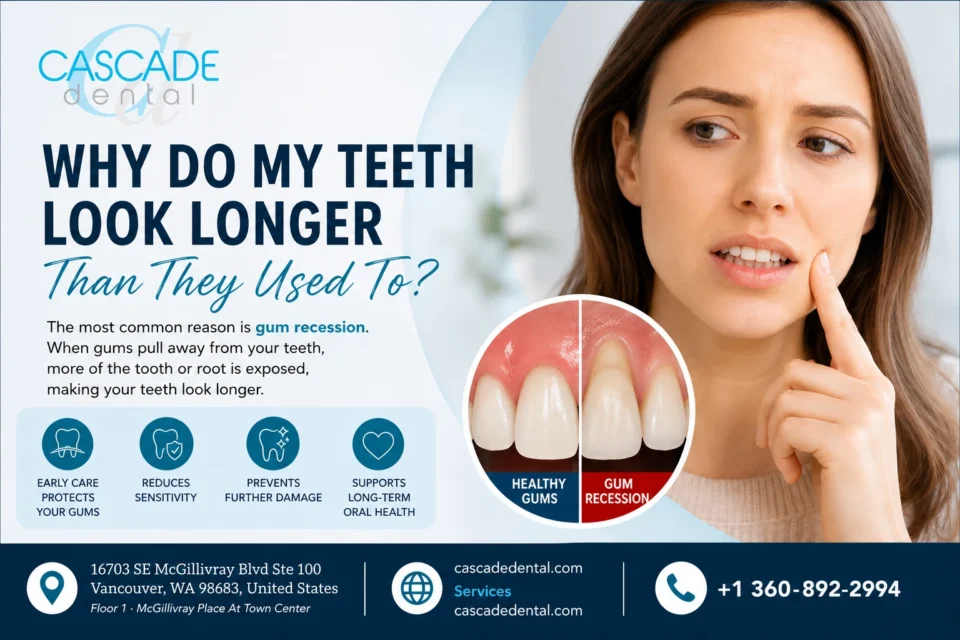
If your teeth look longer than they used to, the most common reason is gum recession. Your teeth are not…
When a Crown Is Needed
A crown is needed when a tooth requires more protection than a filling can provide.
Crowns are often recommended when the tooth is weakened, cracked, heavily restored, or exposed to strong bite pressure.
Large Cavities
Large cavities can remove too much natural tooth structure.
When this happens, a filling may not provide enough support. A crown helps cover and protect the tooth, reducing the risk of future cracking.
Cracked or Fractured Teeth
Cracks can weaken a tooth even if the damage is not immediately visible.
A crown may help hold the tooth together and prevent the crack from spreading during chewing.
Large Old Fillings
Older fillings can wear down, leak, or weaken over time.
If a tooth already has a large filling and develops new damage, replacing it with another filling may not be the strongest option. A crown may provide better long-term stability.
Teeth After Root Canal Treatment
Teeth that have had root canal treatment often need crowns, especially back teeth.
Because these teeth may become more fragile, a crown helps protect them from fracture during normal chewing.
Tooth Damage Factors
Dentists consider several factors before deciding between a crown and a filling.
The recommendation is based on the full condition of the tooth, not just one visible cavity.
Amount of Healthy Tooth Structure
The more healthy structure that remains, the more likely a filling may work.
If the tooth has lost a cusp, has deep decay, or has thin remaining walls, a crown may be safer.
Cavity Size and Depth
Small cavities are usually treated with fillings.
Deep or wide cavities may require crowns because the tooth may no longer have enough strength to support a filling under pressure.
Tooth Location
Back teeth handle more chewing force than front teeth.
Molars and premolars may need stronger protection when they are heavily damaged because they absorb more pressure during eating.
Bite Pressure and Grinding
Patients who clench or grind their teeth place extra stress on restorations.
A large filling may not last as long under heavy bite pressure. A crown may be recommended when durability is a concern.
Crack Risk
Dentists look for visible cracks, symptoms when biting, and weakened areas around old restorations.
If the tooth is at risk of splitting, a crown may offer better protection.
Long-Term Durability
A filling may be simpler, but it is not always the strongest long-term choice.
Dentists compare the risk of future breakage, repeat treatment, and tooth loss when recommending care.
What Happens Next
After the exam, the dentist explains which option is more appropriate and why.
Patients may also be shown X-rays, photos, or clinical findings to help them understand the recommendation.
Diagnostic Exam
The dentist checks the tooth carefully for decay, cracks, wear, and structural weakness.
This may include:
- Visual examination
- Digital X-rays
- Bite testing
- Review of symptoms
- Evaluation of old restorations
These steps help confirm whether the tooth can support a filling or needs crown protection.
Treatment Recommendation
If the damage is limited, the dentist may recommend a filling.
If the tooth is weakened or at risk of fracture, a crown may be recommended instead.
The goal is to choose the option that protects the tooth while preserving as much healthy structure as possible.
Patient Discussion
Patients should feel comfortable asking:
- How much healthy tooth remains?
- Is the tooth cracked?
- Will a filling be strong enough?
- Why is a crown recommended?
- What happens if treatment is delayed?
Clear answers help patients make informed decisions.
Follow-Up Care
After treatment, good oral hygiene and routine dental visits help protect the restoration.
Patients who grind their teeth may also need a nightguard to reduce pressure and extend the life of the filling or crown.
Why Patients Choose Cascade Dental
AtCascade Dental, we focus on helping patients understand why a particular restoration may be recommended instead of simply presenting treatment options without explanation.
We evaluate tooth structure, bite patterns, fracture risk, and long-term durability before recommending crowns or fillings. Our goal is to preserve healthy tooth structure whenever possible while reducing the risk of future complications.
We also believe patients should feel informed and comfortable before making treatment decisions. Whether a tooth needs a small filling or a protective crown, we explain the reasoning clearly and answer questions honestly.
Patients visiting Cascade Dental receive individualized care designed around long-term oral health rather than one-size-fits-all recommendations.
Dental Crown or Filling — Which Is Right for You?
Every tooth is different. Speak with an experienced dentist for a personalized treatment plan that restores your comfort and confidence.