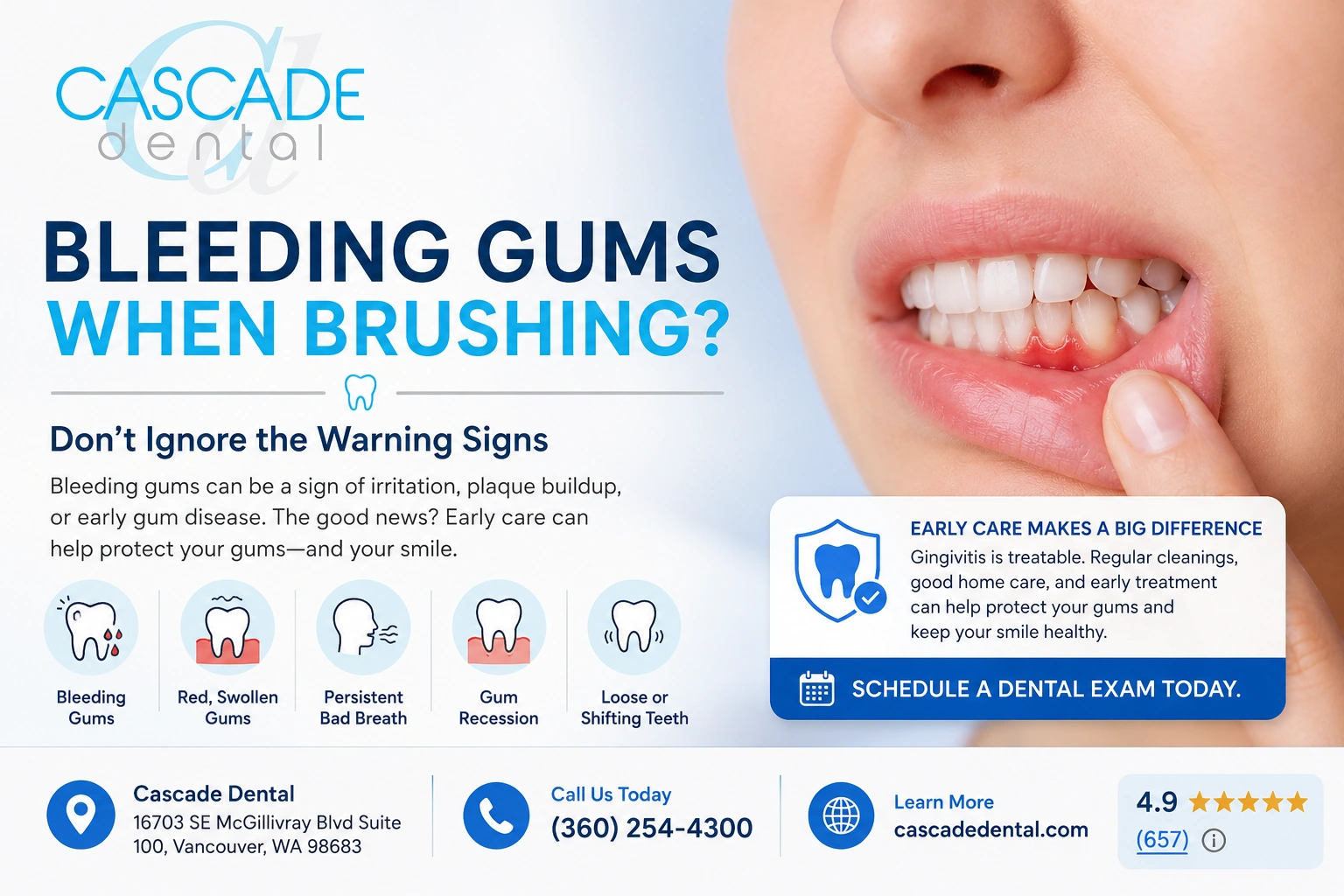
Bleeding gums when brushing are common, but they are not something to ignore. A little bleeding once may happen if you brushed too hard, started flossing again after a long break, or irritated one small area.
Repeated bleeding is different. If your gums bleed often, bleed easily, or feel swollen and tender, it may be an early sign of gum disease.
Gum disease often begins with plaque buildup along the gumline. In the early stage, called gingivitis, the gums can become red, swollen, tender, and more likely to bleed. The good news is that early gum inflammation can often be improved with better home care and a professional dental cleaning.
The risk is waiting too long. Untreated gum disease can progress and affect the tissues and bone that support your teeth.
If your gums bleed when brushing for more than several days, or if bleeding comes with bad breath, gum recession, loose teeth, swelling, or pain while chewing, schedule a dental exam.
Seeing Blood When You Brush?
Don’t wait for the symptoms to get worse. Let our dental team take a closer look.
Fast Answer: Why Do Gums Bleed When You Brush?
Gums usually bleed because they are irritated or inflamed. Common causes include brushing too hard, using a hard-bristled toothbrush, flossing inconsistently, or having plaque and tartar buildup near the gumline.
A small irritated spot may settle down quickly. Repeated bleeding is different. If your gums bleed easily or often, especially with redness, swelling, tenderness, or persistent bad breath, it may be a sign of gingivitis or more advanced gum disease.
A dentist can check whether the bleeding is caused by brushing technique, plaque buildup, gum inflammation, medication-related bleeding, or another oral health issue.
Common Causes of Bleeding Gums When Brushing
Bleeding gums do not always mean you have advanced gum disease. Several everyday issues can make your gums bleed.
Brushing Too Hard
Your gums are delicate. Scrubbing with too much pressure or using a firm toothbrush can irritate the gum tissue and cause bleeding.
A soft-bristled toothbrush and gentle circular motions are usually better than aggressive back-and-forth scrubbing. If your toothbrush bristles look flattened or frayed quickly, you may be brushing harder than you realize.
Inconsistent Flossing
However, bleeding should not continue indefinitely. If your gums keep bleeding after you have been flossing gently and consistently, plaque buildup or gum inflammation may be part of the problem. Understanding why gums bleed after flossing can also help you recognize when the issue is temporary irritation and when it may be time to have your gums checked by a dentist.
Plaque and Tartar Buildup
Plaque is a sticky film of bacteria that forms on your teeth. When plaque is not removed well, it can collect along the gumline and harden into tartar. Tartar cannot be removed with brushing and flossing at home. It needs to be cleaned away by a dental professional.
As plaque and tartar build up, the gums can become inflamed and bleed more easily. A professional teeth cleaning can remove buildup from areas that are difficult to fully clean at home.
Gingivitis
Gingivitis is the early stage of gum disease. It often causes gums to bleed easily, look red or swollen, feel tender, or contribute to bad breath. The American Dental Association notes that gingivitis is reversible at this stage with proper care.
This is why bleeding gums are worth checking early. A simple dental exam and cleaning may help stop the problem before it becomes more serious.
Medication, Health, or Hormonal Changes
Some medications, health conditions, and hormonal changes can make gums more sensitive or more likely to bleed. Pregnancy, certain medical conditions, and medications that affect bleeding may also play a role.
Your dentist may ask about your medical history and medications during your visit. This helps them understand whether the bleeding is mostly from plaque buildup, gum disease, brushing habits, or another factor.

Questions to Ask Before Booking a Dentist
Booking a dentist appointment sounds simple, but asking the right questions first can save you time, money, and stress. Before…
When Bleeding Gums May Be a Sign of Gum Disease
Bleeding gums are more concerning when the bleeding is frequent, easy to trigger, or paired with other gum symptoms.
Look for patterns, not just one moment of bleeding. Gum disease is more likely when bleeding happens repeatedly or appears with other symptoms.
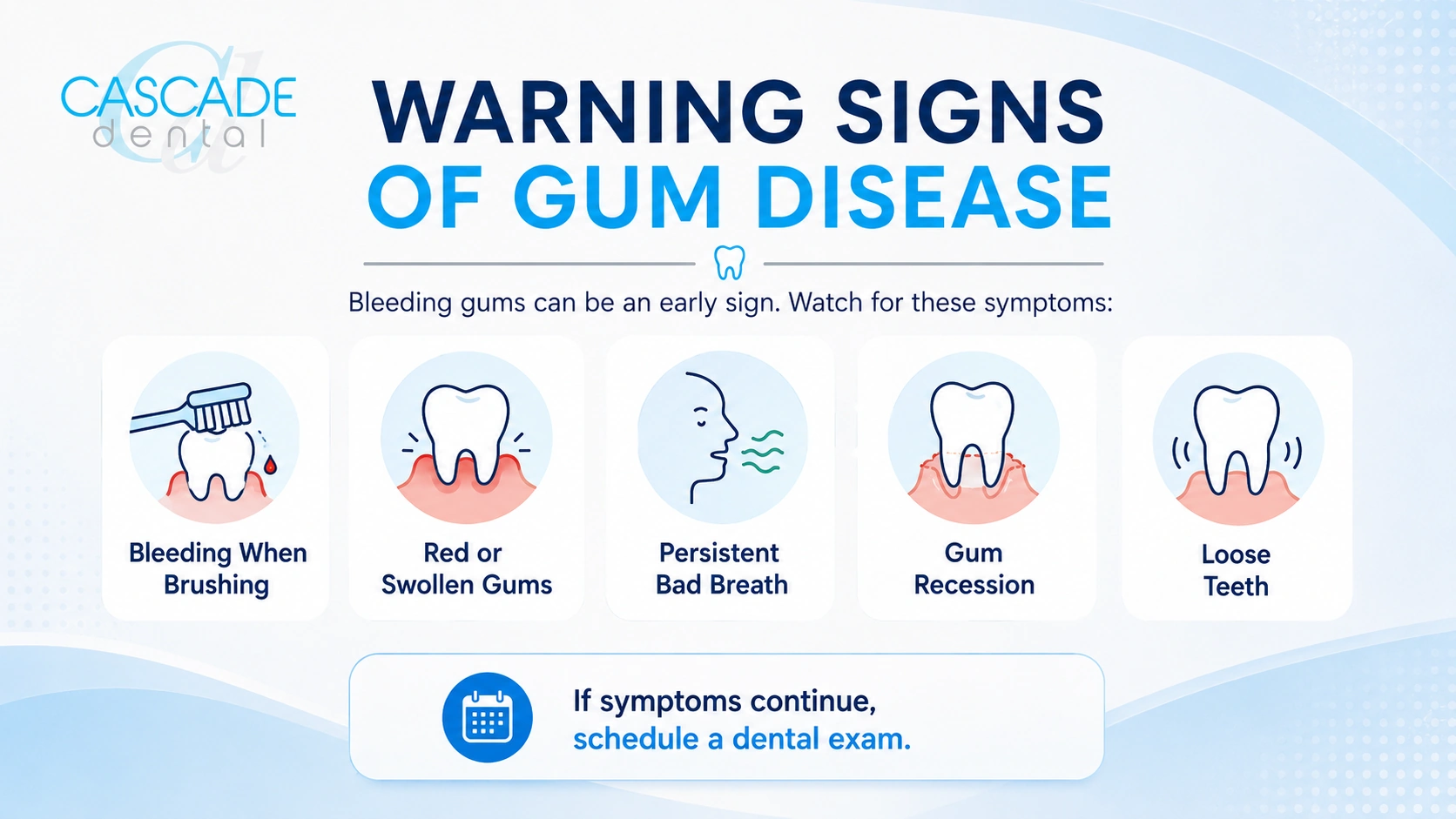
Possible signs of gum disease include:
- Gums that bleed when brushing, flossing, or eating firm foods
- Red, swollen, or tender gums
- Persistent bad breath
- Gums that appear to be pulling away from the teeth
- Teeth that look longer because of gum recession
- Pain when chewing
- Loose or shifting teeth
- A change in how your bite feels
The American Academy of Periodontology lists bleeding while brushing, flossing, or eating hard foods as a warning sign of gum disease, along with gum recession, loose teeth, persistent bad breath, and bite changes.
The key difference is pattern. A one-time spot of blood after brushing too hard is usually less concerning than gums that bleed repeatedly or seem inflamed most days. If gum disease is present, your dentist may recommend gum disease treatment to help protect the gums and supporting bone around your teeth.
Gingivitis vs. Periodontitis: What Is the Difference?
Gingivitis and periodontitis are both forms of gum disease, but they are not the same.
Gingivitis is the earlier and milder stage. The gums are inflamed, but the deeper structures supporting the teeth have not been seriously damaged. With good home care and regular professional cleaning, gingivitis can often be reversed.
Periodontitis is more advanced. At this stage, ongoing inflammation and infection can affect the tissues and bone that hold the teeth in place. The National Institute of Dental and Craniofacial Research explains that untreated periodontal disease can spread to the bone around the gums and may eventually lead to loose teeth or tooth removal in severe cases.
This does not mean every case of bleeding gums is severe. It means bleeding gums are an early clue worth taking seriously.
What a Dentist Checks During an Exam for Bleeding Gums
If you schedule a dental exam for bleeding gums, your dentist is not just looking at the blood. They are checking what is causing the bleeding and whether gum disease is present.
During the visit, they may evaluate:
- Where the gums are bleeding
- Whether the gums are red, swollen, or tender
- How much plaque or tartar is present
- Whether the spaces, or pockets, between the teeth and gums are deeper than expected
- Signs of gum recession
- Loose teeth or bite changes
- Existing restorations that may trap plaque
- Whether X-rays are needed to check bone support
This exam helps separate simple irritation from early gum disease or more advanced periodontal concerns.
A routine dental exam can also catch issues before they become painful. Gum disease can be quiet at first, so waiting for major pain is not the best way to decide whether you need care.
What You Can Do at Home Before Your Appointment
You should not ignore bleeding gums, but there are safe steps you can take at home while you wait for your dental visit.
Use a soft-bristled toothbrush and brush gently along the gumline. Avoid scrubbing. Brush for about two minutes, twice a day, and clean between your teeth daily.
Do not stop brushing near the gumline because of bleeding. Gentle cleaning is still important unless your dentist gives you different instructions.
If flossing makes your gums bleed, continue gently unless your dentist has told you otherwise. Bleeding may improve as inflammation decreases and your gums get used to regular cleaning. But if bleeding continues, schedule an exam instead of trying to treat it on your own.
You can also look for patterns. Does one spot bleed every time? Do your gums bleed only when flossing? Are they swollen or tender? This information can help your dental team understand what is happening.
Avoid trying to scrape tartar off your teeth at home. Tartar removal requires professional instruments and training. Trying to remove it yourself can injure your gums or damage enamel.
When to Schedule a Dental Visit for Bleeding Gums
Schedule a dental exam if your gums bleed repeatedly, even if the bleeding seems minor. It is especially important to call a dentist if bleeding comes with swelling, tenderness, bad breath, gum recession, loose teeth, or pain when chewing.
You should also schedule a visit if:
- Bleeding continues for more than a week with gentle brushing and flossing
- Your gums bleed every time you brush
- You see blood when eating crunchy or firm foods
- Your gums look puffy, shiny, or dark red
- You have not had a dental cleaning in six months or longer
- You are concerned about gum disease
Early care is usually simpler than waiting until symptoms become more serious. A dental exam can confirm whether you need a routine cleaning, home-care changes, periodontal evaluation, or gum disease treatment.
Bleeding Gums in Vancouver, WA: Why Local Dental Care Matters
For patients in Vancouver, WA, bleeding gums are a good reason to schedule a local dental exam before the issue progresses. Gum irritation can be affected by daily habits, missed cleanings, tobacco use, medical conditions, dry mouth, and plaque buildup that needs professional attention.
If you are looking for general dentistry in Vancouver, WA, a local dental team can check your gums, clean areas that are difficult to reach at home, and recommend next steps based on what they see during your exam.
If the bleeding is connected to gum disease, they can guide you toward the right level of periodontal care.
The goal is not to scare you. It is to catch gum inflammation early, protect your teeth, and help your gums stay healthy over time.
FAQs About Bleeding Gums When Brushing
Is it normal for gums to bleed when brushing?
No, gums should not bleed regularly when you brush. A small amount of bleeding may happen if you brush too hard or irritate one area, but frequent bleeding can be a sign of gum inflammation or gum disease.
Do bleeding gums always mean gum disease?
Not always. Bleeding can come from brushing too hard, inconsistent flossing, a new oral care routine, medications, or other health factors.
However, repeated bleeding is one of the common warning signs dentists look for when evaluating gum disease.
Should I stop flossing if my gums bleed?
In most cases, no. Gentle, consistent flossing can help remove plaque between the teeth.
If bleeding continues after you have been flossing regularly, schedule a dental exam to check for buildup, gingivitis, or periodontal disease.
Can gingivitis be reversed?
Gingivitis is the early stage of gum disease and can often be reversed with improved brushing and flossing plus professional dental cleaning.
The sooner it is addressed, the easier it is to control.
When should I see a dentist for bleeding gums?
Schedule a dental visit if your gums bleed repeatedly, bleed when eating firm foods, feel swollen or tender, or if you notice bad breath, gum recession, loose teeth, or changes in your bite.
You should also schedule a visit if bleeding continues even after several days of gentle brushing and flossing.
What will a dentist do for bleeding gums?
A dentist will examine your gums, check for plaque and tartar buildup, look for signs of gum disease, and may measure the spaces between your teeth and gums.
Depending on the findings, they may recommend a cleaning, home-care changes, or periodontal treatment.
Schedule a Dental Exam for Bleeding Gums in Vancouver, WA
Bleeding gums when brushing may be an early sign that your gums need attention. If the bleeding keeps happening, do not wait for pain or loose teeth before getting it checked.
Schedule a dental exam at our Vancouver, WA office to find out what is causing your gums to bleed and what steps may help protect your gum health.
Bleeding Gums When Brushing?
Repeated bleeding may be an early sign of gum disease. Don’t wait too long.