Dental veneers typically last 10 to 15 years for porcelain veneers and around 5 to 7 years for composite veneers, although individual results vary. Their lifespan depends on the material, oral hygiene, bite pressure, and everyday habits.
At Cascade Dental, we help patients understand what to expect from their veneers and how to protect their investment. While veneers can improve the appearance of chipped, stained, or uneven teeth, they are not permanent restorations. Knowing what affects their condition can help you maintain your smile and recognize when professional attention is needed.
Fast Answer: How Long Do Veneers Last?
Porcelain veneers generally last 10 to 15 years, while composite veneers often last approximately 5 to 7 years. Some veneers remain functional longer, particularly when patients maintain good oral health and avoid habits that place excessive pressure on their teeth.
Veneers are thin coverings bonded to the front surfaces of natural teeth. They improve the appearance of teeth affected by discoloration, minor chips, gaps, or irregular shapes.
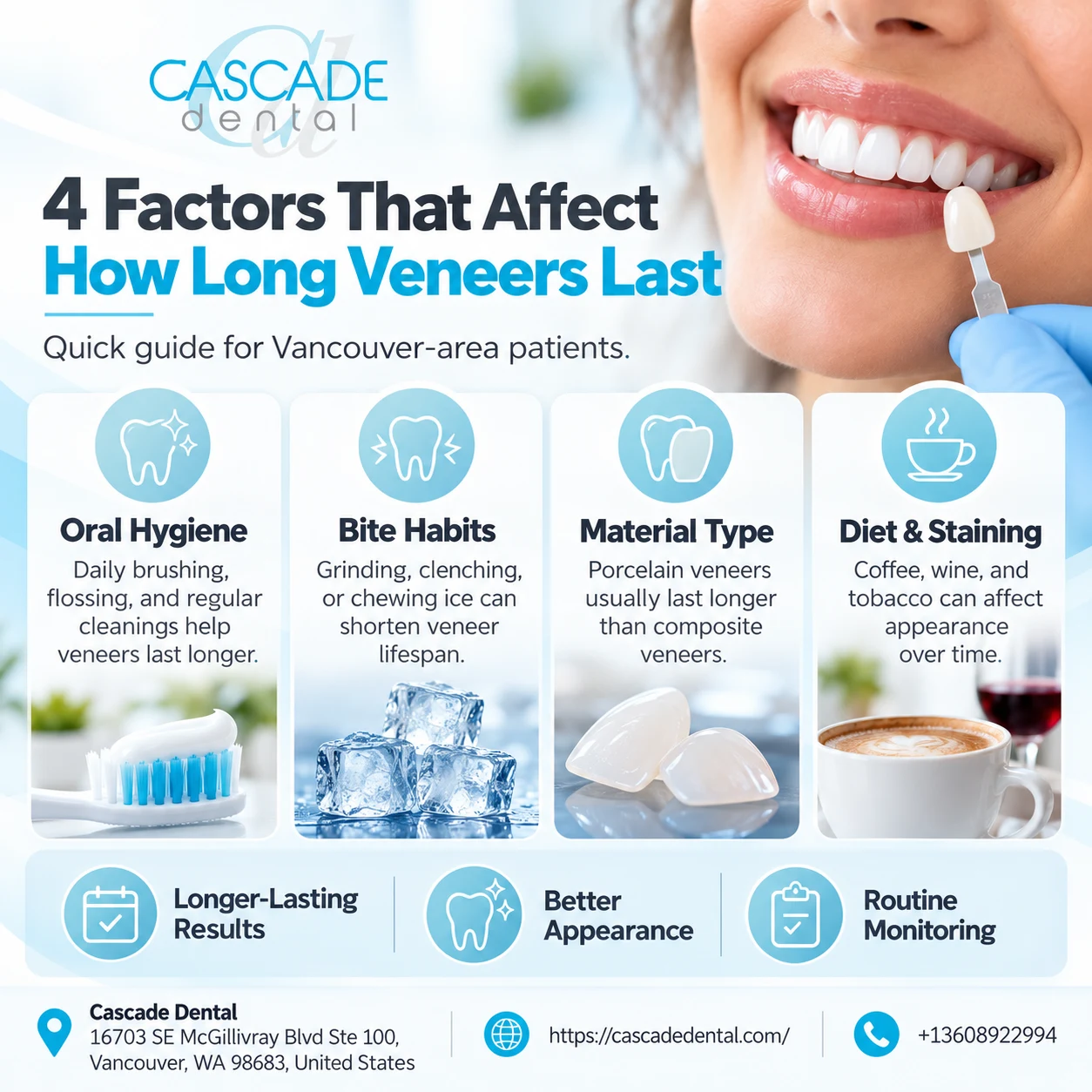
Several factors influence their lifespan, including:
- The type and quality of veneer material
- The condition of the underlying natural teeth
- Daily brushing and flossing habits
- Teeth grinding or clenching
- Dietary habits and exposure to excessive biting forces
- Routine dental examinations and professional cleanings
Although veneers are designed for long-term use, no dentist can guarantee exactly how many years an individual restoration will last.
What Is the Average Lifespan of Dental Veneers?
The average lifespan of dental veneers varies depending on their construction and the conditions inside the mouth.
Porcelain veneers are generally considered a longer-lasting cosmetic option because their ceramic material resists wear and staining. Composite veneers use tooth-colored resin that can be more susceptible to surface wear, discoloration, and minor damage.
However, the material alone does not determine durability.
A porcelain veneer exposed to frequent grinding may fail earlier than expected. Meanwhile, a carefully maintained composite veneer may remain in satisfactory condition beyond its typical lifespan.
It is also important to distinguish between a veneer that remains attached and one that still looks and functions as intended.
A restoration may remain bonded but develop visible discoloration along its edges, surface damage, or changes in appearance that require professional evaluation.
At Cascade Dental, we consider the condition of the veneer and the supporting tooth rather than recommending replacement based solely on its age.
What Factors Affect How Long Veneers Last?
Several everyday and clinical factors influence how well veneers hold up over time.
Oral Hygiene and Gum Health
Veneers cover the front surfaces of teeth, but the natural teeth underneath remain vulnerable to cavities and gum disease.
Inadequate brushing and flossing can allow plaque to accumulate around veneer margins.
Over time, decay or gum inflammation may affect the supporting tooth and compromise the restoration.
Teeth Grinding and Clenching
Bruxism, or teeth grinding, creates repeated pressure on the teeth.
This pressure can contribute to veneer chips, cracks, or loosening.
Patients who grind their teeth during sleep may benefit from a professionally fitted nightguard, depending on their dental evaluation.
Bite Alignment
The way upper and lower teeth meet affects how chewing forces are distributed.
An uneven bite or excessive contact on a veneered tooth can increase stress on the restoration.
Dental evaluations help identify whether bite adjustments or other treatment may be necessary.
Veneer Placement and Bonding
Proper tooth preparation, accurate fitting, and reliable bonding are important to long-term results.
A poorly fitting veneer can create areas where plaque accumulates or where excessive pressure develops.
Natural Changes in Teeth and Gums
Teeth and gums can change over time.
Gum recession, tooth movement, and underlying dental problems may affect how veneers look or fit, even when the veneer material itself remains intact.
Do Porcelain and Composite Veneers Last the Same Amount of Time?
No. Porcelain veneers generally last longer than composite veneers, although both materials have advantages.
| Feature | Porcelain Veneers | Composite Veneers |
| Typical lifespan | 10–15 years | 5–7 years |
| Material | Dental ceramic | Tooth-colored resin |
| Stain resistance | Higher | Lower |
| Wear resistance | Generally higher | More prone to wear |
| Repair options | Often require replacement for significant damage | Minor damage is often repairable |
| Treatment process | Usually laboratory-made | Often applied directly to teeth |
Porcelain Veneers
Porcelain veneers are custom-made ceramic restorations designed to resemble natural tooth enamel.
Their smooth surfaces provide good stain resistance, and their strength makes them suitable for many long-term cosmetic treatments.
However, porcelain can still chip or fracture under excessive force.
Composite Veneers
Composite veneers are made from tooth-colored resin that a dentist can often shape directly onto the teeth.
They may require less extensive preparation in suitable cases and are frequently easier to repair when minor damage occurs.
However, composite resin generally wears and stains more readily than porcelain.
The best material depends on your dental health, cosmetic goals, budget, and bite characteristics.
How Can You Make Veneers Last Longer?
Protecting veneers involves many of the same habits needed to maintain healthy natural teeth.
Brush Twice a Day
Brush with a soft-bristled toothbrush and a nonabrasive fluoride toothpaste.
Gentle brushing helps remove plaque without unnecessarily scratching or wearing the restoration surface.
Floss Every Day
Flossing removes plaque and food particles between teeth and around veneer margins.
These areas are especially important because cavities can still develop in the exposed natural tooth structure.
Address Teeth Grinding
If you regularly clench or grind your teeth, discuss it with your dentist.
A custom nightguard may help reduce damaging forces during sleep.
Protect Your Teeth During Sports
Contact sports and recreational activities can expose teeth to accidental impacts.
A properly fitted sports mouthguard can help protect both natural teeth and dental restorations.
Schedule Regular Dental Visits
Routine appointments allow your dentist to examine veneer edges, evaluate gum health, and identify early signs of damage.
Good daily care and professional monitoring work together to support long-term results.
What Foods and Habits Can Damage Veneers?
Veneers are designed for normal eating, but certain habits place unnecessary stress on their surfaces or bonding.
Hard Foods and Objects
Biting directly into particularly hard foods can place concentrated pressure on the front teeth.
Examples include:
- Ice cubes
- Hard candies
- Unpopped popcorn kernels
- Very hard nuts
- Hard foods bitten forcefully with front teeth
Cutting firm foods into smaller portions and chewing with your back teeth can reduce unnecessary pressure on veneers.
Using Teeth as Tools
Opening packages, tearing tape, or holding objects between your teeth can cause unexpected damage.
Veneers are not designed to withstand these activities.
Nail Biting and Pen Chewing
Repeatedly biting fingernails or chewing pen caps creates concentrated forces that may weaken or chip restorations.
Coffee, Tea, and Other Staining Substances
Porcelain veneers resist staining better than composite veneers, but discoloration can still develop around restoration margins.
Composite veneers are generally more susceptible to surface staining from coffee, tea, tobacco, and other pigmented substances.
You do not necessarily need to eliminate these beverages. Maintaining oral hygiene and attending professional cleanings can help manage surface discoloration.
How Do Teeth Cleanings and Checkups Help Protect Veneers?
Professional dental care helps maintain both the restorations and the natural teeth supporting them.
At Cascade Dental, we focus on identifying potential problems before they lead to more extensive treatment.
During routine examinations, we may evaluate:
- Whether veneers remain securely bonded
- The condition of veneer margins
- Signs of cracks, chips, or unusual wear
- Gum inflammation or recession
- Tooth decay around the restorations
- Changes in bite alignment
Professional cleanings also help remove plaque and tartar that regular brushing cannot eliminate completely.
Dental professionals can select appropriate cleaning instruments and polishing methods for veneer materials.
These visits are particularly valuable because some problems develop gradually without obvious discomfort.
The recommended examination and cleaning schedule depends on your oral health and individual risk factors.
What Are the Signs a Veneer Needs to Be Replaced?
Aging veneers do not automatically require replacement. However, certain changes suggest that a dental examination is necessary.
Visible Cracks or Chips
Small chips may sometimes be repairable, but larger fractures can affect the veneer structure.
A Loose or Detached Veneer
A veneer that moves, feels unstable, or falls off requires professional evaluation.
Avoid attempting to reattach it with household adhesives.
Discoloration Around the Edges
Darkening or staining near the margins can develop from surface changes, bonding deterioration, or underlying dental problems.
Not every dark edge means the veneer has failed, but it should be examined.
Gum Recession
Receding gums may expose previously covered tooth surfaces or make the edges of veneers more noticeable.
New Tooth Sensitivity or Discomfort
Sensitivity, pain when biting, or persistent discomfort may indicate a problem with the veneer or underlying tooth.
These symptoms do not always mean replacement is necessary, but they should not be ignored.
Changes in Appearance
Wear, uneven edges, or differences in color between veneers and neighboring teeth may lead patients to consider cosmetic improvements.
A dental examination can determine whether polishing, repair, or replacement is appropriate.
Can Veneers Be Repaired Instead of Replaced?
Yes. Some veneer problems can be repaired without replacing the entire restoration.
The options depend on the material, severity of damage, and condition of the natural tooth.
Minor Composite Veneer Damage
Small chips or worn areas in composite veneers can often be repaired by adding and polishing new resin material.
This may restore the appearance without requiring complete replacement.
Minor Porcelain Veneer Damage
Certain small porcelain chips may be repairable using specialized bonding techniques.
However, repairs may not provide the same appearance or longevity as an intact restoration.
Larger fractures often require replacement.
Loose Veneers
If a veneer becomes detached but remains undamaged, a dentist may be able to clean, assess, and rebond it.
Rebonding depends on the condition of the veneer, tooth surface, and previous bonding materials.
Do not attempt to glue a loose veneer back onto your tooth yourself.
Improper adhesives can damage dental surfaces and interfere with professional treatment.
What Happens When Veneers Reach the End of Their Lifespan?
When a veneer can no longer function or maintain its intended appearance, your dentist will assess whether replacement is appropriate.
The process generally includes several steps.
1. Examining the Existing Veneer
Your dentist evaluates the restoration, surrounding gums, bite, and underlying tooth.
Any decay or other dental concerns must be addressed before a new restoration is placed.
2. Removing the Old Veneer
The existing veneer is carefully removed using appropriate dental instruments and techniques.
The procedure depends on the original material and bonding condition.
3. Preparing the Tooth
Your dentist examines the remaining tooth structure and determines whether additional preparation is necessary.
Not every replacement requires the same amount of tooth preparation.
4. Creating and Placing a New Veneer
For porcelain veneers, impressions or digital scans may be taken to create a custom replacement.
The finished veneer is checked for fit, appearance, and bite before bonding.
Composite veneers may be built directly onto the prepared tooth when appropriate.
5. Reviewing Long-Term Care
After replacement, your dentist can recommend care practices based on the reason the original veneer failed.
Because many veneer treatments involve removing some natural enamel, replacement is an important long-term consideration before choosing treatment.
FAQs
Can Veneers Last 20 Years?
Yes, some porcelain veneers can last 20 years or longer, but this is not guaranteed. Their longevity depends on the material, oral health, bite forces, and maintenance. Regular dental evaluations help determine whether older veneers remain in good condition.
Are Dental Veneers Permanent?
Veneers are considered long-term restorations, but they do not last forever. Traditional porcelain veneer treatment usually requires some enamel removal, making the treatment generally irreversible. Future repair or replacement may be necessary.
Can You Get Cavities Under Veneers?
Yes. Although veneer material cannot develop cavities, the natural tooth underneath or around its edges can still decay. Brushing, flossing, and routine dental examinations remain essential.
Can Veneers Be Whitened?
Traditional teeth whitening products do not significantly change the underlying color of porcelain or composite veneers. Professional polishing may help remove some surface stains. If the veneer color no longer matches surrounding teeth, replacement may be considered.
What Should I Do If My Veneer Falls Off?
Keep the detached veneer in a clean container and contact your dentist. Avoid chewing on the affected tooth and do not use household glue to reattach the veneer. A dentist can determine whether rebonding or replacement is needed.
Keep Your Veneers Looking Their Best With Cascade Dental
Dental veneers can provide years of cosmetic improvement, but their longevity depends on more than the material alone. Healthy teeth and gums, consistent home care, and regular dental visits all contribute to how well veneers perform over time.
At Cascade Dental, we help patients make informed decisions about their cosmetic dental care. Whether you are considering veneers for the first time, have concerns about an existing restoration, or want to know whether older veneers need replacement, our team can evaluate your teeth and discuss appropriate options.
We can also help identify habits or dental conditions that may affect veneer longevity, including grinding, gum changes, and uneven bite pressure.
Schedule a consultation with Cascade Dental to discuss your veneers, review their condition, and learn what steps may help protect your smile for years to come.