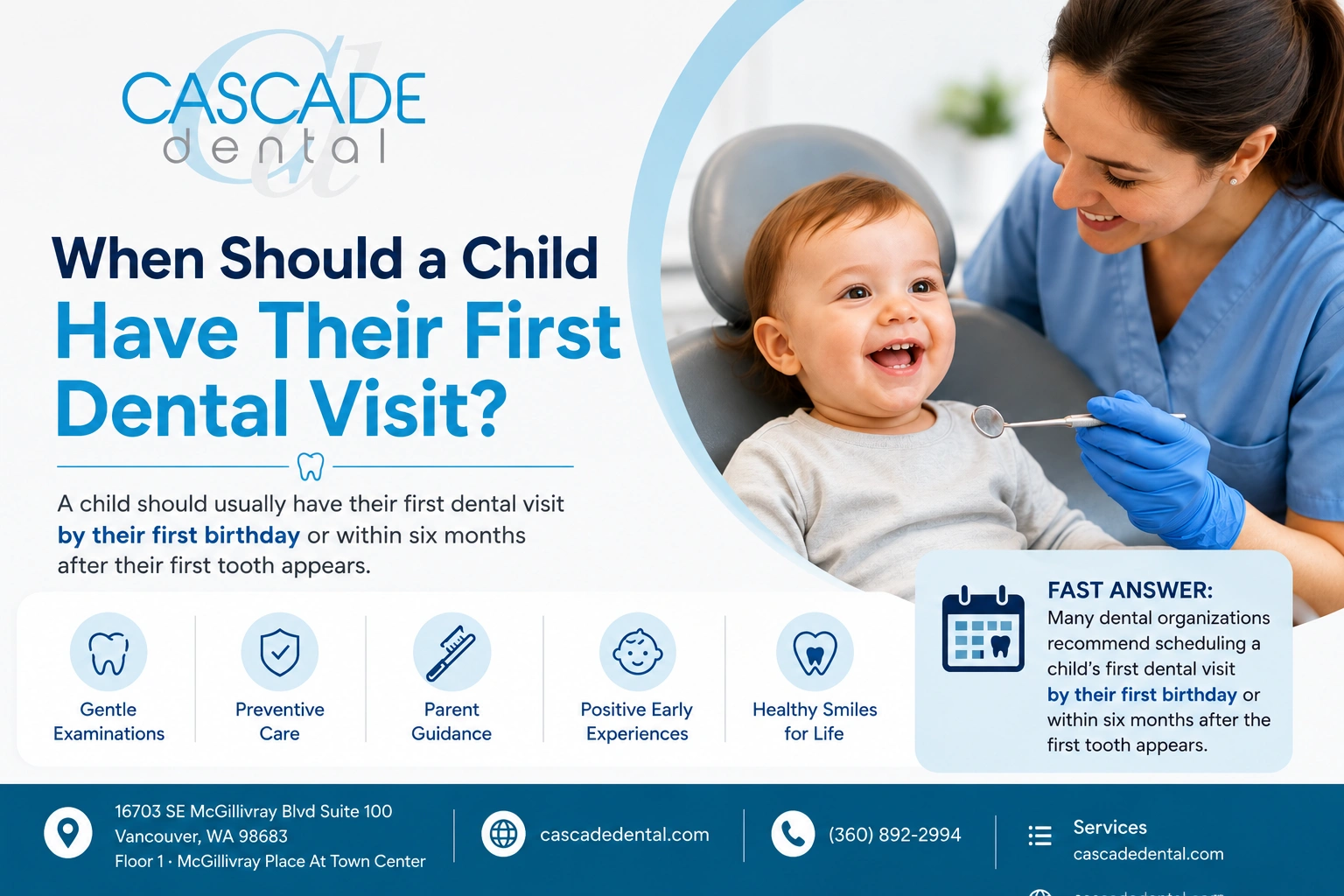
A child should usually have their first dental visit by their first birthday or within six months after their first tooth appears. Even if your baby only has one or two teeth, an early dental visit helps monitor development, prevent problems, and give parents helpful guidance.
These first appointments are typically gentle, educational, and focused on prevention. They also help children become comfortable with dental care from a young age, which can support positive dental experiences in the future.
Many parents wonder if it is too early to visit the dentist when only a few teeth have erupted. In reality, early dental care plays an important role in helping children develop healthy habits and supporting long-term oral health.
Understanding the recommended timing for a child’s first dental visit can help parents feel more confident about taking this important step.
Is it time for your child's first dental visit?
Give your child a healthy start with gentle, stress-free dental care. Call today to schedule their first appointment.
Fast Answer: When Should a Child First See a Dentist?
Many dental organizations recommend scheduling a child’s first dental visit by their first birthday or within six months after the first tooth appears.
Even if your child only has one or two teeth, those teeth can benefit from professional monitoring and preventive care. Early visits allow dental professionals to evaluate oral development and answer questions before concerns become larger issues.
One common misconception is that parents should wait until all baby teeth have erupted before scheduling an appointment. In reality, waiting that long may delay opportunities to identify concerns early and establish healthy oral care routines.
Baby teeth may be temporary, but they play an important role in chewing, speaking, and guiding permanent teeth into their proper positions. Monitoring them from an early age helps support healthy development.
What Happens During a Child’s First Dental Visit?
Many parents feel nervous about their child’s first appointment, but these visits are typically gentle, educational, and designed to help children feel comfortable.
During a first dental visit, parents and children can generally expect:
A Gentle Examination
The dentist will examine the teeth, gums, jaw, and mouth to evaluate oral health and development. This examination is usually brief and adapted to the child’s age and comfort level.
Monitoring Oral Development
The dental team may check how teeth are erupting and assess overall growth patterns to ensure development appears healthy.
Discussion About Brushing Habits
Parents often receive guidance on brushing techniques, fluoride recommendations, and age-appropriate oral hygiene practices. Establishing a consistent brushing and bedtime routine can also help children develop healthy habits that support both oral care and their everyday routine.
Feeding and Nutrition Guidance
The dentist may discuss feeding habits, bottle use, snacks, beverages, and other dietary factors that can affect oral health.
Questions About Thumb Sucking or Pacifier Use
Many parents have concerns about thumb sucking, pacifiers, or other habits. The first visit provides an opportunity to discuss these topics and learn what is considered normal during development.
Most importantly, first visits are usually focused on education and prevention rather than treatment. The goal is to help children build positive associations with dental care while giving parents useful information about supporting healthy smiles at home.

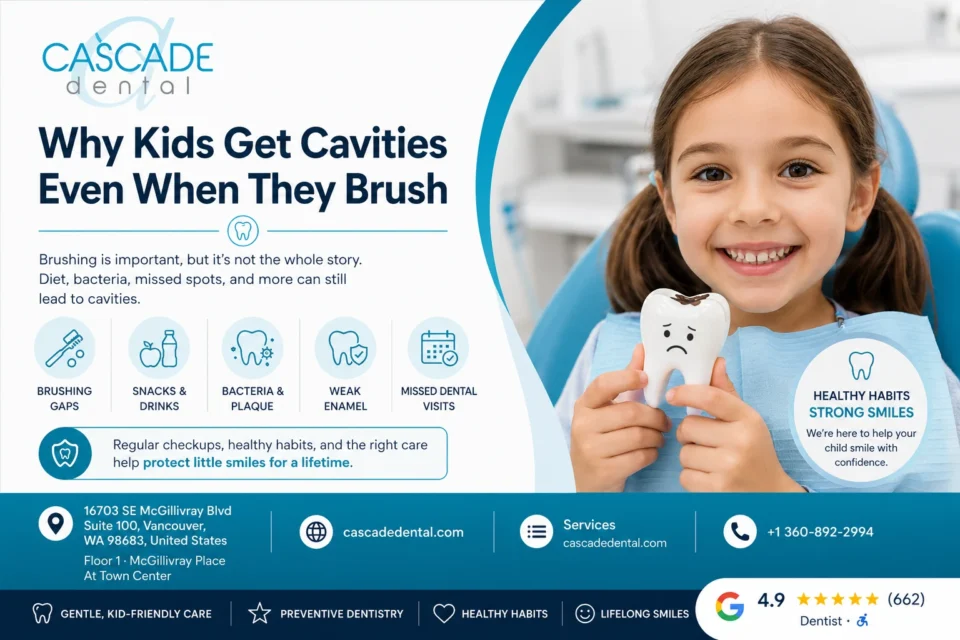
Why Kids Get Cavities Even When They Brush
Many parents feel confused when their child gets a cavity even though they brush every day. It can feel frustrating,…
How to Prepare Your Child for the Dentist
A little preparation can go a long way in helping children feel comfortable during their first dental visit.
Use Positive Language
Talk about the dentist in a friendly and encouraging way. Focus on helping teeth stay healthy rather than discussing fear, pain, or unpleasant experiences.
Read Age-Appropriate Books
Many children’s books introduce dental visits in a fun and reassuring way. Reading together can help your child know what to expect.
Schedule Wisely
Try to book appointments when your child is well-rested and typically in a good mood. Avoid scheduling during nap times whenever possible.
Avoid Using Dental Visits as Punishment
Never use the dentist as a threat or consequence for poor behavior. Children should view dental care as a positive and helpful experience.
Bring Your Questions
Parents often have questions about brushing, teething, thumb sucking, nutrition, fluoride, and cavity prevention. Bringing a list of questions can help you make the most of the visit.
When parents remain calm and supportive, children often feel more relaxed and confident as well.
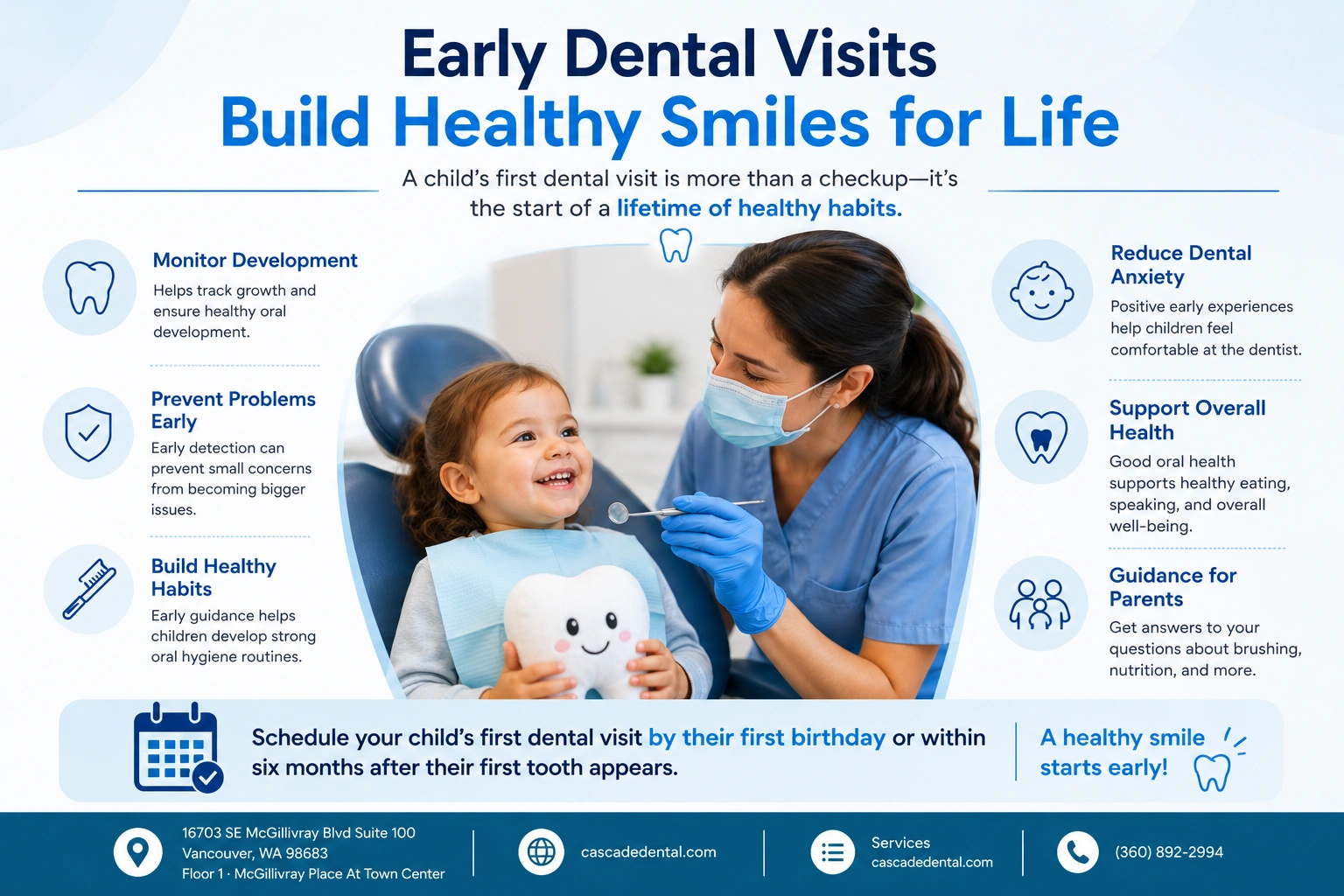
Why Early Dental Visits Help
Early preventive dental care offers several important benefits for growing children.
Monitoring Tooth Development
Regular dental visits allow professionals to monitor how baby teeth emerge and identify developmental concerns early.
Identifying Potential Concerns Early
Some oral health issues can begin before parents notice visible symptoms. Early evaluations can help identify concerns before they become more complicated.
Establishing Healthy Oral Hygiene Habits
Children who start dental visits early often become more familiar with oral care routines and develop positive habits that continue into adulthood.
Reducing Dental Anxiety
Regular exposure to a dental office can help children feel more comfortable and reduce anxiety about future appointments.
Supporting Long-Term Oral Health
Preventive care helps establish a strong foundation for lifelong oral health. Small concerns are often easier to address when identified early.
Parents interested in preventive and comprehensive dental care for children can discuss available services with their dental team during an appointment.
In some situations, early monitoring may also help identify concerns that could eventually require treatment if left unaddressed.
When to Schedule a Dental Visit Sooner
While most children should have their first appointment by age one, certain situations may warrant scheduling a visit sooner.
Parents may want to contact a dental professional if they notice:
Tooth Discoloration
White spots, brown spots, or unusual discoloration may indicate developing concerns that should be evaluated.
Delayed Tooth Eruption
Children develop at different rates, but significant delays in tooth eruption may warrant professional guidance.
Oral Injuries
Falls, bumps, or injuries involving the mouth should be assessed promptly to ensure teeth and surrounding tissues remain healthy.
Signs of Discomfort
If a child appears to be experiencing oral pain, sensitivity, or difficulty eating, a dental evaluation may be appropriate.
Concerns About Cavities
Even young children can develop cavities. Early detection often allows for more conservative treatment approaches.
Feeding-Related Questions
Parents with concerns about bottle feeding, breastfeeding, sippy cups, or nutrition-related oral health issues should not hesitate to seek guidance.
Whenever you have concerns about your child’s oral health, a professional evaluation can provide reassurance and personalized recommendations.
FAQs About a Child’s First Dental Visit
When should my baby first see a dentist?
Most dental organizations recommend scheduling your baby’s first dental appointment by their first birthday or within six months after the first tooth erupts.
Is it necessary to visit a dentist before age one?
Yes. Early visits allow dental professionals to monitor development, provide preventive guidance, and identify concerns before they become more serious.
What happens at a baby’s first dental appointment?
The dentist typically performs a gentle examination of the teeth and gums, discusses oral hygiene and nutrition, and answers parents’ questions about development and preventive care.
How long does a child’s first dental visit take?
Appointment lengths vary, but first visits are generally relatively short and focused on education, prevention, and helping children feel comfortable.
How can I help my child feel comfortable at the dentist?
Use positive language, read books about dental visits, schedule appointments when your child is rested, and remain calm and supportive throughout the experience.
Should I brush my baby’s teeth before the first dental visit?
Yes. Once the first tooth appears, parents can begin brushing gently with a soft, age-appropriate toothbrush. Your dentist can provide guidance on toothpaste amounts, fluoride use, and brushing techniques during the first visit.
What if my child already has a cavity?
If you suspect your child has a cavity, schedule an evaluation as soon as possible. Early assessment allows the dental team to recommend the most appropriate treatment and preventive strategies.
Building Healthy Dental Habits From the Start
A child’s first dental visit is an important milestone that supports healthy development and lifelong oral wellness. Scheduling an appointment by age one helps establish preventive care habits, gives parents access to professional guidance, and allows potential concerns to be identified early.
By creating positive experiences from the beginning, families can help children build confidence around dental care while supporting healthy smiles for years to come.
Ready to schedule your child's first dental checkup?
Early care supports healthy teeth for years to come. Call today and let our experienced team help your family.