Discovering that you have a cavity often leads to a series of questions. One of the most common is, “What type of filling should I get?” While many patients know that fillings are used to repair teeth affected by decay, fewer realize that there are several filling materials available, each with its own advantages and considerations.
Modern dentistry offers more options than ever before, allowing dentists to recommend restorations based on factors such as the size of the cavity, the location of the tooth, durability needs, appearance goals, and overall oral health. Understanding the basics of these materials can help patients feel more informed and confident during conversations with their dental team.
At Cascade Dental, we believe patient education is an important part of preventive and restorative care. This guide explains common tooth filling materials, how dentists determine which option may be appropriate, and when a filling may not be the best solution for restoring a damaged tooth.
Protect Your Tooth Before It Gets Worse
Explore safe, lasting filling options and call now for professional dental care.
Fast Answer: Tooth Filling Materials
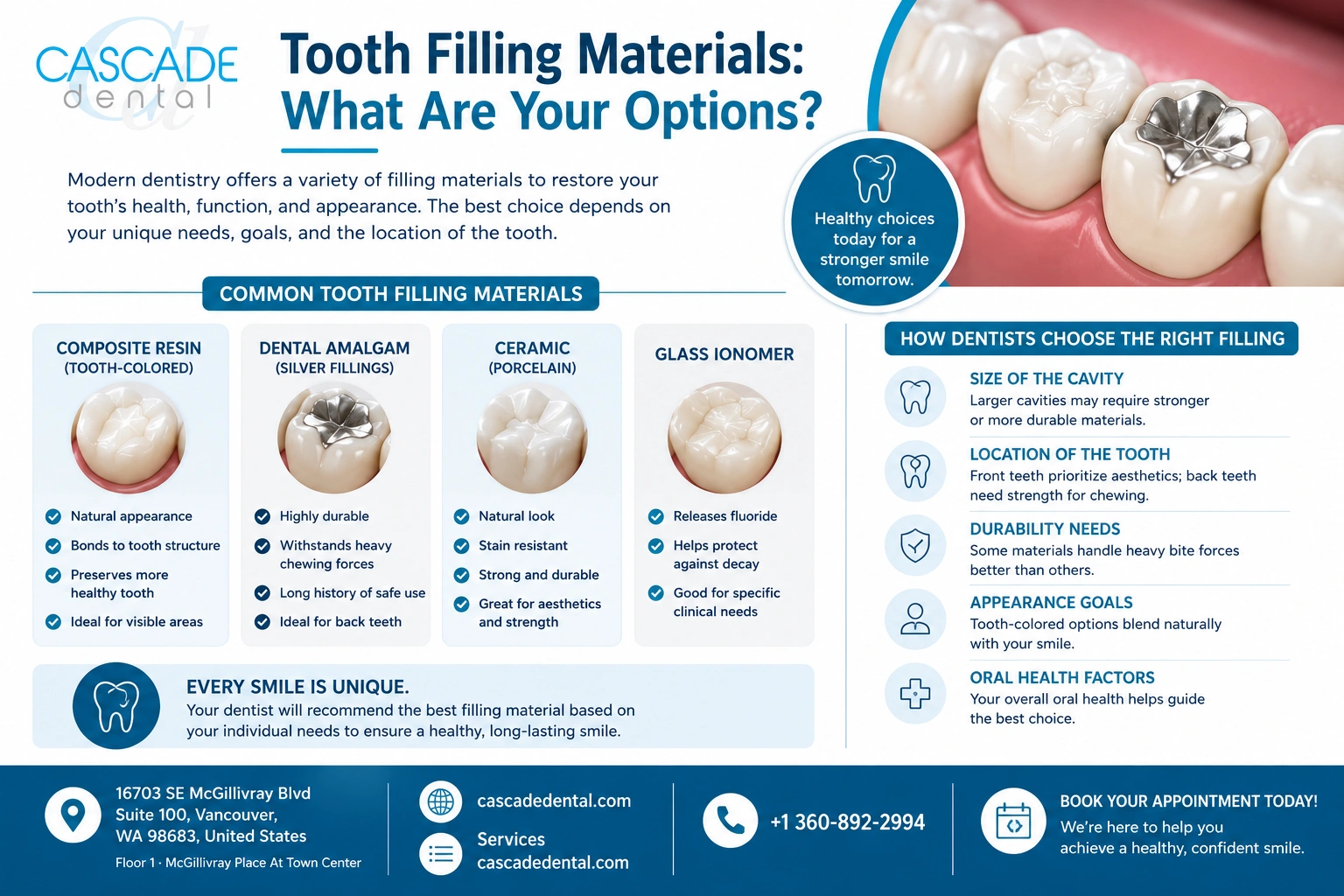
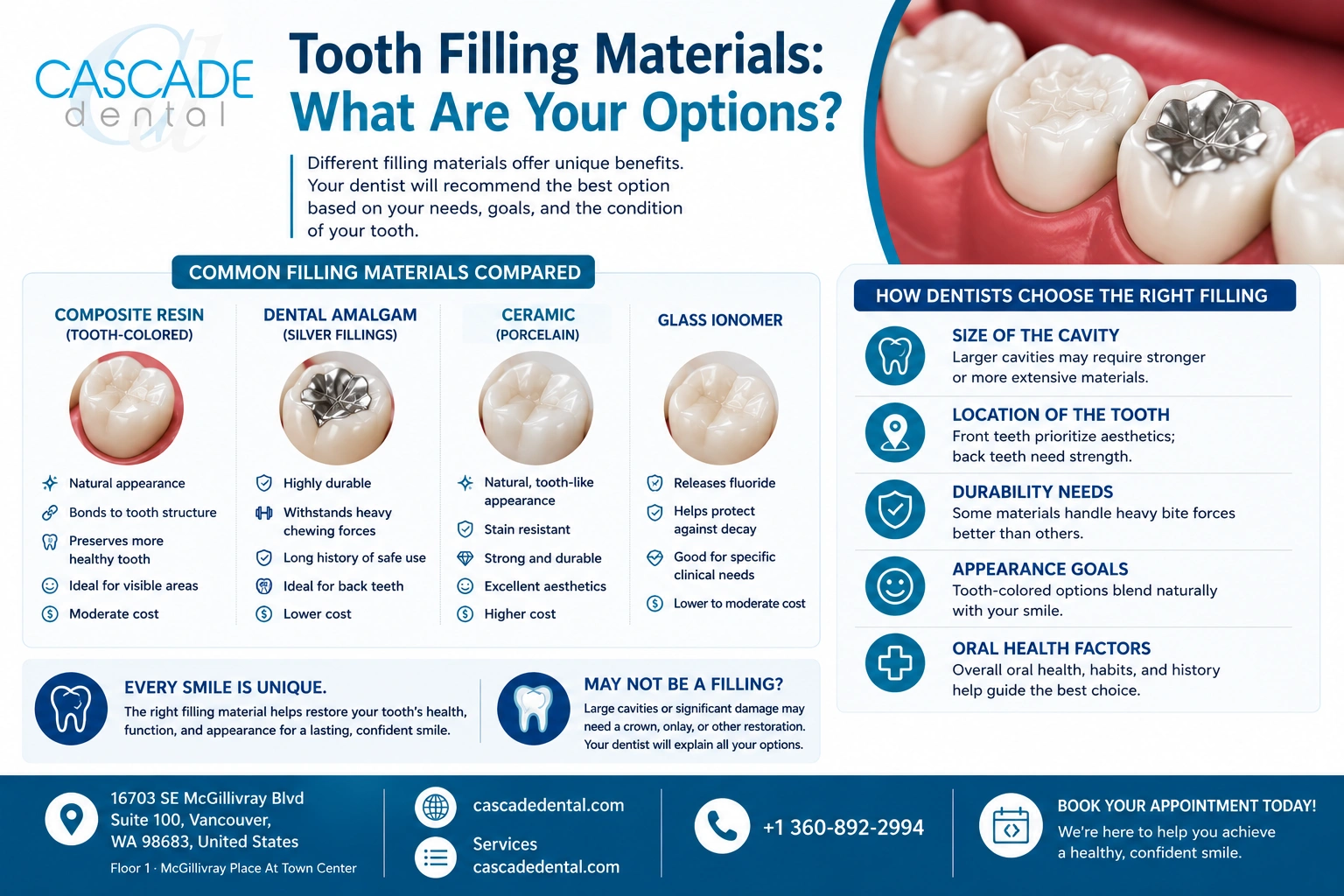
Several materials may be used to restore teeth affected by cavities or minor damage. Common options include composite resin (tooth-colored fillings), dental amalgam, ceramic restorations, and other restorative materials. Each option offers different benefits related to appearance, durability, cost, and placement.
Today, many patients prefer tooth-colored composite fillings because they blend naturally with surrounding teeth. However, the best material depends on the specific condition of the tooth, the size of the restoration, chewing forces, and individual oral health needs.
This article focuses on helping patients understand filling material options. For treatment-specific information, appointment details, and candidacy considerations, visit our dedicated Tooth Fillings service page.
What Are Tooth-Colored Fillings?
When patients ask about filling materials, they are often referring to tooth-colored fillings.
Tooth-colored fillings are typically made from a composite resin material that is carefully matched to the natural shade of the surrounding teeth. Because of their appearance, they have become one of the most popular restorative options in modern dentistry.
How Composite Fillings Blend with Natural Teeth
Unlike silver-colored materials, composite resin is designed to mimic the appearance of natural tooth enamel.
The material can be customized to match the color of nearby teeth, making the restoration much less noticeable when smiling, speaking, or eating.
For many patients, this cosmetic advantage is one of the primary reasons they choose tooth-colored fillings.
Benefits of Composite Resin Fillings
Composite fillings offer several advantages:
- Natural-looking appearance
- Strong bonding to tooth structure
- Preservation of healthy tooth material
- Suitable for many visible areas of the mouth
- Versatility for small and moderate restorations
Because the material bonds directly to the tooth, dentists can often preserve more healthy tooth structure compared to some traditional restorative approaches.
Common Uses for Tooth-Colored Fillings
Composite fillings may be used for:
- Small cavities
- Moderate cavities
- Repairing chipped teeth
- Replacing older restorations
- Cosmetic improvements in certain situations
Every recommendation depends on the specific condition of the tooth and the patient’s individual needs. Understanding what happens if you wait to fill a cavity can also help explain why early treatment is often recommended before decay becomes more extensive.
Other Common Filling Materials
Although composite resin receives much of the attention today, it is not the only filling material available.
Dentists may consider several restorative options depending on the situation.
Dental Amalgam
Dental amalgam has been used for many decades and is known for its durability.
This material consists of a combination of metals and has traditionally been used in areas of the mouth that experience significant chewing pressure.
Potential advantages include:
- Long history of use
- Excellent durability
- Resistance to heavy chewing forces
One consideration is appearance. Because amalgam fillings have a silver color, some patients prefer more natural-looking alternatives when aesthetics are important.
Ceramic Restorations
Ceramic materials may also be used for certain types of restorations.
These restorations are designed to closely resemble natural tooth enamel and are often valued for their:
- Aesthetic appearance
- Stain resistance
- Durability
Ceramic restorations may be recommended in situations where appearance and strength are both priorities.
Glass Ionomer Materials
In some situations, dentists may use glass ionomer materials.
These restorations release fluoride over time, which may provide additional benefits for certain patients.
While they are not typically used for every type of restoration, they can be useful in specific clinical situations depending on the location and condition of the tooth.
Other Restorative Materials
Dentistry continues to evolve, and additional materials may be considered depending on a patient’s unique needs.
Your dentist will explain the options available and discuss why a particular material may be recommended for your situation.

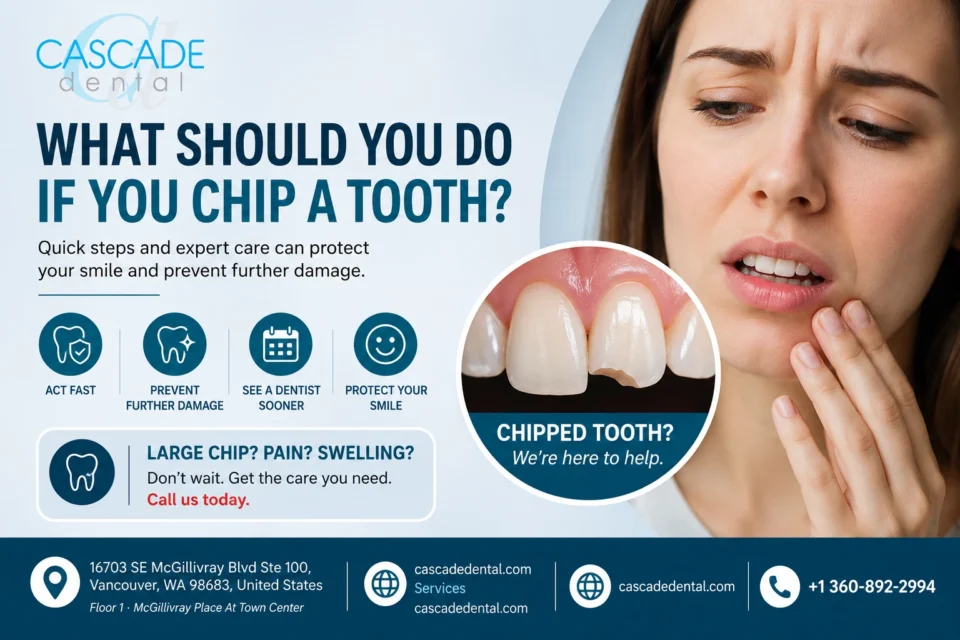
What Should You Do If You Chip a Tooth?
If you chip a tooth, rinse your mouth with warm water, avoid chewing on that side, and contact a dentist…
How Dentists Choose Filling Materials
Many patients assume there is one “best” filling material, but the reality is more nuanced.
Dentists evaluate several factors before recommending a restoration.
Size of the Cavity
The size of the damaged area is often one of the most important considerations.
Smaller cavities may be suitable for a wider range of filling materials, while larger restorations may require different approaches to ensure long-term stability.
The amount of remaining healthy tooth structure helps guide the recommendation.
Location of the Tooth
Where the tooth is located also matters.
Front teeth and highly visible areas often place greater importance on aesthetics, while back teeth may experience stronger chewing forces that influence material selection.
Dentists balance appearance and durability when making recommendations.
Chewing Pressure and Bite Forces
Not all teeth experience the same amount of pressure.
Molars, for example, absorb significant force during chewing. Patients who grind or clench their teeth may also place additional stress on restorations.
Understanding bite forces helps determine which material may perform best over time.
Appearance Goals
Many patients prefer restorations that blend naturally with their smile.
For visible teeth, tooth-colored materials are often a popular choice because they provide a more seamless appearance.
However, aesthetics represent only one part of the decision-making process.
Oral Health History
A patient’s overall oral health can also influence recommendations.
Dentists may consider:
- History of cavities
- Existing restorations
- Gum health
- Bite alignment
- Oral hygiene habits
- Risk factors for future decay
These factors help create a personalized treatment plan rather than a one-size-fits-all solution. For younger patients, understanding why kids get cavities even with regular brushing can also help families identify additional risk factors and improve prevention.
Long-Term Restoration Goals
Every restoration is intended to support both function and oral health.
Your dentist will evaluate which material offers the most appropriate balance of:
- Strength
- Longevity
- Appearance
- Preservation of natural tooth structure
The goal is always to support the long-term health of the tooth whenever possible.
When a Filling May Not Be Enough
While fillings are highly effective for many cavities and minor tooth repairs, they are not always the most appropriate solution.
Sometimes the damage extends beyond what a filling can reliably restore.
Large Areas of Tooth Loss
When a substantial portion of the tooth has been weakened by decay, fracture, or previous restorations, a filling may not provide enough support.
In these situations, the remaining tooth structure may require additional protection.
Cracked or Weakened Teeth
Cracks can compromise the integrity of a tooth and increase the risk of further damage.
Depending on the severity of the crack, a more comprehensive restoration may be recommended to help stabilize the tooth.
Teeth with Multiple Previous Fillings
A tooth that has undergone multiple restorations over time may have less healthy structure remaining.
As fillings become larger, the risk of future fractures can increase.
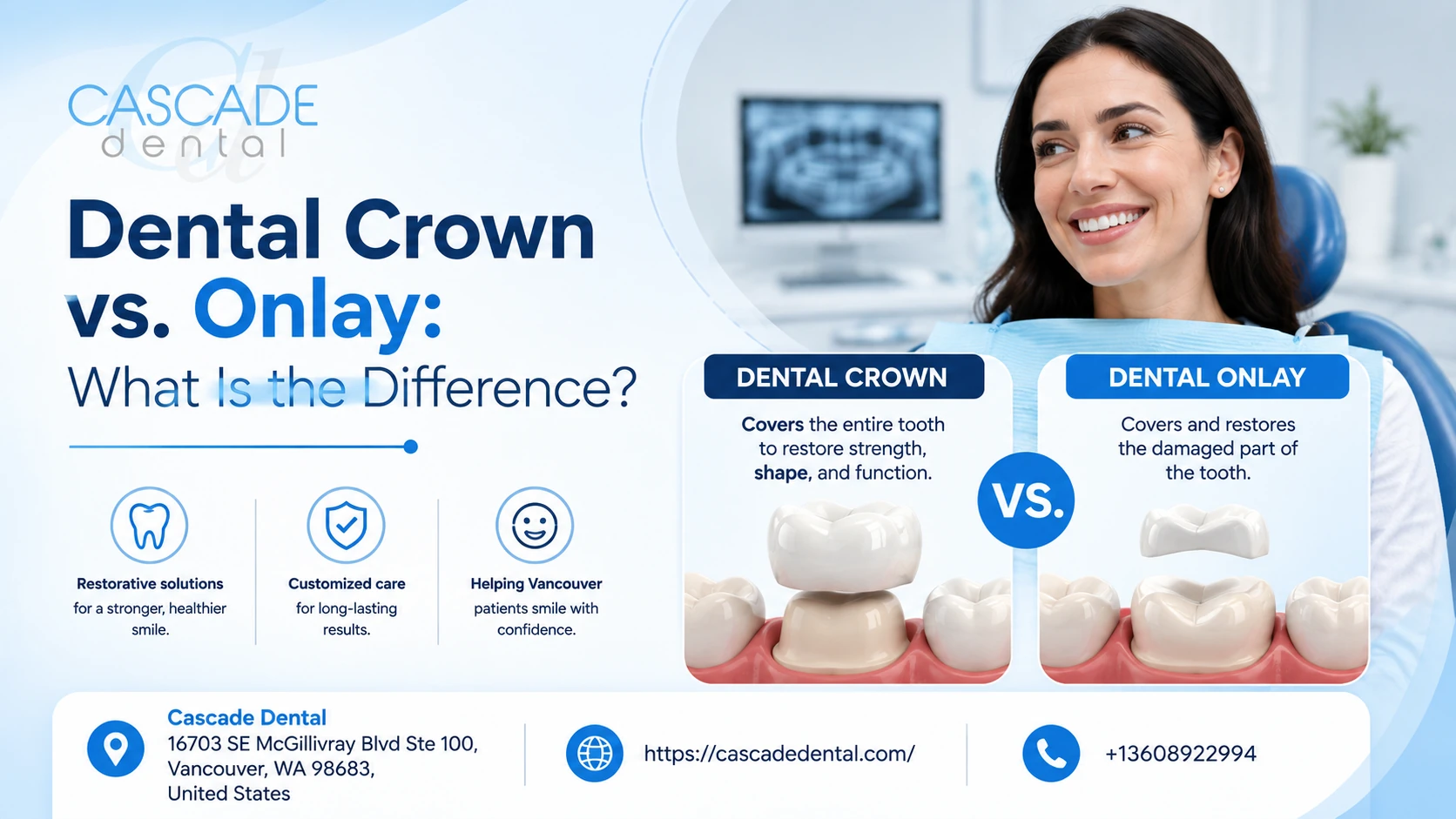
When Crowns May Be Considered
In certain situations, a dental crown may provide better long-term protection than a filling.
Crowns cover and reinforce a larger portion of the tooth and may be recommended when:
- Extensive decay is present
- The tooth is structurally weakened
- Large restorations already exist
- Additional protection is needed
For more information about these restorative options, patients can explore our Dental Crowns service page, which discusses situations where crowns may be considered.
Filling Aftercare and Maintenance
Once a filling has been placed, ongoing care plays an important role in maintaining both the restoration and the surrounding natural tooth structure.
Maintain Daily Oral Hygiene
Consistent brushing and flossing help reduce plaque accumulation and support healthy teeth and gums.
Patients should continue:
- Brushing twice daily
- Flossing daily
- Using recommended oral hygiene products
Good home care helps protect both restored and untreated teeth.
Attend Routine Dental Exams
Regular dental visits allow dentists to monitor fillings and identify potential concerns before they become larger issues.
During routine exams, dentists can evaluate:
- Filling integrity
- Signs of wear
- New areas of decay
- Overall oral health
Early detection often leads to simpler solutions.
Pay Attention to Changes
Patients should contact their dentist if they notice:
- New sensitivity
- Pain when chewing
- Rough edges
- Cracks
- Changes in bite alignment
Addressing concerns early can help prevent more significant damage.
Protect Your Teeth from Excessive Force
For patients who grind or clench their teeth, protective appliances may be recommended to reduce stress on restorations.
Minimizing excessive forces can help prolong the lifespan of fillings and other dental work.
Making an Informed Decision About Fillings
Modern dentistry offers several filling material options, each with unique advantages. Composite resin, amalgam, ceramic, and other restorative materials can all play a role in preserving damaged teeth and supporting oral health.
The most appropriate filling material depends on multiple factors, including cavity size, tooth location, appearance goals, chewing forces, and the overall condition of the tooth. This is why professional evaluation is so important when deciding which restorative option is best.
AtCascade Dental, we help patients throughout Vancouver, WA understand their treatment options so they can make informed decisions about their dental care. Whether you need a small filling, a larger restoration, or an evaluation of a damaged tooth, understanding the available materials is an important step toward protecting your smile.
If you have questions about filling materials or restorative dentistry options, our team is here to help you explore solutions that support both your oral health and long-term comfort.
Need a Durable Tooth Filling?
Learn your best filling options and schedule your dental visit today.