

Most patients have heard the same rule for years: see the dentist every six months for a cleaning. For many people, that schedule works well. But the real answer depends on your oral health, gum condition, medical history, home care routine, and risk for cavities or gum disease.
A professional dental cleaning is not just about making your teeth feel smooth. It helps remove plaque and tartar buildup, supports healthier gums, freshens breath, and gives your dental team a chance to spot early signs of trouble before they become bigger concerns. Plaque that is not removed can harden into tartar, which cannot be removed with brushing and flossing alone. Professional cleanings are also an important part of preventing gum disease, which the CDC notes is largely preventable and treatable with good oral hygiene, self-care, and regular dental care.
If you are wondering whether twice a year is enough or whether you should come in more often, here is a patient-friendly guide to help you understand what may be best for your smile.
Fast Answer: Cleaning Frequency
For many patients, a professional dental cleaning every six months is a good general guideline. This schedule gives your dental team regular opportunities to remove buildup, check your gums, polish your teeth, and monitor for changes in your oral health.
However, six months is not a one-size-fits-all rule. Some patients may do well with routine cleanings twice a year, while others may need cleanings every three to four months. Your dentist or hygienist may recommend a more frequent schedule if you have active gum inflammation, a history of periodontal disease, frequent tartar buildup, dry mouth, diabetes, tobacco use, or a higher risk of cavities.
Think of dental cleaning frequency like maintenance for your mouth. Some people build up plaque and tartar quickly, even with good brushing and flossing. Others may have medical conditions or lifestyle factors that make gum health harder to maintain. The right schedule should be based on your specific needs, not just a calendar rule.
If you are due for a routine visit, our teeth cleaning service page explains how professional cleanings help protect your teeth and gums.
Who Needs More Frequent Cleanings
Some patients benefit from professional cleanings more often than every six months. This does not always mean something is “wrong.” It simply means your mouth may need closer support to stay healthy.
You may be advised to schedule cleanings more frequently if you have gum disease or a history of gum problems. Gum disease begins with inflammation of the tissues around the teeth and can progress if plaque and tartar remain under the gumline. The CDC explains that periodontal disease involves inflammation and infection of the tissues that support the teeth, including the gums and bone.
Patients with heavy tartar buildup may also need more frequent cleanings. Even excellent brushing cannot remove tartar once it hardens. The National Institute of Dental and Craniofacial Research notes that tartar can only be removed by a dentist or dental hygienist.
More frequent cleanings may also be recommended for patients who:
- Have bleeding, swollen, or tender gums
- Have deep gum pockets or previous periodontal treatment
- Smoke or use tobacco
- Have diabetes or certain chronic health conditions
- Take medications that cause dry mouth
- Wear braces, aligners, bridges, dentures, or other dental appliances
- Get cavities often
- Are pregnant or experiencing hormonal changes
- Have difficulty brushing or flossing thoroughly
- Notice persistent bad breath or a bad taste in the mouth
For some patients, a three- or four-month cleaning schedule helps control bacteria before inflammation has a chance to worsen. These visits can be especially helpful for patients managing gum disease or trying to maintain results after periodontal treatment.
The best way to know your ideal schedule is through a professional evaluation. A dental exam allows your dentist to check your teeth, gums, bite, and overall oral health. You can learn more about what is included on our dental exams page.
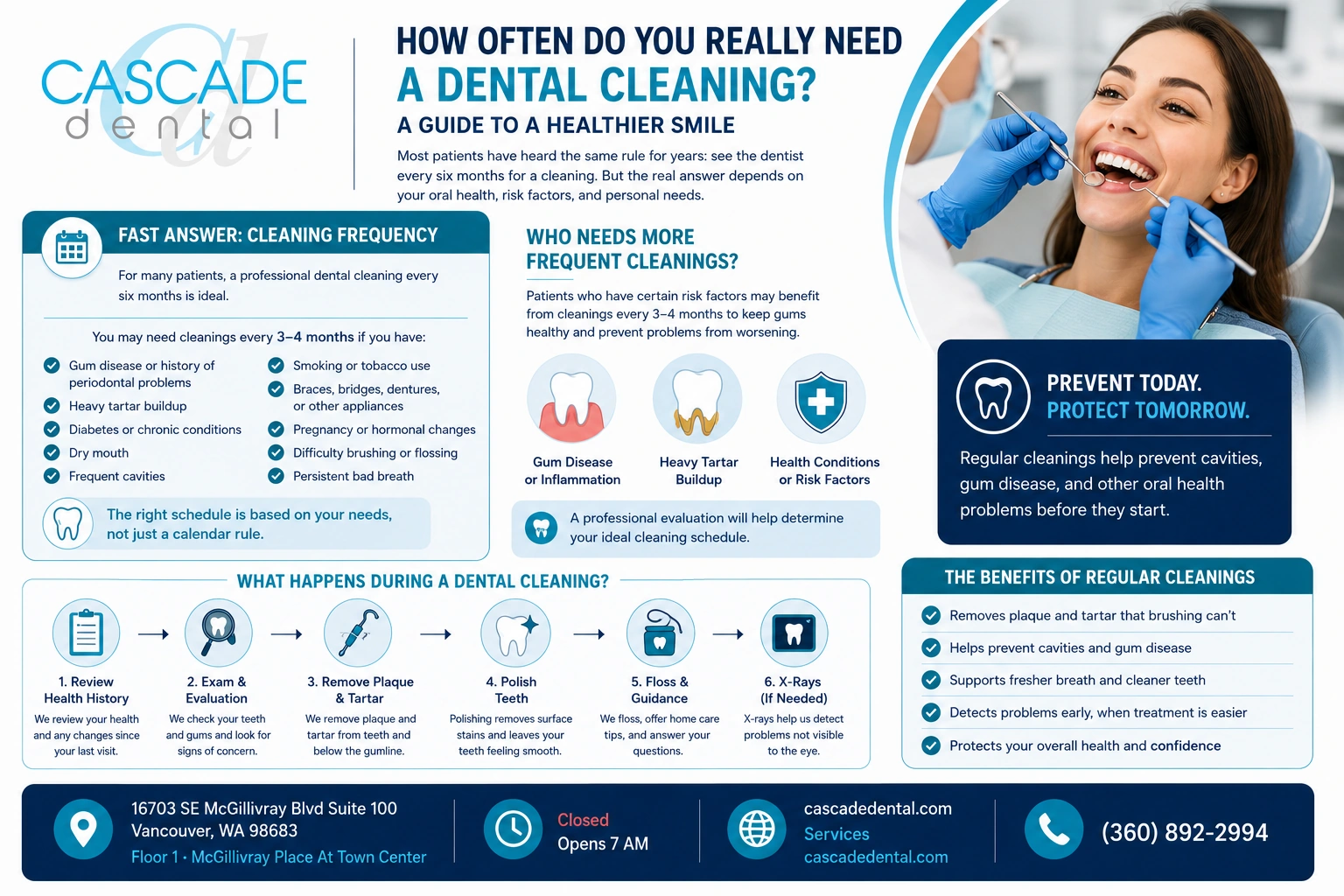
What Happens During Cleaning
A dental cleaning is usually simple, comfortable, and focused on prevention. While each visit may vary depending on your needs, most routine cleanings include several important steps.
First, your hygienist may review your medical history and ask about any changes, such as new medications, sensitivity, bleeding gums, or discomfort. These details matter because your overall health can affect your oral health.
Next, your hygienist will check your teeth and gums. They may measure the spaces between your teeth and gums to look for signs of gum inflammation or periodontal disease. Your dentist may also perform an exam during the visit, especially if you are due for a checkup.
The cleaning itself usually includes removing plaque and tartar from the tooth surfaces and around the gumline. Cleveland Clinic describes professional cleanings as removing bacteria, plaque, and tartar buildup from the surfaces of the teeth. Some visits may also include preventive treatments like fluoride, depending on the patient’s needs.
After buildup is removed, your teeth are polished to help smooth the surfaces and remove surface stains. Your hygienist may also floss between your teeth and offer tips for improving your home routine. These recommendations are not meant to criticize your brushing habits. They are meant to help you clean the areas that may be easy to miss.
If X-rays are needed, they may be taken during the same appointment. X-rays are not always required at every cleaning, but they help your dentist see areas that are not visible during a visual exam, such as decay between teeth or bone changes around the roots.
By the end of the appointment, your mouth should feel cleaner, fresher, and smoother. More importantly, your dental team will have a clearer picture of your current oral health and whether your cleaning schedule should stay the same or be adjusted.
Signs You Should Not Wait
Even if your next cleaning is already scheduled, there are times when you should not wait for your routine appointment. Certain symptoms may point to gum inflammation, tooth decay, infection, or another issue that needs attention sooner.
Schedule a dental visit if you notice:
- Bleeding gums when brushing or flossing
- Swollen, red, or tender gums
- Persistent bad breath
- Tooth sensitivity that does not go away
- Pain when chewing
- A loose tooth
- Gum recession or teeth that look longer than before
- Tartar buildup you can see or feel
- A bad taste in your mouth
- A sore, bump, or irritated area that does not heal
- A chipped, cracked, or damaged tooth
- Food constantly getting trapped in one area
Pain is not the only sign that something needs attention. Gum disease, cavities, and oral infections can sometimes develop quietly. That is why routine cleanings and exams are so valuable. They help catch problems before they become uncomfortable or more difficult to treat.
If you are in Vancouver, WA and you are unsure whether your symptoms can wait, you can start with our Vancouver location page to connect with the local team.
Prevention Tips
- Professional cleanings are important, but your daily routine plays a major role in keeping your mouth healthy between visits. A few consistent habits can reduce plaque buildup, support gum health, and make your cleaning appointments easier.
- Brush your teeth twice a day with fluoride toothpaste. Take your time and aim for about two minutes. Use gentle pressure, especially along the gumline, where plaque often collects.
- Floss once a day. Flossing helps remove plaque and food particles from between teeth where a toothbrush cannot reach. If traditional floss is difficult to use, ask your dental team about floss picks, interdental brushes, or water flossers.
- Drink plenty of water. Water helps rinse away food particles and supports saliva flow. Saliva is important because it helps protect your teeth from acids and dry mouth.
- Limit frequent snacking and sugary drinks. Sugar and refined carbohydrates feed bacteria in the mouth, which can contribute to plaque, acid, and cavities. You do not have to avoid every treat, but reducing frequent exposure can help protect your enamel.
- Do not ignore bleeding gums. Many people assume bleeding is normal, especially when flossing, but healthy gums should not bleed regularly. Bleeding can be an early sign of inflammation.
- Replace your toothbrush or electric brush head regularly. Worn bristles do not clean as effectively. A good rule is to replace it every three to four months, or sooner if the bristles look frayed.
- Keep your recommended cleaning schedule. Whether your dentist recommends cleanings every six months or more often, staying consistent helps prevent buildup from getting ahead of your home care routine.
- Finally, be honest with your dental team. If you struggle with flossing, have dental anxiety, or have not had a cleaning in a while, say so. Your dental team is there to help, not judge.
Final Thoughts
So, how often do you really need a dental cleaning? For many patients, every six months is a healthy routine. For others, especially those with gum disease, heavy tartar buildup, dry mouth, frequent cavities, or certain medical risk factors, more frequent cleanings may be recommended.
The most important thing is to follow a schedule that fits your mouth, not just a general rule. Professional cleanings help remove buildup you cannot clean at home, support healthier gums, and give your dental team a chance to catch concerns early.
To stay on track with your preventive care, you can schedule a visit for a professional teeth cleaning or pair it with a routine dental exam. If you are nearby, our Vancouver, WA dental office is here to help you keep your smile healthy with care that feels comfortable, practical, and personalized.