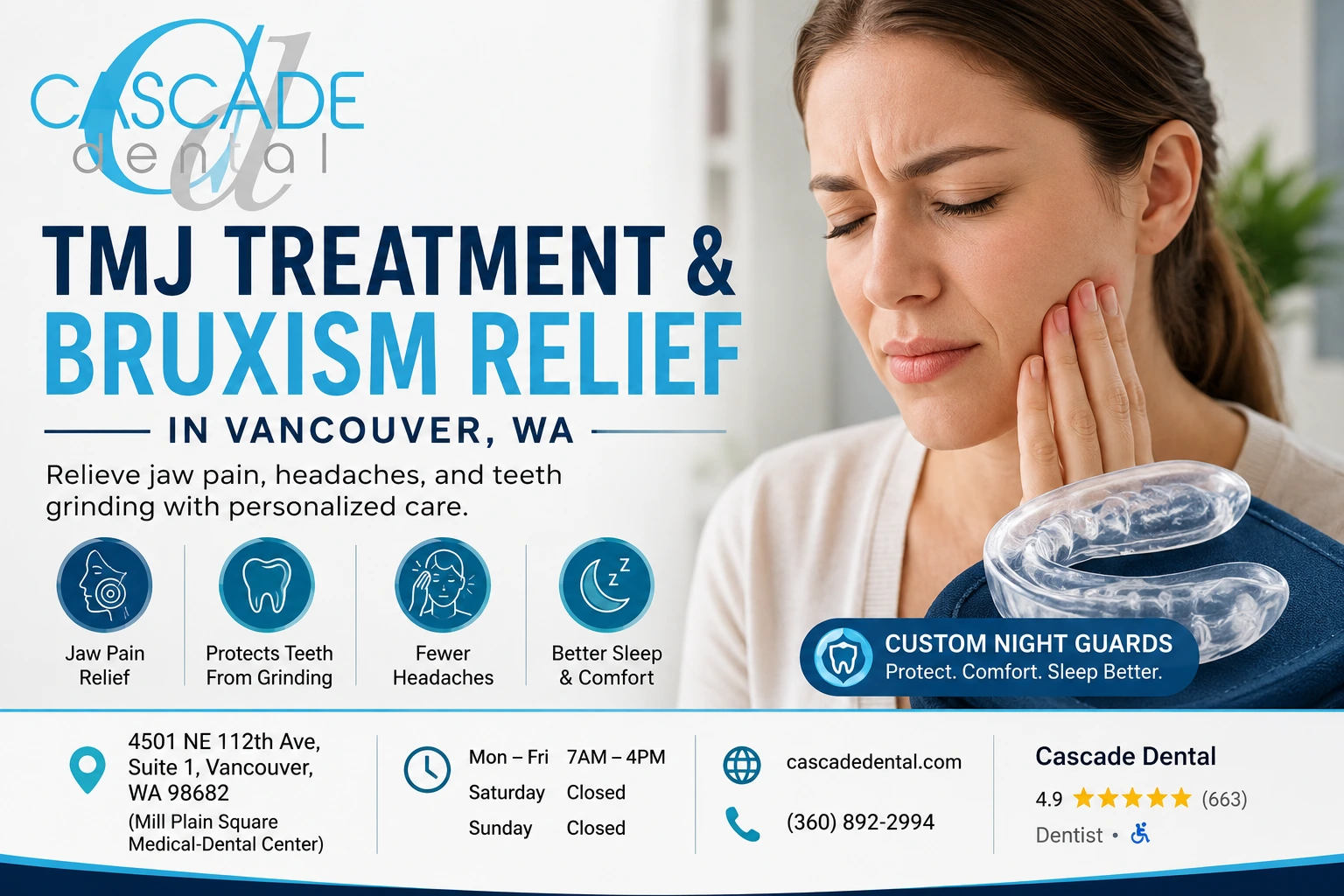
Jaw pain, morning headaches, facial tension, or worn teeth can make everyday activities such as eating, speaking, and sleeping uncomfortable. These symptoms may be connected to problems involving the temporomandibular joints, often called TMJ disorders or TMD, or to bruxism, the habit of grinding or clenching your teeth. For some patients, understanding why your jaw hurts in the morning can be an important first step toward recognizing possible grinding, clenching, or bite-related concerns.
For patients looking for TMJ treatment in Vancouver, WA, the first step is understanding what may be contributing to the discomfort. Jaw symptoms can have several causes, so treatment should begin with a careful dental evaluation rather than assuming that every case requires the same solution.
Tired of Jaw Pain & Teeth Grinding?
Don’t let TMJ symptoms or bruxism keep bothering you. Schedule your evaluation today and start finding relief.
What is TMJ or TMD?
The temporomandibular joints connect your lower jaw to your skull and allow your jaw to move when you talk, chew, yawn, and swallow. Problems affecting these joints, nearby muscles, or normal jaw movement are often described as temporomandibular disorders, or TMD.
People sometimes use “TMJ” to describe the condition, although TMJ technically refers to the joint itself.
Symptoms can range from mild, temporary discomfort to more persistent problems that interfere with normal jaw function.
What Are Common Signs of a TMJ Problem?
TMJ-related symptoms do not look exactly the same for everyone. Some patients primarily notice jaw soreness, while others first become concerned because of headaches, clicking, or difficulty opening their mouth comfortably.
Possible symptoms include:
- Jaw pain or tenderness
- Facial muscle soreness
- Clicking or popping in the jaw
- Difficulty opening the mouth comfortably
- Pain while chewing
- Tightness around the cheeks or temples
- Morning headaches
- Jaw stiffness after waking
- Changes in how the bite feels
These symptoms can have causes unrelated to TMD, so an examination is important when discomfort persists.
What Is Bruxism?
Bruxism is the grinding or clenching of teeth. It can occur while a person is awake or during sleep, and many patients who grind their teeth at night do not realize they are doing it.
Instead, they may notice the effects afterward.
Repeated grinding or clenching places additional force on the teeth, jaw muscles, and surrounding structures. Over time, this may contribute to tooth wear, sensitivity, cracks, damaged dental restorations, or muscle discomfort.
A dentist may also notice signs of grinding during a routine examination before the patient develops significant symptoms.
Can Teeth Grinding Cause Jaw Pain?
Yes, grinding and clenching can contribute to jaw discomfort in some patients.
When jaw muscles remain tense or repeatedly generate strong biting forces, they can become sore or fatigued. Some people wake with tight facial muscles, jaw stiffness, or headaches around the temples.
Grinding may also place additional stress on the jaw joints.
However, not every patient with TMD symptoms grinds their teeth, and not every person who grinds develops significant jaw pain. That is why identifying the likely source of the symptoms matters before choosing treatment.
Why Do People Grind or Clench Their Teeth?
There is not always one clear cause of bruxism.
Grinding or clenching may be influenced by several factors, including stress, sleep-related patterns, medications, lifestyle factors, or individual bite and dental conditions.
Some people also clench during the day without realizing it, particularly while concentrating or feeling stressed.
Rather than assuming why grinding is happening, your dentist can look for physical signs of wear and ask questions about your symptoms, habits, sleep, and dental history.
That information can help determine whether bruxism appears to be contributing to your discomfort.

Common Dental Myths Debunked | Cascade Dental
You know the old saying, "Eating an apple every day helps keep the doctor away," right? While this may be…

How Is TMJ Pain Evaluated?
A dental evaluation generally begins with a discussion of your symptoms.
Your dentist may ask when the discomfort started, whether it is worse in the morning, whether you notice clicking or grinding, and whether chewing or opening your mouth affects the pain.
The examination may also include evaluating:
- Jaw movement
- Muscle tenderness
- Your bite
- Tooth wear
- Cracked or chipped teeth
- Existing dental restorations
- Areas of tooth sensitivity
- Signs of nighttime grinding or clenching
Because jaw pain can have several causes, your dentist may recommend additional evaluation or referral when symptoms suggest another dental or medical condition.
What Treatments May Help With Bruxism and TMJ Discomfort?
Treatment depends on what appears to be causing or contributing to your symptoms. In some cases, patients may also benefit from learning more about jaw pain and malocclusion solutions when an uneven bite or bite pressure appears to be part of the problem.
For some patients, conservative measures may be appropriate. Others may benefit from protecting the teeth from repeated grinding forces.
Can a Night Guard Help?
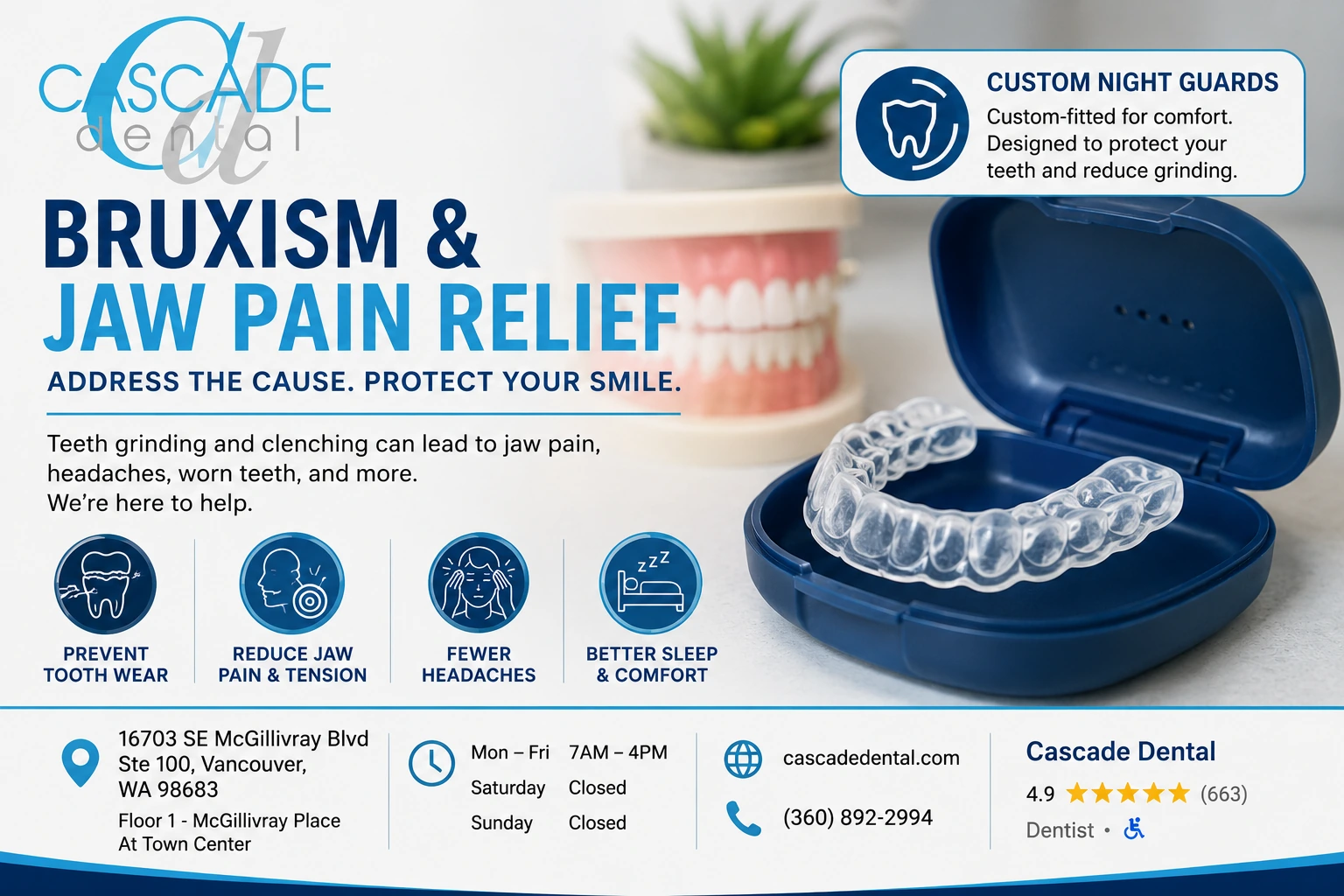
A custom dental night guard is one option for patients whose symptoms are related to grinding or clenching.
The appliance fits over the teeth and creates a protective surface between the upper and lower arches. It does not necessarily stop all grinding movements, but it can reduce direct tooth-to-tooth contact and help protect enamel and dental restorations.
Cascade Dental provides custom Night Guards for patients with grinding, clenching, jaw tension, and related dental wear.
Are Store-Bought Night Guards the Same as Custom Guards?
Store-bought night guards and professionally made appliances serve similar basic purposes, but the fit and design differ.
Over-the-counter products use a general shape or material that patients adapt themselves to. A custom night guard is created from impressions or digital scans of the patient’s teeth and can be evaluated by a dentist for fit and bite.
For someone experiencing ongoing jaw discomfort, headaches, tooth wear, or repeated damage to dental work, professional evaluation is useful before relying on an appliance.
A night guard should address an identified dental need rather than simply covering up unexplained pain.
Can TMJ Symptoms Go Away on Their Own?
Some episodes of mild jaw discomfort may improve, particularly when they are related to temporary muscle tension or short-term habits.
Persistent or recurring symptoms deserve more attention.
Pain that continues, becomes more severe, interferes with eating, or is accompanied by significant changes in jaw movement should be evaluated. Similarly, repeated headaches, worn teeth, or broken restorations may indicate that grinding forces are continuing even if the jaw discomfort occasionally improves.
Early evaluation can help identify dental damage before it becomes more extensive.
When Should You See a Dentist About Jaw Pain?
Consider scheduling a dental evaluation when jaw pain is recurring, persistent, or affecting your normal activities.
You should also mention symptoms such as:
- Difficulty chewing comfortably
- Significant jaw stiffness
- Repeated morning headaches
- New or increasing tooth sensitivity
- Noticeable tooth wear
- Chipped or cracked teeth
- Frequent clenching or grinding
- Damage to fillings, crowns, or other restorations
Severe or unusual pain may require evaluation beyond dentistry. Your dentist can help determine whether your symptoms appear dental in nature and whether another healthcare professional should be involved.
Why Does Local TMJ Care Matter in Vancouver, WA?
TMJ and bruxism concerns often require more than a single conversation because symptoms and dental wear may need to be monitored over time.
Working with a local Vancouver dentist makes it easier to connect jaw concerns with your broader dental care.
Cascade Dental already evaluates patients for grinding, clenching, bite pressure, tooth wear, and jaw discomfort as part of its night guard services. The practice also provides comprehensive preventive and restorative dentistry, allowing your dentist to consider how jaw forces may be affecting both natural teeth and existing dental work.
FAQs About TMJ Treatment and Bruxism
Are TMJ and bruxism the same condition?
No. TMD involves problems affecting the jaw joints or surrounding structures, while bruxism refers to grinding or clenching the teeth. The two can occur together, but one does not automatically cause the other.
Can bruxism damage teeth?
Repeated grinding can wear enamel and may contribute to sensitivity, cracks, chips, or damage to restorations. The amount of damage varies between patients.
Can a night guard cure TMJ?
A night guard is not a universal cure for TMD. It may help certain patients when grinding, clenching, or bite pressure contributes to their symptoms.
Why does my jaw hurt when I wake up?
Morning jaw soreness may be associated with nighttime clenching or grinding, although other causes are possible. A dental examination can help identify signs of bruxism or other problems.
Should I ignore jaw clicking if it does not hurt?
Jaw sounds can occur without significant discomfort. Mention persistent clicking, popping, locking, or changes in jaw movement to your dentist so they can determine whether further evaluation is appropriate.
Find a More Comfortable Path Forward at Cascade Dental
Living with jaw soreness, headaches, or teeth grinding can be frustrating, especially when you are unsure what is causing the problem.
At Cascade Dental, we help Vancouver patients understand what their symptoms may be telling them. Our team can evaluate your teeth, bite, jaw movement, and signs of grinding before discussing appropriate options, including custom night guards when indicated.
If jaw discomfort or bruxism is affecting your daily comfort or your teeth, schedule a visit with Cascade Dental. A personalized evaluation can help you understand the problem and determine a practical next step for protecting your smile.
Ready for Relief From TMJ Pain?
Take the next step toward a more comfortable jaw and healthier smile. Call today for TMJ and bruxism treatment.