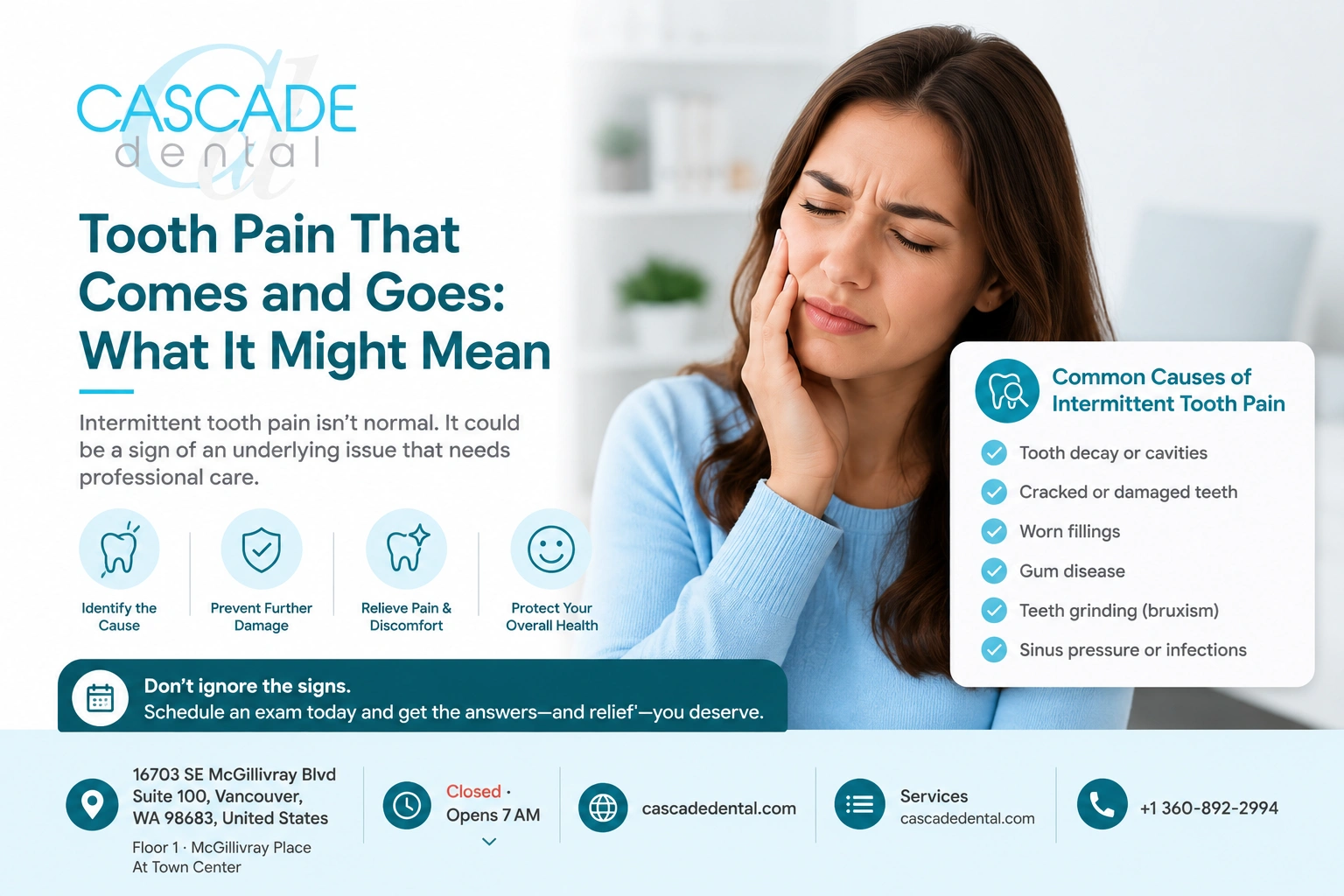
Tooth pain that comes and goes is often a sign that something is irritating the tooth, nerve, gums, or surrounding structures. Even if the discomfort disappears temporarily, intermittent pain may still indicate decay, inflammation, cracks, infection, or bite-related stress that requires professional evaluation.
Many patients assume occasional pain is not serious because symptoms improve on their own. In reality, temporary relief does not always mean the problem has resolved. Understanding the possible causes of changing tooth pain can help patients recognize when a dental exam is necessary.
Recurring Tooth Pain Could Mean Trouble
Speak With a Dentist. Temporary relief doesn’t mean the issue is gone. Cavities, cracked teeth, or infections can worsen silently. Protect your smile with prompt professional treatment.
Fast Answer: Why Pain Comes and Goes
Tooth pain may come and go because irritation inside or around the tooth changes throughout the day.
Temperature changes, pressure, inflammation, eating habits, and nerve irritation can all affect symptom intensity. Some conditions cause temporary discomfort before progressing into more persistent pain later. Patients looking into tooth pain relief treatment in Vancouver, WA should still consider an exam even when symptoms are intermittent.
Nerves Can Respond Intermittently
The nerve inside the tooth reacts differently depending on the level of irritation.
Early inflammation may produce:
- Brief sharp pain
- Sensitivity to temperature
- Occasional throbbing
- Pain during chewing
Symptoms may disappear temporarily between flare-ups.
Pressure and Daily Habits Matter
Chewing, grinding, and jaw pressure may trigger discomfort at certain times.
Pain may worsen:
- During meals
- At night
- After clenching
- With cold drinks
- When biting down
Changes in pressure can make symptoms feel inconsistent.
Inflammation Can Fluctuate
Inflammation inside the tooth or gums may increase and decrease over time.
This explains why some patients notice:
- Pain that lasts a few seconds
- Discomfort only on certain days
- Symptoms that improve temporarily without treatment
The underlying problem may still continue progressing.
Common Causes
Intermittent tooth pain can develop from several different dental conditions.
Some causes are minor and reversible, while others may require restorative treatment to prevent worsening damage.
Tooth Sensitivity
Exposed dentin can make teeth sensitive to temperature changes.
Sensitivity may occur because of:
- Worn enamel
- Gum recession
- Aggressive brushing
- Whitening products
- Acid erosion
Sensitive teeth often react briefly to cold, heat, or sweets.
Small Cracks in the Tooth
Tiny cracks may create pain only when pressure is applied.
Patients sometimes notice discomfort:
- While chewing
- When releasing a bite
- During hard foods
- On one side of the mouth
Cracks may be difficult to detect without a professional dental exam.
Teeth Grinding and Clenching
Grinding places repeated stress on teeth and surrounding muscles.
This pressure may lead to:
- Tooth soreness
- Jaw discomfort
- Intermittent sensitivity
- Hairline fractures
Symptoms are often worse in the morning or after stress.
Gum Irritation
Inflamed gum tissue can sometimes mimic tooth pain.
Food particles, gum disease, or localized irritation may create tenderness around a tooth even when the tooth itself is healthy.
Sinus Pressure
Upper back teeth may feel painful during sinus congestion or seasonal allergies.
Sinus-related discomfort can create:
- Pressure sensations
- Dull aching
- Pain in multiple upper teeth
Symptoms often improve when sinus inflammation decreases.
When It May Be a Cavity
Cavities are one of the most common reasons for occasional tooth pain.
Early decay may cause mild or inconsistent symptoms before becoming more severe.
Early Tooth Decay
Small cavities may not hurt constantly.
Pain may appear only when:
- Eating sweets
- Drinking cold beverages
- Chewing on one side
- Food becomes trapped
As decay spreads deeper, symptoms usually become more frequent.
Decay Near the Nerve
When a cavity approaches the tooth nerve, inflammation increases.
Patients may notice:
- Lingering sensitivity
- Spontaneous pain
- Temperature sensitivity
- Occasional throbbing
At this stage, restorative treatment becomes more urgent.
Old Fillings Can Fail
Older dental fillings sometimes develop leaks or gaps over time.
Bacteria may enter beneath the restoration and create new decay.
This can lead to:
- Sharp pain when biting
- Temperature sensitivity
- Intermittent discomfort
Dental imaging often helps identify hidden decay under restorations.
Food Trapping Around Cavities
Food particles trapped near damaged enamel can irritate the tooth temporarily.
Pain may improve after brushing or flossing but return during future meals.
Recurring discomfort should still be evaluated professionally.
Infection Signs
Intermittent tooth pain can sometimes signal infection inside the tooth.
Dental infections may begin gradually before progressing into severe pain or swelling.
Early Nerve Inflammation
The pulp inside the tooth contains nerves and blood vessels.
When bacteria reach this area, inflammation may cause:
- Brief throbbing
- Random pain episodes
- Sensitivity to heat
- Pressure discomfort
Symptoms often worsen as the infection advances. In some cases, symptoms involving tooth nerve damage and headaches may overlap with other sources of facial or jaw discomfort, making an accurate diagnosis especially important.
Pain That Wakes You at Night
Tooth pain that disrupts sleep may indicate deeper inflammation.
Nighttime symptoms may involve:
- Pulsing pain
- Increased pressure
- Sensitivity without triggers
Persistent nighttime discomfort should not be ignored.
Swelling or Gum Changes
Infection may also affect surrounding tissue.
Warning signs can include:
- Gum swelling
- Tenderness near the tooth
- Pimple-like bumps on the gums
- Facial swelling
These symptoms may indicate an abscess or spreading infection.
Bad Taste or Drainage
Some infections create drainage that produces:
- A bad taste in the mouth
- Persistent bad breath
- Fluid release near the gums
Drainage may temporarily reduce pressure, causing pain to decrease briefly before returning later.
Why Symptoms Sometimes Stop
Infected teeth do not always hurt continuously.
In some cases, nerve tissue begins dying, which may temporarily reduce pain even though the infection continues spreading internally.
A sudden decrease in pain does not necessarily mean the problem is healed.
Why an Exam Matters
Because intermittent tooth pain has many possible causes, a dental exam is necessary for accurate diagnosis.
Symptoms alone often cannot identify the exact source of discomfort.
Visual and Digital Evaluation
Dentists use several tools to evaluate painful teeth.
This may include:
- Visual examination
- Digital X-rays
- Bite testing
- Temperature testing
- Crack evaluation
These methods help identify hidden damage or infection.
Some Problems are Invisible
Small cracks, early infections, and deep decay are not always visible without imaging.
A tooth may appear normal externally while internal inflammation continues progressing.
Early diagnosis often allows more conservative treatment.
Preventing More Serious Damage
Untreated dental problems may worsen over time.
Delaying evaluation can increase the risk of:
- Severe infection
- Tooth fractures
- Nerve damage
- Tooth loss
Early care usually improves long-term outcomes.
Treatment Depends on the Cause
Not every painful tooth requires the same treatment.
Depending on the diagnosis, care may involve:
- Monitoring
- Fillings
- Bite adjustment
- Nightguards
- Root canal therapy
- Gum treatment
The appropriate solution depends on what is causing the pain.
Monitoring Symptoms is Helpful
Patients should pay attention to:
- Pain triggers
- Duration of discomfort
- Temperature sensitivity
- Swelling
- Bite pressure pain
Sharing these details during the exam helps dentists identify patterns more accurately.
Temporary Relief is Not a Diagnosis
Pain that disappears temporarily can still indicate a progressing dental condition.
Professional evaluation helps determine whether the issue is minor sensitivity or something requiring restorative care or infection management.
Understanding the cause early often helps patients avoid more extensive treatment later.
Why Patients Trust Cascade Dental
At Cascade Dental, we understand that occasional tooth pain can feel confusing and easy to dismiss, especially when symptoms improve temporarily.
We take time to evaluate the underlying cause carefully rather than focusing only on the immediate discomfort. Our team examines tooth structure, bite pressure, inflammation, and possible infection patterns to identify what may be triggering recurring pain.
Whether the issue involves sensitivity, cavities, cracks, or inflammation, we explain findings clearly and answer questions honestly.
Sharp Tooth Pain That Keeps Returning?
Recurring tooth pain is your mouth’s warning sign. Our dental team can diagnose the cause fast and provide relief you can trust before the problem spreads.